
In the demanding world of precision metal forming, the manufacturing of bevel gears represents a significant challenge. The dies used in forging these complex, conical-shaped gears are subjected to extreme mechanical stresses, thermal cycling, and severe abrasive and adhesive wear. As an engineer deeply involved in this field, I have witnessed firsthand how the lifespan and performance of these critical tools directly impact production efficiency, part quality, and overall cost. Traditional approaches to enhancing die life through optimal design, meticulous manufacturing, and careful material selection remain foundational. However, one of the most transformative advancements in recent decades has been the strategic application of surface engineering, particularly Physical Vapor Deposition (PVD) coating technology. This article delves into the science behind PVD, analyzes the primary failure modes plaguing bevel gear dies in cold, warm, and hot forging processes, and details how tailored PVD coatings provide a robust, high-performance solution, effectively extending service life by an order of magnitude.
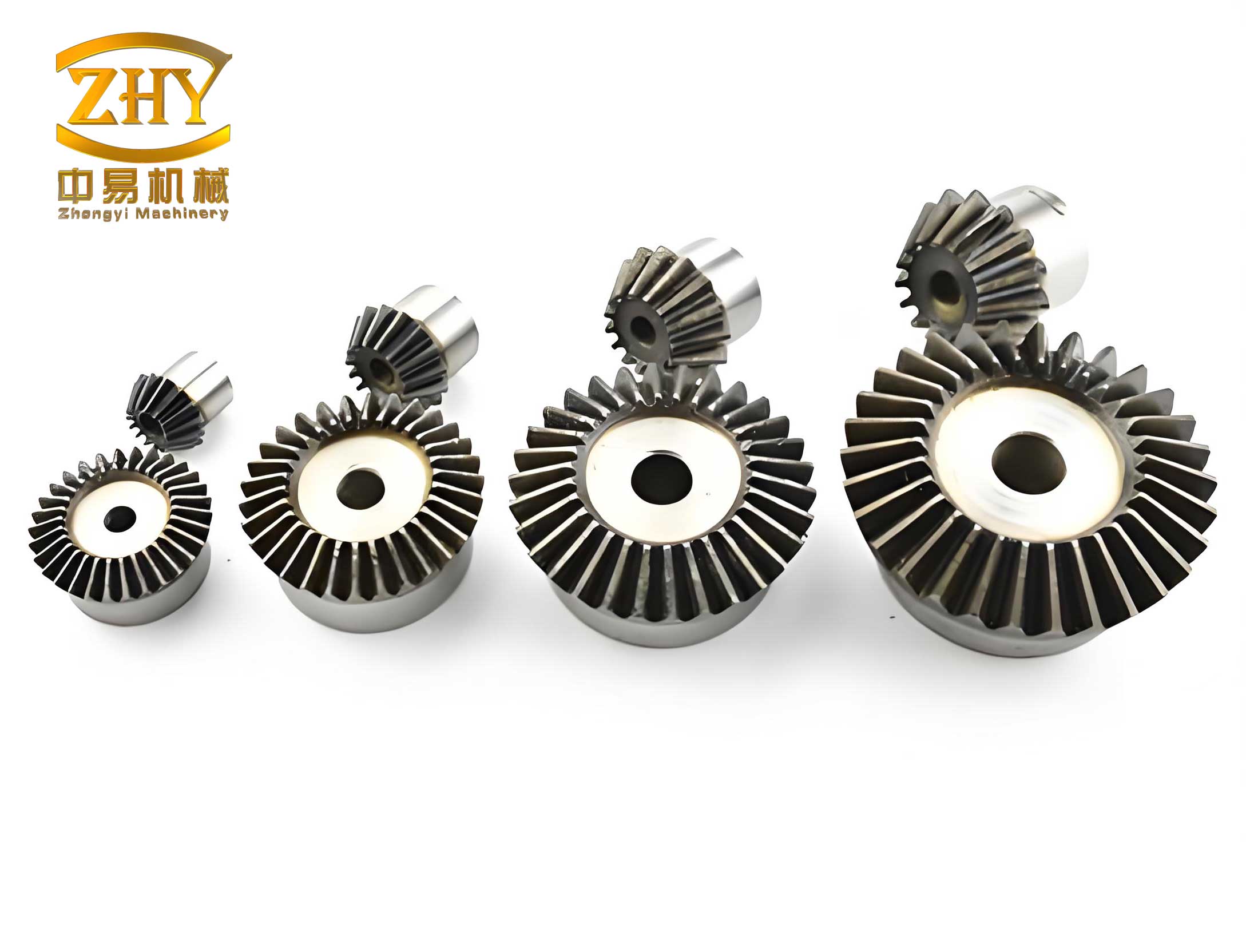
The pursuit of durable bevel gear dies is paramount. Every premature failure translates to production downtime, increased tooling costs, and potential inconsistencies in the forged gear components. While bulk material properties like toughness and hot hardness are crucial, the surface of the die is the direct interface with the deforming metal workpiece. It is this surface that must resist galling, withstand abrasive wear, delay thermal fatigue cracking, and prevent plastic deformation. This is where surface modification technologies shift from being an optional enhancement to an essential manufacturing strategy. Among the plethora of available techniques—including various nitriding processes, chemical vapor deposition (CVD), and thermo-reactive diffusion (TD) treatments—PVD has emerged as a particularly suitable and versatile solution for precision bevel gear dies, primarily due to its relatively low processing temperature and its ability to deposit extremely hard, thin, and well-adhered ceramic coatings without compromising the precision-ground or EDM-finished die geometry.
The Science and Evolution of PVD Technology
Physical Vapor Deposition, as the name implies, is a process of atomistic or molecular transfer in a vacuum environment to form a thin film on a substrate. The core principle involves physically vaporizing a solid target material (the source of the coating) and condensing its vapor onto the workpiece (the die), often with the aid of a reactive gas to form a compound coating. The fundamental PVD techniques can be categorized into three main groups:
- Vacuum Evaporation: The target material is heated to its evaporation point using resistive, inductive, or electron-beam heating. The vapor travels through the vacuum chamber and condenses on the cooler substrate.
- Sputtering: A plasma of inert gas (like Argon) is created. Positively charged gas ions are accelerated towards a negatively charged target (cathode), physically knocking out (sputtering) target atoms which then deposit onto the substrate.
- Ion Plating: This is a hybrid process combining evaporation or sputtering with plasma bombardment of the substrate. The workpiece is subjected to a negative bias, attracting positively charged ions from the plasma. This concurrent ion bombardment during deposition densifies the coating, improves adhesion, and enhances surface coverage. Modern cathodic arc evaporation is a prevalent ion plating technique for tool coatings, where a high-current arc vaporizes the target material, creating a highly ionized plasma.
The generic sequence for applying a PVD coating to a bevel gear die involves several critical steps: rigorous ultrasonic cleaning to remove contaminants, mounting in a specialized fixture inside the PVD chamber, heating under vacuum to outgas the parts, etching via argon ion bombardment to clean and activate the surface, followed by the deposition phase where the coating material and reactive gas (e.g., N₂, C₂H₂, O₂) are introduced. The interaction of these elements, governed by plasma physics and surface chemistry, results in the growth of a thin, hard ceramic layer.
The advantages of PVD for bevel gear die applications are numerous. The coatings exhibit exceptional hardness, often ranging from 1,800 to over 4,000 HV, which directly combats abrasive wear. They significantly reduce the coefficient of friction against the workpiece material, mitigating adhesive wear (galling) and lowering forming forces. Many PVD coatings, such as AlCr-based layers, offer excellent chemical inertness and oxidation resistance, crucial for hot forging applications. Perhaps most importantly for precision bevel gear dies, the process temperature typically lies between 400°C and 500°C, which is well below the tempering temperature of most cold and hot work die steels (e.g., ~520°C for H13). This means the core hardness and mechanical properties of the meticulously heat-treated die substrate are preserved, and dimensional changes or distortions are minimal—a critical factor when dealing with micron-level gear tooth accuracy.
The evolution of PVD coatings has been remarkable. The journey began with simple binary coatings like Titanium Nitride (TiN), recognizable by its golden color. To meet more demanding applications, ternary and quaternary systems were developed. The addition of carbon led to Titanium Carbo-Nitride (TiCN), offering higher hardness. Incorporating aluminum resulted in Titanium Aluminum Nitride (TiAlN) and Aluminum Chromium Nitride (AlCrN), dramatically improving high-temperature stability and oxidation resistance. Today, nanostructured, multilayer, and doped coatings (like AlCrTiN, TiSiN, or coatings with lubricious phases) represent the cutting edge, allowing for precise tuning of properties such as hardness, toughness, thermal conductivity, and friction behavior for specific bevel gear forging challenges.
Comparative Analysis of Surface Engineering Techniques for Dies
Selecting the optimal surface treatment requires a clear understanding of the alternatives. The table below summarizes key surface engineering methods relevant to tool and die applications, highlighting their principles, applicable materials, and characteristics.
| Name / Process | Applicable Materials | Process Principle & Typical Temperature | Key Characteristics for Die Application |
|---|---|---|---|
| Carburizing | Primarily low-carbon steels | Diffusion of carbon into surface at high temperature (850-950°C), followed by quench & temper. | Creates a hard, wear-resistant case over a tough core. Suitable for high-contact-stress components but high distortion. |
| Nitriding (Gas, Plasma) | Alloy steels, tool steels (e.g., H13, Nitriding steels) | Diffusion of nitrogen into surface at moderate temperature (450-580°C). | High surface hardness (900-1200 HV), good wear/fatigue resistance, low distortion. Layer depth ~0.1-0.5mm. |
| Boriding (Boronizing) | Various steels, some alloys | Diffusion of boron at high temperature (850-1000°C) to form boride layers (FeB, Fe₂B). | Extremely high surface hardness (1300-2000 HV), excellent abrasion resistance. High process temperature causes distortion. |
| Chemical Vapor Deposition (CVD) | Tool steels, cemented carbides | Gas-phase chemical reactions at high temperature (800-1100°C) deposit coating (e.g., TiC, TiN). | Excellent coating adhesion and conformity. High temperature degrades substrate hardness and causes significant distortion. |
| Thermo-reactive Diffusion (TD) | Tool steels | Immersion in molten salt bath (800-1100°C) to form a carbide (VC, NbC) layer via diffusion. | Very hard carbide layer (3000+ HV), superb anti-galling properties. Shares high-temperature drawbacks of CVD. |
| Physical Vapor Deposition (PVD) | Tool steels, stainless steels, cemented carbides | Physical atomization and deposition in vacuum at low temperature (200-500°C). | High hardness (1800-4000+ HV), low friction, excellent adhesion (with ion plating), minimal distortion, “green” process. |
For finished, high-precision bevel gear dies—where the intricate tooth profile has already been machined via EDM or grinding—the high-temperature processes (CVD, TD, Boriding) are often unsuitable due to the risk of distortion and the need for re-heat treatment. Nitriding is a viable and common process, providing a relatively deep hardened case. However, PVD offers distinct advantages for combating surface-dominated failure modes: its coatings are significantly harder than nitrided layers, provide a lower friction coefficient, and can be engineered with specific thermal and chemical properties. The choice between a nitrided case and a PVD coating—or sometimes a combination of both—depends on the specific failure mechanism. For severe abrasive wear or galling in cold forging, a thin, ultra-hard PVD coating is often superior. For applications requiring resistance to deeper plastic deformation or high compressive loads, the support of a nitrided case beneath a PVD top layer can be optimal.
Failure Modes of Bevel Gear Dies and the PVD Solution Strategy
The design of an effective PVD coating strategy begins with a fundamental understanding of how and why bevel gear dies fail. The failure modes differ significantly between cold forging and warm/hot forging due to the distinct operating environments.
Cold Forging Bevel Gear Dies
In cold forging, the workpiece material is formed at or near room temperature, requiring extremely high forming pressures. The primary stresses on the die are mechanical. Common failure modes include:
- Abrasive Wear and Galling (Adhesive Wear): This is the predominant cause of early die failure in cold forging of bevel gears. As the metal billet plastically flows and slides against the die cavity surface under immense pressure, microscopic asperities interact. This leads to material removal (abrasion) or material transfer from the workpiece to the die (galling, also called “pick-up” or “scoring”). On the intricate tooth flanks of a bevel gear die, this manifests as a “pull-out” or “scratching” pattern that degrades the surface finish of the forged gear and eventually leads to dimensional inaccuracy. The wear rate can be modeled by Archard’s equation in a simplified form:
$$ V = K \frac{F_N \cdot s}{H} $$
where \(V\) is the wear volume, \(K\) is a wear coefficient (dependent on materials and lubrication), \(F_N\) is the normal load, \(s\) is the sliding distance, and \(H\) is the hardness of the softer material (the die surface if uncoated). - Fatigue Cracking: Under the cyclic loading of thousands of forging strokes, fatigue cracks can initiate at stress concentrators such as the root fillets of the gear teeth or at the transition from the tooth to the die base. These are often radial cracks within the tooth slots or micro-cracks on the tooth surface, particularly at the smaller end of the bevel gear where stress is concentrated.
PVD Application for Cold Forging Dies: For cold forging dies made from high-alloy tool steels like D2 (1.2379) or high-speed steels, the primary goal of PVD coating is to combat abrasive and adhesive wear. A coating with very high hardness and a low coefficient of friction is ideal. TiCN coatings, with a hardness of approximately 2800 HV and a silver-grey appearance, have proven highly effective. They provide a barrier that resists material transfer and reduces the effective wear coefficient \(K\) in the Archard equation. The thin coating (1.5-4 µm) does not alter the macro-stress state to induce fatigue, but by preventing surface damage, it can delay fatigue crack initiation. In some advanced applications, a multi-layer approach or a coating with integrated solid lubricants (like doped carbon or MoS2) is used to further reduce friction and prevent galling in challenging cold forging operations of bevel gears.
Warm and Hot Forging Bevel Gear Dies
Here, the dies operate in a much more aggressive environment. The workpiece is heated (typically 750-950°C for warm forging, 1150-1250°C for hot forging), subjecting the die surface to intense thermal cycling in addition to mechanical loads. Key failure modes include:
- Thermal Fatigue (Heat Checking): This is the most characteristic failure mode in hot work dies. The die surface rapidly heats up during contact with the hot billet and cools during lubrication and part ejection. This cyclic thermal expansion and contraction induces cyclic thermal stresses. Over time, a network of fine cracks, known as heat checks, develops on the die surface. These cracks are typically perpendicular to the surface and can propagate, leading to macro-cracking or surface spalling. The Manson-Coffin relationship can be adapted for thermal fatigue life estimation:
$$ \Delta \epsilon_{inelastic} \cdot N_f^\alpha = C $$
where \(\Delta \epsilon_{inelastic}\) is the inelastic strain range per cycle (driven by temperature gradient), \(N_f\) is the number of cycles to failure, and \(\alpha\) and \(C\) are material constants. - Thermal Softening and Plastic Deformation: The surface temperature of the die can locally exceed the tempering temperature of the die steel, causing it to soften. This reduces yield strength, making the die cavity susceptible to plastic deformation under the forging pressure. For bevel gear dies, this often manifests as a “mushrooming” or rounding of sharp edges (like the tooth crests) or a general collapse of the tooth profile.
- Abrasive Wear (Accelerated): The oxide scale (slag) that forms on the hot workpiece acts as a potent abrasive, accelerating die wear. The softened die surface further exacerbates this wear.
- Stress Cracking: A combination of thermal shock, mechanical overload, and pre-existing defects can lead to catastrophic brittle fracture, such as a crack propagating from the tooth tip down through the die.
PVD Application for Warm/Hot Forging Dies: The PVD coating strategy here must address multiple challenges simultaneously. The coating must possess:
1. High Hot Hardness: Retain its hardness at elevated temperatures to resist abrasive wear from the scale and prevent indentation.
2. Oxidation Resistance: Form a stable, protective oxide layer (like Al₂O₃ from Al-containing coatings) to protect the underlying die steel from oxidation and decarburization.
3. Thermal Barrier Effect: Have a lower thermal conductivity than the die steel to reduce the peak temperature at the substrate interface, mitigating thermal softening and the amplitude of thermal cycling.
4. Good Adhesion Under Cyclic Stresses: Withstand the shear stresses induced by the differential thermal expansion between coating and substrate.
For warm forging bevel gear dies (e.g., from H13 steel), coatings like AlCrN or AlTiN are standard. Their high aluminum content promotes the formation of a protective alumina layer. For hot forging, where surface temperatures can exceed 700°C, more advanced quaternary coatings like AlCrTiN or NAlCr are employed for their superior stability. The coating acts as a sacrificial barrier, taking the brunt of the thermal and abrasive attack. While it may eventually wear or degrade, it significantly extends the period before the underlying die steel begins to fail via thermal fatigue or plastic deformation.
Technical Implementation and Performance Data
The successful implementation of PVD on bevel gear dies requires a holistic approach, from substrate preparation to coating selection and post-coating analysis.
Substrate Preparation is Critical: The performance of any PVD coating is contingent on the quality of the substrate. For bevel gear dies, this means:
– Achieving the correct bulk hardness and microstructure through proper forging, annealing, hardening, and tempering of the die steel (e.g., 47-51 HRC for H13, 60-62 HRC for cold work steels).
– Precision machining and finishing of the tooth profile. A superior surface finish (low Ra value) is essential, as peaks (asperities) can lead to localized coating failure. The final finish is often achieved by precision grinding or fine-finishing EDM.
– Meticulous and thorough cleaning to remove all oils, polishing compounds, and oxides before loading into the PVD chamber. Any contamination will severely compromise coating adhesion.
Coating Selection Guide for Bevel Gear Dies: The following table expands on common PVD coatings used in forging applications, detailing their properties relevant to bevel gear die performance.
| Coating Type | Approx. Hardness (HV) | Characteristic Color | Key Properties & Advantages | Typical Application for Bevel Gear Dies |
|---|---|---|---|---|
| TiN | 2300 | Gold | Good general wear resistance, lower cost. | General-purpose coating for light-duty or less abrasive cold forging. Less common today. |
| TiCN | 2800 – 3200 | Gray/Violet | Higher hardness and lower friction than TiN. Excellent abrasion resistance. | Standard for cold forging dies where galling and abrasive wear are primary concerns. |
| TiAlN / AlTiN | 3000 – 3300 | Purple-Black / Black | Excellent oxidation resistance (up to ~800°C). Good thermal stability. | Warm forging dies, hot forging dies for lower-temperature alloys. AlTiN has higher Al content for better stability. |
| AlCrN / AlCrTiN | 3200 – 3500 | Gray | Superior oxidation resistance and hot hardness (up to ~1000°C). Good thermal fatigue resistance. | High-performance warm forging and hot forging dies. State-of-the-art for demanding bevel gear applications. |
| CrN | 1800 – 2200 | Silver | Excellent anti-galling properties, corrosion resistance, lower stress. | Useful for forging sticky materials like aluminum or copper alloys, even for bevel gears. |
| DLC (a-C:H, ta-C) | 2000 – 5000 | Black/Gray | Extremely low friction (hydrocarbon surfaces), high hardness. Limited thermal stability (~300-400°C). | Specialized cold forging applications where extreme lubricity is needed, often as a top layer on a harder coating. |
Quantifying the Benefit: The effectiveness of PVD is not merely theoretical; it is quantified in production. For cold forging bevel gear dies, the transition from an uncoated or nitrided die to a TiCN-coated die can increase the number of good parts produced per die by a factor of 5 to 8. The “pull-out” or galling that previously occurred after a few thousand shots is delayed until tens of thousands of shots. For warm forging H13 dies, applying an AlCrN coating can extend life from perhaps 10,000-15,000 pieces to 60,000-100,000 pieces before refurbishment is needed. The coating’s role in maintaining the sharp definition of the bevel gear tooth profile throughout the production run is invaluable for part quality consistency.
The adhesion of the coating is paramount and is often evaluated using the Rockwell C indentation test (e.g., VDI 3198 norm). A high-quality coating will show no or minimal delamination around the indent. The residual stress within the PVD coating, which influences adhesion and toughness, can be estimated using Stoney’s equation for thin films:
$$ \sigma_f = \frac{E_s}{1-\nu_s} \cdot \frac{t_s^2}{6 t_f} \cdot \left( \frac{1}{R} – \frac{1}{R_0} \right) $$
where \(\sigma_f\) is the film stress, \(E_s\) and \(\nu_s\) are the Young’s modulus and Poisson’s ratio of the substrate, \(t_s\) and \(t_f\) are the substrate and film thicknesses, and \(R_0\) and \(R\) are the radii of curvature of the substrate before and after coating deposition. Modern PVD processes are finely tuned to manage this intrinsic stress.
Challenges, Future Trends, and Conclusion
Despite its proven success, applying PVD to bevel gear dies is not without challenges. The complex, deep, and often narrow geometry of the gear teeth can make achieving uniform coating thickness and composition difficult. “Shadowing” effects can occur. This necessitates sophisticated fixture design and plasma steering techniques within the PVD chamber. The initial investment in PVD equipment and process development is significant. Furthermore, the coating is a consumable layer; understanding its failure mode (gradual wear vs. localized delamination) is key to planning preventative maintenance and die refurbishment cycles.
The future of PVD for bevel gear dies lies in the development of even more sophisticated coating architectures. Nanoscale multilayer coatings, where layers of different materials (e.g., TiAlN/CrN) are deposited in alternating sequences only a few nanometers thick, can combine high hardness with improved toughness and crack deflection capabilities. Gradient coatings, where the composition gradually changes from the substrate to the surface, can optimize adhesion and stress distribution. The integration of sensor technology to monitor coating condition in-situ during production is an area of active research. The ultimate goal is to move from a fixed-interval coating application to a predictive, condition-based maintenance model for bevel gear forging dies.
In conclusion, PVD surface engineering has established itself as a cornerstone technology for maximizing the productivity and economic viability of bevel gear forging. By providing a tailored, ultra-hard, and chemically inert barrier on the die surface, PVD coatings directly counteract the primary failure mechanisms of abrasive wear, galling, thermal fatigue, and oxidation. The ability to apply these performance-enhancing layers at low temperatures preserves the precision and bulk properties of the expensive die substrate. From the gold standard of TiCN for cold forging to the advanced AlCr-based coatings for hot forging, PVD offers a scalable and environmentally sound solution. As coating science advances towards nanostructured and intelligent systems, the potential for further dramatic improvements in the life and performance of bevel gear dies—and the quality of the gears they produce—remains immense. The strategic application of PVD is not just a treatment; it is a fundamental enabler of modern, high-precision gear manufacturing.