
The pursuit of high-performance power transmission systems is a constant endeavor in mechanical engineering. Among various solutions, screw gears, particularly those based on complex enveloping principles, offer unique advantages for demanding applications. This article delves into the sophisticated world of one such high-capacity variant and presents a comprehensive methodology for its performance optimization. My focus is on a specific type known as the planar double-enveloping torus worm drive, a superior form of screw gearing. The core challenge addressed here is that the exceptional performance of these screw gears is highly sensitive to their geometric design parameters. Traditional optimization approaches often fall short because they fail to consider the complete meshing characteristics across the entire tooth surface. This work, therefore, establishes and solves an optimization model that holistically accounts for all contact lines, leading to a significant enhancement in both the micro- and macro-meshing quality of the screw gear set.
Planar double-enveloping torus screw gears are renowned for their compact design, high load-carrying capacity, and extended service life. These desirable traits stem from a complex tooth generation process that results in instantaneous double-line contact between the worm and the wheel. Unlike standard cylindrical worm gears, the tooth surfaces of both members in this screw gear pair are non-developable curved surfaces generated through a secondary enveloping process. This complexity means that the performance of the screw gear is governed by numerous geometric parameters. Selecting the optimal combination of these parameters is paramount to unlocking the full potential of this transmission type. The performance of such screw gear sets is typically evaluated from two perspectives: micro-meshing quality, involving contact stress and lubrication film thickness, and macro-meshing quality, concerning the distribution of contact lines and the overall tooth structure. A truly accurate assessment must consider the entirety of the contact lines across the tooth surface. However, calculating the contact lines in the secondary contact zone has historically been challenging, leaving a gap in precise theoretical performance prediction and often relegating final design validation to experimental methods.
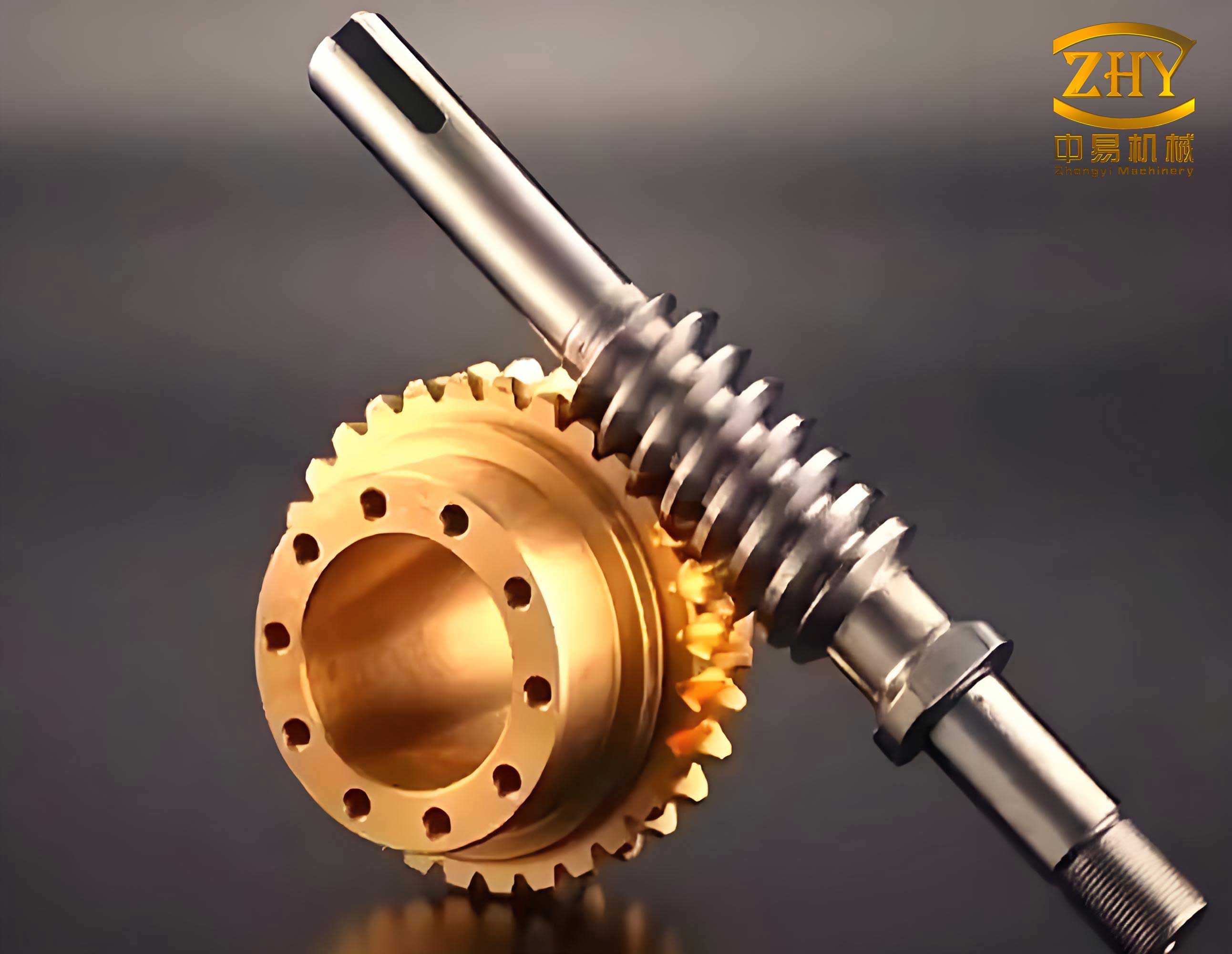
Previous research has laid substantial groundwork in modeling and optimizing these screw gears. Studies have developed mathematical models for the tooth surfaces and explored 3D modeling techniques, though often with acknowledged limitations in precision regarding full contact line calculation. Others have employed differential geometry and envelope theory to create accurate digital models for CNC machining. In terms of optimization, prior work has targeted parameters to improve lubrication performance or contact pattern distribution. A common limitation among these studies is that optimizations were not conducted based on a complete set of contact lines encompassing both primary and secondary contact zones. Consequently, the results may not fully represent the actual transmission performance of the screw gear pair. This analysis aims to bridge that gap by developing an optimization model that integrates the meshing quality of all contact points, thereby providing a more reliable and comprehensive approach to enhancing the performance of these advanced screw gears.
Establishment of the Optimization Model
Selection of Optimization Variables
For a planar double-enveloping torus screw gear drive, several factors influence its performance, including center distance \(a\), transmission ratio \(i_{12}\), number of worm threads \(z_1\), inclination angle of the generating plane \(\beta\), worm pitch diameter coefficient \(k_1\), and worm wheel base circle diameter coefficient \(k_2\). Typically, \(a\), \(i_{12}\), \(z_1\), and \(\beta\) are predetermined based on the application requirements and established design guidelines. Therefore, they are not treated as variables in this optimization. The focus is on the two most influential free parameters: the worm pitch diameter coefficient \(k_1\) and the worm wheel base circle diameter coefficient \(k_2\). The coefficient \(k_1\) directly determines the worm’s pitch diameter \(d_1 = k_1 \cdot a\), affecting the worm’s strength and stiffness. The coefficient \(k_2\) determines the worm wheel’s base circle diameter \(d_b = k_2 \cdot a\), which significantly influences the pressure angle and the overall contact pattern. Thus, the design variable vector is defined as:
$$ \mathbf{X} = [k_1, k_2]^T $$
While empirical ranges exist for these coefficients based on considerations like tooth strength, avoidance of undercutting, and tip thickness, their precise optimal values for maximizing overall meshing quality are not explicitly defined. The recommended ranges from classical screw gear theory are summarized in the table below:
| Parameter | Definition | Recommended Range |
|---|---|---|
| Worm Pitch Diameter Coefficient \(k_1\) | \(d_1 = k_1 \cdot a\) | \(i_{12} \le 10\): \(0.40 – 0.50\) \(10 < i_{12} \le 20\): \(0.36 – 0.42\) \(i_{12} \ge 20\): \(0.33 – 0.38\) |
| Wheel Base Circle Coefficient \(k_2\) | \(d_b = k_2 \cdot a\) | \(0.5 – 0.67\) |
Different pairs of \((k_1, k_2)\) within these intervals yield screw gear pairs with different tooth geometries and, consequently, different transmission performance characteristics. The objective is to find the pair that optimizes a holistic performance metric.
Definition of the Optimization Objective
A key metric for evaluating the lubrication condition and meshing quality in screw gears is the lubrication angle. For any point on the contact line, the lubrication angle \(\theta\) is the acute angle between the relative sliding velocity vector and the tangent to the contact line (or the contact line direction). A larger lubrication angle promotes the formation of a more stable elastohydrodynamic lubrication (EHL) film, reducing friction and wear, and thereby enhancing the transmission efficiency and lifespan of the screw gear pair.
Critically, the performance of a screw gear set cannot be accurately judged by the local conditions at a few points or on a single contact line. A holistic assessment requires considering the lubrication angles across all contact lines that appear on the tooth surface during the meshing cycle. Therefore, the optimization objective is to maximize the average lubrication angle across the entire set of discrete points representing all contact lines. Suppose the worm wheel tooth surface contains \(m\) discrete contact lines, and each line is sampled at \(n\) meshing points. Let \(\theta_{ij}\) denote the lubrication angle at the \(i\)-th point on the \(j\)-th contact line. The objective function \(\bar{\theta}\) is defined as the average of all these angles:
$$ \bar{\theta} = \frac{1}{m \cdot n} \sum_{j=1}^{m} \sum_{i=1}^{n} \theta_{ij} $$
Maximizing \(\bar{\theta}\) ensures the improvement of the overall, global lubrication condition for the screw gear pair.
Mathematical Formulation of Contact Lines and Lubrication Angle
To compute \(\theta_{ij}\), mathematical models for the contact lines and the relative velocity are required. The coordinate systems for the generation process are established as shown in the referenced figure. Let \(S_1(O_1-uvw)\) be the coordinate system attached to the generating plane. The worm is generated by the enveloping motion of this plane. The fundamental equation of meshing during this first enveloping process is given by \(\mathbf{n} \cdot \mathbf{v}^{(12)} = 0\), where \(\mathbf{n}\) is the unit normal vector of the generating plane and \(\mathbf{v}^{(12)}\) is the relative velocity vector between the plane and the worm blank.
Within the generating plane coordinate system \(S_1\), the plane’s normal vector is \(\mathbf{n} = [0, 0, 1]^T\). Through coordinate transformations to the worm coordinate system \(S_{2i}\), the normal vector \(\mathbf{n}_1\) and the relative velocity \(\mathbf{v}^{(12)}\) can be derived. Solving the meshing equation yields the relation between parameters \(u\) and \(v\) defining a point on the plane:
$$ v = \frac{(i_{12}\cos\beta + \cos\varphi_2)\sin\beta}{\sin\varphi_2} u + \frac{(a – r_b \sin\varphi_2)\sin\beta}{\sin\varphi_2} $$
Here, \(\varphi_2\) is the rotational angle of the generating plane, \(\beta\) is its inclination angle, \(a\) is the center distance, and \(r_b = k_2 \cdot a\) is the base circle radius of the worm wheel. This equation, combined with the coordinate transformations, defines the family of contact lines on the worm tooth surface (first envelope).
In the second enveloping process, the generated worm now acts as the tool to envelope the worm wheel. The coordinates of points on the worm surface are transformed through the new set of meshing relations between the worm and the wheel. The meshing condition for this second process is applied, ultimately yielding the set of all contact lines on the worm wheel tooth surface in its own coordinate system \(S_{3i}\). This set includes lines from both the primary and secondary contact zones. The position vector of any contact point on the wheel can be denoted as \(\mathbf{c} = [x_1, y_1, z_1]^T\).
The relative sliding velocity vector \(\mathbf{v}^{(12)}\) at the corresponding point during the first enveloping stage (which is critically related to the sliding condition in the final gear pair) is given by:
$$
\mathbf{v}^{(12)} =
\begin{bmatrix}
-i_{12}(v\sin\beta – r_b) + v\cos\beta\cos\varphi_2 \\
u i_{12} – v\cos\beta\sin\varphi_2 \\
-u\cos\varphi_2 + (v\sin\beta – r_b)\sin\varphi_2 + a
\end{bmatrix}
$$
The lubrication angle \(\theta_{ij}\) at the point \(\mathbf{c}_{ij}\) is then calculated as the angle between the relative velocity vector and the contact line direction. For a sufficiently dense sampling of points, the direction of the contact line can be approximated by the vector between adjacent points, or from the partial derivatives of the surface. The angle is computed using the dot product formula:
$$ \theta_{ij} = \arccos\left( \frac{|\mathbf{v}^{(12)}_{ij} \cdot \mathbf{t}_{ij}|}{\|\mathbf{v}^{(12)}_{ij}\| \|\mathbf{t}_{ij}\|} \right) $$
where \(\mathbf{t}_{ij}\) is the tangent vector along the contact line at that point.
Complete Optimization Model and Solution Strategy
Combining the objective and constraints, the complete nonlinear optimization model for the screw gear pair is:
Find: \(\mathbf{X} = [k_1, k_2]^T\)
To maximize: \(\bar{\theta}(\mathbf{X}) = \frac{1}{m \cdot n} \sum_{j=1}^{m} \sum_{i=1}^{n} \theta_{ij}(\mathbf{X})\)
Subject to:
$$
\begin{cases}
0.4 \le k_1 \le 0.5, & \text{if } i_{12} \le 10 \\
0.36 \le k_1 \le 0.42, & \text{if } 10 < i_{12} \le 20 \\
0.33 \le k_1 \le 0.38, & \text{if } i_{12} \ge 20 \\
0.5 \le k_2 \le 0.67
\end{cases}
$$
This is a constrained, nonlinear optimization problem where the objective function \(\bar{\theta}(\mathbf{X})\) is computationally expensive to evaluate and lacks an explicit algebraic form. Traditional gradient-based methods are not well-suited. Therefore, a Genetic Algorithm (GA), a robust population-based stochastic search method, is employed to find the global optimum. The GA works by evolving a population of candidate solutions (chromosomes encoding \(k_1\) and \(k_2\)) over generations. Selection, crossover, and mutation operators are applied to guide the population toward better solutions based on the fitness value, which is the average lubrication angle \(\bar{\theta}\). The parameters used for the GA in this study are listed below:
| GA Parameter | Setting |
|---|---|
| Encoding Type | Binary Code |
| Population Size | 20 |
| Maximum Generations | 100 |
| Crossover Type / Rate | Single-point / 100% |
| Mutation Type / Rate | Single-point / 8% |
| Fitness Function | \(\bar{\theta}(\mathbf{X})\) |
Case Study and Performance Analysis
To demonstrate the effectiveness of the proposed optimization method for screw gears, a specific case is analyzed.
Operating Conditions: Input power \(P_1 = 15 \text{ kW}\), input speed \(n_0 = 1000 \text{ rpm}\), transmission ratio \(i_{12} = 40\). The center distance is determined as \(a = 200 \text{ mm}\) from standard design tables, and the number of worm threads is \(z_1 = 1\). The initial design parameters are selected from the middle of their respective ranges: \(k_1^0 = 0.35\), \(k_2^0 = 0.55\).
Optimal Solution via Genetic Algorithm
The GA was executed with \(m = 100\) contact lines and \(n = 10\) points per line for fitness evaluation. The algorithm converged efficiently, finding the best population at the 32nd generation. This indicates good convergence behavior of the proposed optimization model for the screw gear design. The optimal parameters found were:
$$ \mathbf{X}_{opt} = [k_1^{opt}, k_2^{opt}]^T = [0.37, 0.62]^T $$
with a corresponding maximum average lubrication angle of \(\bar{\theta}_{max} = 1.3648\) radians.
Comparison of Screw Gear Performance Before and After Optimization
The transmission performance of the screw gear pair, characterized by both micro- and macro-meshing quality, is compared for the initial and optimal parameter sets.
Micro-Meshing Quality (Lubrication Angle Distribution)
The lubrication angles for all 1000 sampled points (100 lines × 10 points) were calculated. The key statistical metrics are presented in the table below:
| Performance Metric | Initial Design (rad) | Optimized Design (rad) | Improvement |
|---|---|---|---|
| Maximum Lubrication Angle | 1.4975 | 1.5568 | +3.96% |
| Minimum Lubrication Angle | 0.9547 | 1.1222 | +17.55% |
| Average Lubrication Angle \(\bar{\theta}\) | 1.2427 | 1.3648 | +9.82% |
The results clearly show a substantial improvement in micro-meshing quality. The optimized screw gear pair exhibits a higher average lubrication angle. More importantly, the minimum lubrication angle increased significantly by over 17%, indicating that the worst-case lubrication condition on the tooth surface has been markedly improved. This leads to better overall wear resistance and efficiency for the screw gear drive.
Macro-Meshing Quality (Contact Pattern and Zone)
The macro-meshing quality relates to the spatial distribution of contact lines and the size of the contact zone on the worm wheel tooth. A larger, well-distributed contact zone indicates better load-sharing capabilities and structural utilization of the screw gear teeth.
Using the optimal parameters, the complete set of contact lines (primary and secondary) on the worm wheel tooth was plotted. Visual comparison of the entrance and exit contact lines before and after optimization reveals a significant change. After optimization, these boundary contact lines move closer to the edges of the worm wheel tooth. This shift results in a notable expansion of the total contact area on the tooth flank.
The expansion of the contact zone directly translates to improved load distribution. Stress concentrations are reduced, and the load-carrying capacity of the screw gear pair is enhanced. This improvement in macro-meshing quality complements the gains in micro-meshing quality, confirming that the holistic optimization approach successfully improves the overall transmission performance of the screw gear set.
Conclusion
This article presented a comprehensive methodology for the holistic optimization of planar double-enveloping torus screw gear drives. The core of the method is an optimization model that maximizes the average lubrication angle calculated across all contact lines on the worm wheel tooth surface, thereby considering the complete meshing behavior of the screw gear pair. The model incorporates accurate mathematical descriptions of the generation process and contact geometry. A Genetic Algorithm was effectively employed to solve this constrained nonlinear optimization problem.
The case study demonstrated the efficacy of the approach. Compared to an initial design based on standard coefficient ranges, the optimized screw gear design showed significant improvements: a 9.8% increase in the average lubrication angle and a remarkable 17.6% increase in the minimum lubrication angle. Furthermore, the macro-scale contact zone on the tooth was enlarged, indicating superior load distribution. These simultaneous improvements in both micro- and macro-meshing quality validate the holistic nature of the optimization model. The proposed method provides a powerful and systematic tool for designers to select optimal geometric parameters, enabling the development of high-performance, durable, and efficient screw gear transmissions for demanding industrial applications.