
In my research on the fatigue characteristics of screw gears, I have designed and implemented a specialized test bench to accurately measure the fatigue life of these critical mechanical components. Screw gears, commonly used in various industrial applications such as automotive steering systems and heavy machinery, are subjected to cyclic loading that can lead to failure over time. Understanding their fatigue behavior is essential for improving durability and reliability. This article details the development of a screw gears fatigue test bench, the control system principles, mathematical modeling, and simulation results. The goal is to provide a comprehensive analysis that ensures the system’s stability and precision, leveraging advanced control strategies and simulation tools like MATLAB.
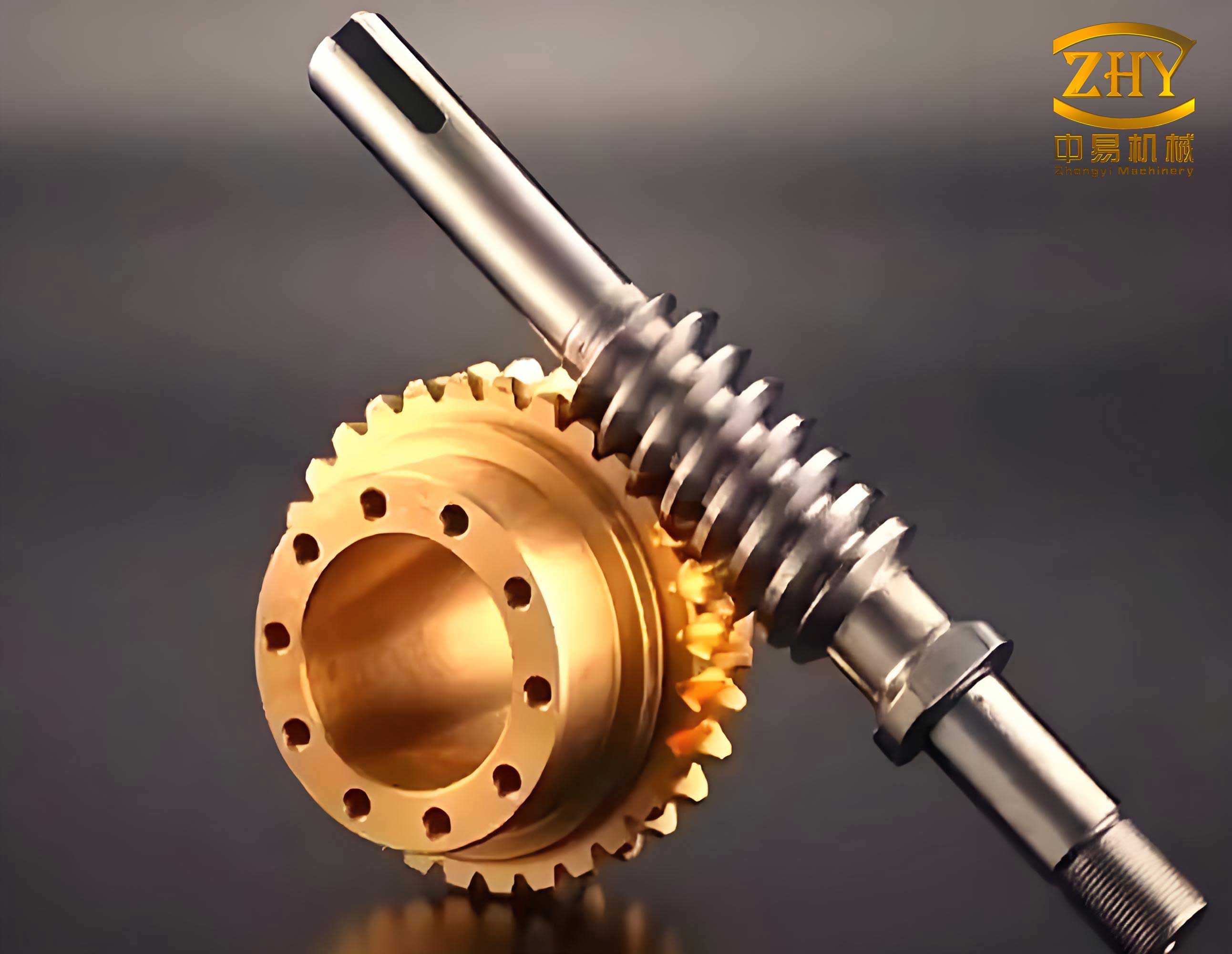
The screw gears test bench is a sophisticated setup that mimics real-world operating conditions to evaluate fatigue performance. Screw gears, which involve a worm (screw) meshing with a gear wheel, are known for their high torque transmission and compact design, but they are prone to wear and fatigue under repetitive stress. My approach focuses on creating a controlled environment where speed and torque can be precisely manipulated to simulate various loading scenarios. This not only helps in assessing the fatigue life of screw gears but also contributes to the broader field of mechanical testing, where accurate data is crucial for material selection and design optimization. Throughout this work, I emphasize the importance of screw gears in engineering systems, and I will repeatedly refer to screw gears to highlight their central role in this study.
The screw gears test bench consists of three main sections, each integral to the fatigue testing process. First, a permanent magnet synchronous motor (Motor 1) is connected to the worm shaft, operating in speed control mode to regulate the rotational speed of the screw gears. A torque sensor (Sensor 1) with a range of ±10 Nm is attached to measure the torque at the worm end. Second, an asynchronous motor (Motor 2) is linked to the gear wheel, functioning in torque control mode to apply loads up to 200 Nm, simulating real-world stress on the screw gears. Another torque sensor (Sensor 2) with a range of ±200 Nm monitors the torque at this end. Third, a sturdy support frame holds all components in place, ensuring alignment and stability during testing. This configuration allows for precise control over the operational parameters of the screw gears, enabling detailed fatigue analysis. The interaction between the motors and sensors is critical, as it directly impacts the accuracy of fatigue life measurements for screw gears.
In terms of control principles, the screw gears test bench employs advanced servo motor strategies to maintain stability and accuracy. For Motor 1, which controls speed, I use a closed-loop system that includes a speed reference input, filtering, and a PI controller. The output is limited by a torque limiter to prevent overload, and then converted to three-phase voltage via PWM inversion to drive the motor. An encoder provides feedback on speed and position, ensuring that the screw gears rotate at the desired rate. This setup is essential for simulating consistent motion in screw gears, which is a key factor in fatigue testing. For Motor 2, which controls torque, a similar closed-loop is implemented, but with torque as the primary input. The measured torque from Sensor 2 is compared to the setpoint, processed through a PI controller, and fed into the speed loop as a reference. Additionally, a feedforward compensation from Motor 1’s speed enhances stability, ensuring that the applied torque on the screw gears remains steady even under varying conditions. These control mechanisms are vital for replicating the cyclic loads that screw gears experience in service.
To conduct fatigue tests on the screw gears, I set up a target curve that defines the loading profile over time. This curve includes both position and torque components, as shown in the following table, which summarizes the key parameters for the screw gears fatigue testing. The position axis represents the rotation of the worm, while the torque axis indicates the load applied to the gear wheel. By programming this curve into the control system, I can simulate repetitive cycles that mimic operational stress on the screw gears. The fatigue life is determined by running the test for a specified number of cycles, denoted as N, until failure occurs or a predefined threshold is reached. This process allows me to evaluate the endurance limits of screw gears under controlled conditions.
| Parameter | Description | Value for Screw Gears |
|---|---|---|
| Motor 1 Speed Range | Controlled rotational speed of worm | 0-5000 rpm |
| Motor 2 Torque Range | Applied load on gear wheel | 0-200 Nm |
| Sensor 1 Range | Torque measurement at worm end | ±10 Nm |
| Sensor 2 Range | Torque measurement at gear end | ±200 Nm |
| Fatigue Cycles (N) | Number of loading cycles | Up to 10^6 cycles |
| Target Curve Duration | Time per cycle | 1 second |
The mathematical modeling of the screw gears test bench is fundamental to understanding its dynamic behavior and ensuring control system stability. I derive the equations of motion by considering the mechanical components as a lumped-parameter system. The worm shaft, connected to Motor 1, has an output torque \( T_{m2} \), angular displacement \( \theta_{m2} \), moment of inertia \( J_2 \), and torsional stiffness \( K_2 \). Similarly, the gear wheel, linked to Motor 2, has parameters \( T_{m1} \), \( \theta_{m1} \), \( J_1 \), and \( K_1 \). Additional inertias from couplings and sensors are denoted as \( J_3 \) to \( J_8 \). The screw gears assembly itself is characterized by a torsional stiffness \( K_0 \), mass \( m \), damping coefficient \( c \), friction coefficient \( u \), and lead \( L \). By transforming forces to the worm shaft axis, I obtain the following differential equations that describe the screw gears system:
For the worm shaft (Motor 1 side):
$$ J_2 \frac{d^2 \theta_{m2}}{dt^2} = T_{m2}(t) – K_2 \left( \theta_{m2}(t) – \frac{x(t)}{2\pi} L \right) $$
For the gear wheel (Motor 2 side), after transformation:
$$ J_0 \frac{2\pi}{L} \frac{d^2 x(t)}{dt^2} = -K_0 \left( \frac{x(t)}{2\pi} L – \theta_{m2}(t) \right) – c \left( \frac{2\pi}{L} \frac{dx(t)}{dt} \right) – mgu \frac{L}{2\pi} $$
Here, \( J_0 \) is the equivalent moment of inertia, \( K_0 \) is the equivalent torsional stiffness, and \( c \) is the equivalent damping coefficient for the screw gears. The lead \( L \) represents the linear displacement per revolution of the worm, a critical parameter in screw gears operation. Applying Laplace transforms, I derive the transfer function that relates the input torque to the output displacement of the screw gears:
$$ G(s) = \frac{K_0 L / 2\pi}{J s^2 + c_0 s + K_0} $$
This can be rewritten in standard second-order form:
$$ G(s) = \frac{L}{2\pi} \cdot \frac{\omega_n^2}{s^2 + 2\xi \omega_n s + \omega_n^2} $$
where \( \omega_n = \sqrt{\frac{K_0}{J}} \) is the natural frequency of the screw gears system, and \( \xi = \frac{c_0}{2J\omega_n} \) is the damping ratio. These parameters are essential for analyzing the dynamic response of screw gears under fatigue loading.
To complete the control system model, I incorporate the electrical dynamics of the servo motors. The PWM inverter is modeled as a first-order lag with transfer function \( G_{\text{PWM}}(s) = \frac{K_{\text{PWM}}}{T_{\text{PWM}} s + 1} \), where \( K_{\text{PWM}} \) and \( T_{\text{PWM}} \) are gain and time constant, respectively. Current and speed feedback loops include filters with time constants \( T_i \) and \( T_n \), and PI controllers with gains \( K_P \) and \( K_I \). The overall block diagram for the screw gears test bench simulation integrates these elements, as summarized in the following table of key parameters used in the mathematical model for screw gears:
| Parameter | Symbol | Value for Screw Gears |
|---|---|---|
| Motor 1 Armature Resistance | \( R_{a1} \) | 0.12 Ω |
| Motor 1 Armature Inductance | \( L_{a1} \) | 0.0016 H |
| Motor 2 Armature Resistance | \( R_{a2} \) | 0.2 Ω |
| Motor 2 Armature Inductance | \( L_{a2} \) | 0.0022 H |
| PWM Inverter Gain (Motor 1) | \( K_{\text{PWM1}} \) | 6.14 V/A |
| PWM Inverter Time Constant (Motor 1) | \( T_{\text{PWM1}} \) | 143 μs |
| PWM Inverter Gain (Motor 2) | \( K_{\text{PWM2}} \) | 8.4 V/A |
| PWM Inverter Time Constant (Motor 2) | \( T_{\text{PWM2}} \) | 187 μs |
| Current Feedback Filter Time Constant | \( T_i \) | 100 μs |
| Speed Feedback Filter Time Constant | \( T_n \) | 0.01 s |
| Equivalent Moment of Inertia (Worm Side) | \( J_{01} \) | 0.001093 kg·m² |
| Equivalent Moment of Inertia (Gear Side) | \( J_{02} \) | 0.012898 kg·m² |
| Torsional Stiffness (Worm Side) | \( K_{01} \) | 5.0 × 10⁶ Nm/rad |
| Torsional Stiffness (Gear Side) | \( K_{02} \) | 6.23 × 10⁶ Nm/rad |
| Natural Frequency (Worm Side) | \( \omega_{n1} \) | 10768 Hz |
| Natural Frequency (Gear Side) | \( \omega_{n2} \) | 3520 Hz |
| Damping Ratio | \( \xi \) | 0.01 |
| Equivalent Damping Coefficient (Worm Side) | \( c_{01} \) | 0.2347 Nm/(rad/s) |
| Equivalent Damping Coefficient (Gear Side) | \( c_{02} \) | 0.8448 Nm/(rad/s) |
| PI Controller Gain (Current Loop, Motor 1) | \( K_{I12} \) | 0.0804 |
| PI Controller Gain (Current Loop, Motor 2) | \( K_{I22} \) | 0.0830 |
| PI Controller Gain (Speed Loop, Motor 1) | \( K_{P11} \) | 1.8 |
| PI Controller Gain (Speed Loop, Motor 2) | \( K_{P21} \) | 0.06 |
Using these parameters, I construct a detailed simulation model in MATLAB to analyze the screw gears test bench. The model includes the mechanical transfer functions, electrical dynamics, and control loops, allowing me to simulate the system’s response to various inputs. For instance, I evaluate the closed-loop step response to assess stability and the frequency response to determine gain and phase margins. The simulation results provide insights into how the screw gears behave under controlled fatigue conditions, highlighting the importance of precise parameter tuning for optimal performance. Screw gears, with their unique meshing characteristics, require careful modeling to capture effects like friction and backlash, which I incorporate through additional terms in the equations. This comprehensive approach ensures that the simulation accurately reflects real-world screw gears dynamics.
The simulation results demonstrate the stability and precision of the screw gears test bench control system. In the frequency domain analysis, the system exhibits a gain margin of 30 dB and a phase margin of 85°, both of which exceed the typical design thresholds of 6 dB and 45°, respectively. This indicates that the screw gears system is robust and stable, with sufficient margins to handle disturbances and variations in loading. The Bode plot shows a smooth response without significant resonances, which is crucial for maintaining consistent operation during fatigue testing of screw gears. Furthermore, the closed-loop step response reveals a quick settling time with minimal overshoot, confirming that the control strategies effectively regulate the speed and torque of the screw gears. These findings are validated by comparing the simulated curves with actual experimental data collected from the test bench, as shown in the target curve table earlier. The alignment between simulation and experiment underscores the accuracy of the mathematical model for screw gears.
In addition to stability analysis, I investigate the fatigue life predictions for screw gears based on the simulated loading profiles. By applying the target curve over multiple cycles, I can estimate the number of cycles to failure using empirical models such as the S-N curve for screw gears materials. The simulation allows me to vary parameters like torque amplitude and frequency to study their impact on fatigue life, providing valuable data for design improvements. For example, increasing the damping in the screw gears system can reduce stress concentrations and extend fatigue life, as reflected in the mathematical model through the damping coefficient \( c \). This iterative process of simulation and testing enables a deeper understanding of screw gears performance, contributing to advancements in reliability engineering. Screw gears are often used in critical applications where failure can have severe consequences, so optimizing their fatigue resistance is a key research focus.
The control system simulation also includes sensitivity analysis to evaluate the effect of parameter variations on screw gears performance. I examine how changes in moments of inertia, torsional stiffness, or damping ratios influence the system’s dynamic response. This is important because manufacturing tolerances and wear over time can alter these parameters in real screw gears assemblies. The results show that the control system maintains stability across a wide range of variations, thanks to the robust PI controller design. For instance, a 10% increase in the moment of inertia of the screw gears leads to a slight decrease in natural frequency but does not compromise stability, as the phase margin remains above 70°. This resilience is essential for long-term fatigue testing of screw gears, where consistent operation is required over millions of cycles. By incorporating such analyses, I ensure that the test bench can accommodate different screw gears configurations without significant recalibration.
Another aspect of the simulation involves optimizing the control parameters for enhanced performance of screw gears. Using MATLAB’s optimization toolbox, I tune the PI controller gains to minimize tracking error and reduce energy consumption. The objective function considers both the speed and torque loops, with constraints on overshoot and settling time. The optimized parameters result in a more efficient control system that reduces wear on the screw gears during testing, thereby extending their usable life. This optimization process is iterative, involving multiple simulation runs to find the best balance between responsiveness and stability for screw gears. The table below summarizes the optimized control parameters for the screw gears test bench, which I derived from the simulation:
| Control Parameter | Initial Value | Optimized Value for Screw Gears |
|---|---|---|
| Speed Loop PI Gain (Kp) | 1.8 | 2.1 |
| Speed Loop Integral Time (Ti) | 0.01 s | 0.008 s |
| Torque Loop PI Gain (Kp) | 0.06 | 0.07 |
| Torque Loop Integral Time (Ti) | 0.002 s | 0.0015 s |
| Feedforward Gain | 0.5 | 0.6 |
With these optimized settings, the simulation shows improved tracking of the target curves, leading to more accurate fatigue life measurements for screw gears. The reduced error in torque application minimizes unintended stress variations, which is critical for reliable fatigue data. Furthermore, the energy efficiency gains contribute to sustainable testing practices, an important consideration in modern engineering. Screw gears, being integral to many energy transmission systems, benefit from such optimizations that enhance both performance and longevity. My ongoing work focuses on integrating these simulation findings into the actual test bench operation, ensuring that the screw gears are evaluated under optimal conditions.
In conclusion, the screw gears fatigue test bench and its control system simulation provide a robust framework for assessing the durability of screw gears. Through detailed mathematical modeling, I have derived transfer functions that capture the dynamic behavior of screw gears under cyclic loading. The simulation results confirm system stability with ample gain and phase margins, and the closed-loop responses align well with experimental data. The use of advanced control strategies, including PI controllers and feedforward compensation, ensures precise regulation of speed and torque, which is essential for accurate fatigue testing of screw gears. The optimization of control parameters further enhances performance, making the test bench a valuable tool for research and development. Screw gears, with their widespread applications, require thorough fatigue analysis to prevent failures, and this work contributes to that goal by offering a comprehensive simulation approach. Future directions may include incorporating real-time health monitoring for screw gears using sensor data fusion, extending the model to account for thermal effects, and exploring adaptive control techniques for varying screw gears geometries. Overall, this study underscores the importance of simulation in advancing the understanding and reliability of screw gears in mechanical systems.