
In modern mechanical manufacturing, the pursuit of higher efficiency, greater precision, and longer component life is relentless. Gear hobbing stands as a pivotal process for generating high-quality gears. The surface roughness of gear teeth, often overlooked compared to geometric accuracy, is a critical quality attribute. It directly influences functional performance, affecting noise generation, lubrication efficiency, wear resistance, and ultimately, the contact fatigue life of the gear pair. A rougher surface accelerates wear and creates stress concentrators that can precipitate premature fatigue failure. This investigation delves into the specific influence of tool-related parameters—namely the hob’s rake face quality, top edge fillet radius, and cutting edge preparation—on the resultant surface roughness when hobbing 20CrMnTi alloy steel. The goal is to provide actionable insights for process optimization where material and gear geometry are fixed constraints.
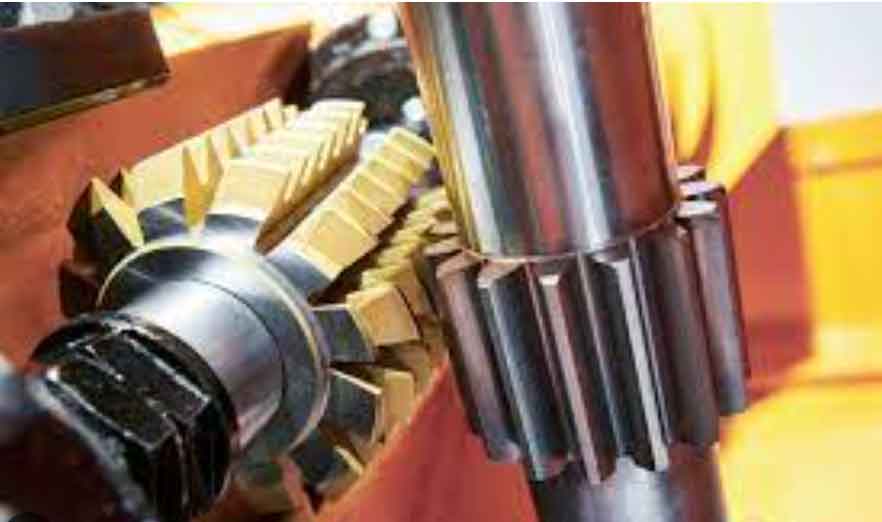
The experimental foundation of this study was built upon systematic gear hobbing tests. The workpiece material selected was 20CrMnTi, a case-hardening steel renowned for its good toughness, hardenability, and widespread use in high-strength transmission components like automotive gears. A series of gear blanks were prepared from this material. The machining was conducted on a Y3150 hobbing machine to ensure process stability. The primary cutting tool was an A-grade, high-speed steel (HSS) hob (material: 6542 Tungsten-Molybdenum HSS) with a module of 2 mm and a pressure angle of 20°. To isolate the effects of the parameters under investigation, specific hobs were prepared or selected with variations in their rake surface finish, top edge geometry, and edge hone.
A crucial preliminary step was establishing a reliable and consistent methodology for measuring gear tooth surface roughness. The complex, curved nature of an involute tooth flank presents a challenge, as measurements taken in different directions—along the profile (tooth form) versus along the lead (face width)—yield different values due to the directionality of the cutting marks left by the gear hobbing process. An initial study was performed on 20 sample gears. Roughness was measured using a stylus profilometer (needle描法) at three distinct locations on the tooth flank: near the tip, at the pitch diameter, and near the root. This was done separately for both the profile direction and the lead direction.
| Measurement Direction | Average Roughness Rz Range (μm) | Remarks |
|---|---|---|
| Along Tooth Profile | 4.95 – 6.18 | Higher values, greater variation. |
| Along Tooth Lead (Face Width) | 1.25 – 1.87 | Lower values, more consistent. |
The data clearly indicated that measurements taken along the tooth lead direction exhibited significantly lower and more consistent roughness values (Rz between 1.25 and 1.87 μm) compared to those taken along the tooth profile (Rz between 4.95 and 6.18 μm). Furthermore, measurements at the tooth root in the profile direction were often problematic due to the small radius of curvature, risking stylus over-travel. Therefore, for all subsequent experiments in this study, surface roughness was measured exclusively in the tooth lead direction to ensure reliability and comparability. A correlation analysis showed that the roughness values from the two directions followed a linear relationship, confirming that optimizing for lead-direction roughness inherently improves profile-direction quality.
Experimental Investigation: The Influence of Hob Rake Face Quality
The first experimental series focused on the quality of the hob’s rake face, which is the surface over which chips flow during the gear hobbing cut. A smoother rake face reduces friction, chip adhesion, and built-up edge formation, potentially leading to a better finish on the workpiece. Three sets of nine 20CrMnTi gear blanks were prepared. Each set was machined using a hob with a distinctly different rake surface roughness (Ra). All other gear hobbing parameters were held constant: cutting speed (vc) = 35 m/min, feed rate (f) = 2.0 mm/rev.
| Workpiece Set | Hob Rake Face Roughness, Ra (μm) | Resulting Gear Surface Roughness, Rz (μm) – Individual Samples | Mean Rz (μm) |
|---|---|---|---|
| A | 3.2 | 5.472, 6.824, 4.573 | 5.623 |
| B | 1.6 | 3.665, 4.170, 5.391 | 4.409 |
| C | 0.8 | 3.093, 2.881, 2.634 | 2.869 |
The results are compelling. The set machined with the hob having the finest rake face (Ra = 0.8 μm) achieved an average surface roughness (Rz) of 2.869 μm. This is a marked improvement over the set machined with the roughest hob rake face (Ra = 3.2 μm), which yielded an average Rz of 5.623 μm. Statistical representation via a box plot would show a clear downward trend in both the median and spread of Rz values as the hob’s rake face roughness decreases. This confirms that a high-quality, finely finished rake face on the hob is a significant factor in achieving superior surface finish during gear hobbing. In practice, this emphasizes the importance of proper hob grinding techniques and potentially the application of advanced surface treatments or coatings to maintain a smooth rake surface throughout the tool’s life.
Experimental Investigation: The Role of Hob Top Edge Fillet Radius
In gear hobbing, the hob’s top edge (the edge connecting the rake face to the clearance face on the tooth tip) does not simply have a sharp corner. It features a controlled fillet or radius. This top edge fillet radius (R) plays a dual role: it generates the trochoidal root fillet on the gear and significantly influences the surface finish at the gear tooth root. An excessively small fillet can lead to a sharp, stress-concentrating root on the gear and cause rapid wear of the hob’s own tip. An excessively large fillet may cause undercutting or interference in the gear root, affecting mesh smoothness. For standard hobs, this radius is derived from the hob geometry. For a zero-rake-angle hob, the theoretical top edge fillet radius can be expressed as:
$$ R = \frac{(S_a – 2h_a \cdot \tan\alpha_a) \cdot \cos\alpha_a}{2(1 – \sin\alpha_a)} $$
where $S_a$ is the hob tooth thickness at the reference circle, $h_a$ is the hob addendum, and $\alpha_a$ is the hob pressure angle.
To investigate its effect, two hobs with calculated top edge fillet radii of R1 = 1.882 mm and R2 = 1.617 mm were used. Two sets of three 20CrMnTi blanks each were machined under identical gear hobbing conditions (vc = 35 m/min, f = 2.0 mm/rev).
| Workpiece Set | Hob Top Edge Fillet Radius, R (mm) | Resulting Gear Surface Roughness, Rz (μm) – Individual Samples | Mean Rz (μm) |
|---|---|---|---|
| D | 1.882 | 2.865, 3.742, 2.771 | 3.126 |
| E | 1.617 | 5.384, 4.970, 4.656 | 5.003 |
The data demonstrates a strong correlation. The hob with the larger top edge fillet radius (R = 1.882 mm) produced gears with an average surface roughness of 3.126 μm, which is substantially better than the 5.003 μm average from the hob with the smaller radius (R = 1.617 mm). This suggests that within the permissible design limits that avoid gear root interference, specifying a larger top edge fillet radius on the hob can be an effective strategy for enhancing the surface quality of the gear tooth, particularly in the critical root region. The larger radius likely provides a more gradual engagement and reduced specific pressure during the cutting of the root area.
Experimental Investigation: The Impact of Cutting Edge Preparation (Honing)
The micro-geometry of the cutting edge, specifically its sharpness or intentional bluntness (honing), is a well-known factor in tool performance and workpiece finish. A perfectly sharp edge is fragile and prone to micro-chipping, which can degrade surface finish. A controlled honing process creates a small, uniform radius or chamfer (edge hone) that increases edge strength, reduces chipping, and can improve finish by providing a more consistent cutting action. For this experiment, two new, identical HSS hobs (40 mm bore, 143 mm length) were subjected to different edge preparation processes. One hob received a robust honing with a target edge radius of approximately 50 μm. The other received a much lighter honing, resulting in an edge radius of approximately 10 μm. Five 20CrMnTi gear blanks were machined with each hob under standard gear hobbing parameters.
| Hob Edge Condition | Target Edge Hone Radius (μm) | Resulting Gear Surface Roughness, Rz (μm) – Individual Samples | Mean Rz (μm) |
|---|---|---|---|
| Large Hone | ~50 | 2.751, 3.820, 2.913, 2.665, 2.487 | 2.927 |
| Small Hone | ~10 | 4.533, 3.781, 4.753, 5.439, 3.826 | 4.466 |
The difference is statistically and practically significant. The hob with the larger, 50 μm honed edge produced gears with an average surface roughness of 2.927 μm. In contrast, the hob with the smaller, 10 μm honed edge yielded a markedly poorer average roughness of 4.466 μm. A comparative box plot analysis would reveal not only a lower median but also a tighter distribution of values for the large-hone hob. This finding underscores that in gear hobbing of 20CrMnTi, a suitably large cutting edge hone is beneficial for surface finish. The honed edge resists initial wear and micro-fractures better, maintaining its geometry longer and producing a more stable cutting process, which translates to a smoother gear surface.
Discussion and Synthesis of Findings
The collective results from these three targeted experimental series paint a clear picture for optimizing gear hobbing surface finish when machining 20CrMnTi. The mechanisms are interlinked but distinct:
1. Rake Face Quality: A superior rake face finish minimizes the interaction forces between the chip and the tool. It reduces the likelihood of material adhesion (built-up edge) and results in a cleaner shearing process. This directly leads to a reduction in the height and irregularity of the feed marks left on the workpiece, which is reflected in a lower Rz value. This parameter is directly controllable through tool grinding and maintenance protocols.
2. Top Edge Fillet Radius: This parameter governs the cutting conditions at the gear tooth root—a region of complex engagement and high stress in service. A larger fillet radius increases the effective cutting edge angle at the tip, reducing the sheer stress on the tool material and providing a more forgiving, gradual material removal process in the root area. This mitigates tearing or plowing effects, resulting in a smoother root surface. Its optimization must be balanced with gear design constraints to avoid undercutting.
3. Cutting Edge Hone: The edge preparation transcends mere sharpness. An appropriately sized hone (e.g., 50 μm) acts as a microscopic reinforcement for the cutting edge. It prevents the rapid formation of micro-notches and chipping that invariably occur with a very sharp but fragile edge, especially when cutting tough materials like 20CrMnTi. A stable edge geometry, maintained over more cutting cycles, ensures consistent cutting forces and chip formation, which is fundamental to achieving a uniform, high-quality surface finish throughout a production batch.
These factors are often more immediately actionable than altering fundamental gear hobbing parameters like speed and feed, which are typically optimized for productivity and tool life. They point toward a philosophy of “tool-condition-centric” optimization.
Conclusion and Practical Implications
This focused investigation into the gear hobbing of 20CrMnTi alloy steel has successfully identified and quantified several key tool-geometry-based factors that exert significant control over the final gear tooth surface roughness. The following conclusions can be drawn, providing a guide for manufacturing engineers and tool designers:
- Hob Rake Face Finish is Critical: Investing in hobs with a high-quality, finely ground rake surface (low Ra value) or implementing stringent re-grinding standards directly pays dividends in improved gear surface quality. Advanced surface engineering of the hob can further enhance this effect.
- Optimize the Top Edge Fillet: Within the geometric boundaries set by the gear design to prevent root interference, specifying a larger top edge fillet radius on the hob is a recommended practice for achieving a smoother finish on the gear tooth flanks, particularly in the root region. This also benefits hob life.
- Embrace Strategic Edge Honing: Contrary to the simplistic desire for absolute sharpness, a controlled and sufficiently large cutting edge hone (e.g., on the order of 50 μm for this material and process) is highly advantageous. It stabilizes the cutting process from the very first cut, protecting the edge and consistently generating a superior surface finish compared to a very lightly honed or “sharp” edge.
In summary, when the workpiece material (20CrMnTi) and gear macro-geometry are fixed, significant gains in surface quality from the gear hobbing process can be realized through deliberate optimization of the tool’s micro-geometry: its rake face, top edge, and cutting edge. This research provides a foundational understanding for such optimization. Future work could involve multi-factorial designed experiments to model the interactions between these parameters and standard cutting parameters, as well as extending the study to other high-performance gear steels and coated hobs.