
The evolution of manufacturing towards sustainability and intelligence imposes new demands on traditional processes like gear hobbing. Gear hobbing is a critical machining operation for producing cylindrical gears. Selecting appropriate parameters, including the hob tool geometry (e.g., diameter, number of starts) and cutting control settings (e.g., spindle speed, axial feed), is paramount for simultaneously improving key performance indicators such as carbon emissions, machining time, and product quality. Employing multi-objective heuristic algorithms to find optimal parameter sets that balance these often-conflicting goals presents a reliable and efficient pathway.
Commonly used algorithms like the Multi-objective Weighted Mean of Vectors (MOINFO), Multi-objective Grey Wolf Optimization (MOGWO), and Multi-objective Dragonfly Algorithm (MODA) have been applied to gear hobbing parameter optimization. However, each algorithm has inherent limitations: MOINFO is sensitive to weight settings and struggles with balancing exploration and exploitation; MOGWO, while possessing strong global search capabilities, can easily converge to local optima and is parameter-sensitive; MODA suffers from high computational complexity and sensitivity to initial population distribution. Crucially, the performance of these algorithms varies significantly across different problem instances and datasets. Selecting a sub-optimal algorithm for a specific gear hobbing scenario can lead to unsatisfactory parameter sets, raising a fundamental question: which heuristic algorithm is the most suitable for a given optimization task?
Selection hyper-heuristic algorithms offer a promising solution to this algorithm selection problem. Operating at a higher level of abstraction, a hyper-heuristic manages a set of low-level heuristic algorithms (the heuristic pool) and dynamically selects or combines them based on their performance during the search process. This approach automates the algorithm selection process, adapting to the problem’s landscape. While successful in domains like vehicle routing, scheduling, and task assignment, the application of hyper-heuristics to gear hobbing parameter optimization remains unexplored.
Furthermore, different users or production scenarios have varying, often vaguely expressed, priorities regarding machining performance. A typical requirement might be “high priority on quality, medium priority on time and carbon emissions.” Translating such fuzzy preferences into a definitive choice from a set of optimal (Pareto-optimal) parameter solutions is a non-trivial decision-making problem.
To address these dual challenges—automated algorithm selection and decision-making under fuzzy preferences—this paper proposes an integrated method for gear hobbing tool and control parameter optimization and decision-making. The core idea involves: first, determining realistic bounds for hobbing parameters using historical data via spectral clustering; second, employing an improved multi-objective selection hyper-heuristic algorithm to obtain a set of Pareto-optimal parameter solutions; and third, applying a fuzzy Technique for Order Preference by Similarity to Ideal Solution (TOPSIS) method to rank these solutions based on the user’s fuzzy performance preferences and select the most satisfactory one.
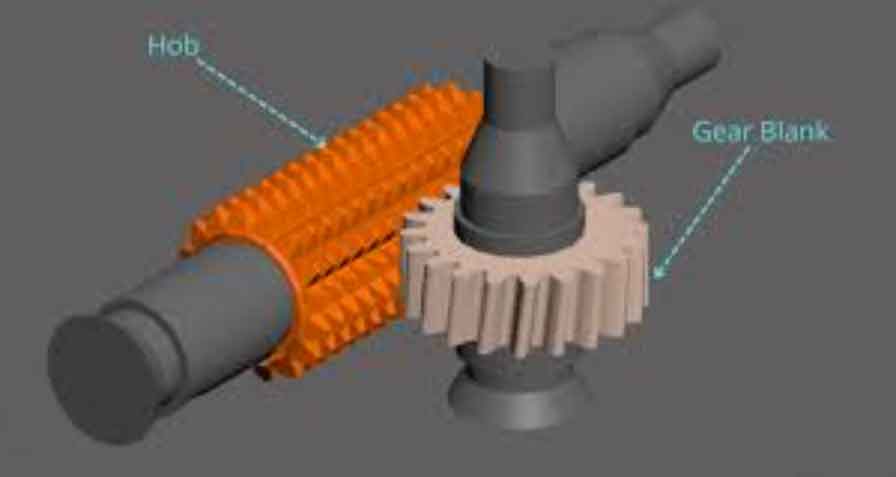
The proposed method’s primary advantage lies in its adaptive optimization capability. By dynamically selecting the most promising low-level heuristic, it effectively balances global exploration and local exploitation, leading to higher-quality Pareto fronts for the complex gear hobbing parameter space. Concurrently, the integration of fuzzy TOPSIS provides a robust and intuitive mechanism for incorporating imprecise human preferences into the final decision, significantly enhancing the practicality and user-centricity of the optimization outcome.
Problem Formulation and Methodological Framework
The gear hobbing tool and control parameter optimization and decision problem is formally defined as $$Y = (W, L)$$, where $$W = {f_1, f_2, …, f_7}$$ represents the workpiece attributes defining the specific gear to be machined, and $$L = {l_1, l_2, …, l_m}$$ is a set of historical machining samples. Each sample $$l_i$$ consists of a pair: the workpiece attributes $$\{f_{i,1}, f_{i,2}, …, f_{i,7}\}$$ and the corresponding successful machining parameters $$\{p_{i,1}, p_{i,2}, p_{i,3}, p_{i,4}\}$$. The attributes and parameters are detailed in Table 1. Parameters $$p_1$$ (hob diameter) and $$p_2$$ (number of hob starts) are discrete, while $$p_3$$ (spindle speed) and $$p_4$$ (axial feed) are continuous.
| Workpiece Attribute | Description | Hobbing Parameter | Description |
|---|---|---|---|
| $$f_1$$ | Module (mm) | $$p_1$$ | Hob Outer Diameter (mm) |
| $$f_2$$ | Pressure Angle (rad) | $$p_2$$ | Number of Hob Starts |
| $$f_3$$ | Number of Teeth | $$p_3$$ | Spindle Speed (rpm) |
| $$f_4$$ | Helix Angle (rad) | $$p_4$$ | Axial Feed (mm/rev) |
| $$f_5$$ | Workpiece Outer Diameter (mm) | ||
| $$f_6$$ | Face Width (mm) | ||
| $$f_7$$ | Cutting Depth (mm) |
The optimization targets are Carbon Emissions ($$CE$$), Machining Time ($$T$$), and Quality ($$Q$$). $$CE$$ aggregates emissions from energy consumption, tool wear, and cutting fluid usage. $$T$$ is defined as the duration of the core cutting phase. $$Q$$ is a composite metric derived from the weighted sum of gear errors (profile, helix) and surface roughness.
Given $$L$$ and the models for $$CE, T,$$ and $$Q$$, the objective is to find the most suitable hobbing parameters for $$W$$ that align with the user’s fuzzy preferences. The proposed methodological framework consists of three main steps, with Step 2 being the most critical.
Step 1: Parameter Space Definition. The spectral clustering algorithm is applied to historical data $$L$$ to cluster similar machining scenarios. The minimum and maximum values of parameters $$p_1$$ to $$p_4$$ within the identified cluster relevant to $$W$$ are used to define the search space bounds $$[p_{j,min}, p_{j,max}]$$ for the optimization.
Step 2: Multi-objective Hyper-heuristic Optimization. An improved multi-objective selection hyper-heuristic algorithm is employed to find Pareto-optimal parameter sets. This algorithm operates on two levels:
- High-level Control Domain: Manages the selection mechanism.
- Low-level Problem Domain: Contains a pool of candidate multi-objective algorithms (Heuristics $$H_1$$ to $$H_4$$) which perform the actual search.
The low-level heuristic pool comprises:
- $$H_1$$: Multi-objective Weighted Mean of Vectors (MOINFO)
- $$H_2$$: Multi-objective Harris Hawks Optimization (MOHHO)
- $$H_3$$: Multi-objective Grey Wolf Optimizer (MOGWO)
- $$H_4$$: Multi-objective Ant Lion Optimizer (MOALO)
The hyper-heuristic dynamically selects which low-level heuristic to apply in each iteration based on a continuously updated performance score, thereby automating the algorithm selection process specifically for the gear hobbing problem at hand.
Step 3: Fuzzy Decision-Making. The set of Pareto-optimal solutions (non-dominated parameter sets) obtained from Step 2 is evaluated using a fuzzy TOPSIS method. User preferences for $$CE, T,$$ and $$Q$$ are expressed linguistically (e.g., “Very High,” “Medium,” “Low”) and converted into fuzzy numbers. TOPSIS then ranks all solutions by their relative closeness to a fuzzy positive ideal solution and distance from a fuzzy negative ideal solution, finally recommending the top-ranked parameter set.
The Improved Multi-objective Selection Hyper-heuristic Algorithm
The core innovation lies in the design of the hyper-heuristic algorithm for gear hobbing parameter optimization. Its flowchart is presented in Figure 1, and its key components are detailed below.
1. Initialization. Key parameters are set: maximum iterations ($$max\_iter$$), archive size ($$ArchiveMaxSize$$), and the Pareto archive ($$Archive\_X$$, $$Archive\_F$$). An initial population of parameter sets $$X$$ is randomly generated within the bounds from Step 1. A state transition matrix $$M$$, which tracks the performance relationship between heuristics, is initialized. Crucially, in the first 10 iterations, all four low-level heuristics ($$H_1$$-$$H_4$$) are executed to fairly assess their initial performance and build a reliable initial $$M$$.
$$ M = \begin{bmatrix}
tm_{1,1} & tm_{1,2} & tm_{1,3} & tm_{1,4} \\
tm_{2,1} & tm_{2,2} & tm_{2,3} & tm_{2,4} \\
tm_{3,1} & tm_{3,2} & tm_{3,3} & tm_{3,4} \\
tm_{4,1} & tm_{4,2} & tm_{4,3} & tm_{4,4}
\end{bmatrix} $$
2. Scoring Module. This module evaluates the performance of the low-level heuristics. It receives the updated parameter set $$X$$ and the archive $$Archive\_F$$. An improved dual-phase scoring strategy is used:
- Phase 1 (Iterations ≤ 40): Employs strategy CS1 which emphasizes exploration. The score incorporates the spatial distribution (Spacing metric, $$SP$$) of the current population $$X$$ to encourage diversity.
$$ SP(X) = \sqrt{ \frac{1}{n-1} \sum_{i=1}^{n} (d_i – \bar{d})^2 } $$
where $$d_i$$ is the minimum Euclidean distance of the $$i$$-th solution to any other in the objective space, and $$\bar{d}$$ is the mean of these distances. The score is calculated as:
$$ score = c_1 \cdot SSX + c_2 \cdot FIR $$
$$ SSX = \frac{SP\_X}{sum(H\_SP\_X)} $$
Here, $$FIR$$ is the ratio of dominated solutions, and $$SSX$$ relativizes the current $$SP$$ against recent historical $$SP$$ values from all heuristics. - Phase 2 (Iterations > 40): Switches to strategy CS2 focusing on convergence. It uses the spatial distribution of the elite archive $$Archive\_X$$ to refine the Pareto front.
$$ score = d_1 \cdot SSA + d_2 \cdot FIR $$
$$ SSA = \frac{1/SP\_Archive}{sum(1./H\_SP\_Archive)} $$
This adaptive scoring guides the search from broad exploration to focused exploitation.
3. Algorithm Selection Module. This module uses the scores to update the state transition matrix $$M$$ and select the next heuristic. The reward for a heuristic transition is computed based on the score change:
$$ reward = \tanh(new\_S – S) $$
The corresponding element in $$M$$ is updated: $$tm_{cur,next} = tm_{cur,next} + 0.2 \cdot reward$$.
For iterations > 10, the next heuristic is selected via a dynamic mechanism: with probability $$P_I$$ (linearly decreasing from 0.9 to 0.4), a roulette wheel selection based on normalized transition probabilities $$P_k$$ is used; otherwise, the historically best-performing heuristic is chosen greedily.
$$ P_k = \frac{tm_{cur,k}}{\sum_{j=1}^{4} tm_{cur,j}} $$
This balances exploration and exploitation at the meta-level.
4. Acceptance Strategy Module. Decides whether to accept new solutions into the population and the archive. A mixed strategy is used:
- AS1: Selects solutions based on crowding distance, preserving the top 75% most diverse solutions on the Pareto front.
- AS2: Accepts solutions based on Pareto dominance.
The strategy is chosen probabilistically, favoring AS2 more as iterations progress. The archive is then trimmed to its maximum size based on crowding distance.
| Step | Action |
|---|---|
| 1 | Generate random number $$rand\_num$$. Calculate $$P_I = 0.9 – iter \times (0.5 / max\_iter)$$. |
| 2 | If $$rand\_num < P_I$$: Perform roulette wheel selection based on heuristic scores $$H\_scores$$ to get $$selected\_index$$. Else: Select heuristic with the maximum score in $$H\_scores$$ (greedy selection). |
| 3 | Switch($$selected\_index$$): Case 1: Execute $$H_1$$ update on population $$X$$. Case 2: Execute $$H_2$$ update on population $$X$$. Case 3: Execute $$H_3$$ update on population $$X$$. Case 4: Execute $$H_4$$ update on population $$X$$. |
Experimental Validation and Discussion
The proposed method was validated through gear hobbing experiments on a YS3120CNC6 CNC hobbing machine. The workpiece material was 20CrMo, and the hob had an S390 substrate with TiAlN coating. The target workpiece attributes were $$W = {2, 0.349, 80, 0, 170, 30, 4.5}$$. Historical data from 29 past operations (Table 3) was used to define the parameter search space via spectral clustering: $$p_1 \in [70, 80]$$, $$p_2 \in {2, 3}$$, $$p_3 \in [360, 450]$$, $$p_4 \in [1.5, 2]$$.
| Sample | $$f_1$$ | $$f_2$$ | $$f_3$$ | $$f_4$$ | $$f_5$$ | $$f_6$$ | $$f_7$$ | $$p_1$$ | $$p_2$$ | $$p_3$$ | $$p_4$$ |
|---|---|---|---|---|---|---|---|---|---|---|---|
| $$l_1$$ | 2.5 | 0.401 | 46 | 0.436 | 128.55 | 13.5 | 5.815 | 80 | 3 | 380 | 1.5 |
| $$l_2$$ | 2 | 0.305 | 44 | 0.611 | 110 | 12.6 | 5.742 | 80 | 3 | 360 | 1.5 |
| $$l_3$$ | 1.86 | 0.279 | 30 | 0.628 | 73.9 | 13.8 | 5.784 | 80 | 2 | 360 | 1.8 |
| $$l_{29}$$ | 2.02 | 0.253 | 31 | 0.583 | 79.1 | 18 | 5.524 | 80 | 2 | 360 | 2 |
The multi-objective optimization problem for gear hobbing was formulated as:
$$ \min \, F(p_1, p_2, p_3, p_4) = (\min CE, \min T, \min Q) $$
subject to the parameter bounds, where the models for $$CE$$, $$T$$, and $$Q$$ are as described earlier. The user preference was set as “High” for $$CE$$ and $$Q$$, and “Low” for $$T$$.
Feasibility Experiment. The proposed Hyper-heuristic Framework (HF) was run with a population of 100 for 100 iterations. It successfully generated a Pareto-optimal set of 100 gear hobbing parameter solutions. The 3D Pareto front (Figure 2) shows a well-distributed and converged set of trade-offs between carbon emissions, time, and quality. Using fuzzy TOPSIS, the most recommended parameter set was $$(p_1, p_2, p_3, p_4) = (74, 2, 450, 2)$$, yielding objective values $$(CE, T, Q) = (0.2046, 2.2336, 1.1191)$$. Actual machining with these parameters confirmed the results with an error of less than 2.1%, validating the method’s feasibility.
Comparative Analysis: Hyper-heuristic vs. Single Algorithms. To evaluate the hyper-heuristic’s performance, HF was compared against each of its low-level heuristics (MOINFO/H1, MOHHO/H2, MOGWO/H3, MOALO/H4) run independently. Each algorithm was executed 5 times under identical conditions. Performance was assessed using the Spacing (SP) metric, Pareto coverage, and the fuzzy TOPSIS ranking score.
1. Spacing (SP) Metric. Measures the uniformity of solutions along the Pareto front. Lower, more stable SP values are desirable. As shown in Table 4 and Figure 3, HF consistently achieved the lowest and most stable SP values across all runs, indicating its superior ability to find a uniformly distributed set of gear hobbing parameter solutions. In contrast, the single algorithms showed higher and more volatile SP values.
| Run # | HF | H1 (MOINFO) | H2 (MOHHO) | H3 (MOGWO) | H4 (MOALO) |
|---|---|---|---|---|---|
| 1 | 0.273 | 1.442 | 0.404 | 0.393 | 0.390 |
| 2 | 0.211 | 5.055 | 0.283 | 1.346 | 8.287 |
| 3 | 0.273 | 1.427 | 0.885 | 0.196 | 8.914 |
| 4 | 0.252 | 1.559 | 0.757 | 8.740 | 1.037 |
| 5 | 0.278 | 0.812 | 0.751 | 0.883 | 1.723 |
2. Pareto Coverage. Measures the relative dominance between solution sets. Let $$C(A,B)$$ denote the fraction of solutions in B that are dominated by at least one solution in A. Figures 4-7 show that the coverage of HF over any single heuristic ($$C(HF, H_i)$$) was generally much higher than the reverse coverage ($$C(H_i, HF)$$). This demonstrates that the HF Pareto front is more comprehensive and of higher quality, covering regions in the objective space that the single heuristics miss.
3. Fuzzy TOPSIS Score. After each run, the obtained Pareto set was ranked using fuzzy TOPSIS with the specified user preferences. The score of the top-ranked solution indicates how well the algorithm’s best-found parameters meet user needs. As seen in Table 5, HF achieved the highest score in the final run and consistently high scores overall, often securing second place when not first. This confirms that HF’s adaptive search leads to parameter sets that better align with complex, fuzzy user requirements for the gear hobbing process.
| Run # | HF | H1 | H2 | H3 | H4 |
|---|---|---|---|---|---|
| 1 | 0.7238 | 0.6664 | 0.7154 | 0.7246 | 0.7228 |
| 2 | 0.7239 | 0.6685 | 0.7156 | 0.7246 | 0.7229 |
| 3 | 0.7240 | 0.6704 | 0.7164 | 0.7248 | 0.7239 |
| 4 | 0.7313 | 0.6721 | 0.7187 | 0.7351 | 0.7241 |
| 5 | 0.7413 | 0.6979 | 0.7202 | 0.7392 | 0.7241 |
4. Convergence Speed. While HF’s average runtime (21.0s) was not the lowest, analysis revealed it typically converged to a stable Pareto front by around 61 iterations, much faster than the single algorithms’ full 100-iteration runs. This suggests the hyper-heuristic’s efficiency could be further improved by implementing an early stopping criterion.
Comparison with Established Methods. The proposed HF was also compared against two established gear hobbing parameter decision methods: M1 (based on Harris Hawks Optimization and Support Vector Regression) and M2 (based on BP Neural Networks). Over five runs, HF demonstrated superior stability in its results and achieved the highest average fuzzy TOPSIS score (0.7087 vs. 0.5247 for M1 and 0.5350 for M2), representing a lead of approximately 35% and 32.5%, respectively. This significant margin underscores the advantage of the integrated hyper-heuristic and fuzzy decision-making approach.
Conclusion
This paper addressed the dual challenges of automated algorithm selection and fuzzy preference-based decision-making in the optimization of gear hobbing tool and control parameters. The proposed method integrates an improved multi-objective selection hyper-heuristic algorithm with a fuzzy TOPSIS decision framework. The hyper-heuristic automates the selection and application of low-level heuristic algorithms (MOINFO, MOHHO, MOGWO, MOALO) through a dynamic, score-based mechanism, effectively solving the “which algorithm to choose” dilemma for gear hobbing parameter optimization. The fuzzy TOPSIS module then provides a practical and intuitive way to select the final parameter set from the Pareto-optimal solutions based on linguistically expressed user preferences for carbon emissions, machining time, and quality.
Experimental validation on a CNC hobbing machine confirmed the method’s feasibility and effectiveness. Comparative analysis demonstrated that the hyper-heuristic framework outperformed any single constituent algorithm in terms of solution uniformity (SP metric), Pareto front coverage, and alignment with fuzzy user preferences (TOPSIS score). It also showed a substantial performance lead over other established decision-making methods for gear hobbing. The method successfully realizes automatic heuristic algorithm selection and effective decision-making under fuzzy performance preferences for gear hobbing parameter optimization. Future work will focus on expanding the low-level heuristic pool, incorporating more real-world machining constraints, and further refining the adaptive mechanisms to enhance the method’s robustness and applicability across a wider range of manufacturing scenarios.