
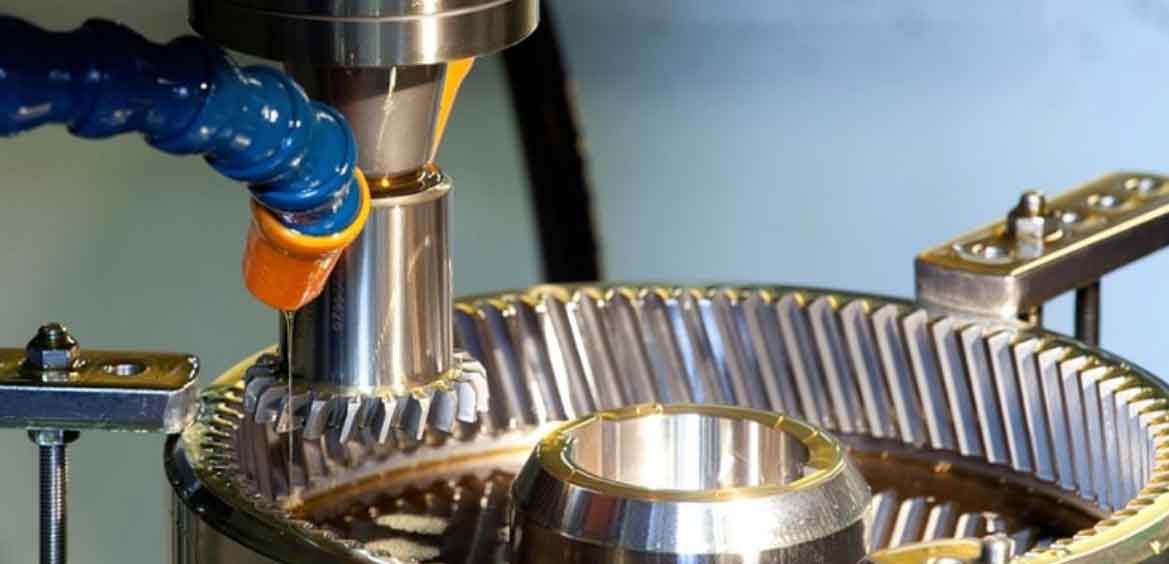
In the realm of mechanical transmission systems, gear drives have been pivotal for centuries, evolving to meet diverse motion requirements. Traditional constant-ratio gear transmissions often fall short in applications demanding precise, periodic variable-speed motions. Non-circular gears, with their unique geometric and kinematic properties, enable exact design and manufacturing for specific运动 needs, making them increasingly prevalent. Among various manufacturing techniques, gear shaping using a shaper cutter on a numerically controlled (NC) gear shaping machine is a widely adopted method for generating non-circular gear profiles. However, this process, particularly on three-axis NC gear shaping machines, is plagued by cutting interference during retraction, which compromises tooth integrity and accelerates tool wear. This article delves into the mechanism of this retraction interference and proposes a novel method to avoid it by offsetting the rotational center of the shaper cutter from its geometric center, thereby enabling continuous gear shaping. The implementation strategy and algorithms are illustrated through the example of shaping the internal gear ring of a non-circular planetary gear hydraulic motor.
Gear shaping on a three-axis NC machine involves three primary motions: the rotation of the workpiece, the rotation of the shaper cutter, and the variation in the center distance between them. During the process, the shaper cutter retracts along the line connecting the centers of the cutter and the workpiece. Ideally, the pitch circle of the cutter and the pitch curve of the workpiece roll without sliding, generating the tooth profile via enveloping. However, due to the retraction direction being fixed along the center line, and the point of tangency between the cutter and workpiece not always lying on this line, interference occurs during retraction, where the cutter inadvertently removes material from the already formed tooth, leading to defects. This phenomenon, known as retraction interference, is especially acute in non-circular gears where the pitch curve deviates significantly from a circle.
To understand the interference mechanism, consider the initial contact point \( P_0(r_0, \theta_0) \) between the cutter’s pitch circle and the workpiece’s pitch curve. After the workpiece rotates by an angle \( \phi_i \), the contact point shifts to \( P_i(r_i, \theta_i) \). The angle between the negative normal direction of the pitch curve at \( P_i \) and the center line, denoted as \( \delta_i \), is critical. A large absolute value of \( \delta_i \) indicates a higher risk of interference. The relevant angles and distances are derived as follows:
The tangent direction angle \( \mu_i \) at point \( P_i \) is given by:
$$ \mu_i = \arctan\left( \frac{r_i}{dr_i/d\theta_i} \right) $$
Then, \( \delta_i \) is calculated as:
$$ \delta_i = \arctan\left( \frac{r_i \cos \mu_i}{r_i \sin \mu_i \pm g_i} \right) $$
where \( g_i \) is the distance from the workpiece center to the point of tangency along the normal. The angle between the radial direction and the center line, \( \gamma_i \), is:
$$ \gamma_i = \arctan\left( \frac{g_i \cos \mu_i}{r_i \mp g_i \sin \mu_i} \right) $$
The rotation angle of the shaper cutter, \( \psi_i \), and the workpiece, \( \phi_i \), are:
$$ \psi_i = \pi + \delta_i – \delta_0 $$
$$ \phi_i = (\theta_i – \theta_0) \mp (\gamma_i – \gamma_0) $$
The center distance \( a_i \) is:
$$ a_i = r_i \cos \gamma_i \pm g_i \cos \delta_i $$
In these equations, the upper sign applies to external non-circular gears, and the lower sign to internal ones. The gear shaping process involves repeated cycles of cutting and retraction along the center line. When \( |\delta_i| \) is large, the cutter’s retraction path intersects with the workpiece tooth profile, causing interference. This is particularly severe for internal non-circular gears with convex pitch curves or external gears with concave regions, such as the internal gear ring of a non-circular planetary gear hydraulic motor.
To mitigate this issue, conventional approaches involve offsetting the cutter or workpiece center from the retraction direction. However, since \( \delta_i \) can be positive or negative, continuous gear shaping is disrupted, requiring frequent停机 adjustments that hamper efficiency. This article proposes a method where the rotational center of the shaper cutter is offset from its geometric center, allowing for continuous interference-free gear shaping. The core idea is to introduce an eccentricity \( \Delta \) for the cutter’s rotational center, such that at the starting point, \( \delta_0 \) is minimized, reducing \( |\delta_i| \) throughout the process.
For implementation, consider shaping the internal gear ring of a non-circular planetary gear hydraulic motor. The pitch curves of the sun gear and internal ring are described by implicit equations. The sun gear’s pitch curve is given by:
$$ r_1 = \frac{a(1 – k^2)}{1 – k \cos(n\theta_1)} $$
where \( a \) is the center distance, \( k \) is the eccentricity, and \( n \) is the number of lobes. The internal ring’s pitch curve is derived from the sun gear’s kinematics. The angle \( \mu_1 \) for the sun gear is:
$$ \mu_1 = \arctan\left( \frac{r_1}{dr_1/d\theta_1} \right) $$
For the internal gear, the maximum \( |\delta_i| \) occurs where \( |\mu_i| \) is maximized. By setting the starting point \( P_0 \) at this location and introducing an eccentricity \( \Delta \), we can adjust the initial angles. Let \( O_c \) be the geometric center of the cutter, and \( O_r \) be its rotational center, offset by \( \Delta \). At \( P_0 \), the angle between the negative normal and the center line becomes:
$$ \delta_0′ = \delta_{\text{max}} – \arctan\left( \frac{\Delta \sin \psi_0}{a_{0z} + \Delta \cos \psi_0} \right) $$
where \( \psi_0 \) is the angle between the line connecting \( O_c \) and \( O_r \) and the line connecting \( O_c \) and the workpiece center, and \( a_{0z} \) is the distance from \( O_c \) to the workpiece center. \( \psi_0 \) is calculated as:
$$ \psi_0 = \gamma_0 \pm \arccos\left( \frac{\Delta}{a_{0z}} \right) $$
The sign depends on whether \( \delta_{\text{max}} \) is positive or negative. For subsequent points \( P_i \), the adjusted parameters are:
The angle \( \delta_i’ \):
$$ \delta_i’ = \delta_i – \arctan\left( \frac{\Delta \sin(\psi_0 + \phi_i’)}{a_i + \Delta \cos(\psi_0 + \phi_i’)} \right) $$
The angle \( \gamma_i’ \):
$$ \gamma_i’ = \gamma_i – \arctan\left( \frac{\Delta \sin(\psi_0 + \phi_i’)}{a_i + \Delta \cos(\psi_0 + \phi_i’)} \right) $$
The cutter rotation angle \( \psi_i’ \):
$$ \psi_i’ = \pi + \delta_i’ – \delta_0′ $$
The workpiece rotation angle \( \phi_i’ \):
$$ \phi_i’ = (\theta_i – \theta_0) + (\gamma_i’ – \gamma_0′) $$
The center distance \( a_i’ \):
$$ a_i’ = \sqrt{a_i^2 + \Delta^2 + 2a_i\Delta \cos(\psi_0 + \phi_i’)} $$
To ensure continuous gear shaping, the workpiece pitch curve is divided into segments, such as eight segments for the hydraulic motor example. Each segment has a distinct starting point \( P_0 \) with initial phase angles \( \theta_0 \) at the segment boundaries. The eccentricity \( \Delta \) and angle \( \psi_0 \) are computed for each segment to minimize \( |\delta_i’| \). The following table summarizes the key parameters for the gear shaping process with eccentricity adjustment:
| Parameter | Symbol | Formula | Description |
|---|---|---|---|
| Negative Normal Angle | \( \delta_i \) | \( \arctan\left( \frac{r_i \cos \mu_i}{r_i \sin \mu_i \pm g_i} \right) \) | Angle between pitch curve normal and center line |
| Radial Angle | \( \gamma_i \) | \( \arctan\left( \frac{g_i \cos \mu_i}{r_i \mp g_i \sin \mu_i} \right) \) | Angle between radial direction and center line |
| Cutter Rotation | \( \psi_i \) | \( \pi + \delta_i – \delta_0 \) | Rotation angle of shaper cutter |
| Workpiece Rotation | \( \phi_i \) | \( (\theta_i – \theta_0) \mp (\gamma_i – \gamma_0) \) | Rotation angle of workpiece |
| Center Distance | \( a_i \) | \( r_i \cos \gamma_i \pm g_i \cos \delta_i \) | Distance between cutter and workpiece centers |
| Eccentricity Angle | \( \psi_0 \) | \( \gamma_0 \pm \arccos\left( \frac{\Delta}{a_{0z}} \right) \) | Angle for cutter center offset |
| Adjusted Normal Angle | \( \delta_i’ \) | \( \delta_i – \arctan\left( \frac{\Delta \sin(\psi_0 + \phi_i’)}{a_i + \Delta \cos(\psi_0 + \phi_i’)} \right) \) | Adjusted angle with eccentricity |
| Adjusted Center Distance | \( a_i’ \) | \( \sqrt{a_i^2 + \Delta^2 + 2a_i\Delta \cos(\psi_0 + \phi_i’)} \) | Adjusted distance with eccentricity |
The algorithm for implementing this method in gear shaping involves the following steps:
- Analyze the pitch curve of the non-circular gear to identify points where \( |\delta_i| \) is maximized.
- Determine the eccentricity \( \Delta \) and angle \( \psi_0 \) for each segment to reduce \( |\delta_i’| \).
- Compute the adjusted parameters \( \delta_i’ \), \( \gamma_i’ \), \( \psi_i’ \), \( \phi_i’ \), and \( a_i’ \) for all points along the pitch curve.
- Input these values into the three-axis NC gear shaping machine to control the motions continuously.
For the non-circular planetary gear hydraulic motor, the internal gear ring’s pitch curve is divided into eight segments with \( \theta_0 \) values at \( 0, \pi/4, \pi/2, \ldots, 7\pi/4 \). The corresponding \( \psi_0 \) for each segment is computed using the formula above, ensuring that \( |\delta_i’| \) remains small. This approach significantly reduces interference risks, as demonstrated by comparing \( |\delta_i| \) with and without eccentricity. The graph below illustrates this comparison for a shaper cutter with a diameter of 32.5 mm and module 2.5 mm, shaping an internal gear with 104 teeth. With eccentricity, \( |\delta_i’| \) is markedly lower, enabling smooth gear shaping without interruptions.
The advantages of this method are manifold. First, it effectively avoids retraction interference in gear shaping, preserving tooth quality and extending tool life. Second, it allows for continuous加工 on existing three-axis NC gear shaping machines without hardware modifications, making it cost-effective. Third, the algorithms are generalizable to various non-circular gears, enhancing the versatility of gear shaping processes. Moreover, by integrating this approach, manufacturers can achieve higher efficiency and precision in producing complex non-circular gears for applications like hydraulic motors, packaging machinery, and automotive systems.
In conclusion, retraction interference in non-circular gear shaping stems from the misalignment between the cutter’s retraction path and the pitch curve geometry. By offsetting the rotational center of the shaper cutter from its geometric center, we can manipulate the angles involved to minimize this interference. The proposed method, supported by detailed formulas and algorithmic steps, offers a practical solution for continuous, interference-free gear shaping on standard three-axis machines. This advancement not only addresses a longstanding challenge in gear manufacturing but also paves the way for broader adoption of non-circular gears in innovative mechanical designs. Future work could explore optimizing the eccentricity parameters for different gear profiles or extending the method to multi-axis gear shaping systems for even greater flexibility.
Throughout this discussion, the term gear shaping has been emphasized to underscore its centrality in the manufacturing process. From initial setup to final execution, gear shaping encompasses the intricate motions and adjustments needed to generate accurate non-circular gear teeth. By refining techniques like eccentricity adjustment, we can push the boundaries of what’s possible in gear shaping, enabling more efficient and reliable production of advanced gear systems. As industries demand higher performance and customization, such innovations in gear shaping will continue to play a crucial role in mechanical engineering.