
The process of gear shaping stands as a fundamental and precise operation in gear manufacturing. While machining standard gears often employs straightforward workholding methods, the challenge escalates significantly when confronted with components featuring complex internal geometries. A prime example is the machining of internal gears where the designated locating bore is not a simple through-hole but an internal stepped feature, presenting a significant obstacle for conventional fixturing techniques that rely on plain cylindrical mandrels or arbors. This article details my first-hand experience and engineering rationale behind the design and validation of a specialized fixture developed to overcome this precise challenge, enabling efficient and accurate gear shaping of a complex automotive transmission component.
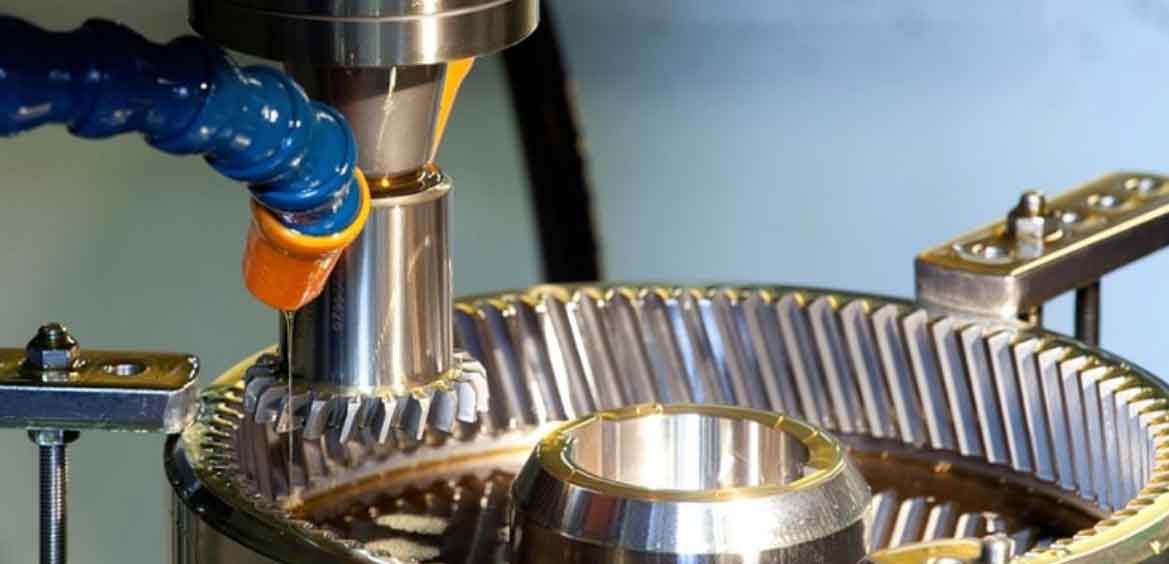
The workpiece in question was an automotive countershaft reverse gear. The pre-machined forging presented a critical internal stepped bore intended as the primary datum for the subsequent gear shaping operation. This bore consisted of a central locating diameter with two smaller diameters on either end, forming a “dog-bone” shaped internal profile. The machining requirement was to generate the internal teeth with strict radial runout tolerance relative to this central locating diameter. Conventional collets, expanding mandrels, or even standard bore-locating fixtures were rendered ineffective due to the recessed nature of the target locating surface. This necessitated a novel fixturing solution that could reach into the bore, engage the central diameter accurately, and provide rigid clamping, all without interfering with the toolpath of the gear shaping cutter.
Core Mechanical Design of the Specialized Fixture
The fundamental principle adopted was a combination of a retractable, radially-expanding locator paired with an integral face-clamping mechanism, both actuated by a single hydraulic cylinder. The design prioritizes the principle of coinciding design, setup, and machining datums (the 6-point location principle) while actively eliminating over-constraint.
1. The Retractable Ball-Lock Locator Mechanism:
This is the heart of the fixture, solving the inaccessible bore problem. The central component is a precision-ground locating pin attached to the piston rod of the hydraulic cylinder. A section of this pin features a tapered cone transitioning into a smaller-diameter cylinder. A set of hardened, precision-grade steel balls is housed in radial holes within a fixture body that surrounds this pin. In the retracted state (loading/unloading position), the balls rest on the tapered section, allowing their outer profile to be radially inwards, clearing the smaller entry diameter of the workpiece bore.
When the hydraulic cylinder is energized, the locating pin is pulled axially downward. This axial motion forces the balls to ride up the tapered section onto the cylindrical portion. Since the balls are constrained radially by the housing, this movement forces them to project outward uniformly. The diameter spanned by the protruding balls is precisely calculated to match the nominal size of the central locating bore of the workpiece, creating a multi-point, frictionless contact. This achieves a near-kinematic location, minimizing errors from form imperfections. The relationship governing the radial expansion (Δr) as a function of axial travel (Δx) and taper angle (α) is:
$$ \Delta r = \Delta x \cdot \tan(\alpha) $$
This mechanism provides excellent repeatability. The expansive force (F_exp) required to seat the balls against the bore wall is derived from the hydraulic force and the taper’s mechanical advantage:
$$ F_{exp} = \frac{F_{hydraulic}}{n \cdot \tan(\alpha + \phi)} $$
where \( n \) is the number of balls and \( \phi \) is the friction angle.
2. The Integral Face-Clamping Mechanism:
Simultaneously with the locating action, the same hydraulic motion is leveraged to actuate the clamp. The piston rod is also connected, via a linkage system (spherical joints and levers), to several hook-style clamping jaws arranged circumferentially around the fixture’s top face. As the piston retracts, the linkage rotates these jaws inward, applying a downward clamping force directly onto a machined face of the workpiece. This dual-action design—locate then clamp—is crucial. The sequence is ensured by adjusting the threaded connections in the linkage; the locating balls are designed to make full contact and slightly lift the workpiece against the fixture’s primary locator face before the clamping jaws apply their full pressure. This guarantees that the primary face locator bears the axial thrust from gear shaping.
3. Hydraulic Actuation System:
A single, double-acting hydraulic cylinder integrated into the fixture body provides the motive force. The fixture base connects to the machine table, with hydraulic lines fed through the table’s rotary union. The system is designed for standard workshop hydraulic pressure (e.g., 1.5 MPa). The key design parameters for the cylinder are its bore diameter (D_cyl) and piston rod diameter (d_rod), which directly determine the available hydraulic force (F_hyd) at a given pressure (p):
$$ F_{hyd} = p \cdot \frac{\pi}{4} \cdot (D_{cyl}^2 – d_{rod}^2) $$
This force must be sufficient to overcome the expansion resistance and provide ample clamping force, as will be calculated later.
Comprehensive Analysis of Positioning Accuracy
The primary goal of the fixture is to maintain the radial runout (Fr) of the shaped gear teeth within the specified tolerance (e.g., ≤ 0.036 mm) relative to the central locating bore. The total positioning error (Δ_D) is analyzed through its two classical components: datum mismatch error (Δ_B) and datum displacement error (Δ_Y).
$$ \Delta_D = \Delta_B + \Delta_Y $$
In this application, the machining datum (axis of the internal teeth) is intended to coincide with the axis of the central locating bore, which is also the fixture’s locating datum. Therefore, the datum mismatch error Δ_B is effectively zero. The dominant error is the displacement error Δ_Y, which arises from the clearance between the workpiece bore and the effective diameter created by the locating balls.
The maximum radial displacement occurs when the workpiece bore is at its maximum size (D_max) and the effective locating diameter (composed of the pin’s cylinder, ball diameter, and their tolerances) is at its minimum (d_eff_min). Assuming the balls are selected and graded for minimal size variation, the critical tolerance stack is between the workpiece bore and the central locating pin’s cylindrical section. If the pin’s nominal diameter is d_pin with a tolerance of ±δ_pin, and the radial expansion per ball is r, the effective diameter is approximately \( d_{eff} = d_{pin} + 2r \). The radial displacement error is half the maximum gap:
$$ \Delta_Y \approx \frac{1}{2} \left[ (D_{max}) – (d_{pin,min} + 2r) \right] = \frac{1}{2}(\delta_{D} – \delta_{d_{pin}}) $$
For a workpiece bore tolerance of +0.022/0 mm and a pin ground to a k5 tolerance (+0.016/+0.003 mm), the calculation is:
$$ \Delta_Y = \frac{1}{2}(0.022 – 0.003) = 0.0095 \text{ mm} $$
This error, being less than one-third of the permissible radial runout, confirms the fixture’s capability to meet the gear shaping accuracy requirement. The use of ball contact minimizes errors from geometric form (e.g., bore cylindricity) compared to full-surface contact.
| Parameter | Symbol | Value/Description | Comment |
|---|---|---|---|
| Workpiece Locating Bore | D | 95.6 +0.022/0 mm | Central stepped diameter |
| Fixture Locating Pin Diameter | d_pin | 75.6k5 (+0.016/+0.003 mm) | Hardened & ground |
| Locating Ball Diameter | d_ball | 10 mm (Grade 10) | Precision steel balls |
| Taper Angle on Pin | α | 15° | Optimized for force/ travel |
| Number of Locating Balls | n | 6 | Equally spaced |
| Hydraulic Cylinder Bore | D_cyl | 110 mm | |
| Piston Rod Diameter | d_rod | 28 mm | |
| System Hydraulic Pressure | p | 1.5 MPa | Standard shop line |
| Calculated Radial Position Error | Δ_Y | 0.0095 mm | Meets 1/3 part tolerance rule |
Force Analysis: Cutting Loads vs. Fixture Holding Capacity
A fixture must not only position accurately but also withstand the dynamic cutting forces during gear shaping without inducing vibration or displacement. The clamping force must exceed the resultant cutting force by a sufficient safety margin.
1. Calculation of Gear Shaping Cutting Force (F_cut):
The cutting force in gear shaping is intermittent and varies per stroke. A conservative estimate can be derived by calculating the average cross-sectional area of material removed per cutter stroke and applying a specific cutting pressure (k_s). The process involves:
- Radial Depth per Work Revolution (X): Governed by radial feed (f_r) and circular feed (f_c).
$$ X = \frac{f_r}{f_c} \cdot \pi \cdot m \cdot Z_w \cdot \frac{1}{\cos\beta} $$
where \( m \) is module, \( Z_w \) is number of workpiece teeth, \( \beta \) is helix angle. - Number of Strokes per Tooth (N_s):
$$ N_s = \pi \cdot m \cdot \frac{1}{\cos\beta} \cdot \frac{1}{f_c} \cdot \lambda $$
where \( \lambda \) is the gear mesh ratio (cutter teeth/work teeth). - Area of Cut per Work Revolution (A_rev): An approximation of the chip area for a generating process.
$$ A_{rev} \approx \left[ m \cdot X \cdot (2\cos\alpha + 1.57) – X^2 \tan\alpha \right] \cdot \frac{1}{\cos\beta} $$
where \( \alpha \) is pressure angle. - Average Area per Stroke (A_stroke):
$$ A_{stroke} = \lambda \cdot \frac{A_{rev}}{N_s} $$
Using typical values for the example gear (m=5, Z_w=23, β=4°, α=20°, f_r=0.02 mm, f_c=0.2 mm/rev, λ≈0.65):
$$ X \approx 36.2 \text{ mm}, \quad N_s \approx 51.4, \quad A_{rev} \approx 147.7 \text{ mm}^2, \quad A_{stroke} \approx 1.87 \text{ mm}^2 $$
With a specific cutting pressure for alloy steel (k_s ≈ 430 N/mm²), the average cutting force is:
$$ F_{cut} = k_s \cdot A_{stroke} \approx 430 \cdot 1.87 \approx 804 \text{ N} $$
This is a per-stroke average force. The peak force can be 2-3 times higher, and the total resultant force on the workpiece includes tangential and radial components. A conservative estimate for total clamping requirement could be \( F_{cut, total} \approx 2000 \cdot 4 \) N = 8000 N, considering multiple teeth in cut and dynamic effects.
2. Calculation of Available Hydraulic Clamping Force (F_clamp):
The hydraulic cylinder provides the fundamental force. Using the parameters from the table:
$$ F_{hyd} = p \cdot \frac{\pi}{4} (D_{cyl}^2 – d_{rod}^2) = 1.5 \cdot \frac{\pi}{4} (0.11^2 – 0.028^2) \cdot 10^6 $$
$$ F_{hyd} \approx 13,330 \text{ N} $$
This hydraulic force is shared between the ball-lock expansion mechanism and the clamping jaws. The linkage for the jaws is designed with a lever ratio (L_r > 1) to amplify the force at the clamp contact point. Therefore, the net clamping force (F_clamp) applied orthogonally to the workpiece face is:
$$ F_{clamp} = F_{hyd} \cdot L_r \cdot \eta $$
where \( \eta \) is the mechanical efficiency of the linkage (~0.8). Even with a modest lever ratio, the available clamping force far exceeds the estimated maximum cutting force of 8000 N, ensuring absolutely no slippage or chatter during the gear shaping process. The expansive force on the locating balls is also more than adequate to prevent any radial shift.
Practical Application and Broader Implications
The implementation of this fixture transformed the production of the challenging component. The loading sequence is rapid and operator-friendly: place the workpiece on the fixture face, initiate the hydraulic cycle, and the part is automatically centered and locked. The repeatability of the ball-lock mechanism ensures consistent radial runout results batch after batch, directly contributing to the quality and performance of the final gear assembly. The fixture’s rigidity allows for optimal gear shaping parameters to be used, minimizing cycle time.
This design philosophy extends beyond this specific case. The principle of using a retractable, radially-actuated locator (via taper, wedge, or偏心 cam) is applicable to a wide range of components with recessed or internal datums, not just in gear shaping but also in turning, grinding, and inspection. The integration of location and clamping into a single, sequenced actuator is a powerful concept for designing compact, reliable, and high-precision fixtures for complex workpieces. It underscores that innovative mechanical design, grounded in solid principles of kinematics, statics, and tolerance analysis, remains indispensable in solving advanced manufacturing challenges in processes like precision gear shaping.