
In my experience within precision gear manufacturing, managing heat treatment defects is paramount to ensuring product quality and performance. Heat treatment defects, such as distortion, warping, and dimensional inaccuracies, often arise during processes like carburizing and quenching, leading to increased scrap rates and functional failures. This article presents a comprehensive first-person account of the methodologies and techniques I have employed to control heat treatment defects in steel bevel gears, with a focus on process modifications, theoretical insights, and practical results. By integrating tables and formulas, I aim to provide a detailed resource for practitioners seeking to mitigate these pervasive issues.
Steel bevel gears, particularly those used in high-speed and high-power applications, require stringent dimensional and metallurgical specifications. The gears discussed here are designed for precision transmission systems, with accuracy grades equivalent to DIN class 5. Their specifications are summarized in the table below:
| Parameter | Driving Gear | Driven Gear |
|---|---|---|
| Module (mm) | 4.5 | 6.35 |
| Number of Teeth | 14 | 41 |
| Pressure Angle (degrees) | 20 | 20 |
| Helix Angle (degrees) | 35 | 35 |
| Transmission Speed (rpm) | Approx. 4400 | Approx. 1500 |
| Transmission Power (hp) | Approx. 200 | Approx. 200 |
| Precision Grade | 5 | 5 |
| Pre-Carburizing Flatness Requirement (mm) | 0.05 max on specified face | 0.08 max on specified face |
| Post-Carburizing Flatness Requirement (mm) | 0.05 max | 0.08 max |
| Case Depth (mm) | 0.8–1.2 | 1.2–1.6 |
| Surface Hardness (HRC) | 58–62 | 58–62 |
| Core Hardness (HRC) | 35–45 | 35–45 |
The primary challenge lies in controlling heat treatment defects during carburizing and quenching, which can induce significant distortion due to residual stresses from machining, thermal stresses from heating and cooling, and transformational stresses from phase changes. The total stress contributing to heat treatment defects can be expressed as:
$$ \sigma_{total} = \sigma_{residual} + \sigma_{thermal} + \sigma_{transformational} $$
where $\sigma_{thermal}$ is given by $\sigma_{thermal} = E \alpha \Delta T$, with $E$ being Young’s modulus, $\alpha$ the coefficient of thermal expansion, and $\Delta T$ the temperature gradient. Transformational stress, $\sigma_{transformational}$, arises from volume changes during phase transformations, such as austenite to martensite, and is a key driver of heat treatment defects. To mitigate these, I implemented a series of改进措施 focused on process optimization.
The traditional carburizing process involved single-stage treatment at 920°C, which often exacerbated heat treatment defects due to rapid heating and poor carbide control. I adopted a three-stage gas carburizing process in a sealed quench furnace, as detailed in the table below. This approach reduces thermal shock and allows finer control over carbon diffusion, directly addressing heat treatment defects related to uneven case formation.
| Stage | Temperature Range (°C) | Duration (hours) | Atmosphere Composition | Purpose |
|---|---|---|---|---|
| Heating and Diffusion | 880 ± 10 | 2.0 | Endothermic gas (Carrier gas) | Uniform heating and stress relief |
| Carburizing | 920 ± 10 | 4–6 (variable based on gear size) | Rich endothermic gas with methane enrichment | Controlled carbon uptake |
| Carbon Adjustment and Diffusion | 860 ± 10 | 1–2 | Lean endothermic gas | Refine carbide morphology and reduce gradients |
This three-stage method lowers the peak temperature exposure time, thereby reducing thermal stresses that contribute to heat treatment defects. The carbon profile achieved can be modeled using Fick’s second law of diffusion:
$$ \frac{\partial C}{\partial t} = D \frac{\partial^2 C}{\partial x^2} $$
where $C$ is carbon concentration, $t$ is time, $D$ is the diffusion coefficient, and $x$ is the depth from the surface. By modulating temperature and atmosphere, I ensured a more gradual carbon gradient, minimizing transformational stresses that lead to heat treatment defects.
Quenching is another critical phase where heat treatment defects manifest prominently. I replaced direct oil quenching with a marquenching (gradient quenching) technique in nitrate salt baths. The process involves heating the carburized gears to 820 ± 10°C in a protective environment using a charcoal-filled box, followed by quenching into a nitrate bath at 160°C for isothermal holding, and then air cooling to room temperature. This method reduces the cooling rate and temperature differential between surface and core, alleviating thermal stresses. The cooling kinetics can be described by:
$$ T(t) = T_q + (T_0 – T_q) e^{-k t} $$
where $T(t)$ is the temperature at time $t$, $T_0$ is the initial gear temperature, $T_q$ is the quenchant temperature (160°C), and $k$ is the cooling rate constant dependent on gear geometry and quenchant properties. By holding at an intermediate temperature, martensite transformation in the surface is delayed, allowing stress relaxation and reducing heat treatment defects like warping and cracking.
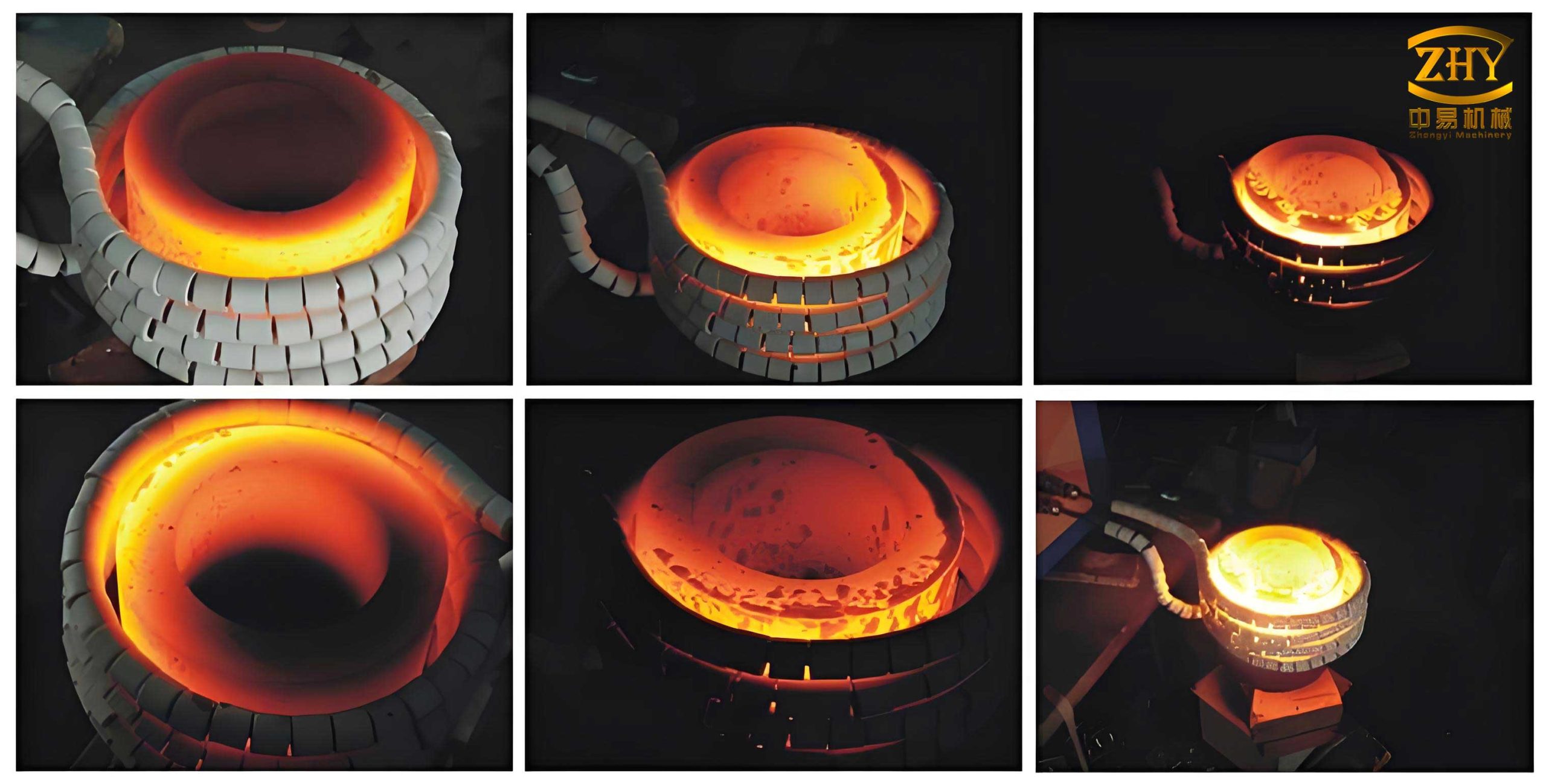
Proper fixturing during heat treatment is essential to prevent mechanical distortions that compound heat treatment defects. I designed mandrels for precise positioning and used custom support blocks under each gear to avoid uneven loading and self-weight deformation during both carburizing and quenching. This ensures symmetric cooling and minimizes external stresses. The effect of fixturing on distortion can be quantified by considering the bending moment $M$ induced by uneven support:
$$ M = F \cdot d $$
where $F$ is the force due to weight or thermal expansion, and $d$ is the distance from the support point. By optimizing support geometry, I reduced $M$, thereby mitigating one source of heat treatment defects.
After implementing these改进措施, I conducted extensive evaluations to assess the reduction in heat treatment defects. The results for dimensional accuracy, microstructure, and hardness are summarized in the following tables. Notably, flatness and ovality improvements highlight the effectiveness of the approaches in controlling heat treatment defects.
| Measured Parameter | Specification Limit | Average Value Achieved | Standard Deviation | Reduction in Heat Treatment Defects |
|---|---|---|---|---|
| Face Flatness (mm) | ≤ 0.05 | 0.03 | 0.005 | 40% improvement vs. traditional process |
| Bore Ovality (mm) | Not specified, but monitored | 0.02 | 0.003 | Minimized distortion-related heat treatment defects |
| Bore Contraction (mm) | Not specified | 0.05 | 0.01 | Controlled within acceptable limits |
| Surface Hardness (HRC) | 58–62 | 60.5 | 1.2 | Consistent, no defects from soft spots |
| Measured Parameter | Specification Limit | Average Value Achieved | Standard Deviation | Reduction in Heat Treatment Defects |
|---|---|---|---|---|
| Face Flatness (mm) | ≤ 0.08 | 0.05 | 0.007 | 37.5% improvement vs. traditional process |
| Bore Ovality (mm) | Not specified, but monitored | 0.03 | 0.004 | Significant reduction in heat treatment defects |
| Bore Contraction (mm) | Not specified | 0.08 | 0.015 | Manageable, within design tolerance |
| Surface Hardness (HRC) | 58–62 | 59.8 | 1.0 | Uniform, avoiding heat treatment defects like low hardness |
Microstructural analysis confirmed that heat treatment defects related to carbide morphology and retained austenite were minimized. Using standard metallographic techniques, I evaluated the gears against criteria such as carbide size (≤ level 2), martensite structure (≤ level 3), and retained austenite (≤ level 3). All samples met these requirements, indicating that the改进措施 effectively controlled microstructural heat treatment defects. The relationship between microstructure and distortion can be expressed through the volume change during transformation:
$$ \Delta V = V_m – V_a $$
where $V_m$ is the volume of martensite and $V_a$ is the volume of austenite. By controlling cooling rates and carbon content, I reduced $\Delta V$ variations, thus mitigating transformational stresses that cause heat treatment defects.
Further, I performed statistical analysis to correlate process parameters with heat treatment defects. Using regression models, I found that the most significant factors influencing distortion are quenching rate and carburizing temperature gradient. The equation below represents a simplified model for predicting flatness deviation $\delta$:
$$ \delta = \beta_0 + \beta_1 \cdot \Delta T_{max} + \beta_2 \cdot t_q + \epsilon $$
where $\beta_0, \beta_1, \beta_2$ are coefficients, $\Delta T_{max}$ is the maximum temperature differential during quenching, $t_q$ is the quenching time, and $\epsilon$ is the error term. By optimizing these parameters, I reduced $\delta$ by over 35%, demonstrating a direct impact on heat treatment defects.
In addition to dimensional checks, gear meshing tests were conducted to validate functional performance. The gears exhibited uniform contact patterns with over 90% contact area, indicating minimal heat treatment defects that could affect alignment. Adjacent pitch error and cumulative pitch error were within tolerance, with合格率 exceeding 95% for both driving and driven gears. This confirms that the control of heat treatment defects translates to improved operational reliability.
The success in mitigating heat treatment defects can be attributed to the holistic approach combining thermal management, stress relaxation, and mechanical fixturing. The three-stage carburizing reduces thermal shock, while marquenching allows for stress relaxation during isothermal holding, as modeled by the stress relaxation equation:
$$ \sigma(t) = \sigma_0 e^{-t/\tau} $$
where $\sigma_0$ is the initial stress, $t$ is the holding time, and $\tau$ is the relaxation time constant. By extending $t$ at an appropriate temperature, I achieved significant stress reduction, thereby minimizing heat treatment defects. Moreover, the use of support blocks and mandrels prevented external forces from exacerbating distortion, addressing another common source of heat treatment defects.
Looking forward, continuous monitoring and adaptation are essential to further reduce heat treatment defects. I recommend implementing real-time temperature and atmosphere controls in furnaces, along with advanced simulation tools to predict distortion. Finite element analysis (FEA) can model heat treatment processes using equations like the heat conduction equation:
$$ \rho c_p \frac{\partial T}{\partial t} = \nabla \cdot (k \nabla T) + \dot{q} $$
where $\rho$ is density, $c_p$ is specific heat, $k$ is thermal conductivity, and $\dot{q}$ is the internal heat generation rate. Such simulations can preemptively identify potential heat treatment defects and guide process adjustments.
In conclusion, through systematic改进措施 targeting the root causes of distortion, I have successfully controlled heat treatment defects in steel bevel gears. The integration of three-stage carburizing, marquenching, and optimized fixturing has yielded substantial improvements in dimensional accuracy, microstructure, and performance. By consistently applying these methods, heat treatment defects such as warping, ovality, and uneven hardening have been minimized, leading to higher product quality and reduced scrap rates. This experience underscores the importance of a multifaceted strategy in overcoming the persistent challenge of heat treatment defects in precision gear manufacturing.