
As a researcher in the field of thermal and power engineering, I have witnessed the critical role this discipline plays in addressing global energy challenges. With the rapid development of society, resource scarcity has become a central矛盾 in current progress. Thermal power plants, which utilize thermal and power engineering, can alleviate energy shortages, making it a vital工程. In the context of technological innovation in thermal and power engineering, the focus is on enhancing energy efficiency in practical applications. During the development of new products and technological research, reducing energy consumption is a prerequisite. This article discusses the research directions of thermal and power engineering, the issues faced in thermal power plant projects, and future prospects, aiming to promote further optimization of thermal power plant operations and improve energy utilization efficiency.
Thermal and power engineering is primarily based on engineering thermophysics, with internal combustion engines and other emerging动力机械及系统 as研究对象. It employs knowledge from engineering mechanics, mechanical engineering,自动控制, computer science, environmental science, and microelectronics to study the safe, efficient, and low- or non-polluting conversion of chemical energy from fuels and kinetic energy from fluids into power. This involves investigating the fundamental laws and processes of conversion, as well as the自动控制 technology of systems and equipment during the transformation. The integration of components such as spur and pinion gears is essential in传动 systems for optimizing mechanical power transmission in these processes.
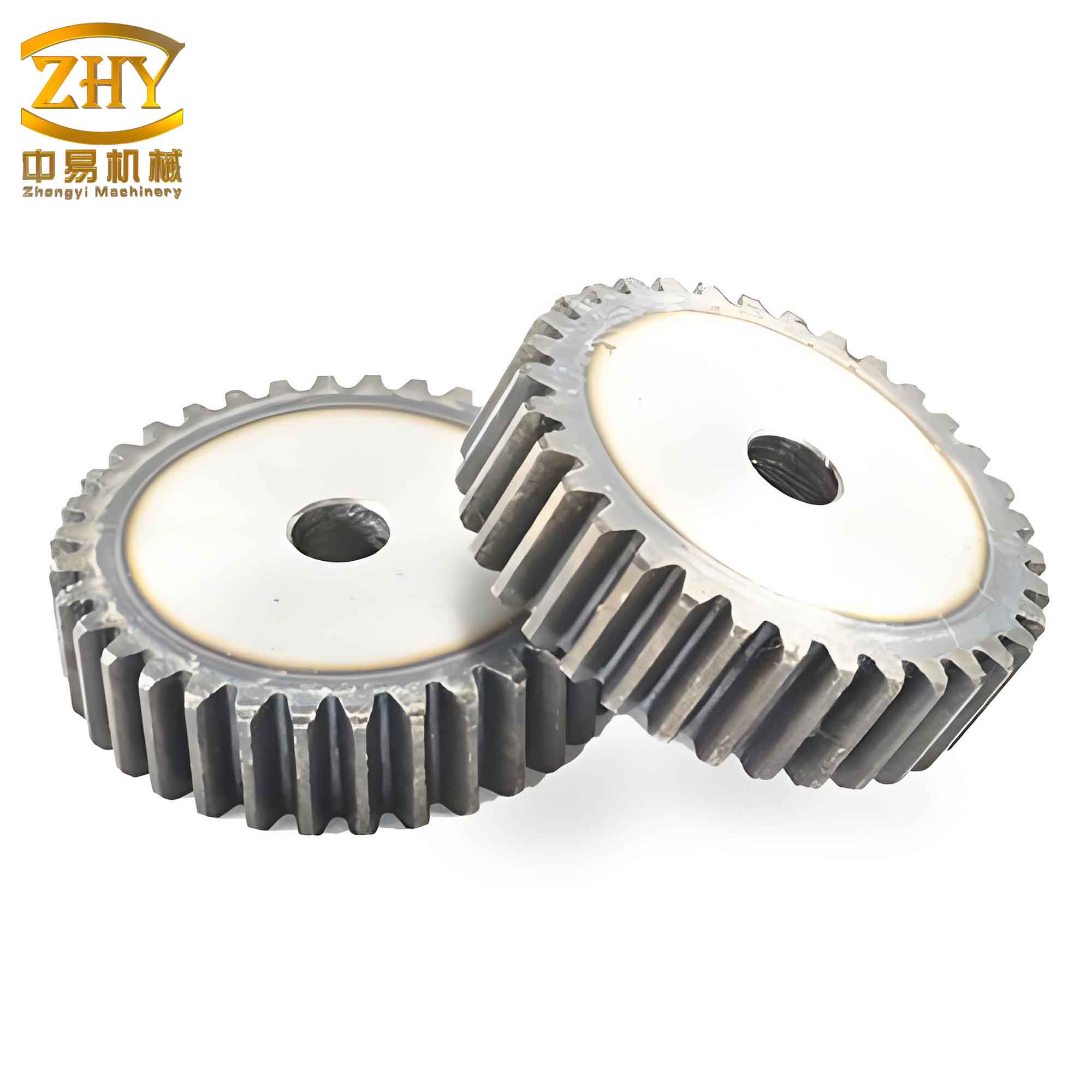
In terms of technological innovation, several issues need addressing. Regarding energy, China is a major energy consumer, using a significant portion of global石油 and煤炭. Coal consumption is largely in thermal power generation, which accounts for over a specific percentage of national electricity production, with coal-fired power making up a substantial share, including热电联产 enterprises. During power generation,大量热能 and余压 are lost through循环水 and水汽,直接排放 into the atmosphere, leading to energy waste. Currently, the energy efficiency of thermal power plants in China is only around a certain level, making energy conservation a key focus. For instance, fans are major electricity consumers in power stations, with送风机,引风机, and冷烟风机 being crucial辅机. Reducing their power consumption is an important节能 measure. The design of spur and pinion gears in fan驱动 systems can influence efficiency, as precise齿轮传动 minimizes energy losses in mechanical components.
Table 1 summarizes the energy consumption and efficiency challenges in thermal power plants:
| Component | Energy Loss Type | Potential Improvement |
|---|---|---|
| Fans (e.g.,送风机) | Electrical consumption | Optimize spur and pinion gear systems for better torque transmission |
| Heat exchangers | Thermal waste | Enhance heat recovery mechanisms |
| 汽轮机 | Wet gas loss | Implement advanced sealing technologies |
In environmental pollution,燃煤电厂 are often called “environmental killers” due to二氧化硫,氮氧化物, and粉尘 emissions. With the expansion of the power industry, the environmental impact of电厂污染物 has increased, characterized by large, concentrated emissions of relatively单一 pollutants. This poses严峻的环境保护 problems and disrupts residents’ lives and health. Technological innovations in emission control systems, such as integrating spur and pinion gears in particulate matter handling equipment, can improve reliability and reduce maintenance downtime.
Safety is another critical area. As power units evolve toward大容量,高转速,高效率, and自动化, the demand for safety in equipment like锅炉风机 has risen. Incidents such as motor burnout,轴窜,叶轮飞车, and轴承损坏 can cause significant设备 and人身 damage, leading to economic losses. The use of robust spur and pinion gears in风机传动 can enhance durability and prevent failures under high-stress conditions.
Despite these challenges, thermal and power engineering offers advantages in科技创新. For example, when any stage in a group reaches critical conditions, the maximum back pressure of the stage group is minimized as the number of stages increases, represented by the critical pressure ratio. The Flügel formula applies when the number of stages in a group is at least three, and under the same operating conditions, the flow rate through each stage is equal. With unchanged flow areas across different conditions, the Flügel formula can be used to calculate stage pressures at various flow rates, determining power efficiency and component stresses. This helps monitor the正常 of the汽轮机通流部分. The formula is expressed as:
$$ \frac{P_1}{P_2} = \frac{G_1}{G_2} \sqrt{\frac{T_1}{T_2}} $$
where \( P \) is pressure, \( G \) is flow rate, and \( T \) is temperature. In调压调节, this increases operational reliability and load adaptability, improving economic efficiency at partial loads, though it may be less economical at high loads. For单元大机组, steam leaves the动叶栅 with余速动能, representing unutilized kinetic energy called余速损失. The degree of部分进汽 is given by the ratio of the喷管 arc length to the circumference. In动静轴向间隙, stagnant steam causes鼓风损失 when动叶片 move to non-working arcs, acting like a blower, and斥汽损失 occurs in working arcs due to accelerating stagnant steam. The efficiency of spur and pinion gears in regulating valve mechanisms can reduce these losses by ensuring precise control of steam flow.
In节流调节,合理调节 is essential. Without调节级分类, other means ensure effectiveness. When the first stage of a汽轮机 achieves full周进汽, temperature decreases with工况变化. For small-capacity units or large base-load units, if economic性 is poor, measures against节流损失 are needed. Determining power efficiency and component stresses allows close monitoring of汽轮机 operation. Using known conditions like flow rate and pressure formulas, changes in flow area can be analyzed. The Flügel formula ensures effective节流调节, creating favorable conditions for thermal and power engineering. The relationship can be summarized in Table 2:
| Parameter | Impact on Efficiency | Role of Spur and Pinion Gears |
|---|---|---|
| Flow rate (G) | Directly affects pressure ratios | Adjust gear ratios for optimal steam control |
| Pressure (P) | Influences power output | Transmit torque in regulating systems |
| Temperature (T) | Affects thermal efficiency | Withstand high-temperature environments in gear materials |
Reducing湿气损失 is crucial for improving汽轮机 efficiency. Wet gas loss occurs due to steam expansion in汽轮机 operation, where temperature differences cause partial condensation, reducing steam量. Additionally, higher steam velocity compared to water droplets leads to kinetic energy consumption under水珠牵制.过冷 of wet steam exacerbates losses. In汽轮机运行, mechanical losses include overcoming friction in支持轴承 and推力轴承, and启动主油泵 and调速器. Using轴流式汽轮机, with high-pressure steam introduced at one end and low-pressure steam exhausted at the other, ensures a shift from high to low pressure, lowering energy consumption. This significantly enhances the application efficiency of thermal and power engineering. The wet gas loss can be modeled as:
$$ \Delta h_w = \frac{1}{2} (v_s^2 – v_w^2) $$
where \( \Delta h_w \) is the wet gas loss, \( v_s \) is steam velocity, and \( v_w \) is water droplet velocity. Incorporating spur and pinion gears in steam turbine auxiliary systems, such as for driving pumps, can optimize mechanical efficiency by reducing slippage and wear.
Building a resource-saving and environmentally friendly society, known as the “two-type society,” is a new initiative proposed by authorities, aligning with scientific development and harmonious society construction. In thermal power plant reform, focus should be on节能减排改造 of thermal equipment and systems. While I have粗略列举了几种节能减排措施, many effective specific measures exist, such as adopting液态排渣,低氮燃烧, and飞灰复燃 technologies in boilers, along with静电除尘器 achieving over a certain除尘效率. These require dedicated research in practical production. For instance, the implementation of spur and pinion gears in advanced combustion control systems can fine-tune fuel delivery, enhancing overall plant performance.
In conclusion, technological innovation in thermal and power engineering is pivotal for addressing energy and environmental challenges. Through advancements in efficiency optimization, emission reduction, and safety enhancements, we can推动热电厂运行的进一步优化. The integration of mechanical components like spur and pinion gears plays a subtle yet significant role in improving传动 efficiency and reliability. As we move forward, continuous research and development in these areas will be essential for achieving sustainable energy solutions. The future of thermal power plants hinges on embracing创新 that balances economic and ecological needs, with spur and pinion gears serving as key enablers in机械传动 systems.
To further illustrate the principles, consider the efficiency公式 for gear systems in thermal applications:
$$ \eta_g = \frac{P_{out}}{P_{in}} = \frac{T_{out} \omega_{out}}{T_{in} \omega_{in}} $$
where \( \eta_g \) is the gear efficiency, \( T \) is torque, and \( \omega \) is angular velocity. In spur and pinion gear setups, minimizing losses due to friction and misalignment can boost overall plant efficiency. Table 3 highlights some key technological innovations:
| Innovation Area | Description | Impact on Thermal and Power Engineering |
|---|---|---|
| Advanced gear designs (e.g., spur and pinion) | Precision-engineered for high load and temperature | Reduces mechanical losses in fans and pumps |
| Flügel formula applications | Monitors steam flow and pressure changes | Enables real-time optimization of turbine performance |
| Wet gas loss reduction techniques | Uses axial flow turbines and improved sealing | Enhances overall cycle efficiency |
| Emission control systems | Integrates gears in particulate handling | Lowers environmental impact |
As we delve deeper into these innovations, the synergy between thermal dynamics and mechanical engineering becomes apparent. The relentless pursuit of efficiency gains, often through seemingly minor improvements in components like spur and pinion gears, can yield substantial benefits across entire power generation systems. I encourage ongoing exploration in this field to unlock new potentials for a sustainable energy future.