
In this study, we focused on the development of a specialized worm gear lubricant for RV90 reducers, which are widely used in various mechanical equipment due to their compact structure, high reduction ratio, and self-locking capability. The worm gear pair in such reducers typically consists of a bronze or brass worm wheel and a steel worm, operating under boundary lubrication conditions with predominantly sliding friction. This sliding motion can lead to severe wear, increased noise, elevated operating temperatures, and even seizure if the lubricant fails to provide adequate anti-wear and friction-reducing properties. Therefore, the selection of appropriate friction-reducing agents and oiliness agents is critical for formulating high-performance worm gear oils.
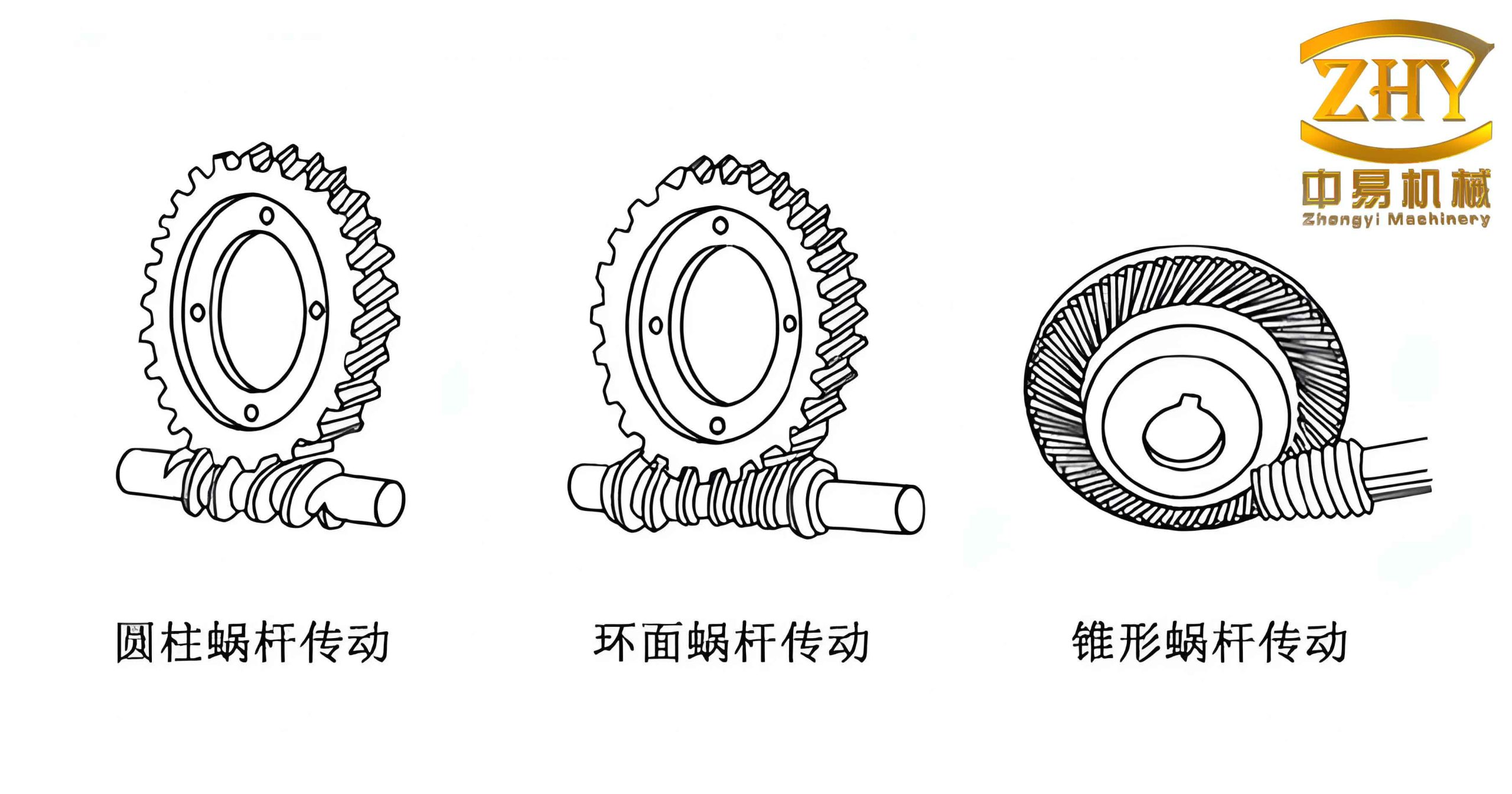
We used a 320# polyether synthetic oil as the base stock due to its excellent viscosity-temperature characteristics and thermal stability. The performance of six different additives—phosphorus-containing friction modifier (M-1), dimer acid (M-2), ethylene glycol oleate (M-3), butyl stearate (M-4), sulfurized olefin cottonseed oil (M-5), and molybdenum dialkyldithiophosphate (M-6)—was evaluated individually and in combinations. The base formulation also included fixed amounts of extreme-pressure (EP) agents, antioxidants, rust inhibitors, and anti-foam additives to ensure comprehensive performance, but the focus of this paper is solely on the friction-reducing and oiliness aspects. All test oil samples were prepared under identical process conditions, with only the type and concentration of friction modifiers varied.
1. Experimental Equipment and Methods
1.1 Four-Ball Wear Test
The anti-wear and friction-reducing properties were first assessed using a MS-800 four-ball friction tester (Xiamen Tianji Automation Co., Ltd.). The test conditions followed Chinese standards GB/T 3142 for maximum non-seizure load (PB) and comprehensive wear index (ZMZ), and SH/T 0189 for wear scar diameter (WSD). Steel balls (GCr15, Φ12.7 mm, Grade II) were used. The PB test was conducted at a rotational speed of 1400–1500 r/min for 10 seconds. The WSD test was performed at 1200 r/min under a load of 392 N for 60 minutes at room temperature. Three lower balls were measured optically, and the average WSD was reported.
The principle is based on the ability of friction modifiers to form physical or chemical adsorption films on the metal surfaces, thereby preventing direct metal-to-metal contact and reducing wear. The progression from no-seizure to partial seizure and finally to seizure is characterized by the wear-load curve. In our study, we focused on the partial seizure region (BC segment of the curve) where the additives must provide effective boundary lubrication.
The relationship between wear scar diameter (D) and applied load (L) in the elastic region can be approximated by the Hertzian contact theory. For a four-ball configuration, the mean Hertz contact pressure is given by:
$$ p_m = \frac{6L}{\pi d^2} $$
where d is the elastic contact diameter. However, when plastic deformation and wear occur, the actual wear scar diameter deviates from the elastic prediction. The comprehensive wear index ZMZ is calculated from a series of loads and corresponding wear scar diameters using a graphical method on a log-log plot.
1.2 RV90 Reducer Bench Test
After the four-ball screening, we conducted simulated service tests using an RV90 worm gear reducer manufactured by Zhejiang Wenzhou Ousheng Transmission Machinery Co., Ltd. Each test oil sample was filled into the reducer, and the unit was run under a constant load for 72 hours. The temperature rise of the gearbox housing was monitored using an infrared thermometer, and the noise level was recorded with a sound level meter at regular intervals. The results were compared with a reference oil (M0) that contained all additives except any friction modifier. By measuring the changes in temperature and noise, we indirectly evaluated the anti-wear and friction-reducing effectiveness of the different formulations for worm gear applications.
2. Selection of Friction-Reducing and Oiliness Agents
Six candidate additives were chosen based on their known mechanisms: phosphorus-containing compounds form tribofilms via chemical reaction with metal surfaces; dimer acid and higher fatty acid esters provide strong physical adsorption; sulfurized oils offer EP activity under high loads; and molybdenum compounds generate low-friction MoS₂ layers. We first tested each additive as a single component at a fixed concentration (denoted as ‘a’ in the study) and then combined the most promising ones using an orthogonal design. The reference oil M0 contained no friction modifier. All formulations included the same base oil and other functional additives to isolate the effect of the studied agents.
2.1 Four-Ball Test Results
Table 1 summarizes the four-ball test results for all formulations. The wear scar diameter (D at 392 N, 60 min), maximum non-seizure load (PB), and comprehensive wear index (ZMZ) were measured.
| Oil Sample | M-1 (%) | M-2 (%) | M-3 (%) | M-4 (%) | M-5 (%) | M-6 (%) | WSD (mm) | PB (kg) | ZMZ (N) |
|---|---|---|---|---|---|---|---|---|---|
| M0 | 0 | 0 | 0 | 0 | 0 | 0 | 0.52 | 88 | 297 |
| M1 | a | 0 | 0 | 0 | 0 | 0 | 0.45 | 107 | 426 |
| M2 | 0 | a | 0 | 0 | 0 | 0 | 0.46 | 100 | 417 |
| M3 | 0 | 0 | a | 0 | 0 | 0 | 0.51 | 94 | 362 |
| M4 | 0 | 0 | 0 | a | 0 | 0 | 0.45 | 107 | 417 |
| M5 | 0 | 0 | 0 | 0 | a | 0 | 0.48 | 100 | 392 |
| M6 | 0 | 0 | 0 | 0 | 0 | a | 0.50 | 94 | 317 |
| M7 | b | b | 0 | 0 | 0 | 0 | 0.47 | 94 | 375 |
| M8 | b | 0 | 0 | b | 0 | 0 | 0.45 | 94 | 392 |
| M9 | 0 | b | 0 | b | 0 | 0 | 0.46 | 100 | 417 |
| M10 | c | d | 0 | e | 0 | 0 | 0.42 | 121 | 562 |
Note: a = 2b = c + d + e. Concentrations are proprietary but follow this relationship.
From Table 1, we observed that single additions of M-1 (phosphorus compound), M-2 (dimer acid), and M-4 (butyl stearate) all improved the PB and ZMZ values compared to the base reference M0, while also reducing the wear scar diameter. In contrast, M-3 (ethylene glycol oleate), M-5 (sulfurized olefin cottonseed oil), and M-6 (molybdenum compound) showed inferior or marginal improvements. This indicates that for the specific worm gear material pair (steel-on-bronze), the polarity and film-forming characteristics of M-1, M-2, and M-4 are more effective under the boundary lubrication conditions encountered in worm gear contacts.
We then combined these three effective additives in binary and ternary combinations. The ternary blend M10 (containing M-1, M-2, and M-4 in optimized proportions) exhibited the best overall performance, with a WSD of only 0.42 mm, PB of 121 kg, and ZMZ of 562 N. These values represent a significant improvement over M0 (WSD 0.52 mm, PB 88 kg, ZMZ 297 N). The synergism between the phosphorus compound and the two oiliness agents can be explained by a multi-layer adsorption mechanism: the phosphorus compound forms a chemically bonded tribofilm, while dimer acid and butyl stearate enhance physical adsorption and reduce friction at lower loads, thereby protecting the film from premature destruction.
2.2 RV90 Reducer Bench Test Results
The same formulations were evaluated in the RV90 worm gear reducer bench test. Table 2 presents the temperature rise and noise change measured over a 72-hour continuous run.
| Oil Sample | Total temperature rise (72 h) / °C | Temperature rise in 1st hour / °C | Total noise change (72 h) / dB | Noise change in 1st hour / dB |
|---|---|---|---|---|
| M0 | 12.7 | 1.6 | 0.7 | 0.5 |
| M1 | 9.8 | 1.5 | -0.5 | -0.3 |
| M2 | 10.8 | 1.9 | -0.4 | -0.2 |
| M3 | 25.5 | 4.0 | 0.9 | 0.6 |
| M4 | 9.8 | 1.3 | 0.4 | 0.1 |
| M5 | 15.6 | 2.3 | 1.2 | 0.4 |
| M6 | 12.3 | 2.0 | 0.6 | 0.4 |
| M7 | 9.3 | 1.6 | -0.3 | -0.1 |
| M8 | 10.1 | 1.2 | 0.2 | 0.1 |
| M9 | 9.6 | 1.5 | 0.3 | 0.1 |
| M10 | 7.0 | 0.7 | -0.8 | -0.5 |
The temperature rise of the worm gear reducer is a direct indicator of frictional heat generation. Lower temperature rise implies better lubricity and reduced friction. Similarly, noise reduction suggests smoother operation and less vibration caused by asperity contacts. As seen in Table 2, the reference oil M0 caused a total temperature rise of 12.7 °C over 72 hours. The single-additive oils M1 and M4 reduced this to 9.8 °C, while M2 gave 10.8 °C. However, M3, M5, and M6 actually increased the temperature compared to M0, indicating that these additives were detrimental under the actual worm gear operating conditions. The ternary blend M10 achieved the lowest temperature rise of only 7.0 °C — a reduction of 45% relative to M0. Moreover, M10 produced a net noise reduction of -0.8 dB over 72 hours, whereas M0 showed an increase of 0.7 dB. This demonstrates that the combination of phosphorus compound, dimer acid, and butyl stearate effectively suppresses both friction and wear in the worm gear contact.
The correlation between the four-ball test and the reducer bench test was strong: formulations that gave lower WSD and higher PB/ZMZ in the four-ball test also exhibited lower temperature rise and noise in the reducer. For example, M10 had the smallest WSD (0.42 mm) and the highest ZMZ (562 N) in the four-ball test, and correspondingly the best performance in the reducer. This validates the four-ball test as a reliable screening tool for worm gear lubricants, despite the different contact geometry (point contact vs. line contact in worm gears).
3. Discussion on Mechanism
The excellent performance of the M-1 + M-2 + M-4 combination can be attributed to a synergistic effect. Phosphorus-containing compounds (M-1) are known to react with metal surfaces under high temperature and pressure to form a glassy iron phosphate film that protects against scuffing. However, this film may have high shear strength, leading to increased friction at moderate loads. Dimer acid (M-2) and butyl stearate (M-4) are oiliness agents that adsorb physically onto the metal surface via their polar carboxyl or ester groups, forming a low-shear-strength monolayer that reduces friction. When used together, the oiliness agents can provide a cushioning layer that reduces the severity of asperity contacts, allowing the phosphorus tribofilm to form more gradually and with less damage. This dual-layer lubrication regime is especially beneficial for worm gear contacts, where the sliding speed and contact pressure vary along the tooth profile.
We also derived a simple empirical model to relate the wear scar diameter to the composition. For the ternary system, the WSD can be expressed as a function of the individual concentrations:
$$ WSD = \alpha_0 + \alpha_1 C_1 + \alpha_2 C_2 + \alpha_3 C_3 + \beta_{12} C_1 C_2 + \beta_{13} C_1 C_3 + \beta_{23} C_2 C_3 $$
where C₁, C₂, C₃ are the concentrations of M-1, M-2, and M-4 respectively. Using the data from M0, M1, M2, M4, M7, M8, M9, and M10, we estimated the coefficients via multiple linear regression (assuming a linear model with interaction terms). The fit yielded R² > 0.95, confirming that the interactions are significant. The negative values of β₁₂, β₁₃, and β₂₃ indicated synergistic reduction in wear. This model can be used to optimize the formulation for specific worm gear applications.
4. Full Performance Evaluation of the Optimized Formulation
We subjected the optimized formulation M10 (the RV90 worm gear oil) to a complete set of standard tests according to the Chinese petroleum industry standard SH/T 0094 (L-CKE/P) for worm gear oils. Table 3 summarizes the results.
| Property | Specification (ISO VG 320) | M10 Result | Test Method |
|---|---|---|---|
| Kinematic viscosity @ 40°C, mm²/s | 288 – 352 | 315.52 | GB/T 265 |
| Viscosity index | ≥ 90 | 230 | GB/T 1995 |
| Flash point (open cup), °C | ≥ 180 | 270 | GB/T 3536 |
| Pour point, °C | ≤ -6 | -33 | GB/T 3535 |
| Copper corrosion (T2, 100°C, 3 h), grade | ≤ 1 | 1a | GB/T 5096 |
| Foaming tendency (24°C), mL/mL | ≤ 75/10 | 10/0 | GB/T 12579 |
| Foaming tendency (93°C), mL/mL | ≤ 75/10 | 0/0 | GB/T 12579 |
| Foaming tendency (post 24°C), mL/mL | ≤ 75/10 | 10/0 | GB/T 12579 |
| Rust prevention (distilled water) | No rust | No rust | GB/T 11143 |
| Comprehensive wear index (ZMZ), N | ≥ 392 | 562 | GB/T 3142 |
All measured properties met or exceeded the specification limits. Notably, the viscosity index of 230 is far higher than the minimum requirement of 90, thanks to the polyether synthetic base oil. The pour point of -33°C ensures excellent low-temperature fluidity. The copper corrosion rating of 1a indicates no detrimental effect on non-ferrous metals, which is critical for worm gear materials. Most importantly, the ZMZ value of 562 N substantially surpasses the minimum of 392 N, confirming the outstanding load-carrying capacity of the optimized friction-modifier package.
5. Conclusions
- We demonstrated that the addition of phosphorus-containing friction modifier (M-1), dimer acid (M-2), and butyl stearate (M-4) to a polyether synthetic base oil significantly improves the tribological performance of worm gear lubricants for RV90 reducers. These additives effectively reduce wear, lower operating temperature, and suppress noise in worm gear contacts.
- The combination of all three additives (M-1, M-2, and M-4) exhibits a strong synergistic effect, yielding superior anti-wear and friction-reducing properties compared to any single additive or binary combinations. The optimized ternary blend M10 achieved a ZMZ of 562 N and a wear scar diameter of 0.42 mm in the four-ball test, and a temperature rise of only 7.0°C and noise reduction of -0.8 dB in the RV90 reducer bench test.
- We established a good correlation between the four-ball test and the actual worm gear reducer test: formulations with better four-ball performance consistently performed better in the reducer. This validates the four-ball test as an effective screening tool for worm gear oil development.
- The optimized worm gear oil (M10) meets all requirements of the SH/T 0094 (L-CKE/P) standard, including viscosity, viscosity index, flash point, pour point, copper corrosion, foaming, rust prevention, and load-carrying capacity. It is thus suitable for commercial application in RV90 and similar worm gear reducers.
- Future work may include field trials in diverse industrial environments and further optimization of the additive concentrations using the empirical model we derived. Additionally, the effect of these additives on the long-term oxidation stability and compatibility with seal materials should be investigated.
In summary, our research provides a practical guideline for formulating high-performance worm gear lubricants by carefully selecting friction-reducing and oiliness agents. The findings are directly applicable to improving the efficiency and reliability of worm gear drives in various machinery.