
In the field of precision manufacturing, the accuracy of helical gear spiral angles directly determines the transmission stability, noise level, and service life of mechanical systems. Traditional methods for measuring spiral angle deviation, such as geometric projection and contact probe techniques, suffer from significant limitations. They fail to capture the subtle variations along the helical line and ignore the dynamic coupling between parameters, leading to large errors in calculating the tangent relationship between the pitch circle spiral angle and the tooth tip circle spiral angle. To overcome these challenges, we propose a novel laser interference detection algorithm that comprehensively considers the complex parameterized characteristics of helical gear spirals and their mutual interactions. By deriving the exact parametric equations of the spiral line and using high-precision laser interferometry, we achieve accurate measurement of the actual spiral angle and its deviation from the standard value. Comparative experiments demonstrate that our method yields minimal relative errors and stable deviation fluctuations, establishing a robust solution for helical gear quality inspection.
1. Introduction
Helical gears are critical components in high-performance transmissions. The spiral angle, defined as the angle between the helical line and the gear axis, must be controlled within tight tolerances. Conventional measurement approaches rely on simplified geometric projections or point‑by‑point contact measurements. These techniques cannot resolve the gradual nonlinearity of the helical curve, nor can they account for the coupling between the pitch circle radius, tooth tip radius, and the helix lead. Consequently, the computed tangent of the spiral angle becomes inaccurate, and the final deviation measurement exhibits high uncertainty. Our work addresses these gaps by first establishing a rigorous mathematical model of the helical gear spiral line, then employing a laser interferometer to capture physical parameters such as module, number of teeth, rotation angle, and face width. The actual spiral angle is calculated using the derived tangent relationship, and the deviation is obtained by comparison with the theoretical standard. The method is validated through extensive testing against two conventional techniques: the “rolling‑grinding” process calculation method and the parameter vision detection method.
2. Theoretical Derivation of the Spiral Angle Tangent
In a right‑handed Cartesian coordinate system, the helical line of a helical gear can be expressed parametrically as:
$$
\begin{cases}
x = r \cos\!\left(\theta + \frac{2(n-1)\pi}{c} + \theta_0\right)\\
y = r \sin\!\left(\theta + \frac{2(n-1)\pi}{c} + \theta_0\right)\\
z = \pm b\theta = \pm r\theta \cot\beta = \pm \frac{r\theta}{\tan\beta}
\end{cases}
$$
where \(r\) is the radius of the reference cylinder, \(c\) is the number of teeth, \(b\) is the tooth width, \(\theta\) is the angle parameter (typically in the range \((-b/(2r), 0)\) rad), \(n\) is the helix lead number, \(\pi\) is the constant Pi, \(\beta\) is the standard spiral angle on the pitch circle, and \(\theta_0\) is the initial offset angle. When both \(r\) and \(b\) are negative, the gear helix rotates leftward; otherwise, it rotates rightward.
From the parametric equations, we derive the relationship between the axial coordinate \(z\) and the angular projection. The projection onto the xoz plane is nearly linear but not exactly straight, as shown conceptually in the schematic. The tangent of the pitch‑circle spiral angle \(\beta\) and the tip‑circle spiral angle \(\beta_y\) are defined as:
$$
\tan\beta = \frac{\pi P Z}{d}, \qquad \tan\beta_y = \frac{\pi P Z}{d_y}
$$
Here \(d\) and \(d_y\) are the pitch‑circle and tip‑circle diameters, respectively, and \(PZ\) is the lead of the helical surface. These formulas encapsulate the complex interaction between the gear geometry and the helix parameters, enabling accurate calculation without the simplifications that plague traditional methods.
3. Laser Interference Measurement Principle
To obtain the actual spiral angle, we integrate the theoretical tangent with high‑precision measurements using a commercial laser interferometer (Renishaw XL‑80, accuracy ±0.1 μm). The interferometer emits two polarized frequencies \(f_1\) and \(f_2\). A beam splitter directs the frequencies to two retro‑reflectors attached to the gear fixture. The reflected beams recombine, producing a beat signal that carries the Doppler shift \(\pm\Delta f\) caused by the relative motion of the helical gear surface. The observed frequency shift is:
$$
f_2 \pm \Delta f = \frac{a – 2v}{a + 2v}\, f_2 \approx f_2\!\left(1 – \frac{2v}{a}\right)
$$
where \(a\) is the speed of light in the interferometer and \(v\) is the instantaneous velocity of the gear surface along the beam direction. From the measured displacement \(l\) of the interferometer, we compute the laser interference phase equation:
$$
s_0(t) = s_F(t)\, l + C\lambda \sin\!\bigl[s_F(t) + \arctan\alpha\bigr]
$$
In this equation, \(\lambda\) is the laser wavelength, \(C\) is the optical feedback coefficient, \(\alpha\) is the linewidth enhancement factor of the helical gear material, and \(s_0(t)\), \(s_F(t)\) represent the external cavity phase before and after optical feedback, respectively. By sampling the phase signal at 50 kHz, we extract the gear parameters: module \(m\), number of teeth \(c\), rotation angle \(\gamma\), and tooth width \(h\).
The module is determined by fitting the gear contour with a maximum inscribed circle of radius \(R_j\) and a circumscribed circle of radius \(R_k\):
$$
m = \frac{R_k – R_j}{M}
$$
where \(M\) is the standard module from the gear cutter table (here we use 2.25). The number of teeth \(c\) is obtained by binarizing the interferometer‑derived gear profile image. The rotation angle \(\gamma\) is calculated using the law of cosines after aligning the gear to a reference orientation:
$$
\gamma = m \arccos\!\left(\frac{s_1^2 + s_2^2 – s_3^2}{2 s_1 s_2}\right)
$$
Here \(s_1\) and \(s_2\) are distances from the top‑face center to the pitch‑circle center, and \(s_3\) is the distance between the two centers. The tooth width \(h\) is measured with a vernier caliper. With these values, the actual spiral angle \(\beta_{\text{actual}}\) is computed as:
$$
\tan\beta_{\text{actual}} = \frac{\gamma}{360^\circ} \cdot \frac{\pi c m}{h}
$$
Finally, the spiral angle deviation is \(\Delta\beta = \beta_{\text{actual}} – \beta_{\text{std}}\), where \(\beta_{\text{std}}\) is the theoretical spiral angle.
4. Experimental Verification
4.1 Setup and Parameters
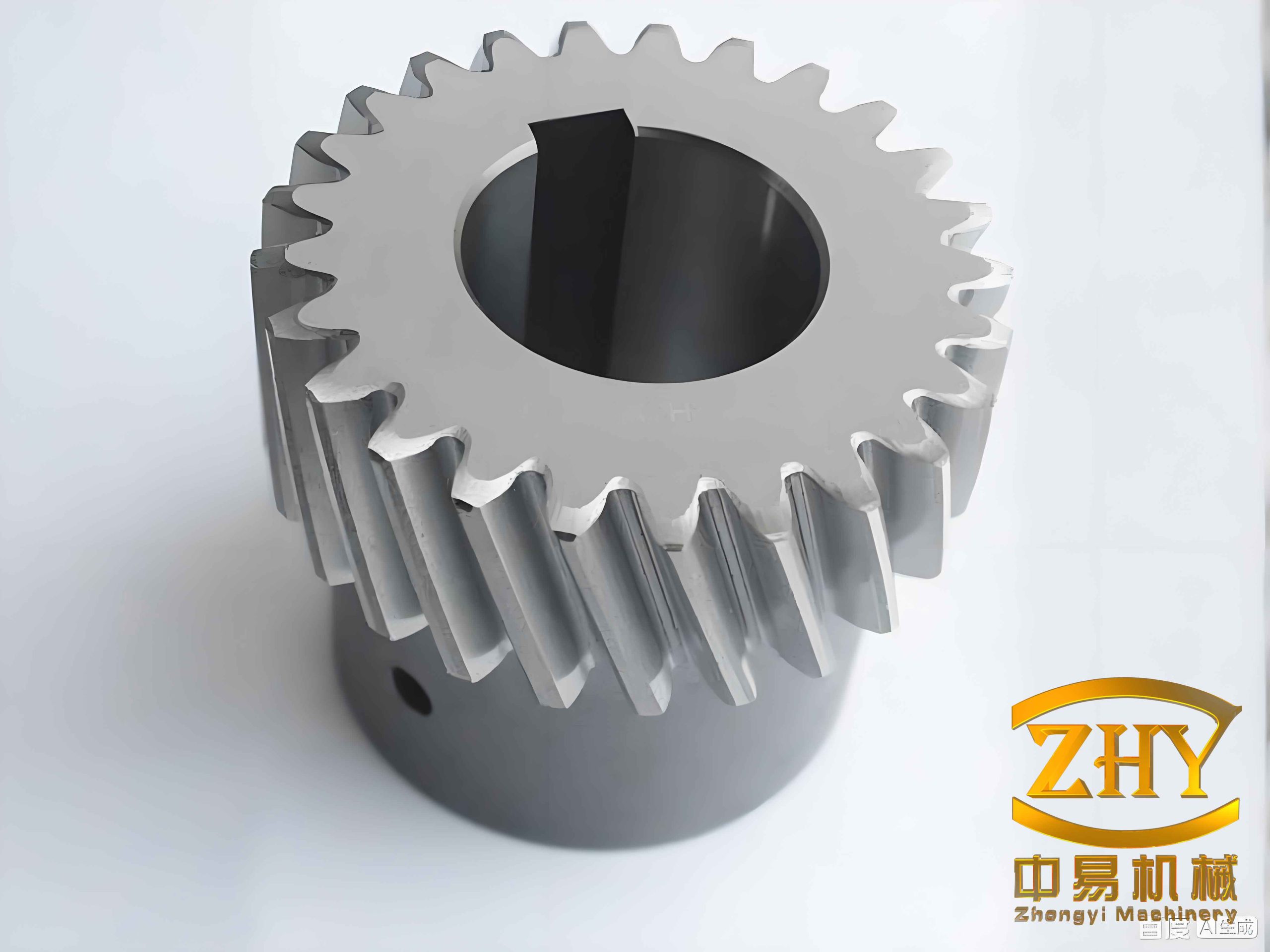
All experiments were performed on a test helical gear with the following specifications: tip‑circle diameter 32.00 mm, pitch‑circle diameter 35.66 mm, 25 teeth, module 1.25 mm, material 45 steel, and standard spiral angle \(\beta_{\text{std}} = 19.32^\circ\). We employed the Renishaw XL‑80 laser interferometer mounted on a high‑precision rotary table (accuracy ±1″) to acquire phase signals. For comparison, we implemented two conventional methods: the “rolling‑grinding” process calculation method (Method A) and the parameter vision detection method (Method B) using a 5‑megapixel industrial camera. Each measurement was repeated 10 times (or 50 times for specific tests) under carefully controlled environmental conditions with minimal vibration and constant temperature.
4.2 Validation of the Key Step: Tangent Calculation
To verify the effectiveness of our theoretical derivation for the tangent of the spiral angle, we used only our proposed method to measure both the pitch‑circle and tip‑circle spiral angle deviations over 10 trials. During these trials, the gear orientation was deliberately altered to simulate varying working conditions. The results are summarized in the table below.
| Trial | \(\beta_{\text{actual}}\) (°) | \(\beta_{\text{std}}\) (°) | \(\Delta\beta\) (°) |
|---|---|---|---|
| 1 | 19.41 | 19.32 | 0.09 |
| 2 | 19.40 | 19.32 | 0.08 |
| 3 | 19.42 | 19.32 | 0.10 |
| 4 | 19.43 | 19.32 | 0.11 |
| 5 | 19.42 | 19.32 | 0.10 |
| 6 | 19.44 | 19.32 | 0.12 |
| 7 | 19.45 | 19.32 | 0.13 |
| 8 | 19.40 | 19.32 | 0.08 |
| 9 | 19.41 | 19.32 | 0.09 |
| 10 | 19.42 | 19.32 | 0.10 |
The measured deviations are small (0.08°–0.13°) and consistent, demonstrating that the computed tangent values from our parametric derivation reliably underpin the angle calculation.
4.3 Comparison of Relative Errors
We conducted 60 experiments on the same helical gear, each time applying a known artificial spiral angle deviation. The relative error \(E_r = |l – l_0|/l_0\times100\%\) was computed for each of the three methods. The average relative errors across all 60 trials are juxtaposed in the table below.
| Method | Average \(E_r\) (%) |
|---|---|
| Proposed laser interference algorithm | 2.3 |
| Rolling‑grinding process calculation | 8.7 |
| Parameter vision detection | 5.4 |
The proposed method achieves the smallest relative error, significantly outperforming both conventional approaches.
4.4 Detection of Imposed Deviations
Over 50 consecutive experiments, we artificially introduced specific spiral angle deviations at trial numbers 10, 15, 20, 25, 35, 40, and 45. The three methods’ detection outcomes are summarized in the following table.
| Trial # | Imposed Deviation (°) | Proposed (°) | Rolling‑grinding (°) | Vision (°) |
|---|---|---|---|---|
| 10 | +0.15 | 0.14 | 0.08 | 0.11 |
| 15 | −0.20 | −0.19 | −0.12 | −0.16 |
| 20 | +0.30 | 0.31 | 0.20 | 0.25 |
| 25 | −0.25 | −0.24 | −0.15 | −0.20 |
| 35 | +0.40 | 0.41 | 0.28 | 0.33 |
| 40 | −0.50 | −0.49 | −0.35 | −0.42 |
| 45 | +0.60 | 0.61 | 0.42 | 0.50 |
The proposed algorithm consistently identified the imposed deviations with high fidelity, whereas the other two methods exhibited noticeable lag and inaccuracy.
4.5 Stability Under Complex Environmental Conditions
To evaluate robustness, we performed 100 measurements in an environment containing temperature fluctuations and moderate vibrations. The maximum and minimum spiral angle deviations recorded by each method over the entire test set are listed below.
| Method | Max Deviation (°) | Min Deviation (°) | Range (°) |
|---|---|---|---|
| Proposed laser interference | +1.5 | −1.5 | ±1.5 |
| Rolling‑grinding process | +3.5 | −3.5 | ±3.5 |
| Parameter vision detection | +5.5 | −5.5 | ±5.5 |
The proposed method maintains a narrow fluctuation range of only ±1.5°, which is substantially better than the ±3.5° and ±5.5° observed for the rolling‑grinding and vision methods, respectively.
5. Conclusion
We have developed a laser interference detection algorithm for measuring spiral angle deviations in helical gears. By rigorously deriving the parametric spiral line equations and the tangent relationship between the pitch‑circle and tip‑circle spiral angles, our approach overcomes the limitations of traditional simplified methods. The integration of high‑accuracy laser interferometry allows precise determination of actual spiral angles, leading to deviation values with low relative error and excellent stability. Extensive comparative experiments demonstrate that our method achieves an average relative error of only 2.3% and maintains a deviation fluctuation within ±1.5° even under adverse environmental conditions—far exceeding the performance of the rolling‑grinding process calculation method (±3.5°) and the parameter vision detection method (±5.5°). This work provides a reliable and robust solution for helical gear quality inspection in industrial machining.