
In modern mechanical power transmission systems, the helical gear is a fundamental and critical component. Its design, featuring teeth that are cut at an angle to the gear axis, offers significant advantages over its spur gear counterpart, including smoother operation, higher load capacity, and reduced noise. The proper functioning and meshing of a helical gear are intrinsically tied to the accuracy of its geometric parameters. Among these, the helical angle—the angle between the tooth trace and an element of the pitch cylinder—is arguably one of the most vital yet challenging parameters to measure accurately. Precise knowledge of this angle is essential for ensuring correct assembly, optimal load distribution, and ultimately, the reliability and longevity of the entire drivetrain.
Traditional measurement techniques for gear parameters, ranging from simple calipers to sophisticated coordinate measuring machines (CMMs), often involve contact, which can be time-consuming, require skilled operators, and risk damaging delicate gear surfaces. The advent of machine vision technology has opened new avenues for non-contact, rapid, and automated inspection. While numerous studies have successfully applied machine vision to the parameter measurement of spur gears, the helical gear presents a unique set of challenges. Its three-dimensional tooth geometry, where the profile varies along the face width, complicates direct edge detection and parameter extraction from a single two-dimensional image. This complexity has historically made the helical angle particularly difficult to assess using standard optical methods.
To address this specific gap, this article presents and elaborates on a novel, efficient machine vision-based method for measuring the helical angle of a standard helical gear. The core innovation of this methodology lies not in attempting to directly measure the angle from a side profile, but in deriving it through a systematic analysis of the gear’s two end faces. By capturing and processing digital images of the top and bottom faces of the helical gear, key characteristic parameters are extracted. A pivotal intermediate parameter, the relative rotation angle between corresponding tooth features on the two faces, is calculated. This rotation angle, in conjunction with other basic gear dimensions, allows for the precise determination of the helical angle. This approach transforms a complex 3D measurement problem into a more manageable series of 2D image processing tasks.
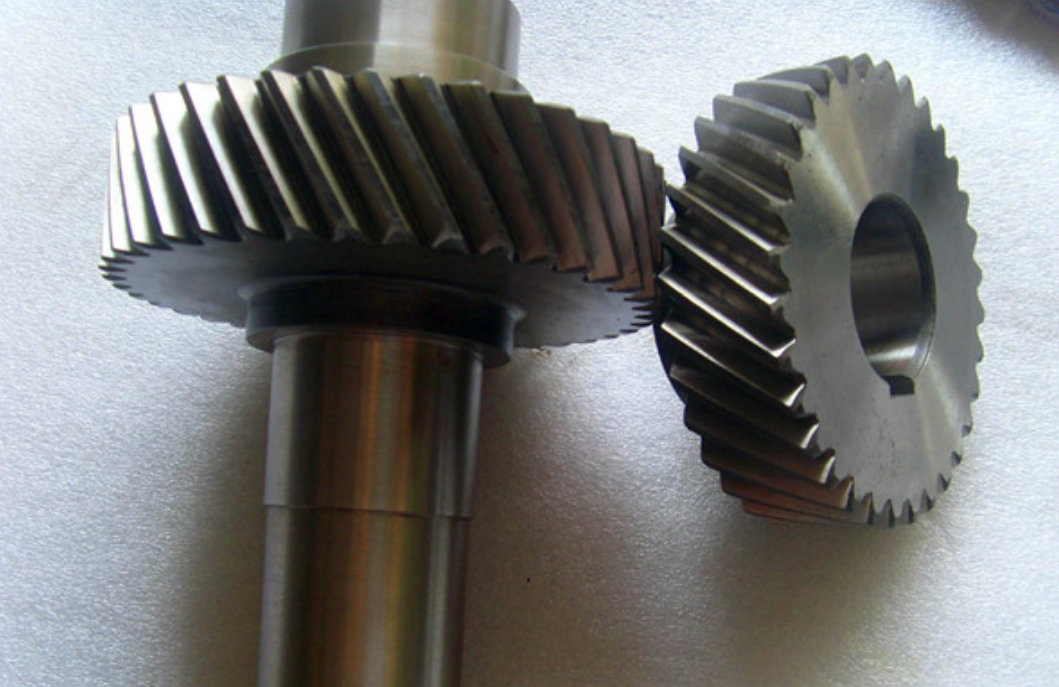
The fundamental relationship governing a helical gear’s geometry is the thread-like path of its tooth. The helical lead, $P_z$, is the axial distance required for one complete $360^\circ$ revolution of the tooth around the gear. This lead is related to the helical angle $\beta$ and the pitch diameter $d$ by the formula:
$$ \tan \beta = \frac{\pi d}{P_z} $$
For a standard helical gear with module $m$ and number of teeth $z$, the pitch diameter is $d = m z$. If a gear has a face width $b$ and a tooth traces a rotation of $\gamma$ degrees over this width, then the corresponding lead segment is $\frac{\gamma}{360^\circ} P_z$. From the geometry, we can also see that $\tan \beta = \frac{\pi d}{P_z} = \frac{\pi m z}{P_z}$. Relating the segment of the lead over width $b$ to the rotation $\gamma$, we derive the core formula used in this method:
$$ \sin \beta = \frac{\gamma}{360^\circ} \cdot \frac{\pi z m}{b} $$
Therefore, by accurately measuring the module $m$, the number of teeth $z$, the face width $b$, and the relative rotation angle $\gamma$ between the gear’s two end faces, the helical angle $\beta$ can be computed directly:
$$ \beta = \arcsin\left( \frac{\gamma}{360^\circ} \cdot \frac{\pi z m}{b} \right) $$
The system developed to implement this methodology consists of a structured hardware setup and a defined software processing pipeline. The hardware framework is designed for stability and repeatability. A high-resolution CCD camera is mounted vertically on a stable stand. The gear under inspection is placed on a flat, neutral background platform. Critical to the imaging quality is the lighting system, which employs a combination of LED ring lighting and backlighting. This dual-source configuration enhances contrast, minimizes shadows that could interfere with edge detection, and ensures uniform illumination across the gear’s face. The camera is connected to a computer which hosts the custom software for image acquisition, processing, and analysis.
The measurement procedure follows a strict sequence to ensure consistency. First, the helical gear is positioned with one end face (e.g., the top face) oriented upwards towards the camera, and an image is captured. Subsequently, the gear is carefully flipped $180^\circ$ so that the opposite end face (the bottom face) is now upward, and a second image is captured. It is crucial that the gear is flipped precisely about its axis to maintain alignment consistency for subsequent comparison. The software then processes these two images independently and in parallel through a multi-stage pipeline to extract the necessary parameters, culminating in the calculation of $\gamma$ and finally $\beta$.
| Step | Action | Output |
|---|---|---|
| 1 | Place gear, capture Image A (Face 1). | Raw digital image. |
| 2 | Flip gear $180^\circ$, capture Image B (Face 2). | Raw digital image. |
| 3 | Process Images A & B (Preprocessing, Segmentation). | Binary images of gear faces. |
| 4 | Analyze binary images to find center, $r_a$, $r_f$, $z$. | Geometric parameters $m$, $z$, $(x_0, y_0)$. |
| 5 | Extract tooth regions from both faces and match pairs. | Coordinates of matched tooth region centers. |
| 6 | Calculate relative rotation angle $\gamma$ from matched pairs. | Angle $\gamma$ (degrees). |
| 7 | Input $m$, $z$, $b$, $\gamma$ into derived formula. | Helical angle $\beta$. |
Image Processing Pipeline: From Raw Pixels to Precise Parameters
The robustness of the entire helical gear measurement method hinges on the accuracy and reliability of the image processing pipeline. Each stage is designed to transform the raw pixel data into a clean, analyzable representation of the gear’s geometry.
1. Grayscale Conversion: The initial color images captured by the CCD camera contain redundant information for geometric measurement. Converting them to grayscale simplifies subsequent processing and reduces computational load. The conversion uses the perceptual luminance model, weighting the red (R), green (G), and blue (B) channels according to human eye sensitivity:
$$ Y = 0.299R + 0.587G + 0.114B $$
where $Y$ is the resulting grayscale intensity value. This weighted average produces a grayscale image that best represents the visual features important for edge detection.
2. Advanced Filtering for Noise Reduction and Contrast Enhancement: Industrial image acquisition invariably introduces noise (e.g., sensor noise, quantization noise) and uneven illumination. A two-stage filtering approach is employed. First, a median filter is applied. This non-linear filter is highly effective at removing “salt-and-pepper” noise while preserving edge sharpness. For a sliding window $W$ centered on pixel $[x_{i,j}]$, the output $[y_{i,j}]$ is the median value of the pixels within $W$:
$$ [y_{i,j}] = \text{med}(W[x_{i,j}]) $$
Second, a homomorphic filter is used to correct non-uniform illumination and enhance contrast. It operates on the principle that an image $f(x,y)$ can be expressed as the product of an illumination component $i(x,y)$ (low-frequency) and a reflectance component $r(x,y)$ (high-frequency): $f(x,y) = i(x,y) \cdot r(x,y)$. By transforming to the logarithmic domain, this product becomes a sum: $\ln f(x,y) = \ln i(x,y) + \ln r(x,y)$. A high-pass filter in the frequency domain can then attenuate the low-frequency illumination variations and amplify the high-frequency reflectance details, leading to a more uniform and contrast-enhanced image after the inverse transform.
3. Dual-Threshold Segmentation: The goal is to separate the gear object from the background. Due to the lighting setup, the image typically contains three distinct regions: the bright metal gear (object), potential darker shadows near the gear root, and the bright white background. A modified Otsu’s method for dual-threshold segmentation is ideal. A fixed high threshold $T_1 \approx 180$ cleanly separates the white background. An adaptive threshold $T_2$ is then found to optimally separate the gear object from any shadow areas. Otsu’s algorithm finds $T_2$ by maximizing the between-class variance $\sigma^2_B$ among the three resultant classes (background, shadow, gear):
$$ \sigma^2_B(T_2) = \omega_0(\mu_0 – \mu_T)^2 + \omega_1(\mu_1 – \mu_T)^2 + \omega_2(\mu_2 – \mu_T)^2 $$
where $\omega_i$ and $\mu_i$ are the probability and mean of class $i$, and $\mu_T$ is the total image mean. The value of $T_2$ that maximizes $\sigma^2_B$ is selected, yielding a clean binary image where the gear is segmented.
4. Morphological Post-Processing: The segmented binary image may contain small holes within the gear body due to reflections or markings. These are filled using a seed-fill algorithm (flood fill). Starting from a point inside the gear region, the algorithm recursively adds all connected foreground pixels until a boundary is reached, ensuring a solid, filled region. This step is crucial for accurate centroid and radius calculations.
Parameter Extraction Algorithms
With clean binary images of both gear faces obtained, the next step is to extract the specific parameters needed for the helical angle calculation.
Gear Center and Module Determination: The gear’s centroid $(x_0, y_0)$ is calculated as the geometric center of the filled binary region. The addendum radius $r_a$ (radius to the tooth tip) is found by fitting a circle to the outermost contour points of the gear using a least-squares fitting algorithm. The dedendum radius $r_f$ (radius to the tooth root) is determined by finding the largest inscribed circle within the gear’s inner boundary, centered at $(x_0, y_0)$. The module $m$ is then derived from the standard relationship between these radii and the module:
$$ m = \frac{r_a – r_f}{2.25} $$
The calculated value is compared to a standard module series to identify the nominal module of the helical gear.
Tooth Count ($z$): To isolate individual tooth spaces, a morphological operation is performed. A circular structuring element with a radius equal to the pitch radius, $(r_a + r_f)/2$, is created. Subtracting this element (via an erosion-like operation) from the binary gear image effectively removes the central hub and leaves behind distinct, disconnected regions corresponding to the gaps between teeth (the tooth spaces). The number of these regions, counted via connected-component analysis, equals the number of teeth $z$.
Calculation of the Relative Rotation Angle ($\gamma$): This is the most critical and novel step for the helical gear measurement. The processed images from Face A and Face B are both subjected to the tooth space isolation process described above. This yields two sets of tooth-space “blob” regions. The algorithm then attempts to find matching pairs of regions between the two faces. A match is hypothesized based on similar region area and spatial relationship to the center. For each valid matched pair $k$, the centroid coordinates of the region on Face A, $\vec{C}_{A,k}$, and on Face B, $\vec{C}_{B,k}$, are computed. The vectors from the gear center $\vec{O}$ to these centroids are $\vec{OA}_k$ and $\vec{OB}_k$. The angle $\gamma_k$ between these two vectors (the rotation of that specific tooth feature from one face to the other) is calculated using the law of cosines based on the side lengths:
$$ s_1 = |\vec{OA}_k|, \quad s_2 = |\vec{OB}_k|, \quad s_3 = |\vec{C}_{A,k}\vec{C}_{B,k}| $$
$$ \gamma_k = \arccos\left( \frac{s_1^2 + s_2^2 – s_3^2}{2 s_1 s_2} \right) $$
Multiple valid matches (e.g., 3 pairs) are identified, and their individual $\gamma_k$ values are averaged to obtain a robust, final relative rotation angle $\gamma$:
$$ \gamma = \frac{1}{N} \sum_{k=1}^{N} \gamma_k $$
Helical Angle ($\beta$) Calculation: The final step is straightforward computation. The face width $b$ is measured offline using a precision caliper. With all parameters now known—$m$, $z$, $b$, and $\gamma$—the helical angle $\beta$ for the helical gear is computed using the final derived formula:
$$ \beta = \arcsin\left( \frac{\gamma}{360^\circ} \cdot \frac{\pi z m}{b} \right) $$
Experimental Validation and Error Analysis
To validate the proposed machine vision method for helical gear inspection, a controlled experiment was conducted. The test specimen was a standard helical gear with known parameters. The vision system utilized a CCD camera with a resolution of 2,592 x 1,944 pixels. Prior to measurement, the system was calibrated to determine the pixel-to-millimeter conversion factor, ensuring accurate dimensional measurements from the images. A high-precision spiral angle measurement instrument was used to provide a benchmark “ground truth” value for the helical angle $\beta$.
The measurement was repeated multiple times to ensure consistency. The results from the vision-based method were then compared against the results from the traditional instrument.
| Parameter | Traditional Method | Proposed Vision Method | Notes |
|---|---|---|---|
| Number of Teeth ($z$) | 31 | 31 | Correctly identified. |
| Module ($m$) | 1.00 mm | 1.00 mm | Correctly identified from radii. |
| Face Width ($b$) | 7.36 mm | 7.36 mm (measured by caliper) | Input parameter. |
| Relative Rotation Angle ($\gamma$) | N/A | 5.6147° | Calculated from image pairs. |
| Helical Angle ($\beta$) | 12.03° | 11.92° | Calculated from formula. |
The calculated helical angle from the vision method was 11.92°, compared to the reference value of 12.03°. This represents a relative error of approximately 0.9%, which is well within acceptable tolerances for many industrial inspection tasks involving helical gears.
Discussion of Error Sources: The small discrepancy can be attributed to several factors inherent to the vision system and the method itself. First, Optical and Lighting Errors: Despite controlled lighting, minor inhomogeneities or specular reflections on the metallic surface of the helical gear can slightly distort the perceived edge during thresholding. Ambient light leakage can also affect contrast. Second, Lens Distortion: Radial and tangential distortion from the camera lens, though mitigated by calibration, can introduce small geometric inaccuracies, affecting the precise location of edges and centroids. Third, Mechanical Positioning Error: Any slight tilt or non-perpendicular alignment of the helical gear’s face relative to the camera sensor during either of the two image captures can project a slightly elliptical shape, affecting the calculated center and radii. The $180^\circ$ flip operation also assumes a perfect rotation about the gear’s axis; any deviation introduces error into the calculated $\gamma$.
Potential Improvements: The accuracy of this helical gear measurement technique can be further enhanced. Employing telecentric lenses would eliminate perspective errors and provide a constant magnification regardless of minor part placement variations. Implementing more advanced sub-pixel edge detection algorithms (e.g., using gradient interpolation or Zernike moments) would improve the precision of contour localization beyond the pixel level. Furthermore, using a motorized rotary stage to precisely flip the gear by $180^\circ$ would ensure better alignment consistency between the two image captures.
Conclusion
This article has detailed a robust and practical machine vision methodology for the non-contact measurement of the critical helical angle parameter in helical gears. By shifting the problem domain from direct 3D measurement to the comparative 2D analysis of the gear’s end faces, the method simplifies the inspection challenge. The comprehensive image processing pipeline—encompassing advanced filtering, intelligent segmentation, and morphological analysis—reliably extracts the necessary geometric primitives. The key innovation is the algorithm to determine the relative rotation angle $\gamma$ between corresponding features on the two faces, which is then used in conjunction with basic gear dimensions to compute the helical angle via a derived trigonometric relationship.
Experimental validation confirms that the method is both fast and reliable, achieving a measurement accuracy sufficient for industrial quality control purposes. The technique offers significant advantages over traditional contact methods, including speed, avoidance of surface damage, and potential for full automation. While subject to minor errors from optical and mechanical sources, these can be systematically reduced through hardware and algorithmic refinements. This approach represents a valuable contribution to the field of precision metrology for complex mechanical components like the helical gear, demonstrating how machine vision can solve intricate geometric measurement problems with efficiency and precision.