
The relentless pursuit of aviation safety and reliability hinges on the flawless operation of its most critical component: the aero-engine. Often termed the ‘heart’ of the aircraft, its failure can have catastrophic consequences. Within this complex machinery, bevel gears play a pivotal role in power transmission, redirecting torque between non-parallel shafts, typically within accessory gearboxes that drive vital systems like fuel and hydraulic pumps. These components operate under extreme conditions—high rotational speeds, significant and variable loads, and demanding thermal environments. Consequently, they are susceptible to a spectrum of failure modes such as pitting, spalling, scuffing, cracking, and ultimately, tooth breakage. Early detection of such faults is paramount for predictive maintenance, preventing unscheduled downtime, and ensuring flight safety.
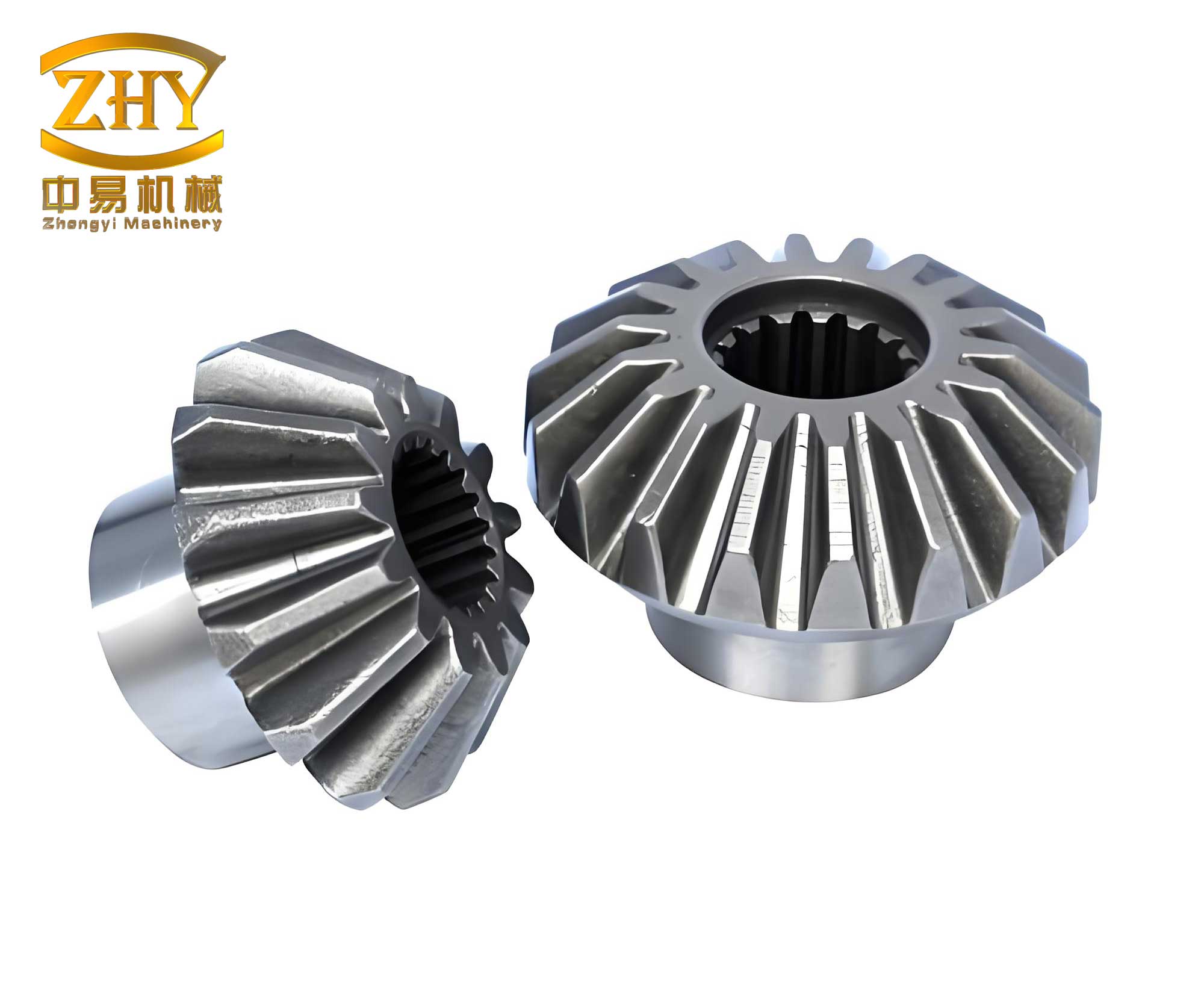
However, diagnosing incipient faults in aero-engine bevel gears presents a formidable challenge. The vibration signals emanating from a nascent fault are inherently weak. Furthermore, these signals must traverse complex paths through the gearbox structure, becoming heavily contaminated by noise from other rotating components (e.g., bearings, shafts), strong meshing harmonics, and external electromagnetic interference. This results in the characteristic fault signatures being buried within a noisy, complex signal mixture, rendering conventional diagnostic techniques ineffective. The feeble vibration signal from a faulty bevel gear is often indistinguishable from background noise using standard spectral analysis. Therefore, developing and applying advanced signal processing algorithms capable of separating these weak, periodic transients from noise and harmonic interference is a critical technological hurdle. This research focuses on overcoming this hurdle by investigating and comparing several advanced signal processing methods for the fault diagnosis of aero-engine bevel gears, with a particular emphasis on the efficacy of low-rank sparse decomposition.
Experimental Setup and Data Acquisition
The foundation of any reliable diagnostic study is high-quality data acquired from a representative test environment. Our investigation was conducted on a dedicated aero-engine test rig, simulating real operational conditions.
Test System Architecture
The data acquisition system was meticulously designed to capture high-fidelity vibration signals. It comprised both hardware and software components, as summarized in Table 1.
| Component | Type / Model | Key Specifications & Purpose |
|---|---|---|
| Sensor | Accelerometers (B & K 4514B-001, etc.) | High sensitivity, low impedance output to minimize noise susceptibility. Measures vibration acceleration. |
| Cabling | Double-shielded twisted pair | Minimizes electromagnetic interference and signal leakage, ensuring signal integrity. |
| Data Acquisition (DAQ) | DEWETRON 8-channel system | 24V DC power, interrupt sampling mode, max 10 kHz sampling rate. Converts analog to digital signals. |
| Computer | Industrial-grade with SSD | Robust performance in high-vibration environments; fast data writing. |
| Software | DEWESOFT 6.6.4 | Real-time monitoring, graphical channel setup, advanced data replay, and online hardware status check. |
Sensor Placement and Test Procedure
To comprehensively capture the dynamic response of the bevel gear pair, six accelerometers were strategically mounted on the accessory gearbox casing. Sensors were placed symmetrically on both sides to capture vibrations in both radial and axial directions relative to the bevel gear shafts, as the fault manifestation can differ with direction. The engine was run through a standardized test cycle, gradually increasing power and applying corresponding electrical loads to simulate actual flight profiles. The specific parameters for the data analyzed in this study are detailed below:
| Parameter | Value |
|---|---|
| Engine Speed | 10,400 rpm |
| Active Bevel Gear Shaft Rotational Frequency (F_in) | 83.56 Hz |
| Passive Bevel Gear Shaft Rotational Frequency (F_out) | 79.77 Hz |
| Bevel Gear Mesh Frequency (F_m) | 1,754 Hz |
| Sampling Frequency | 20,000 Hz |
Theoretical Framework and Signal Processing Methodologies
A local fault on a bevel gear tooth, such as a spall or crack, generates a sharp impact each time it engages. This impact amplitude-modulates (AM) the regular meshing vibration and induces a series of transient impulses in the time-domain signal. The period of these impulses corresponds to the characteristic fault frequency, which is the rotational frequency of the faulty gear (F_in for the active gear, F_out for the passive gear). The core diagnostic task is to extract these periodic impulses from the observed, noisy mixture signal \( X(t) \). Let \( X(t) \) be represented as:
$$ X(t) = S(t) + N(t) + H(t) $$
where \( S(t) \) is the sparse, impulsive fault signature, \( N(t) \) is random noise, and \( H(t) \) represents deterministic harmonic components from healthy meshing and other shafts. We evaluated four distinct methodologies to solve this separation problem.
1. Time-Frequency Analysis (Baseline Method)
This is a classical approach involving the examination of the time-domain waveform, the frequency spectrum (FFT), and the squared envelope spectrum. A fault is suggested by non-sinusoidal, asymmetric waveforms in the time domain and the presence of sidebands around the mesh frequency and its harmonics in the frequency spectrum. The envelope spectrum, derived by demodulating a band-passed signal, aims to reveal the lower-frequency fault characteristic frequency. While useful for pronounced faults, it often fails for weak, early-stage bevel gear faults due to low signal-to-noise ratio (SNR).
2. Sparse Regularization (Basis Pursuit Denoising – BPDN)
This approach leverages the fact that the fault impulse signal \( S(t) \) is sparse in some domain (e.g., time or a transformed dictionary like wavelets). The method solves an optimization problem to find the sparsest representation of the signal that closely matches the observations. A classic formulation is:
$$ \min_{s} \frac{1}{2} \| X – \Phi s \|_2^2 + \lambda \| s \|_1 $$
where \( \Phi \) is a basis or dictionary, \( s \) is the vector of sparse coefficients, \( \| \cdot \|_2 \) is the L2 norm (data fidelity term), \( \| \cdot \|_1 \) is the L1 norm (sparsity-promoting term), and \( \lambda \) is a regularization parameter. The goal is to separate \( S(t) \) approximated by \( \Phi s \) from noise. However, its performance can degrade when strong harmonic interference \( H(t) \) is present, as it may not be sparse in the chosen dictionary.
3. Spectral Kurtosis (SK) and the Fast Kurtogram
Spectral Kurtosis is a statistical tool indicating how impulsiveness varies with frequency. It is excellent for selecting the optimal frequency band for filtering. The Fast Kurtogram algorithm automates the search for the center frequency \( f_c \) and bandwidth \( B_w \) that maximize kurtosis in the envelope of band-passed signals. The signal is then filtered within this optimal band \( [f_c – B_w/2, f_c + B_w/2] \). The kurtosis \( K(f) \) at frequency \( f \) for a complex envelope \( H(t, f) \) can be defined as:
$$ K(f) = \frac{\langle |H(t, f)|^4 \rangle}{\langle |H(t, f)|^2 \rangle^2} – 2 $$
where \( \langle \cdot \rangle \) denotes time averaging. While powerful for detecting a single band of impulsivity, its effectiveness diminishes if the fault impulses excite a broad frequency range or if multiple interfering impulsive sources exist.
4. Low-Rank and Sparse Decomposition (LRSD)
This is the core advanced method evaluated in this study. It is founded on the robust principal component analysis (RPCA) concept, which posits that a data matrix \( \mathbf{X} \) can be decomposed into a low-rank matrix \( \mathbf{L} \) (representing the correlated, repetitive harmonic components \( H(t) \)) and a sparse matrix \( \mathbf{S} \) (representing the impulsive, anomalous fault components \( S(t) \)), with noise being accounted for within the sparse and residual parts. The mathematical formulation is:
$$ \min_{\mathbf{L}, \mathbf{S}} \|\mathbf{L}\|_* + \lambda \|\mathbf{S}\|_1 \quad \text{subject to} \quad \mathbf{X} = \mathbf{L} + \mathbf{S} $$
Here, \( \|\mathbf{L}\|_* \) is the nuclear norm (sum of singular values), which is a convex surrogate for rank minimization, promoting low-rank structure. \( \|\mathbf{S}\|_1 \) is the L1 norm (sum of absolute values of all entries), promoting sparsity. \( \lambda \) is a positive weighting parameter that balances the contribution of the two parts.
For vibration signal analysis, the one-dimensional time series \( X(t) \) is first arranged into a Hankel matrix \( \mathbf{X}_H \). The periodic harmonic signals (like gear meshing) become highly correlated across rows/columns of this matrix, giving it a low-rank property. In contrast, the transient, sporadic fault impulses and random noise contribute to sparse entries. The LRSD algorithm, often solved via Augmented Lagrange Multiplier methods, effectively separates \( \mathbf{L} \) and \( \mathbf{S} \). The sparse component \( \mathbf{S} \), once reconstructed back to a time series, contains the enhanced fault impulses with most of the harmonic background and part of the noise removed.
Results, Analysis, and Comparative Discussion
The vibration signal from a channel monitoring the accessory gearbox was analyzed using the four methods described. The results conclusively demonstrate the superiority of the Low-Rank Sparse Decomposition approach for diagnosing incipient bevel gear faults.
Analysis of Raw Signal
The raw time-domain waveform appeared chaotic with no obvious periodic impulses. Its frequency spectrum was dominated by the mesh frequency (1,754 Hz) and its harmonics, alongside numerous other unknown spectral lines. The squared envelope spectrum of the raw signal, shown conceptually, was cluttered. Although the characteristic frequency of the active bevel gear \( F_{in} \) (approx. 83.56 Hz) and its harmonics were faintly present, they were severely masked by high levels of background noise and interfering spectral components, making definitive fault identification impossible. This is the classic challenge in bevel gear diagnostics.
Performance Evaluation of Each Method
The outcomes from applying each signal processing technique are critically compared below and summarized in Table 2.
1. Time-Frequency Analysis: The time-domain plot revealed a non-sinusoidal, asymmetric waveform, suggesting possible misalignment or eccentricity. A momentary amplitude increase at a specific time indicated an impact. The frequency spectrum showed the mesh frequency but with non-symmetric sidebands and an abnormal pattern where the 3rd harmonic was higher than the 2nd, hinting at a load variation likely caused by a localized fault like pitting. However, this method could only suggest a problem existed; it could not clearly isolate or confirm the specific fault characteristic frequency for the bevel gear.
2. Sparse Regularization (BPDN): The decomposed signal in the time domain exhibited a series of discrete impulses with high sparsity. The maximum amplitude was significant (1457.81 A/g). However, the impulses lacked a clear periodic structure corresponding to \( F_{in} \) or \( F_{out} \). The envelope spectrum of this BPDN-extracted signal still contained substantial noise interference, and the dominant peaks did not correspond to the expected bevel gear fault frequencies. It failed to provide a diagnosable result, indicating that promoting sparsity alone was insufficient when the harmonic interference was structured and strong.
3. Spectral Kurtosis (Fast Kurtogram): The Kurtogram successfully identified an optimal filter band centered at 3437.5 Hz with a 625 Hz bandwidth. However, after filtering the signal within this band, the resulting time-domain waveform did not show identifiable periodic transients. Its envelope spectrum, while showing some frequency components near the fault frequencies, suffered from severe coupling between different tonal components and did not present a clear, unambiguous series of peaks at \( F_{in} \) and its harmonics. Diagnosis remained inconclusive.
4. Low-Rank Sparse Decomposition (LRSD): The results were markedly different. The time-domain signal of the sparse component \( \mathbf{S} \) revealed clear, periodic impulse trains. The maximum amplitude was 293.26 A/g. More importantly, the period between impulses corresponded precisely to the rotation period of the active shaft. The frequency spectrum of \( \mathbf{S} \) was significantly cleaner, with much of the harmonic clutter removed. The definitive proof came from the squared envelope spectrum of \( \mathbf{S} \). It displayed prominent, distinct peaks at the active bevel gear’s characteristic frequency \( F_{in} \) (84.75 Hz) and its first five harmonics. Peaks corresponding to the passive gear frequency \( F_{out} \) were also visible. The amplitude at \( F_{in} \) was the highest (7289.54 A/g), providing clear evidence of a localized fault on the active bevel gear. The LRSD method successfully stripped away the low-rank harmonic background and a significant portion of the noise, leaving the sparse fault signature highly visible and diagnosable.
| Signal Processing Technique | Key Advantages | Limitations for Bevel Gear Diagnosis | Diagnostic Outcome on Test Signal |
|---|---|---|---|
| Time-Frequency Analysis | Simple, intuitive, good for identifying gross faults and modulation patterns. | Poor at diagnosing early-stage faults with low SNR. Cannot separate coupled components. Qualitative rather than quantitative. | Suggested possible fault but could not confirm or identify characteristic frequency. |
| Sparse Regularization (BPDN) | Promotes sparsity, effective for extracting impulsive components in certain noise types. | Struggles with structured, low-rank harmonic interference. Result often retains noise, and periodicity of impulses may not be clear. | Extracted sparse impulses but without clear periodicity; envelope spectrum remained noisy and inconclusive. |
| Spectral Kurtosis (Fast Kurtogram) | Excellent for blind identification of the most impulsive frequency band. Non-parametric and adaptive. | Assumes a single, dominant band of impulsivity. Performance degrades with broad-band impulses or multiple fault sources. The final filtered signal may still be complex. | Identified an optimal band, but the filtered signal’s envelope spectrum did not yield a clear, diagnosable fault frequency. |
| Low-Rank Sparse Decomposition (LRSD) | Explicitly models and separates harmonic (low-rank) and impulsive (sparse) components. Highly effective in high-noise, high-interference environments. Enhances fault signature saliency dramatically. | Computationally more intensive than other methods. Requires parameter (λ) selection. The assumption of a strictly low-rank background may not always hold perfectly. | Successfully isolated periodic fault impulses. Envelope spectrum showed clear peaks at the active bevel gear fault frequency (F_in) and its harmonics, enabling definitive diagnosis. |
Conclusion and Perspectives
This comprehensive investigation into fault diagnosis methodologies for aero-engine bevel gears leads to several definitive conclusions. The experimental test system, employing high-sensitivity accelerometers and robust data acquisition hardware/software, proved capable of capturing the subtle vibration dynamics necessary for advanced analysis. The core challenge—extracting weak, periodic fault impulses from a dominant mixture of harmonic meshing signals and random noise—was systematically addressed.
While conventional time-frequency analysis provides an initial, qualitative assessment, it lacks the discriminative power for early fault detection in complex bevel gear systems. Sparse regularization techniques, though powerful in concept, can be overwhelmed by the strong, correlated harmonic background, failing to deliver a clean diagnostic result. The Spectral Kurtosis method, while adept at finding impulsive bands, did not conclusively isolate the bevel gear fault signature in this application, likely due to the broad-frequency nature of the impacts and residual complexity post-filtering.
The Low-Rank Sparse Decomposition algorithm emerged as the most effective solution. By explicitly modeling the vibration signal as a superposition of a low-rank component (healthy, periodic gear meshing) and a sparse component (anomalous, impulsive faults), it directly attacks the core of the separation problem. The results were unambiguous: the LRSD-processed signal exhibited clear periodicity in the time domain and, crucially, a pristine envelope spectrum with sharply defined peaks at the characteristic fault frequency of the active bevel gear and its harmonics. This method effectively filtered out the noise and harmonic interference that plagued other techniques, thereby solving the critical technical problem of separating and identifying the微弱 (weak) vibration signal of a faulty bevel gear.
Therefore, this research validates that the Low-Rank Sparse Decomposition algorithm provides a robust and effective new method for the fault diagnosis of aero-engine bevel gears. Its implementation can significantly enhance the reliability and safety prognosis of gearbox systems by enabling the detection of faults at their earliest, most manageable stages. For future work, integrating this method with real-time monitoring systems, exploring adaptive parameter selection for \( \lambda \), and combining it with deep learning classifiers for automated fault type identification present promising avenues for further increasing the intelligence and autonomy of aero-engine health management systems.