
In the realm of mechanical power transmission, screw gears, commonly referred to as worm gears, play a pivotal role due to their unique ability to provide high reduction ratios in compact designs. As a researcher deeply involved in tribology and lubrication science, I have dedicated significant effort to understanding and enhancing the performance of lubricants specifically formulated for these critical components. Screw gears operate under severe sliding friction conditions, often leading to boundary lubrication regimes where direct metal-to-metal contact can result in increased wear, noise, and thermal degradation. This article presents an in-depth investigation into the application of friction modifiers and oiliness agents in specialized lubricants for screw gears, with a focus on improving friction reduction and anti-wear properties. Through rigorous laboratory testing and simulated operational assessments, we explore the synergistic effects of various additives, aiming to develop optimized formulations that extend the service life and efficiency of screw gears systems.
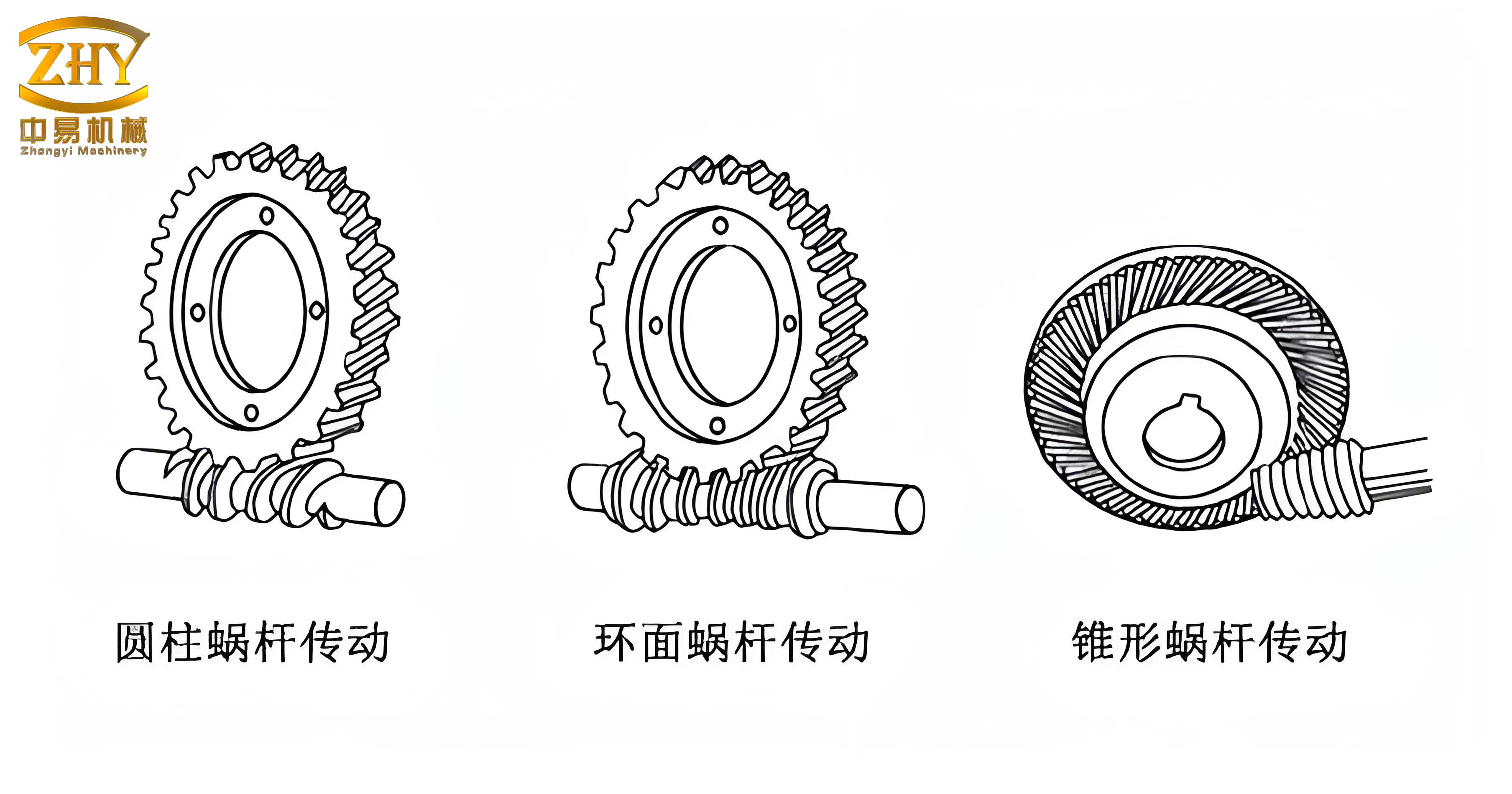
The fundamental challenge in lubricating screw gears stems from their operational characteristics. Unlike spur or helical gears, screw gears involve a sliding motion between the worm and the wheel, typically made of dissimilar materials such as steel and bronze. This sliding action generates substantial frictional heat and wear, necessitating lubricants that can form robust protective films under boundary conditions. In this study, we utilize a polyglycol-based synthetic oil with a viscosity grade of 320 as the base fluid, owing to its excellent thermal stability and viscosity-temperature behavior. Our primary objective is to evaluate the efficacy of selected friction modifiers and oiliness agents in enhancing the tribological performance of lubricants designed for screw gears, specifically targeting applications in RV90-type reducers, which are prevalent in industrial machinery.
To systematically assess the performance of these additives, we employ two main testing methodologies: the Four-Ball Tribometer Test and the RV90 Reducer Bench Evaluation. The Four-Ball Test, conducted according to standard protocols, measures key parameters such as the maximum non-seizure load (PB), the composite wear index (ZMZ), and the wear scar diameter (WSD) under controlled conditions. These metrics provide insights into the lubricant’s ability to prevent adhesive wear and reduce friction. Meanwhile, the RV90 Reducer Bench Evaluation simulates real-world operating conditions, monitoring temperature rise and noise levels in the gearbox over extended periods. This dual approach allows us to correlate laboratory findings with practical performance, ensuring that our formulations meet the demands of actual screw gears applications.
The selection of friction modifiers and oiliness agents is critical, as these additives function by adsorbing onto metal surfaces, forming protective layers that mitigate direct contact. In this research, we investigate six distinct additives: a phosphorus-containing friction modifier (designated as M-1), dimer acid (M-2), ethylene glycol oleate (M-3), butyl stearate (M-4), sulfurized olefin cotton oil (M-5), and molybdenum dialkyl dithiophosphate (M-6). Each additive is evaluated both individually and in combination to identify synergistic effects. A reference oil (M0) containing no friction modifiers or oiliness agents is used as a baseline for comparison. All formulations include fixed amounts of extreme pressure agents, antioxidants, anti-foam agents, and rust inhibitors to address other functional requirements, allowing us to isolate the impact of the focal additives on friction and wear.
The tribological behavior of screw gears lubricants can be mathematically described using models that account for friction coefficients and wear rates. For instance, the friction coefficient $\mu$ in boundary lubrication can be expressed as a function of additive concentration and surface adsorption energy. We consider the following relation:
$$\mu = \mu_0 – \alpha \cdot C \cdot e^{-\frac{E_a}{RT}}$$
where $\mu_0$ is the base friction coefficient without additives, $\alpha$ is a proportionality constant, $C$ is the concentration of the friction modifier, $E_a$ is the activation energy for adsorption, $R$ is the universal gas constant, and $T$ is the absolute temperature. This equation highlights how effective additives reduce friction by facilitating the formation of adsorbed films on screw gears surfaces. Similarly, wear volume $V$ can be modeled using Archard’s wear equation:
$$V = k \cdot \frac{F_N \cdot s}{H}$$
where $k$ is the wear coefficient, $F_N$ is the normal load, $s$ is the sliding distance, and $H$ is the hardness of the material. By incorporating additives that lower $k$, we can significantly enhance the anti-wear performance of lubricants for screw gears.
Our experimental results from the Four-Ball Tests are summarized in Table 1, which compares the wear scar diameters, maximum non-seizure loads, and composite wear indices for each formulation. The data clearly demonstrate the varying effectiveness of the additives in improving tribological properties.
| Sample Name | Additive Composition (wt%) | Wear Scar Diameter (D392N, 60min) / mm | Maximum Non-Seizure Load (PB) / kg | Composite Wear Index (ZMZ) / N |
|---|---|---|---|---|
| M0 (Reference) | None | 0.52 | 88 | 297 |
| M1 | M-1: 2.0% | 0.45 | 107 | 426 |
| M2 | M-2: 2.0% | 0.46 | 100 | 417 |
| M3 | M-3: 2.0% | 0.51 | 94 | 362 |
| M4 | M-4: 2.0% | 0.45 | 107 | 417 |
| M5 | M-5: 2.0% | 0.48 | 100 | 392 |
| M6 | M-6: 2.0% | 0.50 | 94 | 317 |
| M7 | M-1: 1.0%, M-2: 1.0% | 0.47 | 94 | 375 |
| M8 | M-1: 1.0%, M-4: 1.0% | 0.45 | 94 | 392 |
| M9 | M-2: 1.0%, M-4: 1.0% | 0.46 | 100 | 417 |
| M10 | M-1: 0.67%, M-2: 0.67%, M-4: 0.67% | 0.42 | 121 | 562 |
From Table 1, it is evident that samples M1, M2, and M4, containing individual additives M-1, M-2, and M-4 respectively, show significant improvements over the reference oil M0. These additives reduce the wear scar diameter and increase both PB and ZMZ values, indicating enhanced load-carrying capacity and anti-wear performance. In contrast, additives M-3, M-5, and M-6 exhibit lesser effects, with some parameters even degrading compared to the baseline. The most striking result is observed with sample M10, where a ternary blend of M-1, M-2, and M-4 at reduced individual concentrations yields superior performance. This synergistic combination achieves the lowest wear scar diameter (0.42 mm), the highest PB value (121 kg), and the highest ZMZ value (562 N), underscoring the importance of additive interactions in optimizing lubricants for screw gears.
To further validate these findings, we conducted bench tests using an RV90-type screw gears reducer, which closely mimics real operational environments. The reducer was operated under constant load and speed conditions, with temperature and noise monitored over a 72-hour period. The results, presented in Table 2, reveal the practical implications of additive selection on screw gears performance.
| Evaluation Metric | M0 | M1 | M2 | M3 | M4 | M5 | M6 | M7 | M8 | M9 | M10 |
|---|---|---|---|---|---|---|---|---|---|---|---|
| Total Temperature Rise over 72h / °C | 12.7 | 9.8 | 10.8 | 25.5 | 9.8 | 15.6 | 12.3 | 9.3 | 10.1 | 9.6 | 7.0 |
| Temperature Rise per Hour (Average) / °C | 1.6 | 1.5 | 1.9 | 4.0 | 1.3 | 2.3 | 2.0 | 1.6 | 1.2 | 1.5 | 0.7 |
| Total Noise Change over 72h / dB | +0.7 | -0.5 | -0.4 | +0.9 | +0.4 | +1.2 | +0.6 | -0.3 | +0.2 | +0.3 | -0.8 |
| Noise Change per Hour (Average) / dB | +0.5 | -0.3 | -0.2 | +0.6 | +0.1 | +0.4 | +0.4 | -0.1 | +0.1 | +0.1 | -0.5 |
The data in Table 2 highlight a strong correlation with the Four-Ball Test results. Samples M1, M2, and M4 demonstrate lower temperature rises and noise reductions compared to the reference oil M0, confirming their effectiveness in real screw gears applications. Notably, sample M10 exhibits the best performance, with a total temperature rise of only 7.0°C and a noise reduction of 0.8 dB over 72 hours. This aligns with the superior tribological properties observed in the laboratory, emphasizing that the ternary blend not only reduces friction but also minimizes thermal and acoustic emissions in operating screw gears. In contrast, samples M3, M5, and M6 show higher temperature rises and noise increases, indicating inadequate protection under boundary lubrication conditions.
The mechanisms behind these performance differences can be elucidated through surface analysis and adsorption theories. Friction modifiers like M-1 (phosphorus-containing compound) are known to form chemisorbed films on metal surfaces, creating a low-shear boundary layer that reduces friction. Dimer acid (M-2) acts as a polar oiliness agent, adsorbing physically onto screw gears surfaces via van der Waals forces, thereby enhancing film strength and durability. Butyl stearate (M-4) functions similarly, with its long hydrocarbon chain providing a lubricating cushion that prevents metal-to-metal contact. When combined, these additives likely create a multi-layered protective film: the phosphorus compound forms a chemically bonded base layer, while the dimer acid and butyl stearate contribute additional physical adsorption layers, resulting in a synergistic effect that significantly improves load-bearing and wear resistance.
To quantify this synergy, we can model the combined effect of additives using a response surface methodology. Suppose the effectiveness $E$ of a lubricant for screw gears is a function of additive concentrations $C_1$, $C_2$, and $C_3$ for M-1, M-2, and M-4 respectively. A simplified quadratic model might be:
$$E = \beta_0 + \beta_1 C_1 + \beta_2 C_2 + \beta_3 C_3 + \beta_{12} C_1 C_2 + \beta_{13} C_1 C_3 + \beta_{23} C_2 C_3 + \beta_{11} C_1^2 + \beta_{22} C_2^2 + \beta_{33} C_3^2$$
where $\beta$ coefficients represent the individual and interaction effects. Based on our data, the interaction terms $\beta_{12}$, $\beta_{13}$, and $\beta_{23}$ are likely positive, indicating synergistic interactions that enhance performance beyond mere additive contributions. This model underscores the importance of optimizing blend ratios for maximum efficacy in screw gears lubrication.
Beyond friction and wear, the formulated lubricants must meet industry standards for screw gears oils. We evaluated the comprehensive properties of sample M10 against the specifications of SH/T 0094 (L-CKE/P), a common standard for worm gear lubricants. The results, shown in Table 3, confirm that our optimized formulation complies with all required parameters, including viscosity, flash point, pour point, corrosion protection, foam resistance, and load-carrying capacity.
| Property | Specification (SH/T 0094) | Sample M10 Result | Test Method |
|---|---|---|---|
| ISO VG Grade | 320 | 320 | – |
| Kinematic Viscosity at 40°C / mm²/s | 288 – 352 | 315.52 | GB/T 265 |
| Viscosity Index | ≥ 90 | 230 | GB/T 1995 |
| Flash Point (Open Cup) / °C | ≥ 180 | 270 | GB/T 3536 |
| Pour Point / °C | ≤ -6 | -33 | GB/T 3535 |
| Copper Corrosion (T2, 100°C, 3h) / Rating | ≤ 1 | 1a | GB/T 5096 |
| Foam Characteristics / mL/mL | |||
| at 24°C | ≤ 75/10 | 10/0 | GB/T 12579 |
| at 93°C | ≤ 75/10 | 0/0 | |
| after 24°C | ≤ 75/10 | 10/0 | |
| Rust Test (Distilled Water) | No Rust | No Rust | GB/T 11143 |
| Composite Wear Index (ZMZ) / N | ≥ 392 | 562 | GB/T 3142 |
The superior performance of sample M10 in both laboratory and bench tests underscores its potential as a high-performance lubricant for screw gears. The synergy between M-1, M-2, and M-4 not only enhances friction reduction and anti-wear properties but also contributes to lower operating temperatures and noise levels, which are critical for the longevity and efficiency of screw gears systems. This is particularly important in applications such as RV90 reducers, where reliable performance under heavy loads and continuous operation is essential.
In conclusion, this study demonstrates that careful selection and blending of friction modifiers and oiliness agents can significantly improve the tribological performance of lubricants for screw gears. The ternary combination of a phosphorus-containing friction modifier, dimer acid, and butyl stearate exhibits a strong synergistic effect, resulting in outstanding friction reduction, wear protection, and operational stability. These findings provide a valuable framework for developing advanced lubricants tailored to the demanding requirements of screw gears, contributing to enhanced durability and efficiency in power transmission systems. Future work could explore the long-term effects of these additives under varying operational conditions, as well as their compatibility with other gear types, but for now, the optimized formulation stands as a testament to the importance of additive synergy in screw gears lubrication.