
In the pursuit of higher efficiency and power density in modern machinery, the role of helical gear transmissions has become increasingly critical. These components are fundamental to high-performance applications ranging from aerospace propulsion systems and high-speed rail transmissions to heavy-duty industrial machinery. The operational demands in these fields continuously push gears towards higher rotational speeds and greater load-carrying capacities, a regime collectively termed high-speed heavy-duty operation. Under these extreme conditions, the dynamic interactions within the gear mesh become significantly more complex and pronounced. While traditional dynamic analyses have extensively studied factors like time-varying mesh stiffness and geometric transmission error, the influence of friction at the tooth interface has often been simplified or treated as a secondary effect. However, in high-speed heavy-duty scenarios, the frictional forces generated between meshing tooth surfaces are substantial and exhibit pronounced time-varying characteristics. These forces are not merely a source of power loss; they act as a critical dynamic excitation that can influence system vibration, noise generation, and fatigue life. Specifically, they can exacerbate phenomena like torsional vibration and contribute to failure modes such as scuffing and micropitting. Therefore, developing a precise computational model for the time-varying friction force in helical gear pairs is not an academic exercise but a practical necessity for accurate dynamic prediction, optimal design, and reliable operation of advanced powertrains.
Existing research into gear friction has laid a valuable foundation. Studies have employed various methods to calculate friction, often treating the load distribution along the line of contact as uniform for simplicity. Other approaches have calculated time-varying contact lines to determine friction forces or incorporated frictional effects into multi-degree-of-freedom dynamic models to study system response. While these contributions are significant, a common simplification is the treatment of the load per unit length of contact as constant or averaged. In reality, due to the complex deformation of gear teeth under load and the continuous change in the contact geometry, the load distribution along the instantaneous contact line is inherently non-uniform and time-varying. Neglecting this detail can lead to inaccuracies in the calculated friction force magnitude and its fluctuation pattern. Our work addresses this gap by proposing a refined model that integrates a physics-based calculation of time-varying load distribution with other critical time-varying parameters, such as the total length of contact and the coefficient of friction itself, to derive a more accurate expression for the time-varying friction force in helical gear pairs.
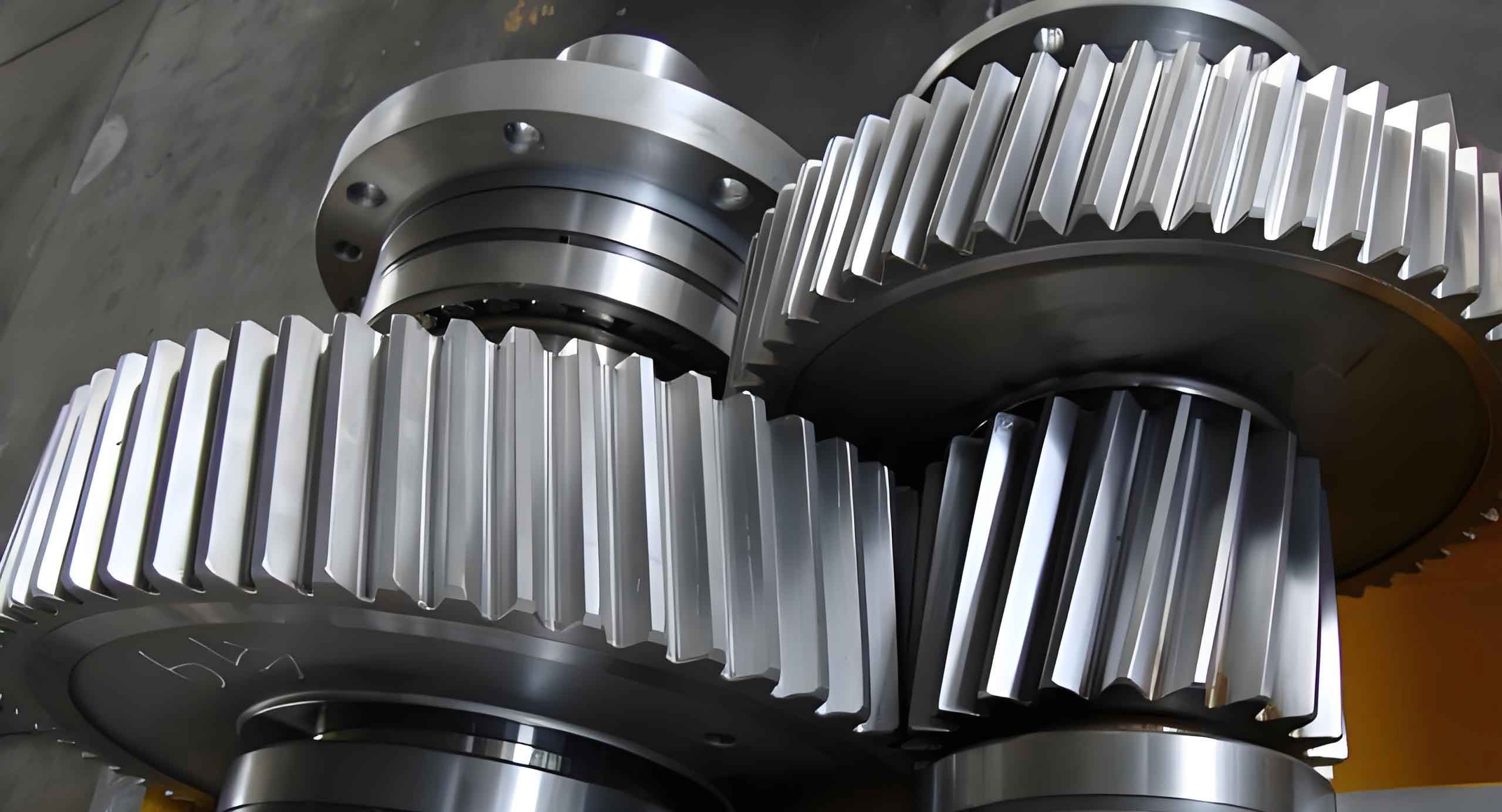
The foundation of an accurate friction model lies in correctly determining how the total transmitted load is shared along the line of contact at any given instant. We base our approach on the principle of minimum total potential energy. The core idea is that the load distribution will arrange itself in a way that minimizes the elastic strain energy stored in the mating teeth. To apply this principle to a helical gear, we employ a well-established slicing technique. The gear tooth is conceptually divided into a series of independent, thin slices along its face width direction. Each slice can be treated as a spur gear tooth. The compliance (or its inverse, stiffness) at the potential contact point of each slice is calculated, accounting for bending, shear, and axial compression deformations. The load on each slice is then proportional to its relative compliance, ensuring the total deformation is compatible across all slices in contact. The classical formulation for the load per unit length, f(ξ), at a normalized position ξ along the contact line is given by:
$$
f(\xi) = \frac{\varepsilon_{\beta} \cos \beta_b}{b} \frac{\nu(\xi)}{\int_{L_c} \nu(\xi) d\xi} F_n
$$
where \(F_n\) is the total normal force, \(\varepsilon_{\beta}\) is the face contact ratio, \(\beta_b\) is the base helix angle, \(b\) is the face width, \(L_c\) is the total contact length, and \(\nu(\xi)\) is proportional to the compliance of the tooth slice at ξ.
To transform this spatial distribution model into a truly time-domain model, we introduce a relationship based on energy conversion. We consider the instantaneous kinetic energy state of the gearing system and relate it to the potential energy distribution. This allows us to express the time-varying load on a discrete slice at a given meshing time \(t\) as:
$$
f(t) = \frac{\sin\beta \cos \beta_b}{\pi m_n} \frac{\frac{E}{\eta}}{\int_{0}^{t} \frac{E_t}{\eta} dt} F(t)
$$
where \(\beta\) is the helix angle, \(m_n\) is the normal module, \(E\) is the total instantaneous kinetic energy of the system, \(\eta\) is an energy loss factor, \(E_t\) is the kinetic energy function over time, and \(F(t)\) is the time-varying total mesh force. This model, denoted as \(Tvnf\) (Time-varying normal force), provides a more dynamic representation of how load is shared among simultaneously contacting tooth pairs as they roll through the mesh cycle.
Accompanying the time-varying load are other essential parameters that govern friction. The first is the total length of the contact line, \(L_c(t)\). For a helical gear pair, this length is constant only if either the transverse contact ratio (\(\varepsilon_{\alpha}\)) or the face contact ratio (\(\varepsilon_{\beta}\)) is an integer. In the general case where both are non-integers, \(L_c(t)\) varies periodically with time. The variation is most significant for certain helix angles. The instantaneous total contact length can be calculated as a function of the gear geometry and a periodic linear function \(\gamma(t)\) which depends on the contact ratios and the instantaneous meshing phase. The total length is the sum of the lengths from all contacting tooth pairs at time \(t\):
$$
L_c(t) = \sum_{j=1}^{n} L_j[(i-1)T + \mod(t, T)]
$$
where \(T\) is the time for one mesh cycle (one base pitch of rotation), and \(n\) is the maximum number of tooth pairs in contact. To validate our geometric calculations, we applied them to a specific industrial helical gear pair. The parameters are listed in Table 1.
| Parameter | Pinion | Gear |
|---|---|---|
| Number of teeth, z | 19 | 76 |
| Module, m (mm) | 4.5 | 4.5 |
| Pressure angle, α (°) | 20 | 20 |
| Face width, b (mm) | 140 | 100 |
| Helix angle, β (°) | 15 | 15 |
| Addendum coefficient, ha* | 1 | 1 |
| Dedendum coefficient, c* | 0.4 | 0.4 |
The results from our time-varying calculation were compared against the established industrial standard method. The comparison, shown in Table 2, confirms the accuracy of our model, with errors in average contact length well below 5%. The periodic fluctuation of the contact length is illustrated conceptually and is a key source of the time-varying nature of the total friction force.
| Calculation Method | Max Length (mm) | Min Length (mm) | Mean Length (mm) |
|---|---|---|---|
| Industrial Standard | 164.90 | 136.85 | 150.88 |
| Proposed Model | 170.17 | 136.47 | 156.61 |
| Error (%) | 3.2 | 0.2 | 3.8 |
The second critical parameter is the coefficient of friction, μ(t). It is widely recognized as a time-varying parameter, heavily dependent on the sliding velocity at the point of contact. We adopt a semi-empirical formula that captures this relationship effectively. The sliding velocity \(v_s(t)\) is the difference in the tangential velocities of the two mating tooth surfaces at the instantaneous point of contact. This velocity changes direction at the pitch point, where pure rolling occurs. The friction coefficient is modeled as:
$$
\mu(t) = 0.05 e^{-3.175 v_s(t)} + 0.01
$$
where \(v_s(t)\) is calculated from the gear kinematics: \(v_s(t) = \omega_p l_p(t) – \omega_g l_g(t)\). Here, \(\omega_p\) and \(\omega_g\) are the angular velocities, and \(l_p(t)\) and \(l_g(t)\) are the instantaneous distances from the contact point to the respective gear centers. A direction function \(\delta(t) = \text{sign}(v_s(t))\) is used to account for the reversal of friction force direction as the contact point passes the pitch line.
With the models for time-varying load distribution \(f(t)\), contact length, and friction coefficient \(\mu(t)\) established, we proceed to integrate them into a comprehensive friction force model. We return to the slicing method. The total friction force at time \(t\) is the vector sum of the friction forces on all active slices across all contacting tooth pairs. The friction force on a single slice \(k\) is given by the product of the local coefficient of friction, the local normal load on that slice, and the direction vector. For a helical gear, this force has components tangential to the base circle (related to power loss) and radial (related to separating force). The total friction force \(F_f(t)\) is therefore:
$$
F_f(t) = \sum_{i=1}^{N_{pair}} \sum_{k=1}^{N_{slice}} \mu_i(t) \cdot f_{i,k}(t) \cdot \vec{d}_{i,k}
$$
where \(N_{pair}\) is the number of tooth pairs in simultaneous contact, \(N_{slice}\) is the number of slices per tooth pair in contact, \(f_{i,k}(t)\) is the load on the k-th slice of the i-th contacting pair (derived from our time-varying load model), and \(\vec{d}_{i,k}\) is the direction vector for that specific slice. This formulation explicitly accounts for the time-varying nature of all primary influencing factors: the number and geometry of contact lines, the distribution of load along them, and the sliding velocity-dependent friction coefficient.
To evaluate the impact and validity of our proposed model, we performed a comparative analysis using computational simulation. We calculated the friction force over a complete mesh cycle for a sample helical gear pair using four different models:
- Kar Model: A previously established model from literature using constant average load.
- Tvnf+Cfc Model: Our proposed time-varying normal force model combined with a constant, average friction coefficient.
- Tvnf+Tvfc Model: Our proposed time-varying normal force model combined with the time-varying friction coefficient model.
- Proposed Full Model: Our complete model integrating time-varying load, contact line length, and friction coefficient via the slicing integration method.
The results are plotted comparatively. A key observation is that the models considering time-varying normal force (Tvnf+Cfc and Tvnf+Tvfc) generally show a different fluctuation pattern and often a reduced amplitude compared to the classic constant-load model. However, when the time-varying friction coefficient (Tvfc) is introduced, the fluctuation of the friction force increases notably, reflecting the strong influence of sliding velocity changes. Our proposed full model yields results that are generally of a slightly higher magnitude than the other three. This is logically consistent because our model integrates the most detailed physical representations: the non-uniform, time-varying load distribution from the minimum potential energy principle, the precise contact line geometry, and the velocity-dependent friction. Consequently, we argue that the proposed model provides a calculation that is closer to the actual physical situation within a high-speed heavy-duty helical gear mesh, offering improved accuracy for demanding dynamic analyses.
Finally, we applied our model to investigate the specific influence of high-speed and heavy-duty operational parameters on the time-varying friction force. The analysis focused on the peak instantaneous friction force within a mesh cycle. First, under a constant transmitted power (a typical heavy-duty condition), we increased the rotational speed. As shown in Figure 4, the peak friction force exhibits a clear increasing trend with speed. This is primarily driven by the increase in sliding velocities, which affects the friction coefficient term in our model. At very high speeds, the rate of increase may become more pronounced. Second, we analyzed the effect under a constant high pitch-line velocity (25 m/s) while increasing the transmitted torque (and thus the normal force \(F_n\)). The results, shown in Figure 5, demonstrate a strong, nearly linear relationship between the applied load (torque) and the peak friction force. This linear relationship is expected as friction force is fundamentally proportional to normal load, but the slope of this relationship is modulated by the time-varying parameters of the system.
These findings have direct practical implications. The positive correlation between speed, load, and friction force provides a quantifiable explanation for why high-speed heavy-duty helical gear applications are particularly susceptible to friction-related failures. The elevated and dynamically fluctuating friction forces lead to higher interfacial temperatures and increased shear stresses, which are primary drivers for failure modes like scuffing (adhesive wear) and accelerated micropitting. Therefore, accurate modeling of these forces is not only crucial for vibration prediction but also for thermal rating and surface durability calculations in the design phase of advanced gear systems.
In conclusion, this work presents a refined methodology for calculating the time-varying friction force in helical gear pairs, with a specific focus on the conditions prevalent in high-speed heavy-duty applications. The core contribution is the development and integration of a time-varying load distribution model based on energy principles, which moves beyond the common assumption of uniform load sharing. This model is combined with detailed calculations of the time-varying contact line length and a velocity-dependent friction coefficient. The synthesis of these elements through a slicing integration technique yields a comprehensive friction force formula. Comparative analysis demonstrates that this approach provides results that differ from and are arguably more physically representative than those from models employing greater simplification. Furthermore, the application of the model clearly quantifies how increasing operational speed and load elevate the magnitude of friction forces, thereby offering valuable insight into the tribological challenges faced by modern high-performance helical gear transmissions. This modeling framework serves as a useful tool for designers and analysts seeking to predict dynamic behavior, optimize efficiency, and enhance the reliability of gear systems operating at the frontiers of performance.