
The study of power losses in gear transmissions is crucial for enhancing efficiency, particularly in applications like wind turbine gearboxes where energy conservation is paramount. Among these losses, churning power loss, which occurs when gears rotate partially or fully submerged in a lubricant oil bath, represents a significant parasitic drain. For spur gear configurations, commonly used in various industrial and automotive applications, accurately predicting this loss is complex due to the multitude of influencing factors. These factors include lubricant properties such as kinematic viscosity and density, operational parameters like rotational speed and oil temperature, geometric characteristics of the spur gear including module, number of teeth, and face width, as well as the immersion depth and gravitational acceleration. The interplay of these variables creates a complex functional relationship that is difficult to resolve with a purely analytical theoretical solution.
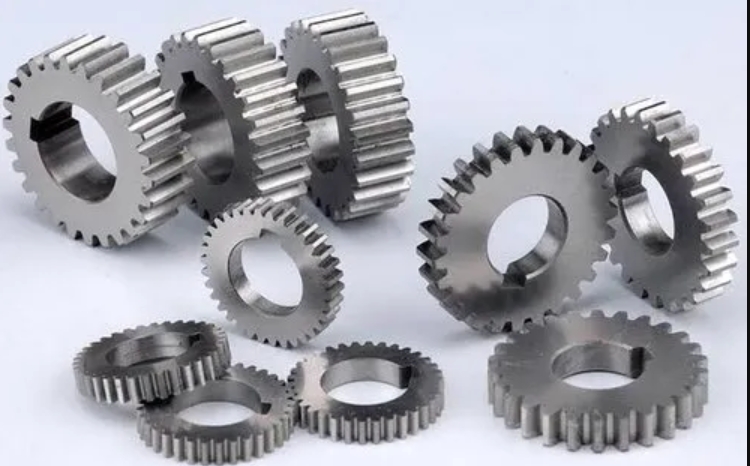
This investigation focuses on the theoretical analysis, numerical simulation, and experimental validation of churning power loss for a single rotating spur gear. The aim is to develop a reliable predictive method. The theoretical foundation employs fluid mechanics, specifically boundary layer theory, to model the flow field around the gear. Subsequently, computational fluid dynamics (CFD) using the FLUENT software with a Volume of Fluid (VOF) multiphase model and a k-ε turbulence model is utilized to solve the governing partial differential equations numerically. Finally, an experimental test rig is constructed to measure churning losses under various conditions, providing data to validate the numerical and derived empirical models. This integrated approach allows for a comprehensive understanding of the spur gear churning phenomenon, especially in medium-to-low speed ranges.
Theoretical Foundation for Spur Gear Churning Loss
The churning power loss of a spur gear partially immersed in oil arises from the work done by the gear teeth to displace and accelerate the surrounding fluid. This loss manifests primarily from two flow components: the tangential flow (mainstream) directly pushed by the gear faces and the radial flow (secondary flow) induced by continuity and entrainment effects. To model this, the complex geometry of the spur gear is simplified using a conformal mapping technique, which transforms the gear profile into an equivalent rotating cylinder of radius \( R_p \). This simplification allows the application of boundary layer theory on a curved surface.
Consider a coordinate system attached to the surface of this equivalent cylinder. The x-coordinate follows the circumferential direction (arc length), the y-coordinate is normal to the surface, and the z-coordinate aligns with the gear axis. Accounting for gravity and viscous forces, and assuming incompressible, isothermal flow, the governing equations can be derived from the Navier-Stokes equations. After applying boundary layer approximations (where gradients normal to the wall are much larger than those along the surface), the system of equations for the fluid motion in the boundary layer can be expressed as:
$$ \frac{\partial u}{\partial x} + \frac{\partial v}{\partial y} = 0 $$
$$ u \frac{\partial u}{\partial x} + v \frac{\partial u}{\partial y} = – \frac{1}{\rho} \frac{\partial p}{\partial x} + \nu \frac{\partial^2 u}{\partial y^2} + g \cos\left(\frac{x}{R_p}\right) $$
$$ – \frac{1}{\rho} \frac{\partial p}{\partial y} = g \sin\left(\frac{x}{R_p}\right) $$
Here, \( u \) and \( v \) are the velocity components in the x (tangential) and y (normal) directions, respectively. \( \rho \) is the fluid density, \( \nu \) is the kinematic viscosity (\( \mu / \rho \)), \( p \) is the pressure, \( g \) is gravitational acceleration, and \( R_p \) is the pitch radius of the equivalent cylinder, related to the spur gear module \( m \) and number of teeth \( z \). The terms \( g \cos(x/R_p) \) and \( g \sin(x/R_p) \) represent the components of gravity tangential and normal to the curved surface, which are crucial for driving the radial flow and determining the oil distribution around the gear.
The boundary conditions are: at the gear surface (\( y = 0 \)), \( u = \omega R_p \) (no-slip condition) and \( v = 0 \); far from the surface (\( y \to \infty \)), \( u \to 0 \). The immersion depth \( h \) influences the effective domain and the pressure field. The instantaneous churning power loss \( P \) is the product of the resisting torque on the gear and its angular velocity \( \omega \). The torque is obtained by integrating the shear stress and pressure over the wetted gear surface. For a gear with face width \( b \), the power loss can be conceptually written as:
$$ P = \omega \cdot b \cdot R_p \oint \left( \mu \left. \frac{\partial u}{\partial y} \right|_{y=0} \right) dx $$
where \( \mu \) is the dynamic viscosity. Obtaining an analytical solution for \( u(x, y) \) from the above system is exceedingly difficult due to the curved geometry, varying immersion, and turbulent flow conditions. Therefore, a numerical approach is essential.
Numerical Simulation Methodology
To solve the complex, three-dimensional, transient, multiphase flow problem of a spur gear churning in an oil-air mixture, Computational Fluid Dynamics (CFD) simulations were performed using ANSYS FLUENT. The following assumptions and models were employed to create a computationally feasible yet physically accurate simulation:
- The lubricating oil is incompressible.
- The oil and air are immiscible, modeled as separate phases using the Volume of Fluid (VOF) method.
- The flow is turbulent at typical operating speeds (high Reynolds number), modeled using the standard k-ε turbulence model with standard wall functions.
- Gravity and inertial forces are included. Gravity is critical for modeling the oil pool and splash dynamics.
- The flow is three-dimensional and unsteady (transient).
- Temperature changes are neglected, assuming isothermal operation.
The computational domain is a rectangular fluid volume surrounding the spur gear. The domain dimensions are sufficiently large (approximately 3 times the gear diameter in the rotation plane and 3 times the face width in the axial direction) to minimize boundary effects and mimic a practical oil sump. The spur gear geometry is created as a solid region within this domain. An unstructured tetrahedral mesh is generated, with significant refinement near the gear teeth and in the expected oil splash region to capture high velocity and pressure gradients accurately. The mesh typically consists of over 300,000 cells. A dynamic mesh technique is employed, where the zone containing the spur gear rotates. Mesh smoothing, layering, and local remeshing algorithms are activated to maintain mesh quality during rotation.
The VOF model tracks the volume fraction of oil and air in each cell. The surface tension between oil and air is modeled, which affects droplet formation and splash behavior. The top boundary of the domain is set as a pressure inlet/outlet at atmospheric pressure. The gear teeth surfaces are defined as rotating no-slip walls. Transient simulations are run until a periodically steady state is reached, where the torque (and hence power loss) fluctuates around a stable mean value. The average power loss over several gear revolutions is then calculated.
Derivation of an Empirical Correlation from Simulation Data
To generalize the findings from the CFD simulations and provide a practical engineering tool, an empirical correlation for churning power loss was derived. Dimensional analysis (Buckingham π theorem) was applied. The churning power loss \( P \) is hypothesized to depend on the following parameters: gear geometry (module \( m \), number of teeth \( z \), face width \( b \)), operating conditions (angular speed \( \omega \), immersion depth \( h \)), lubricant properties (density \( \rho \), dynamic viscosity \( \mu \)), and gravity (\( g \)). This relationship can be expressed as:
$$ P = f(m, z, b, \omega, h, \rho, \mu, g) $$
Using \( \rho \), \( \omega \), and the pitch radius \( R \) (where \( R = m z / 2 \)) as repeating variables, the following dimensionless groups are formed:
- Power coefficient: \( C_P = P / (\rho \omega^3 R^5) \)
- Reynolds number: \( Re = (\rho \omega R^2) / \mu \) (ratio of inertial to viscous forces)
- Froude number: \( Fr = \omega^2 R / g \) (ratio of inertial to gravitational forces)
- Geometric ratios: \( h/R \) and \( b/R \)
- Another geometric group related to tooth size: \( m / R \) or simply using \( m \) and \( z \) separately.
The functional relationship becomes:
$$ C_P = \Phi \left( Re, Fr, \frac{h}{R}, \frac{b}{R}, m, z \right) $$
A multiplicative power-law form is assumed for the correlation:
$$ C_P = A \cdot (m)^{B} \cdot (z)^{C} \cdot (Re)^{D} \cdot (Fr)^{E} \cdot \left(\frac{h}{R}\right)^{F} \cdot \left(\frac{b}{R}\right)^{G} $$
where \( A, B, C, D, E, F, G \) are constants to be determined.
A series of CFD simulations were conducted by systematically varying the parameters \( m, z, b, \omega, h, \rho, \mu \). The simulation matrix included different spur gear configurations and operating conditions. The resulting average churning power loss values from the simulations were used to fit the constants in the power-law model using a least-squares regression method (after taking logarithms to linearize the equation). The resulting empirical formula obtained from the numerical data is:
$$ P = 0.0214 \cdot m^{0.0106} \cdot z^{3.51} \cdot \rho \cdot \omega^{3} \cdot R^{1.77} \cdot Re^{-0.34} \cdot Fr^{-0.61} \cdot \left(\frac{h}{R}\right)^{0.35} \cdot \left(\frac{b}{R}\right)^{1.21} $$
Where:
$$ Re = \frac{\rho \omega R^2}{\mu}, \quad Fr = \frac{\omega^2 R}{g}, \quad R = \frac{m z}{2} $$
This correlation encapsulates the influence of all key parameters on the churning loss of a spur gear as predicted by the CFD model.
Experimental Setup and Procedure
To validate the numerical simulations and the derived correlation, a dedicated experimental test rig was designed and constructed. The rig allows for the measurement of churning torque and power loss of a single spur gear rotating in an oil bath under controlled conditions. The primary components and parameters are summarized below.
| Component/Parameter | Specifications / Range |
|---|---|
| Spur Gear Parameters |
|
| Drive System |
|
| Operating Conditions |
|
| Lubricants |
|
| Measurement |
|
The experimental procedure involved mounting a specific spur gear on the shaft, filling the sump with oil to a precise immersion depth \( h \), and then running the motor at a set speed. The system was allowed to reach thermal equilibrium. The net churning torque was obtained by subtracting the no-load (air-only) torque from the measured torque when the gear was submerged. The churning power loss was then calculated as \( P = \omega \cdot \tau \), where \( \tau \) is the net churning torque. Tests were repeated for various combinations of gear parameters, speeds, immersion depths, and lubricants.
Results and Discussion: Parameter Influence and Validation
The experimental observations revealed distinct flow regimes for the spur gear churning process, dependent on the balance of viscous, inertial, and gravitational forces, characterized by Reynolds number (\( Re \)) and Froude number (\( Fr \)):
- Free Stream Regime: At low speeds or high viscosity (low \( Re \), low \( Fr \)), gravity dominates. Oil does not complete a full revolution; it flows partially around the gear and then falls back freely on the downstream side. The oil stream attached to the gear is thick and cohesive.
- Projection Regime: At moderate speeds, inertial forces increase. Most of the oil completes a full revolution, being projected in parabolic trajectories. The oil stream begins to separate and thin out, forming a distinct pattern.
- Splash Regime: At high speeds (high \( Re \), high \( Fr \)), inertial forces dominate. Oil is ejected from the gear teeth, creating significant splashing and mist. The oil-air mixture around the gear becomes highly disturbed.
The churning power loss increases with the transition from the free stream to the splash regime. The following sections analyze the influence of individual parameters, comparing experimental data points with the trend predicted by the empirical correlation (fitted from simulation data).
Effect of Rotational Speed and Immersion Depth
As shown in the data trend, churning power loss increases significantly with rotational speed \( \omega \). This is expected as \( P \) is proportional to \( \omega^3 \) in the correlation, reflecting the strong influence of kinetic energy imparted to the fluid. A higher immersion depth ratio \( h/R \) also leads to greater power loss. This is because a larger portion of the spur gear is in contact with the oil, displacing more fluid volume and increasing the resisting surface area. The correlation indicates a power dependence of \( (h/R)^{0.35} \). Experimental data for different immersion depths align well with the trends predicted by the fitted curves across the tested speed range.
Effect of Gear Geometry: Number of Teeth and Face Width
Increasing the number of teeth \( z \) (and hence the pitch diameter \( R \), if module is constant) increases the churning loss substantially. The correlation shows a very strong dependence \( z^{3.51} \), which combines the effects of increased diameter (swept volume) and changes in tooth geometry. Similarly, increasing the face width ratio \( b/R \) increases the loss, with a power dependence of \( (b/R)^{1.21} \). A wider spur gear interacts with a larger volume of oil axially, increasing the power required to churn it. Experimental measurements for different \( z \) and \( b/R \) values confirm these trends, with data points generally distributed around the predicted curves.
Effect of Lubricant Viscosity
The influence of dynamic viscosity \( \mu \) is captured through the Reynolds number \( Re \). The correlation has a term \( Re^{-0.34} \), meaning power loss decreases as \( Re \) increases (i.e., as viscosity decreases for constant \( \rho \) and \( \omega \)). Physically, a higher viscosity increases the fluid’s internal shear resistance, requiring more torque to rotate the gear. However, it also dampens turbulent mixing and splash. The net effect, as seen in both simulation and experiment, is that churning loss is higher for the more viscous Oil 1 compared to Oil 2 under identical operating conditions.
| Parameter | Effect on Churning Power Loss (P) | Physical Reason | Exponent in Correlation |
|---|---|---|---|
| Angular Speed (ω) | Strong Increase | Increased kinetic energy imparted to fluid. | ω³ (combined in term) |
| Immersion Depth Ratio (h/R) | Increase | Larger wetted surface area and displaced fluid volume. | 0.35 |
| Number of Teeth (z) | Very Strong Increase | Increased pitch diameter and changes in tooth spacing/volume. | 3.51 |
| Face Width Ratio (b/R) | Strong Increase | Increased axial interaction with fluid. | 1.21 |
| Dynamic Viscosity (μ) | Increase (via Re) | Increased fluid shear stress on gear surfaces. | -0.34 (on Re) |
| Density (ρ) | Increase | Increased fluid mass being accelerated. | ρ¹ (combined in term) |
The agreement between the experimental data and the correlation curves derived from CFD simulations is generally good for the medium-to-low speed range tested. Some scatter in the experimental points is observed, which can be attributed to measurement uncertainties (e.g., torque sensor resolution at very low torque values, minor temperature fluctuations affecting viscosity) and the inherent stochastic nature of turbulent multiphase flow. The numerical model’s assumptions, such as the isothermal condition and turbulence modeling, also contribute to minor discrepancies. However, the overall trends are accurately captured, validating the numerical approach.
Conclusion
This integrated study combining theoretical analysis, numerical simulation, and experimental investigation provides a comprehensive framework for understanding and predicting churning power loss in spur gear systems. The key conclusions are as follows:
- The churning phenomenon for a spur gear can be categorized into three flow regimes—free stream, projection, and splash—governed by the competing effects of viscous, inertial, and gravitational forces, quantified by the Reynolds and Froude numbers.
- Churning power loss exhibits a power-law dependence on all major influencing parameters: gear geometry (module, number of teeth, face width), operating conditions (rotational speed, immersion depth), and lubricant properties (density, viscosity).
- Computational Fluid Dynamics (CFD) using a transient VOF multiphase model and a k-ε turbulence model is an effective tool for simulating the complex oil-air flow around a rotating spur gear and for estimating churning losses, especially in low-to-medium speed ranges.
- An empirical correlation derived from fitting the numerical simulation data successfully encapsulates the parameter influences and shows good agreement with experimental measurements. The correlation can serve as a practical design aid for estimating spur gear churning losses, with prediction errors generally within acceptable limits (<4% for many cases in the tested range).
- The experimental methodology established provides a reliable means for validating numerical models and empirical formulas for spur gear churning loss.
This work enhances the understanding of a significant source of power loss in gearboxes and provides engineers with both a high-fidelity simulation method and a practical formula for improving the efficiency design of spur gear transmissions operating under oil bath lubrication conditions.