
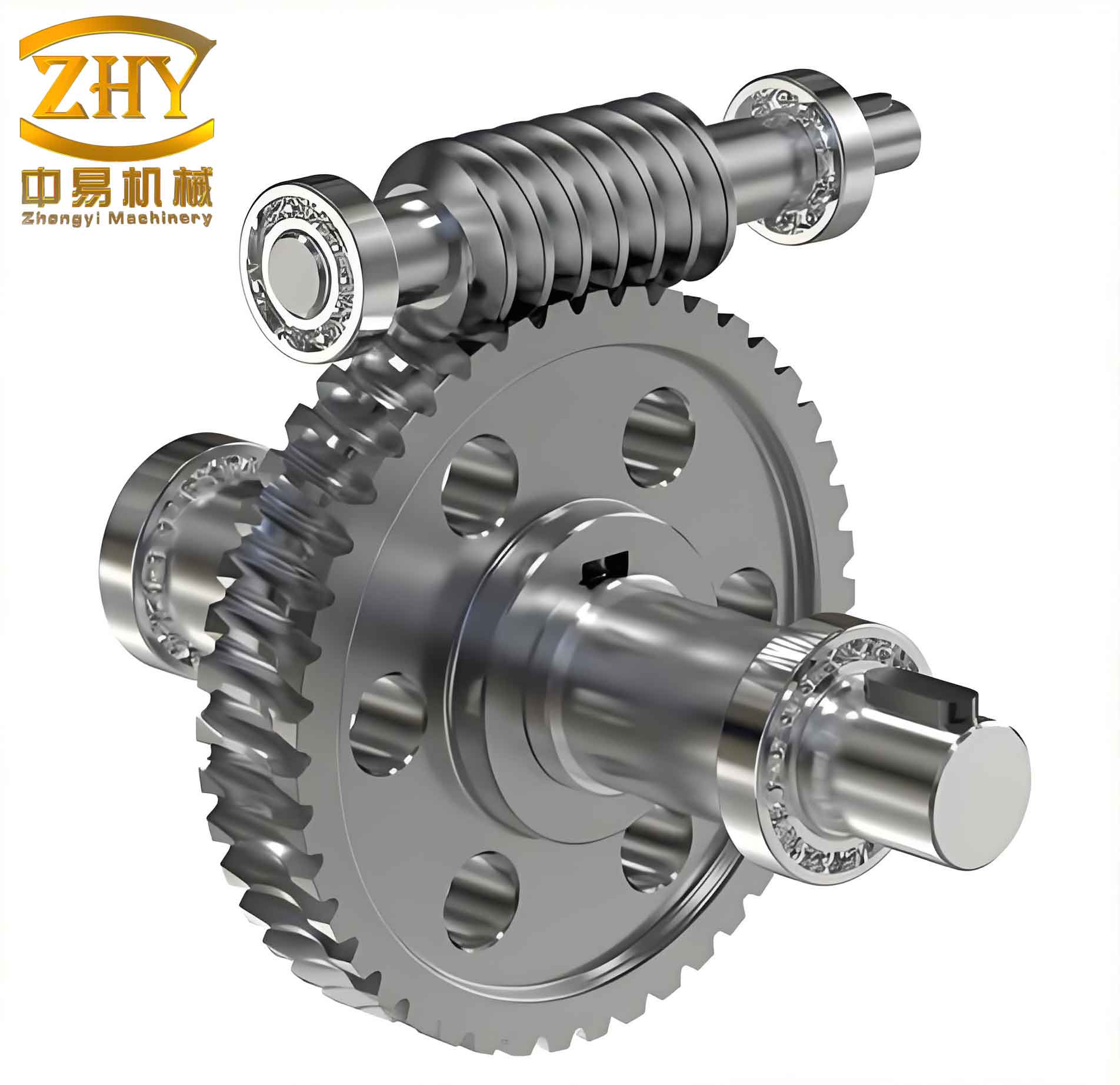
In my research on worm gear lubrication, I have focused on the development and application of borate-based extreme pressure and anti-wear additives. Worm gear pairs, typically composed of bronze or brass worm wheels matched with hardened steel worms, operate under severe sliding conditions with high contact pressures, large sliding velocities, and significant frictional heating. These conditions make it extremely difficult to form a stable oil wedge. Therefore, worm gear oils must possess not only good lubricity (low friction coefficient), viscosity-temperature properties, and thermal-oxidative stability, but also excellent extreme pressure anti-wear performance and superior rust and corrosion protection. Borate additives exhibit precisely these characteristics.
Synthesis of Borate Extreme Pressure Additive
I synthesized the borate additive using a potassium hydroxide–water solution method with overbased calcium petroleum sulfonate, polyisobutylene succinimide, and boric acid as raw materials. The reaction mechanism involves two steps. First, the basic component in the overbased sulfonate reacts with boric acid to form calcium tetraborate:
$$4H_3BO_3 + CaCO_3 \rightarrow CaB_4O_7 + CO_2 + 6H_2O$$
Then, the calcium tetraborate reacts with the potassium hydroxide aqueous solution to produce a mixture of potassium metaborate and calcium metaborate:
$$CaB_4O_7 + 2KOH \rightarrow 2KBO_2 + Ca(BO_2)_2 + H_2O$$
After centrifugation to remove larger particles, the fine amorphous borate particles are uniformly dispersed in the oil with the help of dispersants, forming a stable colloidal solution.
Performance Characteristics of Borate Additive
The borate additive demonstrates exceptional extreme pressure and anti-wear properties. When added to the base oil at a boron content of 0.6% (by weight), the load-carrying capacity is significantly higher than that of sulfur-phosphorus (S-P) type or lead-sulfur (Pb-S) type oils. The film strength of borate-containing oil is approximately three times that of Pb-S oil and twice that of S-P oil, as confirmed by four-ball tests.
Borate also exhibits outstanding oxidation stability, which has been verified by various oxidation tests. Table 1 shows the comparative thermal oxidation stability results.
| Item | Copper Catalyst Weight Loss (%) | Benzene Insolubles (%) | Viscosity Increase at 100°C (%) |
|---|---|---|---|
| S-P type oil | 5.700 | 0.34 | 14.8 |
| Borate-containing oil | 0.018 | 0.15 | 4.9 |
From Table 1, it is evident that the borate oil has dramatically lower copper weight loss, fewer benzene insolubles, and a much smaller viscosity increase, indicating a service life that can be up to four times longer than conventional S-P oils.
Regarding corrosion and rust resistance, the borate additive shows no corrosive effects on copper at high temperatures or on steel at low temperatures. It provides excellent protection for worm gear components.
Mechanism of Borate Extreme Pressure Anti-Wear Action
The mechanism of borate extreme pressure action differs from classical theories. Two main viewpoints exist: the deposition film theory and the boron-diffusion theory. I tend to support J.H. Adams’ view. Because borate dissolves in mineral oil as a colloidal dispersion, transmission electron microscopy (at 96,000× magnification) confirms that the borate particles are amorphous microspheres with an average diameter of less than 0.1 μm. These particles undergo physical adsorption on the sliding surfaces due to charges generated by the sliding motion, forming an elastic deposition film. Research by Wu Xiaoling and Zhang Jishan at the Zhengzhou Mechanical Research Institute has shown that borate-type oils generate a non-reactive deposition film on nitrided and carburized quenched tooth surfaces. This film is not uniform or continuous but preferentially forms on the contact areas of the meshing worm gear surfaces.
Application of Borate in Worm Gear Oil
Development of Borate-Based Worm Gear Oil
Using base oils HVI120BS and HVI650 produced by the solvent deasphalting–solvent refining–solvent dewaxing–clay finishing process, I added the borate additive to obtain excellent extreme pressure properties, good corrosion resistance, and anti-oxidation stability. The key challenges were selecting an appropriate oiliness agent and solving the poor foam resistance of the oil.
Selection of Oiliness Agent
Industrial worm gear pairs usually consist of hard steel worms matched with phosphor bronze worm wheels. The high reduction ratio and load-carrying capacity, combined with sliding and scuffing motions, require the lubricant to have good wettability and adhesion, as well as a low friction coefficient. I evaluated several commercial oiliness agents and synthesized organoboron compounds, phosphate esters, and fatty acid epoxy esters. The results are shown in Table 2.
| Code | Four-Ball Wear Scar Diameter (d29260 min) (mm) | Friction Coefficient f | Friction Coefficient μ |
|---|---|---|---|
| Base oil | 0.832 | 0.128 | – |
| Oiliness agent 1 | 0.728 | 0.112 | 0.143 |
| Oiliness agent 2 | 0.399 | 0.108 | – |
| Oiliness agent 3 | 0.364 | 0.100 | 0.099 |
| Oiliness agent 4 | 0.624 | 0.110 | 0.184 |
| Oiliness agent 5 | 0.364 | 0.102 | 0.037 |
| Oiliness agent 6 | 0.728 | 0.108 | – |
Note: f is measured by the Terry oiliness tester; μ is measured by the HQ-1 tester at Shanghai University; the friction pair is copper-steel.
Because borate has a high base number, strongly acidic oiliness agents tend to form precipitates. I required agents with low neutralization numbers. Tests showed that organoboron compounds and phosphate esters had good steel-steel friction reduction but only moderate copper-steel performance. Agents 3 and 5 both performed well on copper-steel friction, and agent 3 additionally had a synergistic effect on foam suppression. Therefore, I selected agent 3 for the final formulation.
Foam Resistance Investigation
During borate additive production, both ionic and non-ionic surfactants are used. These polar substances lower the liquid surface tension and form strong liquid films that trap air, making the oil prone to foaming and slow to collapse. I tried adding T901 and T902 antifoam agents, either alone or in combination, and even using a colloid mill dispersion, but none achieved satisfactory results for worm gear applications.
However, when combining the borate additive with oiliness agent 3, the foam problem was effectively resolved. The mechanism may be that the unsaturated olefins in agent 3 adsorb some of the surface-active substances, increasing the surface tension. Combined with the antifoam agent’s suppression, the oil became less prone to foaming and foam collapse improved. Table 3 shows the foam test results.
| Additive combination | Antifoam agent (ppm) | Addition method | Foam tendency/stability (mL/mL) | ||
|---|---|---|---|---|---|
| 24°C | 93°C | After 24°C | |||
| Borate complex | T901 50 | A | 560/450 | 600/200 | 500/400 |
| T901 50 | B | 500/350 | 550/25 | 450/300 | |
| T902 50 | A | 500/370 | 290/0 | 450/30 | |
| T902 50 + T901 30 | A | 430/300 | 80/20 | 290/210 | |
| Borate + agent 5 (0.5%) | T901 50 | A | 420/300 | 600/130 | 500/360 |
| T901 50 | B | 350/250 | 430/10 | 470/380 | |
| T902 50 | A | 350/250 | 500/120 | 470/300 | |
| T902 50 + T901 30 | A | 380/295 | 460/0 | 480/320 | |
| Borate + agent 3 | T901 50 | A | 90/50 | 190/0 | 70/30 |
Note: A = antifoam diluted with kerosene and added directly; B = dispersed by colloid mill.
The combination of borate additive with oiliness agent 3 and T901 at 50 ppm gave foam values of 90/50 mL at 24°C, 190/0 mL at 93°C, and 70/30 mL after 24°C, meeting industrial requirements for worm gear applications.
Full Quality Evaluation of Worm Gear Oil
Through formulation optimization, I blended borate with other functional additives to produce two viscosity grades of extreme pressure worm gear oils: N220 and N320. The physicochemical properties were evaluated, and the oils underwent the WL-100 worm gear bench test at the Zhengzhou Mechanical Research Institute. Table 4 compares the results with the military specification MIL-L-18486B(OS) and the contract technical requirements.
| Item | MIL-L-18486B(OS) | Contract Requirement N220/N320 | Result N220 | Result N320 | Test Method |
|---|---|---|---|---|---|
| Viscosity at 40°C (mm²/s) | 198-242 / 288-352 | 198-242 / 288-352 | 218.7 | 314.7 | GB/T 265 |
| Viscosity index, min | 120 | 120 / 100 | 103 | 105 | GB/T 2541 |
| Pour point (°C), max | -12.2 | -12.2 | -13 | -15.7 | GB/T 3535 |
| Flash point (°C), min | 177 | 180 | 274 | 295.9 | GB/T 267 |
| Fire point (°C) | 210 | Report | — | — | GB/T 267 |
| Sulfur (%), max | 1.25 | 1.25 | 0.45 | 0.76 | GB/T 267 |
| Water (%), max | 0.0 | Trace | None | None | GB/T 260 |
| Neutralization number (mg KOH/g), max | 0.30 | 0.30 | 0.04 | 0.03 | GB/T 4945 |
| Saponification number (mg KOH/g), max | 25.0 | 25.0 | 12.21 | 10.31 | GB/T 8021 |
| Chlorine (%) | 0.0 | — | — | — | |
| Copper strip corrosion at 100°C, max | Slight tarnish | Grade 1 | 1a | 1a | GB/T 5096 |
| Rust prevention test (D665B) | No rust | No rust | None | None | |
| Four-ball weld load index (N), min | 392 | 392 | 418 | 447 | GB/T 3142 |
| Foam tendency/stability (mL/mL) | — | 300/100 (24°C), 25/25 (93°C), 300/100 (after 24°C) | 40/50 | 15/0 | GB/T 12579 |
| WL-100 worm gear bench test | — | Efficiency ≥74% (N220), ≥73% (N320); Scoring torque ≥680 N·m | — | Efficiency 73.5%, scoring torque 770 N·m | Bench test |
All physicochemical indices and bench test results met the contract specifications. The N320 oil passed the WL-100 test with an efficiency of 73.5% and a scoring torque of 770 N·m, exceeding the required 680 N·m. The formulation was approved by the Sinopec Corporation in December 1995.
Field Application of Borate Worm Gear Oil
The N320 borate extreme pressure worm gear oil was scaled up and applied in January 1995 to the worm gear reduction box of a Q20 trailer rear axle at Zhanjiang Port Authority. After more than one year of operation (approximately 3600 hours), the oil was inspected. The used oil showed no significant changes in physicochemical properties compared to fresh oil. The worm gear tooth surfaces were clean, free from rust, corrosion, pitting, fatigue wear, or scuffing. There were no deposits in the oil sump, and the worm gear pair remained in good condition for continued service. Field personnel reported high load-carrying capacity, low noise, low temperature rise, and excellent rust and corrosion protection. No foam overflow or mechanical failure occurred during the entire test period.
However, one limitation of borate additives is their sensitivity to water. When a large amount of water enters a borate-containing lubrication system, the borate can crystallize into hard particles, increasing friction. My tests showed that water content below 1% has little effect; between 1% and 3%, the oil can still be used; but above 5%, the additive fails. Similarly, if the borate particle size is too large due to improper production conditions, friction may increase, as confirmed by the WL-100 worm gear bench test results. To improve water resistance, I recommend optimizing the type and ratio of dispersants or combining borate with other types of extreme pressure additives.
Conclusion
Based on my work, I draw the following conclusions:
- The synthesis process of borate additives is mature, and their performance is unique. The mechanism of action differs from classical theories, involving the formation of an elastic deposition film on worm gear surfaces.
- Borate-based extreme pressure worm gear oils meet all required physicochemical indices and bench test specifications for both N220 and N320 grades.
- Borate is a new type of extreme pressure anti-wear additive with wide application potential. It performs exceptionally well in worm gear oil, providing high load capacity, excellent oxidation stability, corrosion resistance, and foam control when properly formulated.
- Borate-containing extreme pressure worm gear oils fulfill the lubrication requirements of worm gear reduction boxes, improving equipment life and operational efficiency. These oils are particularly suitable for sealed heavy-load worm gear reducers, such as those used in elevator traction machines.
In summary, the borate additive has proven to be a highly effective and environmentally friendly component for worm gear lubricants, offering significant energy-saving benefits and extended service intervals.