
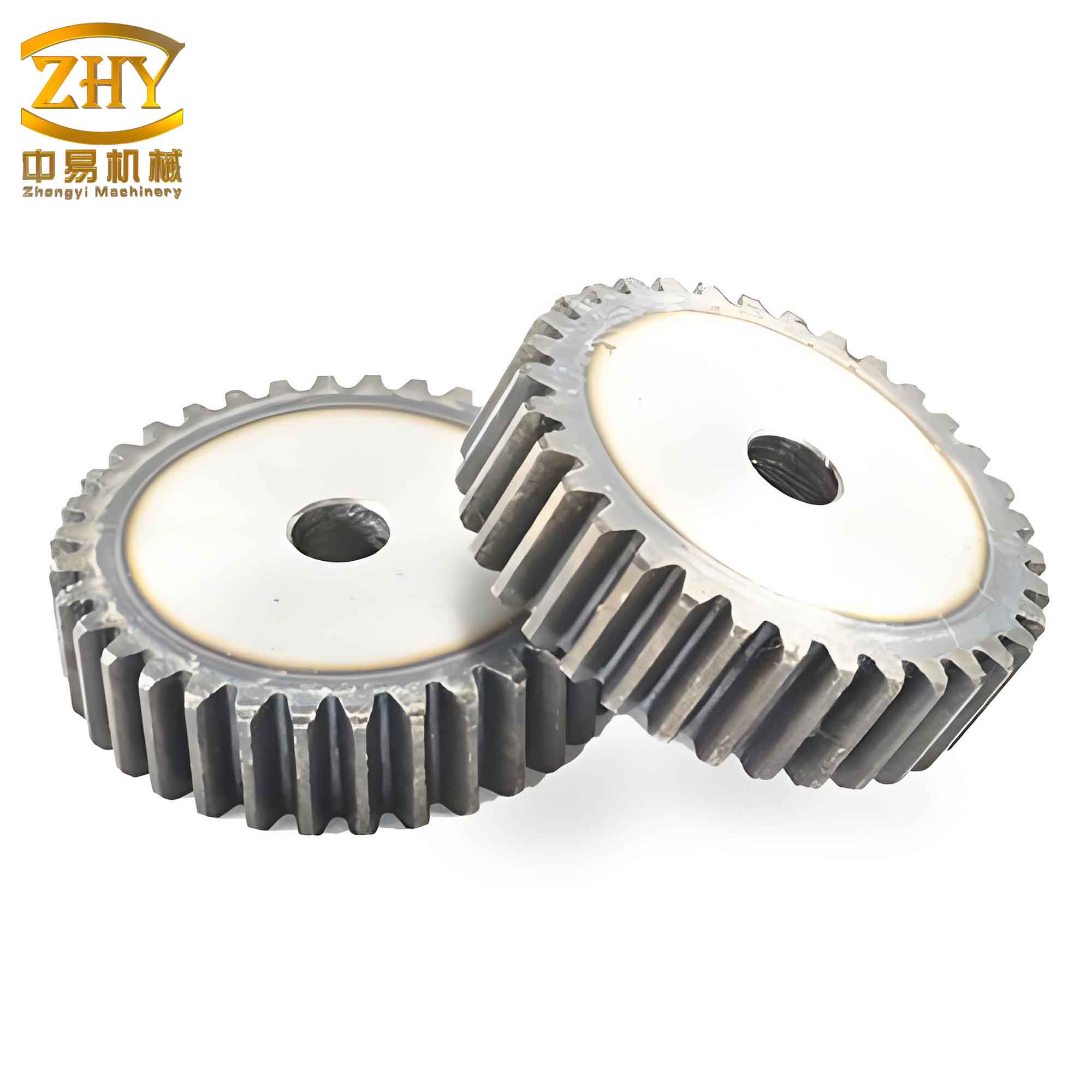
As a fundamental component for transmitting motion and power, the spur and pinion gear finds ubiquitous application across critical industries such as automotive, aerospace, marine, defense, and precision instrumentation. The pursuit of manufacturing methods that deliver high strength, excellent dimensional accuracy, and superior material economy is a constant driver in gear production technology.
Traditional manufacturing routes for spur and pinion gears primarily involve machining processes like hobbing, shaping, milling, and grinding. While these methods can achieve high precision, they suffer from significant drawbacks including low material utilization, severed metal flow lines which can compromise mechanical integrity, and the generation of residual stresses. Consequently, additional, often extensive, heat treatment is frequently required to enhance strength and relieve these stresses, adding cost and process complexity.
The evolution of gear manufacturing took a pivotal turn in the mid-20th century with the development of precision forging, initially for bevel gears in Germany. This technology has since expanded to encompass a wide variety of gears, including spur, helical, and even complex shapes. Precision forging is categorized based on the working temperature: hot, warm, and cold forging. Among these, cold precision forging offers distinctive advantages for producing spur and pinion gears. Conducted at room temperature, it eliminates defects associated with thermal cycles such as oxidation, decarburization, and dimensional variations due to thermal expansion and contraction. More importantly, the process preserves a continuous, unbroken grain flow, enhances strength through work hardening, and yields components with excellent surface finish, high dimensional accuracy, and near-net shape, leading to superior material utilization. Therefore, cold precision forging has become a prevalent and highly effective method for manufacturing high-performance spur and pinion gears.
This article focuses on the numerical simulation and optimization of the cold forging process for a specific batch-produced spur and pinion gear, a critical custom component. Utilizing DEFORM-3D finite element analysis (FEA) software, we investigate a conventional closed-die, flashless forging process and subsequently propose an optimized “hole-division” method to effectively reduce forming load. This optimization aims to ensure complete die filling and high material yield while significantly lowering tooling stresses, thereby enhancing die life and reducing energy consumption.
1. Initial Process Design and Simulation
The subject spur and pinion gear is manufactured from 20CrMnMo steel. As a typical disk-like component, it is suitable for a single-stage, flashless precision forging operation. Minor subsequent machining is allocated only for finishing the central bore and keyway. The primary part parameters are summarized below.
| Parameter | Value | Unit |
|---|---|---|
| Number of Teeth (z) | 22 | – |
| Module (m) | 3.5 | mm |
| Pressure Angle (α) | 20 | ° |
| Face Width (b) | 25 | mm |
| Root Circle Diameter | Φ73.5 | mm |
| Tip Circle Diameter | Φ84 | mm |
The initial process employs a traditional closed-die, flashless forging approach. The billet is positioned concentrically within the die cavity, referenced from the root circle diameter. The volume of the forged part is calculated as 138,648 mm³. To provide sufficient material for complete filling without excess flash, a cylindrical billet with dimensions of Φ82.5 mm in diameter and 26 mm in height is selected. The 3D model of the forging setup is conceptually represented, showing the upper punch, lower die containing the tooth profile, and the billet.
A numerical simulation is conducted using DEFORM-3D to analyze the process. Due to the part’s symmetry, a 36-degree sector (1/10 of the model) is analyzed to improve computational efficiency. The billet material is defined as AISI-4120 from the software’s library, a close analogue to 20CrMnMo. An absolute meshing strategy is applied with local refinement at the billet periphery where tooth formation occurs. The dies are treated as rigid bodies. The friction condition at the die-workpiece interface is modeled using the shear friction model with a coefficient of 0.08, typical for cold forging with carbide tools. The upper punch is defined as the primary moving die with a velocity of 10 mm/s. The step increment is set to 0.15 mm, and thermal effects are neglected for this initial analysis.
The simulation reveals a two-stage forming process, closely correlated with the punch load progression as shown in the time-load curve.
Stage 1: Upsetting and Initial Flow. This stage begins with punch contact and continues until the bulging billet sidewall contacts the tooth tip area of the die cavity. Metal flows radially outward into the nascent tooth spaces. Deformation is relatively moderate, and the load increases steadily due to work hardening.
$$ \epsilon = \ln\left(\frac{h_0}{h}\right) $$
where $\epsilon$ is the true strain, $h_0$ is the initial billet height, and $h$ is the instantaneous height.
Stage 2: Filling and Completion. This stage starts with the sidewall contact and ends when the dies are fully closed and all cavity corners (gear tooth dedendum) are filled. The metal is subjected to a complex triaxial compressive stress state. Flow into the final cavity corners becomes increasingly difficult as the volume is entirely constrained. The absence of a flash gutter means all displaced material must be accommodated within the sealed cavity, leading to a sharp, exponential rise in forming pressure and punch load. The process concludes with a peak load of approximately 2400 kN.
The final forged spur and pinion gear model shows complete filling with no apparent defects like folds or cracks. The material utilization ratio, calculated as the part volume divided by the billet volume, is:
$$ \text{Material Utilization} = \frac{134,118 \text{ mm}^3}{( \pi/4 \times (82.5)^2 \times 26 ) \text{ mm}^3} \times 100\% \approx 96.50\% $$
While successful, the high forming load is a critical concern, as it directly impacts press tonnage requirements, energy consumption, and most importantly, die stress and potential for fatigue failure, which increases production cost for batch manufacturing.
2. Process Optimization: The Hole-Division Method
To address the high load issue, process modifications aimed at pressure reduction are essential. Several “flow relief” techniques exist in precision forging, including shaft-division, constraint-division, and hole-division methods. The hole-division method was selected for this spur and pinion gear optimization due to its simplicity and cost-effectiveness. It requires no modification to the die geometry; only the initial billet is altered by machining a central hole. This hole creates an additional free surface and an internal flow path, effectively reducing the total pressure required to fill the outer tooth profile.
The principle can be understood by considering the pressure distribution. In a solid billet, the material must flow radially outward against high frictional and geometrical constraints. Introducing a central hole creates a radial “division surface.” Under compression, material outside this surface flows outward to form the teeth, while material inside flows inward to reduce the hole diameter. This inward flow absorbs a portion of the deformation work, thereby reducing the pressure needed for outward flow and tooth filling. The final forging load $P_{total}$ can be conceptually expressed as:
$$ P_{total} = P_{outward} + P_{inward} + P_{friction} $$
where $P_{outward}$ is the pressure to form the teeth, $P_{inward}$ is the pressure to close the central hole, and $P_{friction}$ is the overcoming friction. By providing the $P_{inward}$ path, the peak value of $P_{outward}$ is mitigated.
An optimized billet with a central hole was designed. The dimensions were refined to minimize volume while ensuring complete fill: outer diameter Φ82.5 mm, inner (hole) diameter Φ15 mm, and height 26.5 mm. The same simulation parameters as the initial process were used to analyze this new configuration.
| Process Parameter | Initial Process | Optimized (Hole-Division) Process |
|---|---|---|
| Billet Geometry | Φ82.5 x 26 mm (Solid) | Φ82.5 x Φ15 x 26.5 mm (Ring) |
| Billet Volume | ~138,960 mm³ | ~136,950 mm³ |
| Part Volume | 134,118 mm³ | 134,118 mm³ |
| Material Utilization | ~96.50% | ~97.91% |
| Simulated Max Load | 2400 kN | 1710 kN |
| Load Reduction | – | ~28.75% |
The simulation confirmed the two-stage forming behavior. However, with the hole-division billet, the metal flow was visibly different. A distinct radial flow divergence was observed. The forming sequence concluded successfully with the central hole nearly closed and the tooth profile completely filled. The most significant outcome was the drastic reduction in the maximum punch load to approximately 1710 kN, representing a reduction of about 28.75%.
3. Results Analysis and Discussion
The comparative results clearly demonstrate the efficacy of the hole-division method for optimizing the cold forging of this spur and pinion gear. The key performance metrics are summarized and can be further analyzed.
The reduction in forming force has profound implications. The required press capacity is lower, leading to reduced capital investment and energy consumption per part. From a tooling perspective, lower load translates directly to lower mean and fluctuating stresses on the die inserts, particularly in the critical root regions of the gear teeth. This significantly enhances die life by reducing the risk of fatigue crack initiation and propagation. The relationship between die life and stress can be approximated for fatigue considerations:
$$ N_f = C \cdot (\Delta \sigma)^{-m} $$
where $N_f$ is the number of cycles to failure, $\Delta \sigma$ is the stress range, and $C$ and $m$ are material constants. A 28.75% reduction in forming load can lead to a substantially greater than 28.75% increase in die life ($N_f$), as die stress is often linearly or super-linearly related to applied load depending on die geometry.
Furthermore, the optimized process also improved material utilization from 96.50% to 97.91%. This 1.41% increase, while seemingly modest, represents a direct reduction in raw material cost per part. For high-volume production runs typical of spur and pinion gears in automotive applications, this saving compounds into a substantial economic benefit. The scrap generated from the central hole (a small ring) is also more compact and potentially easier to recycle compared to the turning chips from a solid billet.
The success of this optimization underscores the critical role of numerical simulation in modern manufacturing process design. DEFORM-3D enabled the visualization of metal flow, the prediction of forming loads, and the identification of potential filling issues without the cost and time associated with physical try-outs. It allowed for the rapid evaluation of the hole-division concept, including the determination of an optimal initial hole size. The ability to model the complex interaction between the deforming viscoplastic material and the rigid die geometry is indispensable for advancing cold forging technology for complex components like spur and pinion gears.
4. Conclusion and Outlook
This investigation into the cold precision forging of a spur and pinion gear demonstrates a clear path from traditional practice to optimized performance. The initial closed-die process, while capable of producing a sound forging, imposed high loads detrimental to tool life and efficiency. The implementation of a hole-division method, guided by finite element numerical simulation, resulted in a superior process.
The key conclusions are:
- The traditional flashless forging process is effective for producing precise spur and pinion gears but results in high forming pressures.
- The hole-division method serves as a highly effective optimization technique for cold forging spur and pinion gears. It significantly reduces the required forming load (by ~28.75% in this case) while maintaining complete die filling.
- This load reduction yields multiple benefits: extended die service life, lower press tonnage requirements, and reduced energy consumption.
- An ancillary benefit of the optimized process is a slight but valuable increase in material utilization, contributing to overall cost reduction.
- Numerical simulation tools like DEFORM-3D are vital for understanding metal flow, predicting process parameters like load and stress, and virtually testing optimization strategies, thereby shortening development cycles and ensuring robust process design for critical components like spur and pinion gears.
The methodology presented here is not limited to this specific gear geometry. The principles of using flow relief techniques, particularly the hole-division method, combined with rigorous numerical simulation, can be applied to the cold forging of a wide range of high-strength, precision metallic components. Future work could explore the optimization of other geometric parameters for the spur and pinion gear, such as the optimal hole diameter to height ratio, or investigate the effects of warm forging temperatures to further reduce loads for even more challenging geometries or higher-strength materials.