
In the field of gear transmission, the straight spur gear is one of the most fundamental and widely used components. Speed-increasing gear pairs are critical in applications such as wind turbine gearboxes, industrial speed increasers, and special vehicles. However, most design standards and empirical rules originate from speed-reducing gear pairs. Due to the influence of sliding friction at the tooth contact interface, the meshing behavior of a straight spur gear under speed-increasing conditions differs significantly from that under speed-reducing conditions. A comprehensive understanding of these differences is essential for developing dedicated design methodologies for speed-increasing gears. In this work, we systematically compare the tooth bending stress of involute straight spur gears when operating in speed-increasing and speed-reducing modes, using both analytical approaches based on the critical section method and numerical simulations via the finite element method.
1. Meshing Characteristics of Speed-Increasing and Speed-Reducing Straight Spur Gears
Consider a pair of external involute straight spur gears with pinion (small gear) and gear (large gear). In speed-increasing transmission, the gear (larger number of teeth) is the driving member, while the pinion is driven. In speed-reducing transmission, the roles are reversed. Regardless of the transmission direction, the relative sliding velocity between the contacting tooth surfaces generates a friction force. Its direction depends on whether the meshing point is located in the dedendum region (below the pitch circle) or the addendum region (above the pitch circle) of the gear under consideration.
1.1 Dedendum Meshing Region
When the contact point is in the dedendum region of the large gear (gear), the relative sliding velocity of the pinion with respect to the gear is directed toward the root of the gear. Consequently, for the gear acting as a driving member (speed-increasing), the friction force on its tooth surface points toward the root circle. For the gear acting as a driven member (speed-reducing), the friction force direction reverses, pointing toward the tip circle.
1.2 Addendum Meshing Region
When the meshing point lies in the addendum region of the large gear, the relative sliding direction and thus the friction force direction are opposite to those in the dedendum region. In speed-increasing mode, the friction on the gear tooth surface points toward the tip circle; in speed-reducing mode, it points toward the root circle.
1.3 Pitch Point
At the pitch point, the relative sliding velocity is zero, and no sliding friction exists. The tooth force is purely normal to the tooth profile.
These fundamental differences in friction direction lead to alterations in the resultant normal force magnitude and the bending moment at the tooth root. Table 1 summarizes the friction direction on the gear (large wheel) for different regions and transmission modes.
| Meshing Region | Speed-Increasing (Gear = Driver) | Speed-Reducing (Gear = Driven) |
|---|---|---|
| Dedendum (below pitch circle) | Toward root circle | Toward tip circle |
| Addendum (above pitch circle) | Toward tip circle | Toward root circle |
| Pitch point | No friction (pure rolling) | |
2. Analytical Formulation Based on the Critical Section Method
To evaluate the tooth root bending stress, we adopt the classical 30° tangent method to determine the critical section. The nominal normal force acting on the tooth is related to the transmitted torque. Let \( T_2 \) be the torque applied to the large gear, \( r_{b2} \) its base radius, and \( \mu \) the coefficient of sliding friction. The normal force \( F_n \) at a meshing point with pressure angle \( \alpha_2 \) (on the large gear) can be expressed as:
$$
F_n = \frac{F_{n0}}{1 \pm \mu \tan \alpha_2}
$$
where \( F_{n0} = T_2 / r_{b2} \) is the nominal normal force (without friction). The “+” sign corresponds to cases where the friction force increases the tangential load (driver addendum and driven dedendum), and the “−” sign applies to the opposite cases (driver dedendum and driven addendum).
The bending moment at the critical section is the sum of moments caused by the normal force and the friction force. By introducing the lever arms \( l_1 \) (for normal force) and \( l_2 \) (for friction force), the tooth root bending stress becomes:
$$
\sigma = \frac{6 F_n (l_1 \cos\alpha_2 \pm \mu l_2 \sin\alpha_2)}{b s^2} \, Y_s
$$
in which \( b \) is the face width, \( s \) is the tooth thickness at the critical section, and \( Y_s \) is the stress correction factor. The sign in front of the friction term depends on the direction of the bending moment: positive when the friction moment adds to the normal force moment, negative when it opposes.
Using the geometry of the straight spur gear, the distances \( l_1 \) and \( l_2 \) can be expressed as functions of the instantaneous radius \( r_A \) of the meshing point on the large gear:
$$
l_1 = Y_A – l_i – X_A \tan\alpha_2
$$
$$
l_2 = l_1 + X_A \left( \tan\alpha_2 + \frac{1}{\tan\alpha_2} \right)
$$
where \( X_A \) and \( Y_A \) are the coordinates of the meshing point in a coordinate system attached to the gear center, and \( l_i \) is the distance from the gear center to the critical section. Figure 1 shows a typical straight spur gear used in this study.
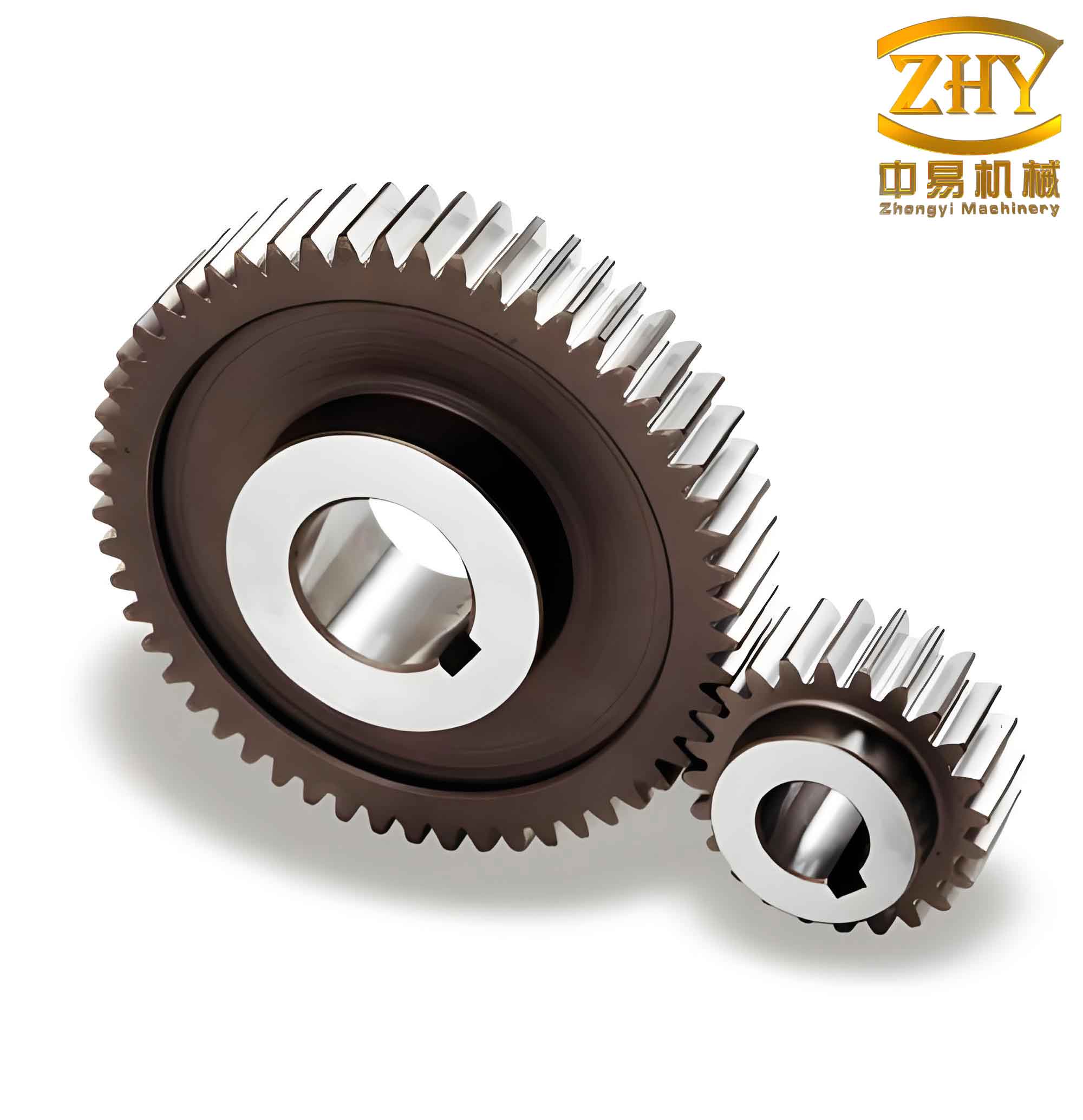
Table 2 lists the basic parameters of the gear pair analyzed.
| Parameter | Pinion | Gear |
|---|---|---|
| Module (mm) | 2 | |
| Number of teeth | 20 | 63 |
| Pressure angle (°) | 20 | |
| Young’s modulus (GPa) | 210 | |
| Poisson’s ratio | 0.3 | |
2.1 Comparison of Analytical Results
Evaluating the analytical formulas for the large gear under a constant torque of 150 N·m, we obtain the root bending stress variation along the meshing line. The results show that in the dedendum region, the speed-increasing bending stress is lower than the speed-reducing stress; in the addendum region, the opposite trend holds. The maximum difference occurs near the single-tooth contact boundaries.
3. Finite Element Simulation of Straight Spur Gear Meshing
To validate the analytical predictions, we performed implicit dynamic finite element simulations using Abaqus. A five-tooth segment model of the straight spur gear pair was meshed with refined elements in the tooth root and contact areas. The friction coefficient was set to 0.1. The gear was driven at a constant angular velocity of 20 rad/s, and the pinion was loaded with torques ranging from 10 N·m to 150 N·m. Both speed-increasing (gear driving) and speed-reducing (pinion driving) cases were simulated.
3.1 Maximum Root Bending Stress under Different Torques
Table 3 lists the maximum root bending stress values extracted from the finite element results for the large gear.
| Torque (N·m) | Speed-Increasing | Speed-Reducing |
|---|---|---|
| 10 | 7.13 | 6.12 |
| 30 | 24.98 | 20.57 |
| 50 | 40.14 | 32.59 |
| 80 | 56.32 | 47.21 |
| 100 | 78.63 | 61.54 |
| 150 | 117.61 | 104.34 |
For the large gear, the speed-increasing maximum stress exceeds the speed-reducing maximum by 12.7% to 27.8%. For the pinion (Table 4), the trend is reversed: the speed-increasing stress is 6.4% to 13.2% lower than the speed-reducing stress.
| Torque (N·m) | Speed-Increasing | Speed-Reducing |
|---|---|---|
| 10 | 8.21 | 8.85 |
| 30 | 25.82 | 29.48 |
| 50 | 43.14 | 48.66 |
| 80 | 69.05 | 79.58 |
| 100 | 88.21 | 94.21 |
| 150 | 137.09 | 150.06 |
3.2 Stress Variation along the Meshing Cycle
By extracting stresses at 40 equally spaced meshing points along the tooth profile of the large gear, we observed the evolution of the bending stress during one meshing cycle. In the dedendum region, the speed-increasing stress is lower; in the addendum region, it is higher. The largest differences occur in the single-tooth contact zones. These numerical findings are fully consistent with the analytical calculations.
4. Discussion
The combined analytical and numerical results confirm that the direction of sliding friction significantly affects the tooth root bending stress of a straight spur gear. When a gear pair originally designed for speed-reducing operation is used for speed-increasing transmission, the large gear experiences higher bending stresses in the addendum region, potentially increasing the risk of tooth root fracture. For the pinion, the stress decreases slightly, but the critical component is the large gear. Therefore, existing design rules for speed-reducing straight spur gears cannot be directly applied to speed-increasing gears. Special attention must be paid to the addendum region of the driving gear (large wheel in speed-increasing).
5. Conclusions
- The direction of sliding friction on a gear tooth surface reverses between the dedendum and addendum regions, and also between speed-increasing and speed-reducing modes.
- The tooth root bending stress of a straight spur gear in the addendum region is larger when the gear is acting as a driver (speed-increasing) compared to when it is driven (speed-reducing). The maximum increase observed was 27.8%.
- In the dedendum region, the speed-increasing stress is lower than the speed-reducing stress.
- The findings highlight the necessity of developing dedicated design methods for speed-increasing straight spur gears, particularly focusing on the addendum fatigue strength of the large gear.