
In the field of mechanical transmission systems, screw gear pairs, commonly referred to as worm gears, are widely utilized due to their ability to provide high reduction ratios and smooth operation in compact spaces. However, the design and validation phase for these components often involves costly physical prototyping and testing. As such, developing accurate predictive models during the design stage is of immense value to reduce development time and expense. This article presents a detailed methodology for the precise modeling, finite element analysis, and dynamic simulation of a screw gear pair. The primary goal is to establish a reliable digital workflow that can accurately predict meshing behavior and stress distribution, thereby serving as a reference for product development. The workflow employs CATIA for parametric modeling, ANSYS for finite element analysis (FEA), and ADAMS for multi-body dynamics, including rigid and flexible body simulations. Throughout this discussion, the term ‘screw gear’ will be used to denote the worm gear pair, emphasizing its helical engagement characteristics.
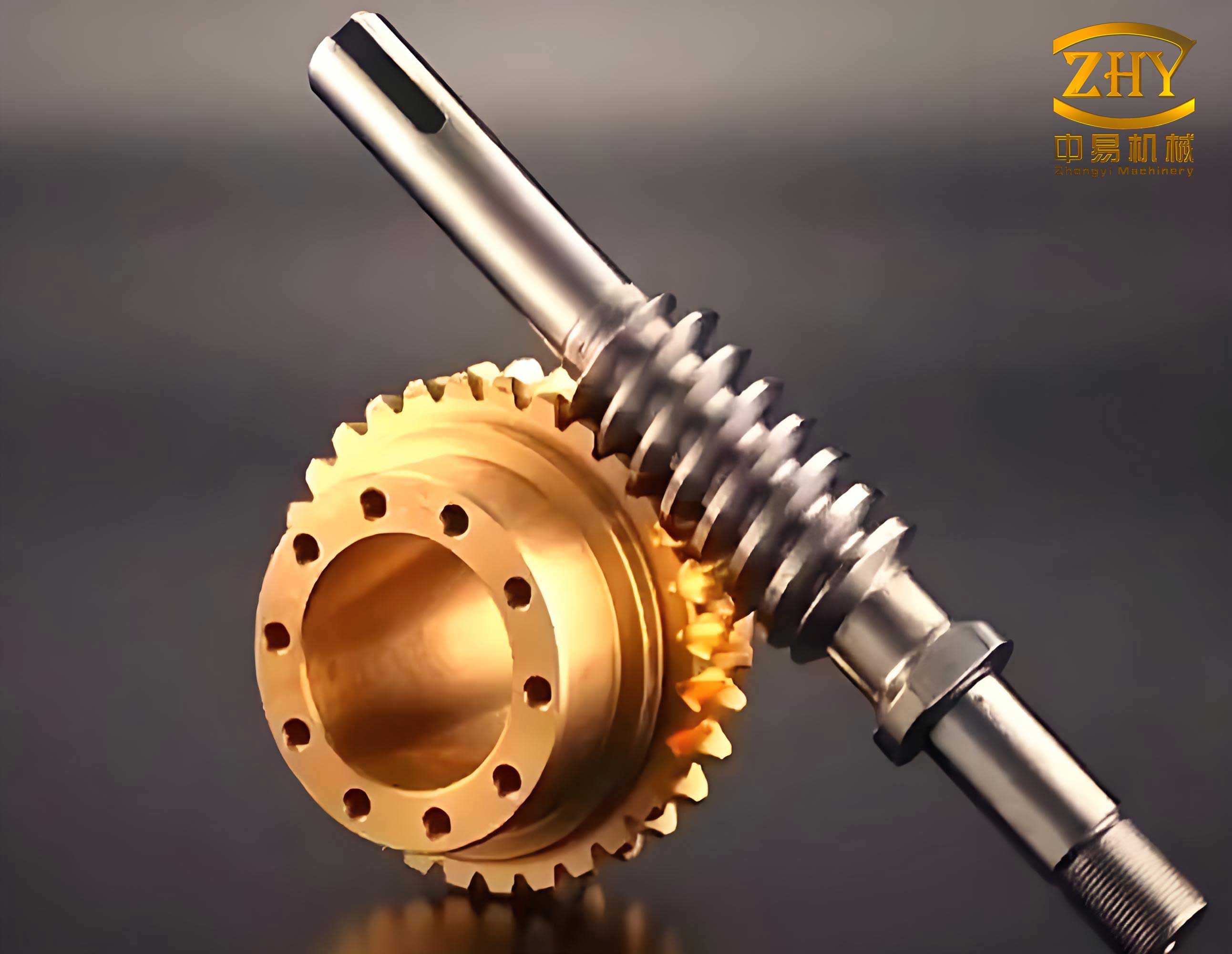
The core challenge in screw gear design lies in accurately capturing the complex contact conditions between the worm and the gear teeth. Traditional methods rely on empirical formulas and extensive physical testing, which can be time-consuming and resource-intensive. Modern computational tools offer a viable alternative, allowing engineers to simulate and analyze performance before manufacturing. This study focuses on a specific screw gear pair derived from industrial data, with parameters detailed in the following section. The approach involves creating a geometrically accurate 3D model, performing static contact stress analysis via FEA, and then conducting dynamic meshing analysis using both rigid and flexible body assumptions. The convergence of results from these different methods validates the modeling approach and provides confidence in the predictive capabilities of the digital twin.
1. Precise Modeling of the Screw Gear Pair
The foundation of any accurate simulation is a precise geometric model. For this study, the screw gear pair was modeled using CATIA software, chosen for its robust parametric capabilities and ease of editing during the analytical phase. The parameters for the screw gear pair, as obtained from industrial sources, are summarized in Table 1. These parameters are essential for defining the tooth geometry, lead angles, and overall dimensions of the screw gear components.
| Parameter | Symbol | Value | Unit |
|---|---|---|---|
| Module | m | 1.25 | mm |
| Number of Worm Threads | Z1 | 1 | – |
| Number of Gear Teeth | Z2 | 42 | – |
| Output Torque on Gear | T2 | 13.923 | Nm |
| Center Distance | a | 36.50 | mm |
| Lead Angle of Worm | γ | 3.49 | ° |
| Lead of Worm | P | 5.65 | mm |
| Pressure Angle | α | 20.00 | ° |
| Pitch Diameter of Worm | d1 | 20.50 | mm |
| Pitch Diameter of Gear | d2 | 52.50 | mm |
The modeling process in CATIA involved generating the worm and gear profiles based on these parameters. The worm was created as a helical thread with the specified lead angle, while the gear teeth were generated to ensure proper meshing with the worm. This parametric model allows for easy modifications if design changes are required, facilitating iterative design optimization. The final 3D assembly of the screw gear pair serves as the input geometry for subsequent analyses.
Before proceeding to simulation, it is crucial to establish baseline allowable stresses for the materials used. This provides a benchmark against which simulation results can be compared. The materials for the screw gear components are as follows: the worm is made of 42CrMo steel, and the gear is made of QA19-4 aluminum bronze. Their material properties are listed in Table 2.
| Component | Material | Density (kg/m³) | Poisson’s Ratio | Elastic Modulus (GPa) |
|---|---|---|---|---|
| Worm (Screw) | 42CrMo | 7850 | 0.28 | 212 |
| Gear | QA19-4 | 7500 | 0.33 | 116 |
Using standard mechanical design handbook formulas, the permissible contact stress and bending stress under rated motor power conditions can be calculated. The contact stress on the tooth surface is given by:
$$ \sigma_H = Z_E \sqrt{\frac{9400 T_2 K_A K_V K_\beta}{d_1 d_2^2}} $$
Where:
- $Z_E$ is the elasticity factor, found from handbooks as $157 \sqrt{\text{MPa}}$
- $K_A$ is the application factor, taken as 1.5 for moderate shock conditions
- $K_V$ is the dynamic load factor, assumed to be 1 for low speeds
- $K_\beta$ is the load distribution factor, taken as 1.2 for varying loads
- $T_2$ is the output torque on the gear (13.923 Nm)
- $d_1$ and $d_2$ are the pitch diameters of the worm and gear, respectively.
Substituting the values yields a calculated contact stress $\sigma_H = 286 \text{ MPa}$.
The bending stress at the tooth root is calculated using:
$$ \sigma_F = \frac{666 T_2 K_A K_V K_\beta}{d_1 d_2 m} Y_{FS} Y_\beta $$
Where:
- $Y_{FS}$ is the composite tooth form factor, taken as 3.8 for this gear geometry
- $Y_\beta$ is the spiral angle factor, calculated as $Y_\beta = 1 – \frac{\gamma}{120} = 0.97$.
This gives a bending stress $\sigma_F = 49 \text{ MPa}$.
These calculated stresses indicate the theoretical limits for the screw gear pair under rated conditions. The primary failure modes considered are contact fatigue on the tooth surface due to high Hertzian contact stress and bending fatigue at the tooth root due to cyclic loading. The subsequent FEA and dynamic analyses will provide detailed stress distributions to verify these handbook calculations.
2. Finite Element Analysis of the Screw Gear Pair
To obtain a more detailed and localized understanding of stress distribution, a finite element analysis was performed using ANSYS software. The 3D CATIA model was imported into ANSYS, where it was prepared for analysis through geometry cleanup and meshing. The goal was to simulate the contact stress during meshing under the specified load conditions.
2.1. Finite Element Model Setup
The material properties from Table 2 were assigned to the respective components in ANSYS. The contact between the worm and gear teeth was defined as a frictional surface-to-surface contact, with a friction coefficient representative of lubricated conditions. Boundary conditions were applied to replicate the operating state: the worm was constrained to rotate about its axis (X-axis) with a small imposed rotation of 5°, while all other degrees of freedom were fixed. The gear was allowed to rotate about its axis (Z-axis) but was subjected to a resisting torque of 13.923 Nm, simulating the output load. All other translational and rotational freedoms for the gear were constrained to zero, except for the rotation about Z.
Mesh generation is a critical step in FEA, as it affects both accuracy and computational cost. The screw gear pair geometry was meshed using tetrahedral solid elements, which are well-suited for complex shapes. A fine mesh was applied in the contact regions to capture stress gradients accurately, while a coarser mesh was used in less critical areas. The final mesh consisted of 243,741 elements, as shown in the mesh visualization. The mesh quality was checked to ensure aspect ratios and skewness were within acceptable limits.
2.2. Results and Discussion of FEA
The FEA solution provided detailed contour plots of stress distribution on the screw gear components. The contact state between the worm and gear teeth revealed a band-shaped contact pattern along the tooth flank, which is characteristic of screw gear meshing. The contact pressure on the gear tooth surface is illustrated in the stress contour plot. The maximum contact stress was found to be 266 MPa, located near the root of the gear tooth. This is a localized peak stress. The majority of the contact band exhibited pressures ranging from 100 MPa to 250 MPa.
Comparing the FEA result ($\sigma_{H, FEA} = 266 \text{ MPa}$) with the handbook calculation ($\sigma_H = 286 \text{ MPa}$), we observe a deviation of approximately 7%. This close agreement validates the accuracy of the FEA model in predicting contact stresses for this screw gear pair. The slight difference can be attributed to the simplifications in the analytical formula, which assumes idealized contact conditions, whereas FEA accounts for local geometry and contact nonlinearities.
Furthermore, the bending stress distribution from FEA was examined. The maximum von Mises stress in the gear tooth root region was found to be around 55 MPa, which is reasonably close to the calculated bending stress of 49 MPa. This consistency reinforces the reliability of the finite element model. The stress concentrations at the fillets and root areas highlight potential zones for fatigue initiation, which should be considered during the design optimization of the screw gear.
3. Dynamic Analysis Using ADAMS: Rigid and Flexible Body Simulations
While FEA provides a static or quasi-static stress analysis, understanding the dynamic behavior of the screw gear pair during operation is equally important. Dynamic analysis captures effects such as impact forces, vibrations, and inertial forces that arise from motion. For this purpose, multi-body dynamics simulations were conducted using ADAMS software, first with rigid body assumptions and then with a flexible body (rigid-flexible coupling) approach.
3.1. Rigid Body Dynamics in ADAMS
The CATIA model was imported into ADAMS, where joints and constraints were applied to define the kinematic pairs. The worm was connected to the ground via a revolute joint, allowing rotation about its axis. Similarly, the gear was connected to the ground with a revolute joint about its axis. A contact force was defined between the worm and gear teeth to simulate meshing impact. The contact force model in ADAMS is based on a spring-damper analogy, often referred to as the Hertzian contact model with damping.
The normal contact force $F$ during impact is modeled as:
$$ F = K \delta^n + C \frac{d\delta}{dt} \text{ step}(\delta, 0, 0, d_{\text{max}}, 1) $$
Where:
- $K$ is the contact stiffness coefficient
- $\delta$ is the penetration depth between the contacting bodies
- $n$ is the force exponent (typically 1.5 for metallic contact)
- $C$ is the damping coefficient
- $\text{step}()$ is a function that activates damping only beyond a specified penetration $d_{\text{max}}$.
The stiffness coefficient $K$ is derived from Hertz contact theory for two curved surfaces:
$$ K = \frac{4}{3} R^{1/2} E^* $$
With the equivalent radius $R$ and equivalent elastic modulus $E^*$ given by:
$$ \frac{1}{R} = \frac{1}{R_1} + \frac{1}{R_2} $$
$$ \frac{1}{E^*} = \frac{1 – \mu_1^2}{E_1} + \frac{1 – \mu_2^2}{E_2} $$
Here, $R_1$ and $R_2$ are the effective radii of curvature at the contact point for the worm and gear, approximated by their pitch radii. Substituting the material properties and geometries from Tables 1 and 2 yields $K = 3.005 \times 10^{11} \text{ N/mm}^{3/2}$. The damping coefficient $C$ was set to 40 N·s/mm after literature review and trial simulations. The force exponent was set to $n=1.5$, and the maximum damping penetration $d_{\text{max}}$ was 0.1 mm. Friction was included with a dynamic coefficient of 0.06 and a static coefficient of 0.09, assuming lubricated conditions.
To simulate the loading condition smoothly and avoid numerical instability from sudden torque application, a step function was used to apply the load torque on the gear. The driving motion was imposed on the worm using a velocity step function: $\text{step}(time, 0, 0, 0.5, 338.8 \text{ deg/s})$, which corresponds to gradually applying the rotational speed over 0.5 seconds. The resisting torque of 13.923 Nm was applied to the gear.
The simulation was run for 0.5 seconds with a high step count to ensure resolution. The resulting meshing force between the screw gear teeth was plotted over time. The force curve showed an initial sharp rise to about 565 N within 0.01 s, followed by a gradual increase to a peak of 587.49 N at 0.19 s. This peak is attributed to the initial impact as the teeth engage. After the initial transient, the meshing force oscillated around an average value of 570 N, with fluctuations due to the discrete nature of tooth engagement and contact dynamics in the rigid body model. This provides insight into the dynamic load variation that the screw gear experiences during operation, which is valuable for durability assessments.
3.2. Flexible Body Dynamics: Rigid-Flexible Coupling Analysis
The rigid body analysis assumes components are infinitely stiff, which may not capture stress waves or deformation effects during meshing. To incorporate elasticity, a flexible body dynamics approach was employed. This involves creating a flexible model of the worm (the more critical component for stress) and coupling it with the rigid gear in ADAMS.
The process began with a modal analysis of the worm using HyperMesh software. The worm’s geometry was meshed with finite elements, and material properties were assigned. A fixed boundary condition was applied at the shaft connections to represent the mounting. The modal analysis computed the natural frequencies and mode shapes of the worm. The first 16 modes were extracted, with the first natural frequency being 725 Hz, which is sufficiently high to be considered valid for dynamic analysis without excessive low-frequency noise. The results were exported as a Modal Neutral File (MNF), which contains mass, stiffness, and mode shape information.
This MNF file was then imported into ADAMS via the Adams/Flex module. The flexible worm model replaced the rigid worm in the assembly. Constraints were reapplied: the flexible worm was connected to ground using a revolute joint at its axis, but now the joint referenced the interface nodes on the flexible body. The gear remained rigid. Contact was redefined between the flexible worm surface and the rigid gear teeth, using the same Hertzian contact parameters as before. The same step function drive was applied to the flexible worm, and the load torque was applied to the gear.
The simulation was run for 0.35 seconds with 20,000 steps. The results showed a more nuanced dynamic response. The maximum contact stress on the flexible worm tooth surface was found to be 251 MPa, located at the tooth root region. Comparing this with the static FEA result of 266 MPa, the deviation is only 5.6%, indicating excellent agreement between the static and dynamic flexible analyses for this screw gear. This consistency confirms that the modeling assumptions and parameters are accurate.
The meshing force curve from the flexible body simulation exhibited a different character. The force rose rapidly to 573 N within 0.001 s, then increased to a higher peak of 795.49 N at 0.138 s. After this peak, the force oscillated around 585 N, but with greater amplitude and higher-frequency fluctuations compared to the rigid body curve. This behavior is more representative of real-world dynamics, as it includes effects of structural flexibility, such as vibration modes and damping, which influence the contact impact. The higher peak force in the flexible analysis suggests that inertia and elastic deformation can lead to transient overloads that might be missed in a purely rigid analysis. This insight is crucial for the design of robust screw gear systems, particularly in applications with high accelerations or variable loads.
4. Comparative Assessment and Design Implications
The integration of CATIA, ANSYS, and ADAMS provides a comprehensive digital prototyping environment for screw gear pairs. The close correlation between the FEA-calculated contact stress (266 MPa), the handbook calculation (286 MPa), and the flexible dynamic analysis stress (251 MPa) demonstrates the validity of the modeling pipeline. The slight variations are within acceptable engineering margins and can be attributed to differences in modeling assumptions: the handbook formula is empirical and simplified, FEA assumes static load application, and ADAMS flexible dynamics includes inertial and damping effects.
A summary of key stress results is presented in Table 3 for clear comparison.
| Analysis Method | Maximum Contact Stress (MPa) | Location | Notes |
|---|---|---|---|
| Handbook Calculation | 286 | Tooth flank (theoretical) | Based on empirical formulas |
| ANSYS FEA (Static) | 266 | Gear tooth root | Nonlinear contact analysis |
| ADAMS Flexible Dynamics | 251 | Worm tooth root | Transient dynamic analysis |
The dynamic meshing forces also provide valuable data. The average meshing force from both rigid and flexible analyses is around 570-585 N, but the flexible model shows higher transient peaks (up to 795 N). This indicates that for fatigue life prediction, dynamic factors should be considered. The force variations can be used to estimate load spectra for durability simulations.
From a design perspective, this study underscores several important points for screw gear development:
- Modeling Accuracy: Parametric CAD models are essential for quick design iterations. The use of CATIA ensures that geometric changes can be propagated seamlessly to analysis models.
- Analysis Integration: Combining static FEA and dynamic multi-body simulation provides a holistic view of performance. FEA gives detailed stress contours under worst-case static loads, while dynamics reveals time-varying loads and vibratory responses.
- Material Selection: The stresses observed are within typical allowable limits for the chosen materials (42CrMo and QA19-4), but the dynamic peaks suggest a need for careful consideration of fatigue strength, especially at the tooth root of the screw gear.
- Contact Geometry Optimization: The band-shaped contact pattern from FEA indicates good alignment, but the stress concentration at the root suggests that slight modifications to the tooth profile or lead angle might improve stress distribution. This can be explored further using the parametric model.
Furthermore, the successful application of rigid-flexible coupling analysis in ADAMS demonstrates that incorporating flexibility is feasible and adds significant value. For high-speed or high-precision screw gear applications, such dynamic analyses become indispensable to predict noise, vibration, and harshness (NVH) characteristics.
5. Conclusion and Future Work
This article has presented a detailed methodological framework for the analysis of a screw gear pair, from precise parametric modeling to finite element and dynamic simulations. The workflow leverages industry-standard software tools—CATIA, ANSYS, and ADAMS—to create a digital twin that accurately predicts meshing behavior and stress distribution. The key findings are:
- The CATIA-based parametric model of the screw gear pair is effective and easily editable for design changes.
- Finite element analysis in ANSYS yields contact stress results that align well with traditional handbook calculations, validating the model’s accuracy for static load conditions.
- Dynamic analysis in ADAMS, both rigid and flexible, provides insights into time-varying meshing forces and the influence of structural flexibility. The flexible body analysis shows stress results consistent with FEA, with only a 5.6% deviation, confirming the robustness of the approach.
- The integration of these tools forms a reliable virtual prototyping pipeline that can significantly reduce the need for physical testing during the development of screw gear systems.
The study confirms that the proposed modeling and analysis methods are correct and the results are reasonable, offering a solid reference for product development teams. Future work could extend this approach to include thermal analysis, as screw gears often generate significant heat due to sliding friction. Additionally, wear and lubrication models could be incorporated to predict long-term performance. Optimization studies could use the parametric model to automatically adjust geometry for minimized stress or maximized efficiency. Finally, experimental validation through strain gauging or telemetry on physical prototypes would further enhance the correlation between simulation and reality, closing the loop on the digital twin concept for screw gear drives.
In summary, the comprehensive analysis of screw gear meshing through integrated CAD, FEA, and dynamics simulations represents a powerful strategy for advancing the design and reliability of these critical mechanical components. The repeated focus on screw gear throughout this discussion highlights its importance in transmission systems and the value of sophisticated digital tools in its development.