
The manufacturing of involute helical gears via the gear shaping process represents a sophisticated form of spatial meshing. The calculations involved in designing the cutter for this process are exceptionally complex, involving numerous interdependent geometric and kinematic parameters. Traditional manual design methods, often reliant on trial-and-error adjustments during manufacturing, are time-consuming and can lead to material waste and suboptimal tool performance. Therefore, developing a systematic, automated design methodology is both critical and urgent. This article presents a detailed, programmatic approach to the Computer-Aided Design (CAD) of helical gear shaping cutters, focusing on the underlying theory, constraint management, and software implementation. My research and development efforts have been directed towards creating a robust system that integrates design calculation, validation, and automated drawing generation specifically for this advanced gear shaping application.
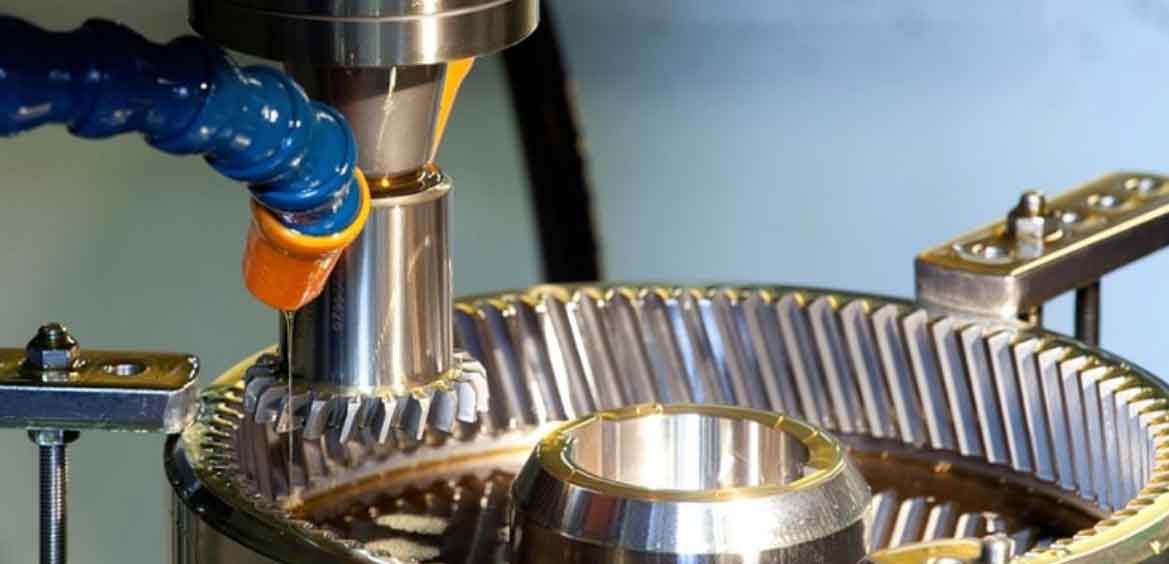
The principle of helical gear shaping involves simulating the meshing of a helical gear pair. The cutter, itself a helical gear with cutting edges, and the workpiece rotate in a synchronized manner while the cutter reciprocates axially to provide the cutting motion. This generating motion ensures the correct involute profile on the workpiece flank. A critical aspect of the shaper cutter design is the incorporation of necessary tool angles. Unlike a standard gear, a shaping cutter possesses rake angles and relief angles. The front rake angle ($\gamma_f$) improves cutting conditions, while the primary relief angle ($\alpha_p$) on the tooth tip is essential to prevent rubbing against the machined surface. This relief angle is achieved by progressively reducing the cutter’s outside diameter from the front face to the back, making each perpendicular section a gear with a different addendum modification coefficient (profile shift coefficient). Similarly, side relief on the tooth flanks is generated by varying the tooth thickness along the cutter’s axis. Consequently, a gear shaping cutter is fundamentally a series of helical gears with continuously varying profile shift coefficients along its axis. The section where the profile shift coefficient is zero is termed the “datum section” or “original cross-section.”
Selecting the appropriate profile shift coefficient ($x_0$) for the new cutter is the most crucial step in the design process for gear shaping tools. The goal is to maximize the usable life of the cutter, which is directly related to the amount of material that can be reground from the front face. Therefore, the new cutter should be designed with the maximum allowable positive profile shift, $(x_0)_{max}$. This offers significant advantages:
- Increased Tool Life: A larger $x_0$ allows for more regrinding operations before the tool reaches its minimum allowable limits, extending its service life.
- Improved Surface Finish: A larger profile shift increases the effective side rake angle at the tooth tip, leading to better cutting action and superior surface quality on the machined gear.
However, increasing $x_0$ is constrained by several factors that must be rigorously checked during the CAD process for gear shaping cutters:
- Tooth Tip Sharpness: Excessively large $x_0$ causes the cutter tooth tip to become too pointed, reducing its strength, heat dissipation capacity, and ultimately, its durability.
- Undercutting (Fillet Interference) in the Workpiece: When cutting gears with a low number of teeth, a cutter with a large positive $x_0$ can cause undercutting (or fillet interference) on the root of the workpiece gear.
- Topping (Peeling) of the Workgear: When cutting gears with a high number of teeth using a cutter with a small number of teeth, the tip of the workpiece tooth may interfere with the root of the cutter tooth during the generation process, causing “topping.”
Conversely, at the end of its life, the fully reground cutter will have its minimum profile shift, $(x_0)_{min}$. This state introduces another set of constraints that must be validated by the gear shaping CAD system:
- Tool Tooth Strength: After repeated regrinding, the tooth thickness at the critical root section diminishes. The tool must maintain sufficient strength to withstand cutting forces without failure.
- Fillet Interference (Revisited for Worn Cutter): The condition for undercutting must be re-checked for the worn cutter geometry against the same workpiece.
- Topping (Revisited for Worn Cutter): The topping condition must also be re-verified for the worn cutter geometry.
The core logic of the CAD system is to navigate these constraints. It first calculates an initial maximum shift based on tip thickness, then iteratively checks all other constraints, adjusting parameters if necessary, to find the optimal $(x_0)_{max}$ that allows for the maximum number of regrinds while ensuring both the new and fully worn cutter produce acceptable gears.
The implementation of the Computer-Aided Design system for helical gear gear shaping cutters follows a structured, algorithmic flow. The process begins with the input of all known parameters related to the workpiece gear and the machine/process constraints. The system then performs a sequence of calculations and validations, as logically outlined in the program flow. The following table summarizes the primary input parameters and key calculated outputs managed by the system.
| Parameter Category | Symbol | Description | Source/Example |
|---|---|---|---|
| Workpiece Gear Inputs | $z_w$ | Number of teeth | Design Specification |
| $m_n$ | Normal module | Design Specification | |
| $\alpha_n$ | Normal pressure angle | e.g., 20° | |
| $\beta$ | Helix angle | Design Specification | |
| $h_{aP}^*$ | Addendum coefficient | e.g., 1.0, 1.25 | |
| $c_n^*$ | Bottom clearance coefficient | e.g., 0.25 | |
| Cutter & Process Inputs | $z_0$ | Cutter number of teeth | Selected based on experience |
| $\gamma_f$ | Front rake angle | e.g., 5° | |
| $\alpha_p$ | Primary relief angle | e.g., 6° | |
| $N_{grind}$ | Desired number of regrinds | Tool life target | |
| $s_{a0,min}$ | Minimum allowable tip width | Strength constraint (e.g., 0.25$m_n$) | |
| Key Calculated Outputs | $d_{a0}$ | Cutter tip diameter (new) | System Calculation |
| $d_{f0}$ | Cutter root diameter (new) | System Calculation | |
| $(x_0)_{max}$ | Maximum profile shift (new cutter) | Optimized by System | |
| $(x_0)_{min}$ | Minimum profile shift (worn cutter) | $(x_0)_{max} – \Delta x$ | |
| $L_{total}$ | Total usable cutter length | Based on $\alpha_p$ and regrinds |
The mathematical core of the gear shaping CAD system is built upon the equations of meshing for crossed helical gears, modified to account for tool angles and profile shift variation. A central calculation involves determining the limiting conditions. For example, the condition to avoid undercutting (fillet interference) for the new cutter involves checking the curvature at the tip of the workpiece against the limiting path of contact. The radius of curvature of the workpiece tooth profile at the tip, $\rho_{a2}$, must be greater than the minimum radius of curvature on the cutter’s usable involute profile. This can be expressed as a validation check:
$$ \rho_{a2} = \sqrt{r_{a2}^2 – r_{b2}^2} \quad \text{and} \quad \rho_{0,min} = a_{w0} \sin\alpha_{wt} – \rho_{a2} $$
where $r_{a2}$ and $r_{b2}$ are the tip and base radii of the workpiece, $a_{w0}$ is the center distance, and $\alpha_{wt}$ is the working pressure angle. The condition $\rho_{0,min} > 0$ must hold. Similarly, the check for topping involves ensuring the tip of the workpiece does not intersect the root trochoid generated by the cutter. For the worn cutter, the entire set of checks is repeated using $(x_0)_{min}$ and the corresponding reduced tip diameter $d_{a0, worn}$.
The tip width constraint is directly used to calculate the initial $(x_0)_{max}$. The tooth thickness at the tip of the cutter, $s_{a0}$, is a function of its profile shift. The system solves for the $x_0$ that gives $s_{a0} = s_{a0,min}$. The formula for tip thickness in the normal section is:
$$ s_{a0} = d_{a0} \left( \frac{s_{0}}{d_{0}} + \text{inv}\alpha_n – \text{inv}\alpha_{a0} \right) $$
where $s_0$ and $d_0$ are the tooth thickness and diameter at the reference pitch circle, and $\alpha_{a0}$ is the pressure angle at the cutter tip. Solving this equation iteratively provides the maximum shift allowed by tip strength.
The following table outlines the primary validation checks performed by the CAD system, their governing equations or logic, and the corrective action if a check fails.
| Validation Check | Applied to | Governing Principle / Logical Condition | Corrective Action if Failed |
|---|---|---|---|
| Tip Width | New Cutter | $s_{a0}(x_0) \geq s_{a0,min}$ | Reduce target $(x_0)_{max}$ or increase $z_0$. |
| Undercutting (Fillet Interference) | New & Worn Cutter | $\rho_{0,min} > 0$ for given $x_0$. | Reduce $x_0$ or (if possible) increase workpiece $z_w$. |
| Topping (Peeling) | New & Worn Cutter | Workgear tip path stays outside cutter root trochoid. | Increase $x_0$, reduce cutter $z_0$, or modify workpiece addendum. |
| Radial Clearance (Secondary Interference) | Worn Cutter | Cutter tip circle diameter > effective involute start circle diameter. | Increase $x_0$ or adjust relief/regrind parameters. |
| Tool Tooth Bending Strength | Worn Cutter | Root thickness & area > minimum safe threshold. | Increase initial module or $z_0$; limit $(x_0)_{min}$. |
A core module of the software handles the critical checks for the fully worn cutter state. The following code logic, implemented in a language like C++, demonstrates how the system validates the worn cutter against topping and secondary interference. The variable names are descriptive: `afoj` is the working pressure angle for the old (worn) cutter, `pminj` is the minimum radius of curvature on the worn cutter, `pmax` is the maximum radius of curvature on the workpiece, `dbo` is the base diameter of the cutter, `db` is the base diameter of the workpiece, `de` is the tip diameter of the workpiece, and `h` is the dedendum.
// Calculate working pressure angle for the worn cutter state
afoj = afn + 1 * PI / 180.0;

// Calculate the minimum radius of curvature on the worn cutter's involute profile
pminj = (db + dbo) * tan(afoj) / 2.0 - pmax;

// CHECK: Topping (Peeling) for the Worn Cutter
if (pminj <= 0) {
    // If the worn cutter's min curvature is <=0, topping occurs.
    printf("Topping (Peeling) will occur with the fully worn cutter.\n");
    exit(0); // or trigger a redesign loop
}

// If no topping, proceed to calculate the max curvature and related diameters
pmaxj = pminj + contactPathLength;
deojp = sqrt(dbo * dbo + 4.0 * pmaxj * pmaxj); // Effective involute tip diameter
deoj = (db + dbo) / cos(afoj) - (de - 2.0 * h); // Actual worn cutter tip diameter

// Calculate the radial "overrun" – the margin by which the actual tip circle
// exceeds the effective involute start circle.
datj = (deoj - deojp) / 2.0;

// CHECK: Secondary Interference (Radial Clearance) for the Worn Cutter
if (datj <= 0) {
    // If there is no overrun, the cutter tip will truncate the workpiece fillet.
    printf("Secondary interference (fillet truncation) will occur with the worn cutter.\n");
    exit(0); // or trigger a redesign loop
}
This code segment is executed within the larger optimization loop. If a check fails, the system can log the issue, adjust a key parameter (like the initial $x_0$ or the number of regrinds), and re-run the calculation cascade until all constraints for both the new and worn states are satisfied simultaneously. This automated validation is the cornerstone of a reliable gear shaping cutter CAD system.
Upon successful completion of all design calculations and constraint validations, the system enters the output generation phase. A modern CAD system for gear shaping tools does not stop at numerical results; it automates the creation of manufacturing documentation. The software I developed is integrated with a CAD drafting environment (e.g., via AutoCAD’s API or similar). It programmatically generates a complete, detailed manufacturing drawing for the helical gear shaping cutter. This drawing includes all essential views (front, side, detailed tooth profile), a full parameter table populated with the calculated values (module, pressure angle, helix angle, number of teeth, profile shift limits, key diameters, tolerances), and notes regarding heat treatment, material, and accuracy specifications. This seamless transition from calculation to drawing eliminates manual transcription errors and drastically reduces the lead time from design to production. The parameter table in the drawing serves as the definitive data source for both in-house manufacturing and external procurement.
The advantages of implementing a comprehensive CAD system for helical gear gear shaping cutters are substantial. It transforms a highly specialized, experience-dependent design task into a reproducible, optimized, and fast engineering process. The system ensures that every designed cutter is validated against all critical failure modes (tooth breakage, undercutting, topping) for its entire usable life. By maximizing the permissible profile shift $(x_0)_{max}$ within safe limits, it directly extends tool life and improves cutting performance. The integration with automated drawing production eliminates a significant source of delay and potential error. In practical application, such a system can reduce the design-to-drawing cycle time by over 80%, providing clear economic benefits and enhancing manufacturing agility. Future development will focus on deeper integration, moving towards a holistic Computer-Aided Engineering (CAE) system that links gear shaping cutter design directly with cutter grinding machine toolpaths and process simulation for the gear shaping operation itself, creating a fully digital thread for gear tooling and production.