
In my extensive experience with automotive component reliability, the failure of gear shafts in transmissions represents a critical issue that can lead to significant downtime, safety concerns, and economic losses. Gear shafts are integral components that transmit torque and rotational motion, often under cyclic loading conditions. This study focuses on a detailed investigation into the fracture failure of gear shafts from an automotive transmission, utilizing a multi-faceted approach encompassing macroscopic examination, chemical composition analysis, mechanical property testing, and microstructural characterization. The primary objective is to elucidate the root causes of failure and propose effective mitigation strategies to enhance the durability and performance of gear shafts in service.
The importance of gear shafts cannot be overstated in automotive systems. They are subjected to complex stress states arising from centrifugal forces, inertial loads, and operational torque variations. Over time, these cyclic stresses can initiate fatigue cracks, leading to catastrophic failure if not addressed. In this analysis, I examined a specific case where gear shafts failed after approximately eight months of service, with the material specified as 35 steel according to relevant standards. Through systematic testing, I aimed to identify whether the failure stemmed from material deficiencies, design flaws, or operational overloads. The insights gained from such failure analyses are pivotal for quality improvement, technological advancement, and accident prevention in the automotive industry.
To ensure a thorough investigation, I employed a range of analytical techniques. The chemical composition of the gear shafts was determined using plasma emission spectroscopy, adhering to standard methods. Mechanical properties, including tensile strength and impact toughness, were evaluated at room temperature following international standards such as GB/T 228-2010 and GB/T 229-2007. Macroscopic morphology was documented using high-resolution digital imaging, while scanning electron microscopy (SEM) provided detailed insights into fracture surfaces. Microstructural analysis involved preparing metallographic samples through sectioning, grinding, polishing, and etching, observed under optical and electron microscopes. These methodologies allowed for a comprehensive assessment of the gear shafts’ integrity.
The chemical composition of the failed gear shafts is summarized in Table 1. As per the GB/T699 standard for quality carbon structural steel, the material should meet specific elemental ranges. The results indicate that the gear shafts’ composition aligns with the requirements for 35 steel, with carbon, silicon, manganese, phosphorus, and sulfur contents within permissible limits. This suggests that the failure is unlikely due to gross chemical deviations, prompting a deeper look into mechanical and microstructural factors.
| Element | C | Si | Mn | P | S | Fe |
|---|---|---|---|---|---|---|
| Measured Value | 0.37 | 0.25 | 0.71 | 0.008 | 0.006 | Balance |
| Standard Range (GB/T699) | 0.32-0.39 | 0.17-0.37 | 0.5-0.8 | ≤0.035 | ≤0.035 | Balance |
Macroscopic examination of the fractured gear shafts revealed critical insights. The breakage occurred at the interface between the threaded section and the nut engagement area, characterized by a fatigue-driven failure mode. The crack initiation site was identified at the root of a thread, where stress concentration is typically high. From this origin, the crack propagated transversely across a semi-cylindrical region, followed by rapid longitudinal splitting. The transverse expansion zone exhibited a relatively flat surface with faint macroscopic arrest lines, indicative of progressive fatigue growth. Notably, no significant plastic deformation or obvious defects were observed near the crack origin, suggesting that the failure initiated under cyclic loading rather than sudden overload.
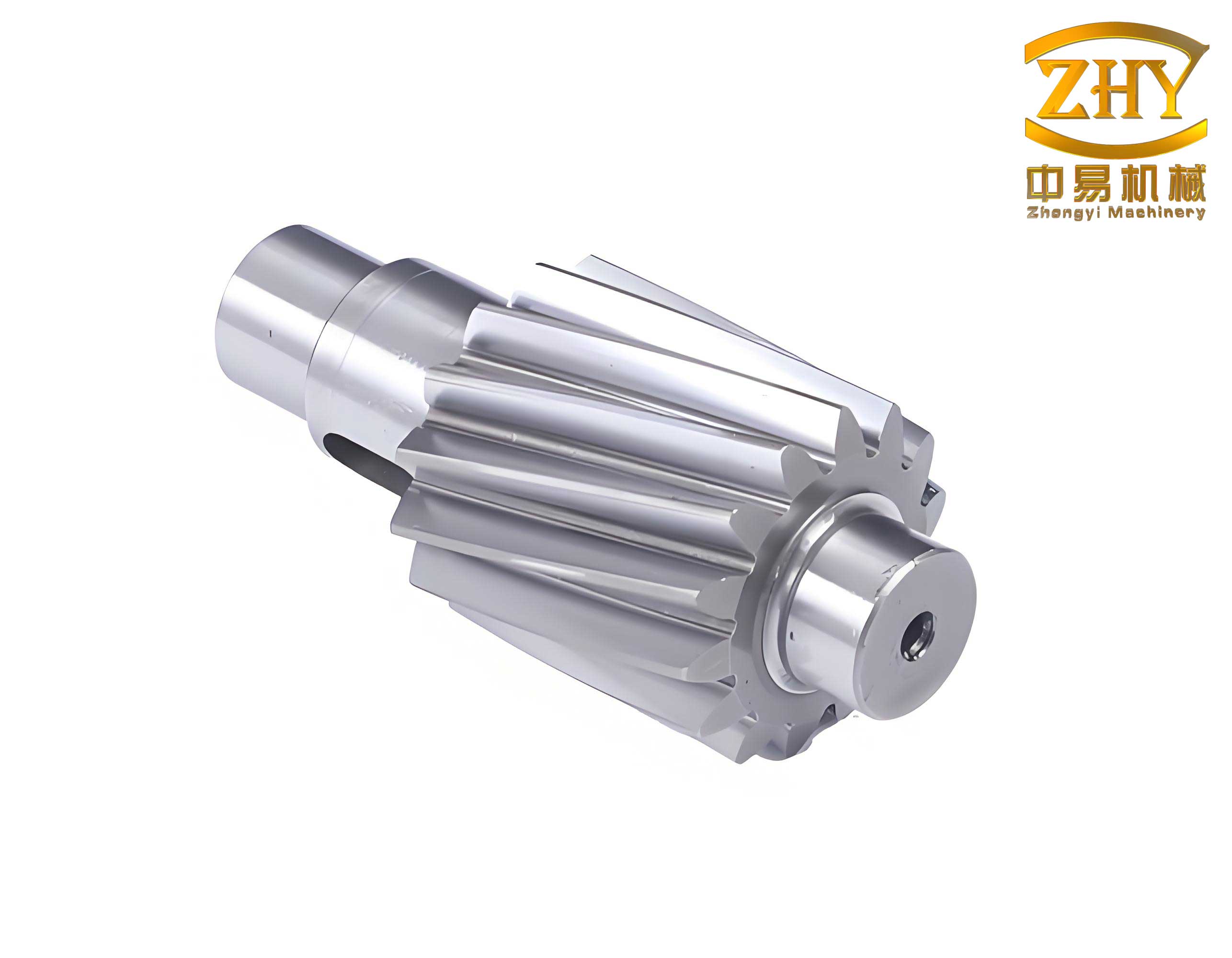
Mechanical property testing provided further clarity on the gear shafts’ performance. Tensile and impact tests were conducted on specimens extracted from the failed gear shafts, with results compared against the GB/T699-2008 standard for 35 steel. As shown in Table 2, the yield strength and elongation met or exceeded requirements, but the tensile strength and impact energy fell below specified values. Specifically, the tensile strength was measured at 525 MPa versus a standard of 530 MPa, and the impact energy was 32 J compared to a requirement of 55 J. This deficiency in toughness and ultimate strength likely contributed to the gear shafts’ susceptibility to fatigue cracking under operational stresses.
| Property | Yield Strength (MPa) | Tensile Strength (MPa) | Elongation (%) | Reduction in Area (%) | Impact Energy (J) |
|---|---|---|---|---|---|
| Measured Value | 330 | 525 | 32 | 48 | 32 |
| Standard Value (GB/T699-2008) | 315 | 530 | 20 | 45 | 55 |
Microstructural analysis through SEM and metallography offered a deeper understanding of the failure mechanisms. The fracture surface near the crack origin showed signs of wear, with distinct fatigue striations radiating inward to a depth of approximately 2 mm. The transverse propagation region displayed dimpled morphology, characteristic of microvoid coalescence and ductile tearing. In the final fast fracture zone, similar dimples were observed alongside plastic deformation marks. Importantly, no large inclusions, porosity, or other metallurgical defects were detected across the entire fracture surface, indicating that the material itself was sound from a defect perspective.
Metallographic samples from near the crack initiation site, specifically at the thread root and in the bulk material, were examined. The microstructure consistently consisted of tempered sorbitte, a common transformation product for quenched and tempered medium-carbon steels like 35 steel. At the thread root, no microcracks or decarburization were present, and the bulk material showed a homogeneous sorbitic structure without pores or anomalies. This suggests that the heat treatment of the gear shafts was adequate, but the mechanical properties may have been compromised by factors such as improper tempering or surface conditions.
The failure of these gear shafts can be attributed to a combination of factors, primarily centered on fatigue initiation at stress concentrators and suboptimal mechanical properties. In automotive applications, gear shafts experience cyclic stresses that can be modeled using fatigue life equations. For instance, the Paris’ law describes crack growth rate under cyclic loading: $$ da/dN = C(\Delta K)^m $$ where \( da/dN \) is the crack growth per cycle, \( \Delta K \) is the stress intensity factor range, and \( C \) and \( m \) are material constants. For gear shafts, stress concentration at thread roots elevates \( \Delta K \), accelerating crack initiation. The measured lower impact energy (32 J) implies reduced fracture toughness, which can be related to the stress intensity factor through: $$ K_{IC} = Y \sigma \sqrt{\pi a} $$ where \( K_{IC} \) is the fracture toughness, \( \sigma \) is the applied stress, \( a \) is the crack length, and \( Y \) is a geometric factor. With lower toughness, the critical crack size for failure decreases, making the gear shafts more prone to fracture under operational loads.
Furthermore, the role of surface quality in gear shafts cannot be overlooked. Stress concentration factors \( K_t \) at thread roots can be approximated using formulas such as: $$ K_t = 1 + 2\sqrt{\frac{a}{\rho}} $$ where \( a \) is the notch depth and \( \rho \) is the root radius. Poor machining or wear can reduce \( \rho \), increasing \( K_t \) and promoting crack initiation. In this case, the absence of surface defects in microscopy suggests that the initial geometry may have been adequate, but cyclic stresses over time led to fatigue nucleation. The combination of marginally low tensile strength and impact energy, coupled with high cyclic stresses, created a perfect storm for failure. This underscores the need for stringent quality control in manufacturing gear shafts, including precise machining, optimized heat treatment, and rigorous testing.
To prevent similar failures in gear shafts, several improvement measures are proposed. First, enhance the material selection or processing to meet or exceed mechanical property standards. For example, using alloy steels like 40Cr or 42CrMo could improve strength and toughness. The yield strength \( \sigma_y \) and toughness \( K_{IC} \) can be optimized through alloying and heat treatment, as described by empirical relationships: $$ \sigma_y = \sigma_0 + k_y d^{-1/2} $$ where \( \sigma_0 \) is the lattice friction stress, \( k_y \) is a constant, and \( d \) is the grain size. Refining the grain size through controlled austenitizing and tempering can boost both strength and toughness. Second, redesign the thread geometry to reduce stress concentration. Implementing larger root radii or using rolled threads instead of cut threads can lower \( K_t \), as per the formula: $$ K_t = \frac{\sigma_{max}}{\sigma_{nom}} $$ where \( \sigma_{max} \) is the maximum stress at the notch and \( \sigma_{nom} \) is the nominal stress. Third, introduce surface treatments such as shot peening or nitriding to induce compressive residual stresses, which can retard fatigue crack initiation. The effectiveness can be quantified by modifying the stress intensity factor: $$ \Delta K_{eff} = \Delta K – K_{res} $$ where \( K_{res} \) is the stress intensity due to residual stresses. Fourth, implement non-destructive testing (NDT) during production to detect early flaws in gear shafts. Techniques like ultrasonic testing or magnetic particle inspection can identify subsurface defects that might escape visual examination.
In addition to these measures, operational factors should be considered. The loading conditions on gear shafts in transmissions can be complex, involving torsional, bending, and axial components. The equivalent stress \( \sigma_{eq} \) under multiaxial loading can be estimated using von Mises criterion: $$ \sigma_{eq} = \sqrt{\frac{1}{2}[(\sigma_1 – \sigma_2)^2 + (\sigma_2 – \sigma_3)^2 + (\sigma_3 – \sigma_1)^2]} $$ where \( \sigma_1, \sigma_2, \sigma_3 \) are principal stresses. Ensuring that gear shafts are operated within design limits, with proper lubrication and maintenance, can extend service life. Fatigue life prediction models, such as the Smith-Watson-Topper (SWT) parameter: $$ SWT = \sqrt{\sigma_{max} \epsilon_a E} $$ where \( \sigma_{max} \) is the maximum stress, \( \epsilon_a \) is the strain amplitude, and \( E \) is Young’s modulus, can be used to assess durability during design phases.
The significance of this analysis extends beyond the specific case study. Gear shafts are ubiquitous in automotive, aerospace, and industrial machinery, and their failure can have cascading effects. By understanding the interplay between material properties, design features, and loading conditions, engineers can develop more robust gear shafts. Future research could focus on advanced materials like high-strength composites or additive manufacturing techniques for gear shafts, which offer tailored properties and reduced weight. Computational tools like finite element analysis (FEA) can simulate stress distributions in gear shafts under various loads, aiding in optimization. The fatigue crack growth rate can be integrated over time to predict life: $$ N_f = \int_{a_i}^{a_f} \frac{da}{C(\Delta K)^m} $$ where \( N_f \) is the cycles to failure, \( a_i \) is the initial crack size, and \( a_f \) is the critical crack size. Such predictive approaches are invaluable for proactive maintenance and design validation.
In conclusion, the fracture failure of the automotive gear shafts investigated in this study was primarily driven by fatigue initiation at stress-concentrated thread roots, exacerbated by substandard mechanical properties, particularly tensile strength and impact energy. The chemical composition and microstructure were within acceptable ranges, highlighting that material conformity alone is insufficient for reliability. To mitigate such failures, a holistic approach involving material enhancement, design optimization, surface engineering, and rigorous quality assurance is essential. Gear shafts must be manufactured to withstand the cyclic demands of automotive transmissions, and continuous improvement based on failure analysis is key to advancing automotive technology. This work underscores the critical role of detailed forensic investigation in improving component performance and safety, ensuring that gear shafts continue to function reliably in demanding applications.
Throughout this analysis, the term “gear shafts” has been emphasized to reflect their centrality in transmission systems. By addressing the identified issues, manufacturers can produce gear shafts that offer longer service life, reduced failure rates, and enhanced overall vehicle performance. The integration of theoretical models, experimental data, and practical recommendations provides a comprehensive framework for future development in this field, ultimately contributing to safer and more efficient automotive systems.