
In the realm of offshore oil and gas development, the structural integrity of mobile jack-up platforms is paramount. Among the critical components ensuring their operational safety, the rack and pinion gear system used for elevating the hull stands out. This system directly bears the immense loads transferred from the platform’s hull and the environmental forces acting upon it. Over time, these rack and pinion gear assemblies are susceptible to wear, pitting, and corrosion, which can compromise their load-carrying capacity. Establishing a scientifically rigorous failure criterion for these components is therefore essential for life extension assessments, inspection planning, and ensuring overall platform safety. The challenge is amplified because the module sizes of these heavy-duty rack and pinion gear systems often exceed the scope of standard industrial gear specifications, rendering conventional failure codes inapplicable. In this article, I present a detailed, first-principles methodology for determining the ultimate allowable wear or corrosion in a rack and pinion gear system, thereby creating a platform-specific failure judgment standard.
The core objective of this methodology is to calculate the maximum permissible material loss (abrasion/corrosion) on the flanks of the rack and pinion gear teeth before the component’s strength falls below the required safety margins. This is achieved through a two-stage analytical process. First, a global finite element analysis (FEA) of the entire platform in a design environmental condition is performed to determine the maximum load acting on the most critically loaded pinion. Second, this calculated load is applied to a local, high-fidelity finite element model of a damaged rack and pinion gear pair. By iteratively increasing the simulated wear depth in the local model until the stress levels reach allowable limits defined by classification society rules, one can deduce the “limiting” wear value. This value becomes the definitive, quantifiable criterion for judging the serviceability of the rack and pinion gear on the specific platform.
Global Finite Element Modeling and Load Determination
The accuracy of the final failure criterion is fundamentally dependent on the realistic determination of loads acting on the rack and pinion gear system. This necessitates the creation of a comprehensive global finite element model that captures the complex interaction between the hull, the legs, and the leg-hull connection system. The model must be built using the platform’s as-built drawings, incorporating data from recent thickness measurements and nondestructive testing reports to account for any general corrosion or structural modifications.
Modeling the Leg-Hull Connection
The most nuanced aspect of the global model is the simulation of the leg-hull connection, as this dictates how loads are distributed among the multiple pinions on each leg. The modeling approach differs significantly depending on whether the platform employs a locking system or not.
For platforms with a leg locking system, the leg bending moment is primarily resisted by the locking devices due to their high rigidity. The modeling strategy is as follows:
- Upper and Lower Guides: These are modeled using nonlinear spring elements positioned at the contact points with the leg chord. These springs are active only in compression, accurately representing the physical gap between the guide and the leg chord. Their stiffness is typically modeled as rigid relative to the adjacent hull structure.
- Locking Devices: Modeled as linear spring elements capable of resisting both vertical and horizontal loads, with stiffness values derived from manufacturer data or design specifications.
- Jacking System & Support Structure: Modeled according to their actual geometry and stiffness, as they influence the load path to the upper guides.
For platforms without a locking system (which is common in many modern designs), the leg bending moment is shared between the guides and the jacking system itself. The distribution depends on the stiffness of the rack and pinion gear engagement and any associated cushioning devices.
- Upper and Lower Guides: Modeled identically to the locked system case, using nonlinear gap springs.
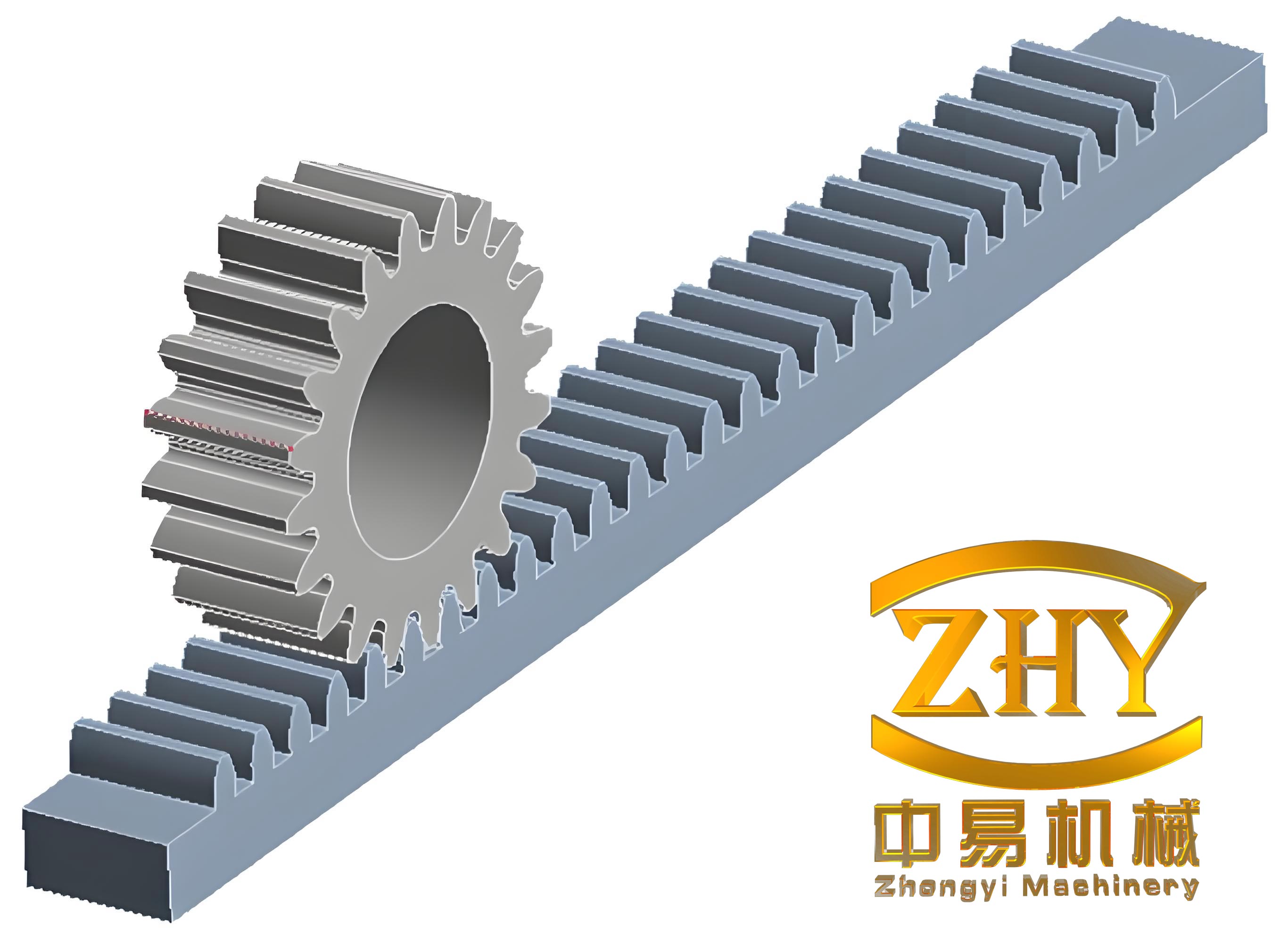
- Rack and Pinion Gear Engagement: Each individual pinion is modeled as a linear spring element located at its theoretical meshing point with the rack. The spring stiffness ($k_{pinion}$) is a critical input, usually provided by the gear manufacturer. This stiffness directly influences how leg bending moment is distributed among the pinions on a chord.
- Cushion Pads (for Floating Jacking Units): In systems where the gearbox can move vertically, cushion pads above and below it are modeled as linear spring elements ($k_{pad}$) that act in series/parallel with the pinion stiffness. The effective stiffness at the meshing point becomes a function of $k_{pinion}$ and $k_{pad}$.
The precise simulation of these connections is vital. An oversimplified model (e.g., assuming all pinions share load equally) will yield non-conservative or inaccurate pinion loads, invalidating the subsequent local stress analysis.
Load Application on the Global Model
The global model is subjected to a combination of loads representing the most severe anticipated condition, typically the “pre-loaded” or “storm survival” case. The key loads include:
- Fixed and Variable Loads: The platform’s lightweight, including all permanent structures and equipment, is distributed through the model’s mass elements. Variable loads (drilling consumables, stored materials, etc.) are applied based on the operational manual for the design case.
- Environmental Loads:
- Wind Load: Calculated according to classification society rules (e.g., ABS, CCS). The force on an exposed element is given by:
$$ F_{wind} = \frac{1}{2} \rho_{air} C_{shape} A V^2 $$
where $\rho_{air}$ is air density, $C_{shape}$ is the shape coefficient, $A$ is the projected area, and $V$ is the wind velocity. These forces are applied as pressure or nodal forces on the exposed hull and leg surfaces. - Wave and Current Load: This is the most complex loading. For tubular legs, Morison’s equation is used per node:
$$ dF = \rho_{water} C_m \frac{\pi D^2}{4} \dot{u} \, dz + \frac{1}{2} \rho_{water} C_d D u |u| \, dz $$
where $C_m$ is the inertia coefficient, $C_d$ is the drag coefficient, $D$ is the member diameter, $u$ and $\dot{u}$ are the water particle velocity and acceleration, and $dz$ is the element length. For lattice legs, the drag and inertia effects of braces and the influence of the rack plate on the chords must be accounted for. A common practice is to use equivalent, increased $C_d$ and $C_m$ coefficients for the chords to account for the shielding effect and the added drag of the bracing members.
- Wind Load: Calculated according to classification society rules (e.g., ABS, CCS). The force on an exposed element is given by:
- Inertial Loads: Dynamic amplification is considered. An equivalent horizontal inertial force is calculated and applied at the platform’s center of gravity. This force is typically derived from a separate dynamic analysis or specified by design guidelines.
- Boundary Conditions (Soil-Structure Interaction): Simply assuming fixed or pinned supports at the mudline is overly conservative and distorts load distribution. Realistic elastic soil springs should be applied at the leg tips or spudcans to model vertical, horizontal, and rotational stiffness. These spring constants ($k_v$, $k_h$, $k_r$) are derived from geotechnical data for the specific site soil profile.
$$ k_v = \frac{E_{soil} \cdot A_{footprint}}{L_{equiv}}, \quad k_h, k_r \text{ from } p-y \text{ and } t-z \text{ curve analysis} $$ - P-Delta Effect: The secondary bending moments induced by the vertical leg load acting through the lateral deflection of the hull must be included, either through a geometric nonlinear analysis or by applying equivalent moment couples.
The following table summarizes a typical set of environmental parameters and platform particulars used as input for the global analysis, based on the reference case study.
| Parameter | Value | Unit |
|---|---|---|
| Hull Length Overall | 64.69 | m |
| Hull Breadth | 53.64 | m |
| Leg Length | 109.83 | m |
| Total Number of Pinions | 36 | – |
| Design Water Depth | 35.0 | m |
| Air Gap | 24.0 | m |
| Leg Penetration | 12.0 | m |
| Significant Wave Height (Hs) | 14.04 | m |
| Wave Period (Tp) | 12.0 | s |
| Sustained Wind Speed (1-hr avg) | 51.45 | m/s |
| Surface Current Speed | 1.03 | m/s |
Extraction of Pinion Loads
Upon solving the global FEA model under the combined load case, the reaction forces in the linear spring elements representing each rack and pinion gear pinion are extracted. These forces represent the total meshing load at that specific location. The analysis invariably shows a highly non-uniform distribution, with pinions on the leeward chord of the most heavily loaded leg experiencing the highest forces. The maximum pinion load ($F_{pinion, max}$) from this analysis is the key output and serves as the primary loading condition for the subsequent local strength assessment of the rack and pinion gear.
The table below exemplifies the type of output obtained from a global analysis for a three-legged platform, demonstrating the significant load variation among pinions on different chords and legs.
| Leg | Chord Orientation | Pinion 1 | Pinion 2 | Pinion 3 | Pinion 4 |
|---|---|---|---|---|---|
| Bow Leg | Forward | 87.5 | 86.8 | 87.5 | 90.2 |
| Port | 107.9 | 106.4 | 107.2 | 110.9 | |
| Starboard | 379.3 | 387.3 | 404.5 | 432.4 | |
| Port Leg | Forward | 85.5 | 84.5 | 85.0 | 87.4 |
| Port | 79.9 | 78.8 | 79.0 | 81.2 | |
| Starboard | 411.6 | 419.0 | 437.1 | 467.4 | |
| Starboard Leg | Forward | 0.0 | 0.0 | 0.0 | 0.0 |
| Port | 0.0 | 0.0 | 0.0 | 0.0 | |
| Starboard | 263.7 | 271.3 | 285.9 | 308.4 |
In this example, the maximum pinion load $F_{pinion, max}$ is identified as 467.4 metric tons (approximately 4.58 MN) on the starboard chord of the port leg. This load becomes the governing condition for the rack and pinion gear strength analysis.
Local Stress Analysis and Determination of Limiting Wear
With the maximum operational load on the rack and pinion gear established, the focus shifts to assessing the strength of the gear teeth in a damaged state. This involves building a separate, detailed local finite element model of a segment of the rack and a single pinion tooth.
Model Development and Load Application
The local model is a contact analysis model. A segment of the rack containing several teeth and a full pinion with its shaft section are modeled using high-order solid elements. The material properties (yield strength, ultimate tensile strength) are defined based on the gear’s material certification. The meshing between the rack and pinion gear is defined using surface-to-surface contact algorithms with a appropriate coefficient of friction. The boundary conditions constrain the back of the rack segment and the pinion shaft in a statically determinant manner.
The load $F_{pinion, max}$ is applied to the pinion shaft as a force, simulating the reaction from the jacking system. This force is resolved through the contact between the pinion tooth and the rack tooth, creating complex states of Hertzian contact stress at the surface and bending stress at the tooth root.
Simulation of Wear/Corrosion and Failure Criterion
The defect is simulated by geometrically modifying the tooth profiles in the model. Uniform wear is modeled by symmetrically reducing the tooth thickness on both flanks of the pinion and the rack, effectively increasing the backlash. Pitting or localized corrosion can be modeled as small cavities or general thinning in specific areas.
The core of the failure assessment is an iterative process. Starting from the nominal (new) tooth profile, the analysis is run to establish a baseline stress distribution. Then, in subsequent analysis runs, the simulated wear depth ($\delta$) is incrementally increased. For each value of $\delta$, the analysis is performed, and the maximum equivalent (von Mises) stress in the rack and pinion gear components is determined.
The failure criterion is based on allowable stresses stipulated by classification society rules, such as the American Bureau of Shipping (ABS) or China Classification Society (CCS) rules. These typically specify allowable stress levels as a fraction of the material yield stress ($\sigma_y$) for different load cases and component types. For the extreme storm condition used in the global analysis, the allowable stress $\sigma_{all}$ might be defined as:
$$ \sigma_{all} = \frac{\sigma_y}{SF_{storm}} $$
where $SF_{storm}$ is the safety factor for storm conditions (e.g., 1.25 to 1.4).
The iterative analysis continues until the calculated maximum stress $\sigma_{max}(\delta)$ in the worn rack and pinion gear model satisfies:
$$ \sigma_{max}(\delta) \geq \sigma_{all} $$
The wear depth $\delta_{limit}$ at the step just before this condition is met is identified as the limiting wear depth.
This $\delta_{limit}$ is expressed as the total material loss (the sum of wear on both flanks of a tooth) that can be tolerated before the gear’s strength is theoretically compromised for the design storm load. It is a conservative and platform-specific value. The process can be summarized by the following governing equation for the assessment:
$$ Find \, \delta_{limit} \, such \, that: \, max\left[\sigma_{pinion}(\delta_{limit}), \sigma_{rack}(\delta_{limit})\right] < \sigma_{all} \, for \, F = F_{pinion, max} $$
where $\sigma_{pinion}$ and $\sigma_{rack}$ are the peak stresses in the respective components.
Application of the Failure Criterion
The final output is a clear, quantitative guideline. For instance, the analysis might conclude: “For the subject platform, the rack and pinion gear system is considered to have reached a failure condition if the measured total wear (sum of wear on both flanks) on any pinion tooth exceeds 14.5 mm, or if the total wear on any rack tooth exceeds 23 mm.” For teeth with cracks, the criterion would state that the cracks must be ground out, and the resulting profile measured against these limiting wear depths.
The table below conceptualizes the results of such a local analysis for different assumed wear levels.
| Total Wear Depth, $\delta$ (mm) | Max Pinion Root Stress (MPa) | Max Rack Contact Stress (MPa) | Governing Stress vs. Allowable ($\sigma_{all}$= 350 MPa) | Judgment |
|---|---|---|---|---|
| 0 (New) | 280 | 320 | 320 < 350 | OK |
| 5.0 | 295 | 335 | 335 < 350 | OK |
| 10.0 | 315 | 345 | 345 < 350 | OK |
| 14.5 | 332 | 349 | 349 < 350 | OK (Limit) |
| 15.0 | 338 | 355 | 355 > 350 | NOT OK |
| 20.0 | 365 | 380 | 380 > 350 | NOT OK |
Conclusion and Framework Summary
The methodology described provides a robust, analytical framework for establishing a failure criterion for the critical rack and pinion gear systems in self-elevating platforms. It moves beyond generic standards and offers a bespoke assessment based on the platform’s specific geometry, leg-hull connection design, and operational design environment. The process integrates global load analysis, considering realistic soil-structure interaction and detailed leg-hull connection modeling, with localized non-linear contact stress analysis of the gear mesh under progressive wear conditions.
The key strength of this approach is that it delivers an unambiguous, measurable threshold—the limiting wear depth $\delta_{limit}$—which can be directly compared against inspection data from ultrasonic thickness measurements or laser scans of the rack and pinion gear teeth. This empowers platform operators and surveyors to make informed decisions regarding continued service, repair, or replacement of these vital components, thereby safeguarding structural integrity and ensuring operational safety throughout the platform’s life. The entire workflow underscores the importance of a detailed and accurate finite element-based engineering assessment for life extension and fitness-for-service evaluations of complex marine structures.