
In the intricate symphony of an automotive drivetrain, the differential assembly plays the crucial role of enabling smooth cornering by allowing wheels to rotate at different speeds. At the heart of this mechanism lies a seemingly simple yet critically stressed component: the planetary gear shaft. This axle is responsible for transmitting torque to the planetary gears and facilitating torque distribution. During operation, it is subjected to a complex combination of torsional and bending stresses. The failure of such a component is not merely a parts replacement issue; it represents a potential systemic risk, a point of vulnerability in the powertrain’s endurance. The following account details my first-person investigation into a fracture event of a planetary gear shaft during a rigorous differential durability test, employing a multi-faceted analytical approach to uncover the root cause.
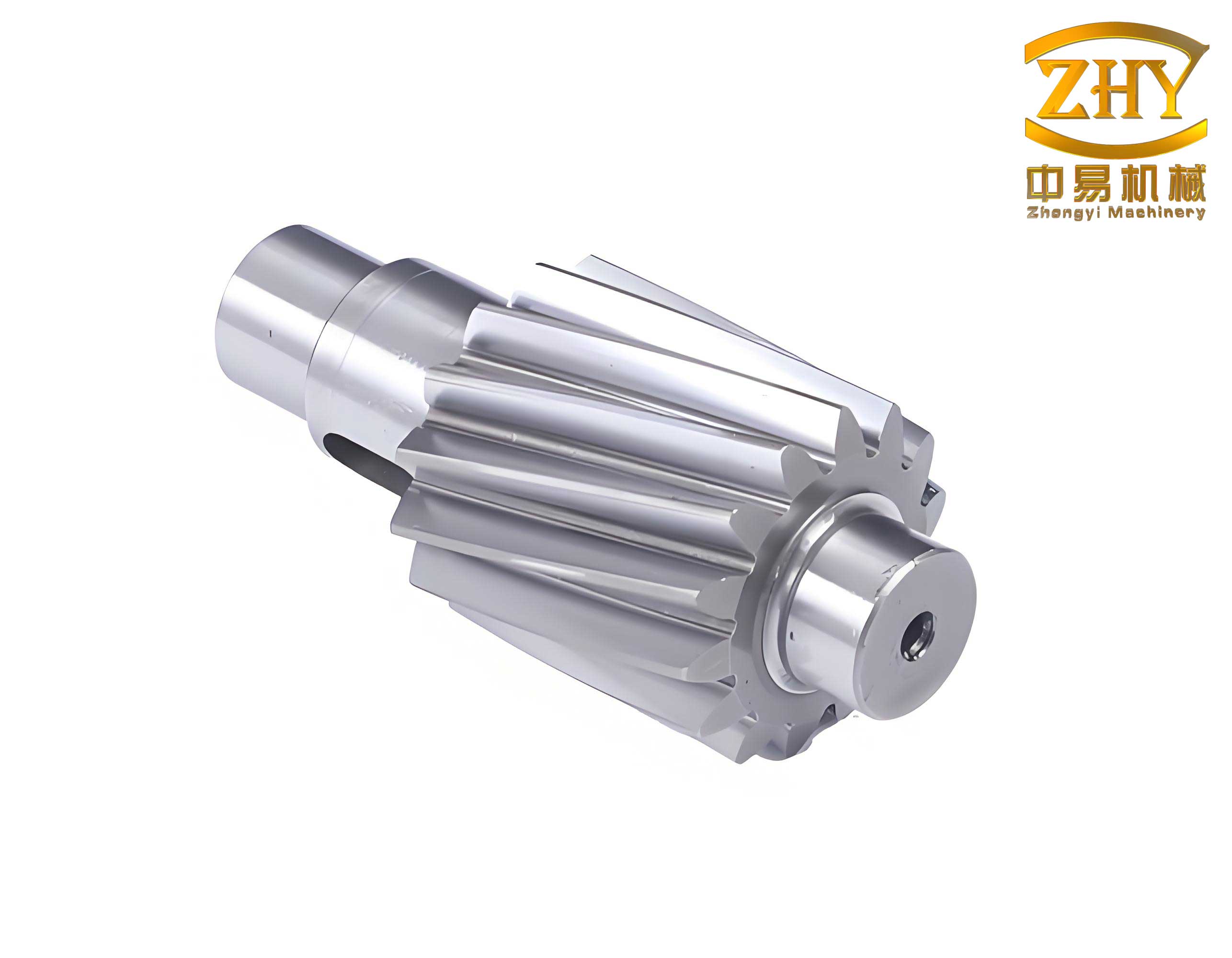
The incident was straightforward in its manifestation: during a pre-defined endurance test cycle designed to validate the differential’s service life, the test unit emitted an abnormal noise, prompting an immediate halt. Subsequent disassembly revealed catastrophic failure—the differential casing was damaged, and the planetary gear shaft was found in two pieces. The specified material for the component was 42CrMo alloy steel, conforming to the Chinese standard GB/T 3077, and its intended heat treatment comprised quenching and tempering followed by surface gas nitriding to achieve the necessary wear resistance and high fatigue strength. My task was to navigate from this endpoint—the fractured gear shaft—back to the initiating flaw, employing a structured sequence of analytical techniques.
Methodological Framework: The Investigative Protocol
My investigation was structured to systematically eliminate potential causes and converge on the definitive failure mechanism. The workflow adhered to a classic failure analysis progression:
- Macroscopic Examination: Visual and low-magnification inspection of the fracture surface and adjacent areas to identify fracture origin, propagation patterns, and any gross anomalies.
- Material Conformity Check: Verification of the base material’s chemical composition against the 42CrMo specification.
- Mechanical and Microstructural Interrogation: Assessment of surface and core hardness, precise measurement of the nitrided case depth, and detailed metallographic examination of the microstructure, particularly the characteristics of the nitrided layer.
- Fractographic Analysis: High-magnification study of the fracture surface using Scanning Electron Microscopy (SEM) to identify micro-mechanisms (e.g., fatigue striations, cleavage) and Energy Dispersive Spectroscopy (EDS) for localized chemical analysis.
The synthesis of data from these orthogonal methods is paramount. A discrepancy in chemistry, a soft spot in hardness, or a microstructural defect—any of these could be the proverbial weak link. For a nitrided gear shaft, the integrity of the compound layer (the white layer) is often a focal point, as its properties directly govern surface-initiated fatigue performance.
Results and Discussion: Unraveling the Evidence
1. Macroscopic Examination: The First Clues
The initial visual inspection provided immediate, critical insights. The fracture’s overall morphology was characteristic of a rotating-bending or torsional fatigue failure. The fracture origin was unequivocally located on the outer circumference of the gear shaft. This region exhibited signs of severe wear and micro-machining, likely from post-fracture rubbing between the fracture faces during the final moments of rotation. The crack had propagated radially inwards from this surface origin. The final fracture zone, indicative of the last material to separate, was situated towards the central axis of the shaft. This classic progression—origin at the surface, propagation through a region often showing beach marks (not always clear in nitrided steels), and final fast fracture—immediately pointed towards a surface-related stress concentrator or material deficiency as the initiator.
2. Material Conformity: Ruling Out Base Metal Issues
The first potential culprit to eliminate was incorrect material. Utilizing Optical Emission Spectrometry (OES), I conducted a quantitative chemical analysis of the fractured gear shaft. The results are summarized below and compared against the standard requirements for 42CrMo steel.
| Element | Standard Requirement (wt.%) | Measured Value (wt.%) |
|---|---|---|
| C | 0.38 – 0.45 | 0.396 |
| Si | 0.17 – 0.37 | 0.226 |
| Mn | 0.50 – 0.80 | 0.714 |
| Cr | 0.90 – 1.20 | 1.11 |
| Mo | 0.15 – 0.25 | 0.204 |
| P | ≤ 0.020 | 0.017 |
| S | ≤ 0.020 | 0.005 |
All elemental concentrations fell comfortably within the specified ranges. This critical finding allowed me to rule out gross material substitution or a major heat chemistry error as the root cause of the gear shaft failure. The problem, therefore, was likely to be found in the processing or the resultant microstructure.
3. Hardness and Microstructure: The Devil in the Details
This phase of the analysis yielded the most significant findings. I measured the surface and core hardness and prepared metallographic samples transverse to the fracture surface. After meticulous polishing and etching (typically with Nital), the microstructure was examined. The quantitative results are consolidated in the following table.
| Property | Technical Specification | Measured Result |
|---|---|---|
| Surface Hardness (HV) | ≥ 600 HV | 727 HV |
| Core Hardness (HV) | 300 – 400 HV | 346 HV |
| Nitriding Depth (mm) | 0.012 – 0.020 | ~0.016 |
| Brittleness (per GB/T 11354) | Grade 1-2 | Grade 2 |
| Nitride Network (per GB/T 11354) | Grade 1-2 | Grade 2 |
| Porosity (per GB/T 11354) | Grade 1-2 | Grade 4 |
The hardness values—both the exceptionally high surface hardness from nitriding and the appropriate core hardness from quenching and tempering—were fully compliant. The case depth was within the specified range. The brittleness of the compound layer and the morphology of the underlying nitride precipitation were acceptable (Grade 2). However, the assessment of the compound layer itself revealed a critical defect: excessive porosity, rated at Grade 4. According to standard microstructural grading scales for nitrided layers, Grade 3 porosity denotes a continuous porous band, and Grade 4 indicates severe, interconnected porosity that may even cause flaking. This is visually characterized by a dark, etched, spongy appearance at the extreme surface.
This finding is pivotal. The porous compound layer has drastically reduced effective load-bearing cross-section and cohesive strength at the very surface where stress is highest. It acts as a built-in stress concentrator. The fatigue strength, $S_f$, of a component is profoundly sensitive to surface condition and can be expressed in a simplified form considering a surface factor, $k_{surf}$:
$$ S_f = k_{surf} \cdot k_{size} \cdot k_{load} \cdot S_f’ $$
where $S_f’$ is the fatigue strength of a polished, laboratory specimen. A severely porous surface drastically reduces $k_{surf}$, thereby lowering the operational $S_f$ below the applied cyclic stress, $\sigma_a$, leading to crack initiation. For a rotating gear shaft under bending, the maximum surface stress, $\sigma_{max}$, is given by:
$$ \sigma_{max} = \frac{32 \cdot M}{\pi \cdot d^3} $$
where $M$ is the bending moment and $d$ is the shaft diameter. A porous surface layer cannot support this calculated elastic stress, leading to localized plasticity and micro-crack formation.
4. Fractographic Analysis: Tracing the Microscopic Footprints
The scanning electron microscope (SEM) examination provided irrefutable evidence linking the microstructural defect to the failure mechanism. At low magnification, the progression from the origin was clear. At higher magnification within the origin region, despite some wear, faint but discernible fatigue striations were observed. These striations are the “fingerprints” of fatigue, each one representing the advance of the crack front during one stress cycle. Their presence confirmed the fatigue nature of the failure. Notably, the initial crack propagation direction was along the circumference, forming an approximately 1-mm deep ring crack around the entire gear shaft before progressing radially inward. This is consistent with the primary driving force being rotational/cyclic torsional or bending stress.
The final fracture zone exhibited a predominantly cleavage morphology—a brittle, faceted appearance indicative of rapid, catastrophic failure once the remaining ligament of material could no longer support the load.
The most conclusive micro-analytical evidence came from Energy Dispersive Spectroscopy (EDS) point analysis conducted at the crack origin area, specifically targeting the porous compound layer.
| Spectrum Location | Oxygen (O) Content (wt.%) | Nitrogen (N) Content (wt.%) | Key Observation |
|---|---|---|---|
| Within severe porosity (Spectrum 1) | 6.44 | 6.00 | High oxygen and nitrogen. |
| Denser compound layer (Spectrum 2) | 1.45 | Not Detected | Low oxygen. |
| Near-interface region (Spectrum 3) | 2.91 | Not Detected | Moderate oxygen. |
| Extreme surface porosity (Spectrum 4) | 12.69 | 5.15 | Very high oxygen. |
The EDS data revealed a striking correlation: the areas with the most severe visible porosity (Spectra 1 and 4) showed significantly elevated oxygen content compared to the denser regions of the nitrided layer. Spectrum 4, from the outermost surface pore, registered an oxygen content of 12.69 wt.%, which is compelling evidence of oxidation. This indicates that the porous network was not merely empty space; it had been filled with iron oxides (likely formed during the nitriding process cooling stage or subsequent exposure). This oxide is brittle and provides zero mechanical strength, effectively creating a network of micro-notches. The stress concentration factor, $K_t$, for such a pore can be estimated, further exacerbating the local stress. The combination of porosity and oxidation catastrophically degraded the surface integrity of the gear shaft.
Synthesis and Root Cause Analysis
Piecing together all analytical evidence, the failure sequence of the planetary gear shaft becomes clear. The root cause was a processing-induced surface defect: a severely porous and oxidized compound layer resulting from the gas nitriding treatment.
- Predisposing Condition: The nitriding process parameters (likely excessive nitriding potential, temperature, or time) led to the formation of a Grade 4 porous compound layer on the surface of the gear shaft. This porosity was subsequently oxidized.
- Crack Initiation: During the differential endurance test, the gear shaft was subjected to designed cyclic torsional and bending stresses. At the porous surface, the effective stress far exceeded the local material strength due to the combined effect of the applied stress and the stress concentration of the pores. This initiated micro-cracks within the brittle, porous/oxidized layer.
- Crack Propagation: Once initiated, these micro-cracks coalesced and propagated perpendicularly into the material, following the principle of fatigue crack growth. The crack advanced with each stress cycle, as evidenced by the striations, first forming a circumferential crack.
- Final Fracture: As the crack grew, the remaining cross-sectional area of the gear shaft diminished. When the stress on this reduced area exceeded the ultimate tensile strength of the core material, instantaneous brittle fracture occurred, resulting in complete separation.
This failure underscores a critical principle in component engineering: a superb base material and core heat treatment can be completely negated by a defective surface treatment. The high core hardness and correct chemistry of the 42CrMo gear shaft were irrelevant because failure was dictated by the weakest link—the surface.
Conclusions and Proactive Recommendations
The investigation conclusively determined that the fracture of the planetary gear shaft was a surface-originated fatigue failure. The primary and fundamental root cause was the unacceptable level of porosity (Grade 4) within the nitrided compound layer, which was exacerbated by oxidation. This defective surface layer acted as a potent stress concentrator and crack initiation site under cyclic service loads.
To prevent recurrence, the focus must shift from failure analysis to process control and specification. Recommendations are multi-tiered:
- Nitriding Process Optimization and Control: The gas nitriding process parameters (temperature, time, ammonia dissociation rate, nitriding potential) must be rigorously reviewed and optimized to suppress the formation of porous compound layers. Implementing precise atmosphere control and post-nitriding cooling in a protective atmosphere can mitigate oxidation.
- Enhanced Quality Surveillance: The microstructural evaluation of the nitrided case, particularly the porosity rating according to standards like GB/T 11354 or ISO 18203, must be a mandatory and critically assessed checkpoint in the production process for all critical gear shaft components. A maximum allowable porosity of Grade 2 should be strictly enforced.
- Alternative Surface Engineering Evaluation: For applications where maximum fatigue performance is paramount, alternative or advanced surface treatments could be evaluated. These might include:
- Plasma Nitriding: Often provides better control over the compound layer structure, potentially reducing porosity.
- Nitrocarburizing: Can produce a different compound layer morphology with potentially better toughness.
- Case Hardening (Carburizing): For a different stress profile, though it involves a different design philosophy.
The choice involves a trade-off analysis based on cost, performance, and geometric considerations of the gear shaft.
- Design for Reliability: While the immediate cause was processing, a reliability engineering review could assess the applied stress margins relative to the material’s endurance limit, considering the *de facto* surface condition factor introduced by nitriding. A more conservative design or a material with higher intrinsic fatigue strength might be considered for future generations.
In essence, this failure analysis transcends a single broken part. It highlights the indispensable role of meticulous surface engineering control in achieving component reliability. The planetary gear shaft is a nexus of torque transfer; its integrity is non-negotiable. By enforcing stringent microstructural standards for diffusion layers and mastering the processes that create them, such failures can be designed out, ensuring the silent, reliable operation of the drivetrain for its intended service life.