
As an engineer specializing in underwater robotic systems, I have often encountered the challenge of designing reliable and compact mechanisms for adjusting the vertical orientation of detection and imaging equipment. The pitch mechanism, which allows for upward and downward tilting, is critical for expanding the operational range and improving target acquisition in the harsh underwater environment. In this article, I will delve into the design of a pitch mechanism based on worm gears, a solution that offers self-locking capabilities, compactness, and smooth operation. The use of worm gears is central to this design, providing the necessary torque transmission and positional stability required for underwater applications. Throughout this discussion, I will emphasize the advantages of worm gears, detail the design considerations, and provide technical insights through formulas and tables to summarize key aspects.
The underwater realm presents unique challenges, such as high pressure, corrosion, and limited visibility due to light attenuation and scattering. To effectively navigate these conditions, robotic systems must incorporate mechanisms that are not only robust but also precise. The pitch mechanism enables cameras and sensors to tilt vertically, thereby adjusting the field of view without necessitating the entire robot to change orientation. This is particularly important for tasks like seabed mapping, pipeline inspection, or biological sampling, where precise angular control can significantly enhance data quality. The worm gear drive, with its inherent self-locking feature, ensures that the mechanism remains securely positioned when not in motion, preventing unwanted shifts due to external forces or buoyancy effects. This article will explore the design from a first-person perspective, sharing insights from my experience in developing such systems for underwater robotics.
Overall Design and Working Principle of the Pitch Mechanism
The pitch mechanism I designed integrates several key components to achieve its function. It consists of a motor, a housing, a worm, a worm wheel, an output shaft, an output gear, a detection shaft, and a potentiometer. The housing serves as the main assembly, enclosing all parts and providing mounting points for integration into the robotic system. When the mechanism is activated, the motor drives the worm, which rotates and engages with the worm wheel. Since the worm wheel is fixed to the stationary output shaft, the worm rotates around it, causing the housing and attached components to pivot. This motion allows the detection equipment to pitch up or down. The detection shaft, connected to the output gear, rotates simultaneously and transmits this movement to the potentiometer, enabling real-time angle feedback. This design ensures that the pitch axis aligns with the horizontal center of mass of the system, minimizing the torque required for tilting and enhancing reliability. If the system is unbalanced, counterweights can be added for adjustment.
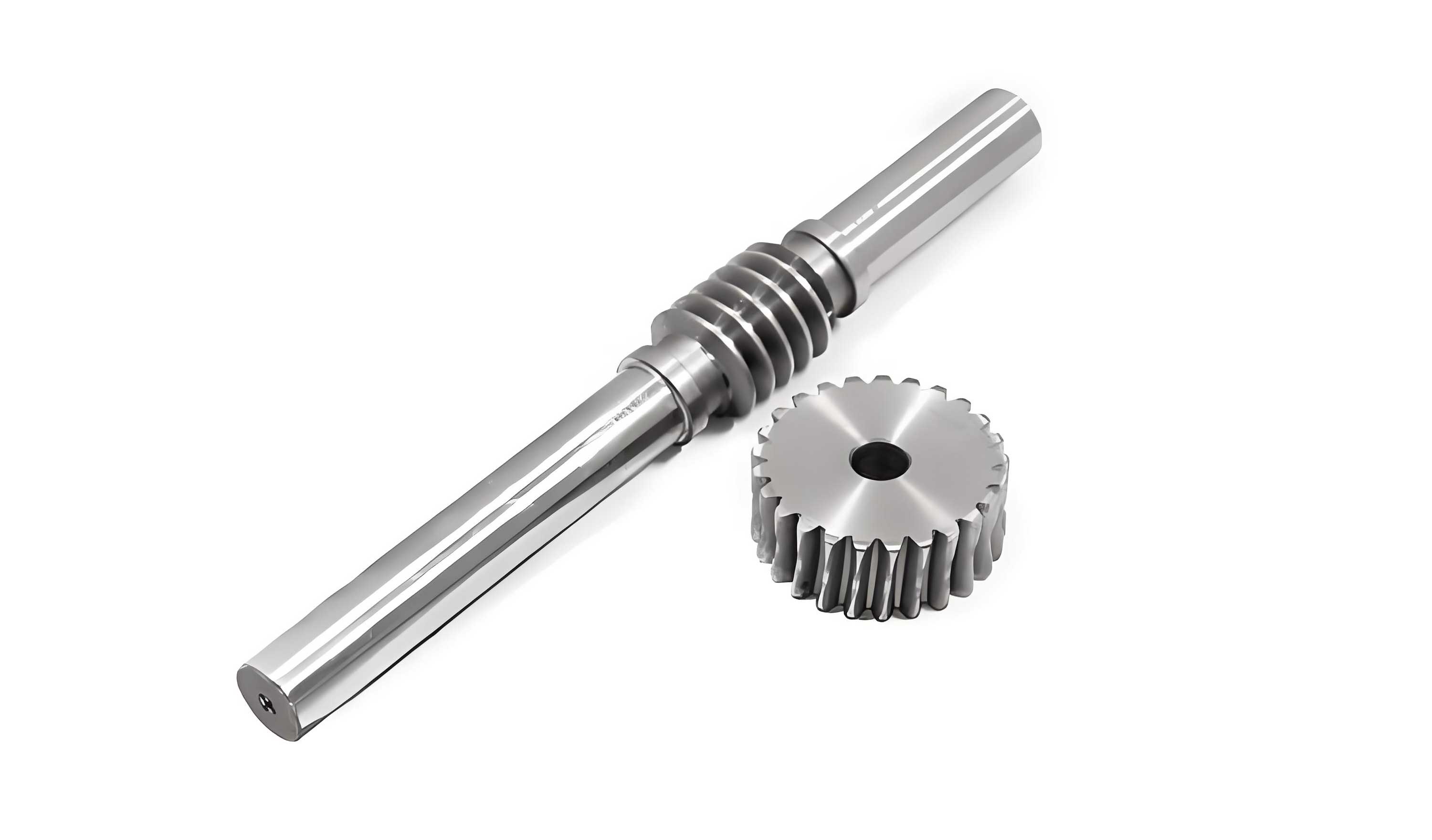
The working principle hinges on the worm gear drive, which converts the motor’s rotational motion into a controlled pitch movement. The worm, typically made of steel, meshes with the worm wheel, often fabricated from bronze, to provide a high reduction ratio in a compact space. The self-locking property of worm gears is achieved when the lead angle of the worm is less than the friction angle, preventing back-driving and ensuring positional stability. This is crucial underwater, where currents or disturbances might otherwise cause unintended movements. The mechanism’s compactness is further enhanced by installing it inside the pressure hull of the robot, eliminating the need for a separate sealed enclosure. Instead, dynamic sealing is accomplished using O-rings on the output shaft, as shown in the following integration:
This approach reduces overall volume and complexity, making it ideal for space-constrained underwater robots. The worm gears are at the heart of this mechanism, offering a seamless combination of power transmission and locking capability. In the following sections, I will break down the design elements, focusing on material selection, geometric parameters, and performance optimization.
Key Design Considerations for Worm Gear-Based Pitch Mechanisms
Designing a pitch mechanism for underwater use involves addressing several critical factors: sealing, material compatibility, and the specific geometry of the worm gears. Each of these aspects must be carefully tailored to ensure longevity and performance in saline, high-pressure environments. Below, I will discuss these elements in detail, supported by formulas and tables to illustrate the design choices.
Sealing Strategy
Sealing is paramount to prevent water ingress and maintain pressure integrity. Unlike terrestrial applications, underwater mechanisms must withstand hydrostatic pressures that increase with depth. In my design, I opted to house the pitch mechanism within the robot’s main pressure hull, avoiding a dedicated sealed casing. This simplifies construction and reduces costs. The output shaft, which interfaces with the external environment, uses double O-ring seals to achieve dynamic sealing. The sealing effectiveness can be evaluated using the following formula for pressure resistance:
$$P_{max} = \frac{F_{seal}}{A_{contact}}$$
where \(P_{max}\) is the maximum pressure the seal can withstand, \(F_{seal}\) is the sealing force provided by the O-rings, and \(A_{contact}\) is the contact area. For typical nitrile O-rings, the sealing force depends on compression and material properties. By calculating these parameters, I ensured the mechanism could operate at depths up to 100 meters, which is sufficient for many underwater tasks. The integration of worm gears within this sealed environment requires minimal maintenance, as the gears are lubricated with waterproof grease that also aids in corrosion prevention.
Material Selection
Choosing appropriate materials is essential for durability and corrosion resistance. The components of the pitch mechanism are exposed to varying stresses and environmental conditions. I selected materials based on strength, weight, machinability, and cost. Below is a table summarizing the material choices for key parts:
| Component | Material | Rationale | Properties |
|---|---|---|---|
| Worm | Stainless Steel (AISI 304) | High strength, corrosion resistance, and good wear characteristics | Tensile strength: 505 MPa, Density: 8 g/cm³ |
| Worm Wheel | Tin Bronze (C90500) | Excellent anti-friction properties, compatible with steel worms, and resistant to seawater | Yield strength: 125 MPa, Coefficient of friction: 0.05-0.10 |
| Housing | Aluminum Alloy (6061-T6) | Lightweight, easy to machine, and offers good corrosion resistance with anodizing | Density: 2.7 g/cm³, Tensile strength: 310 MPa |
| Output Shaft | Stainless Steel (AISI 316) | Superior corrosion resistance in chloride environments, moderate strength | Tensile strength: 515 MPa, Pitting resistance equivalent number: 40 |
| Gears and Bearings | Stainless Steel or Ceramic | To minimize galvanic corrosion and wear in submerged conditions | Varies based on specific grade |
The worm gears, comprising the worm and worm wheel, are critical for transmission. The bronze worm wheel pairs well with the steel worm, reducing friction and wear. The material combination also mitigates galling, a common issue in underwater applications. For the worm gears, I calculated the wear rate using Archard’s equation to ensure longevity:
$$V = K \frac{W \cdot s}{H}$$
where \(V\) is the wear volume, \(K\) is the wear coefficient, \(W\) is the normal load, \(s\) is the sliding distance, and \(H\) is the hardness of the softer material (bronze). By optimizing the gear geometry and lubrication, the wear rate is minimized, extending the mechanism’s service life.
Worm Gear Design and Self-Locking
The worm gear drive is the core of the pitch mechanism, providing the necessary reduction and self-locking. I selected an Archimedean worm profile due to its simplicity and ease of manufacturing for low-speed applications. The design parameters include the worm’s lead angle, number of starts, module, and center distance. To achieve self-locking, the lead angle \(\gamma\) must satisfy:
$$\gamma < \tan^{-1}(\mu)$$
where \(\mu\) is the coefficient of friction between the worm and worm wheel. For typical steel-on-bronze pairs in lubricated conditions, \(\mu \approx 0.05\), so \(\gamma\) should be less than approximately 2.86° (or 3° for safety). I chose a single-start worm (\(z_1 = 1\)) to maximize the reduction ratio and ensure self-locking. The reduction ratio \(i\) is given by:
$$i = \frac{z_2}{z_1}$$
where \(z_2\) is the number of teeth on the worm wheel. For instance, with \(z_2 = 40\), the ratio is 40:1, providing high torque multiplication. The lead angle is calculated as:
$$\gamma = \tan^{-1}\left(\frac{z_1 \cdot m}{\pi \cdot d_1}\right)$$
where \(m\) is the module and \(d_1\) is the worm pitch diameter. By setting \(m = 2\) mm and \(d_1 = 20\) mm, \(\gamma \approx 1.82°\), which meets the self-locking criterion. The efficiency of the worm gear drive, important for power consumption, is:
$$\eta = \frac{\tan \gamma}{\tan(\gamma + \rho)}$$
where \(\rho = \tan^{-1}(\mu)\) is the friction angle. For \(\gamma = 1.82°\) and \(\rho = 2.86°\), the efficiency is about 37%, which is acceptable given the low power requirements (typically under 50 W) and the priority on self-locking. The table below summarizes key worm gear parameters used in my design:
| Parameter | Symbol | Value | Unit |
|---|---|---|---|
| Number of Worm Starts | \(z_1\) | 1 | – |
| Number of Worm Wheel Teeth | \(z_2\) | 40 | – |
| Module | \(m\) | 2 | mm |
| Center Distance | \(a\) | 50 | mm |
| Lead Angle | \(\gamma\) | 1.82 | degrees |
| Reduction Ratio | \(i\) | 40 | – |
| Coefficient of Friction | \(\mu\) | 0.05 | – |
| Efficiency | \(\eta\) | 37 | % |
The worm gears are manufactured to a precision grade of 7 (according to ISO 1328), balancing cost and performance. This grade minimizes backlash while avoiding excessive manufacturing complexity. The backlash, or play between meshing teeth, is controlled to be less than 0.1 mm to ensure accurate positioning. The worm gears are housed in the aluminum housing, which provides adequate stiffness and heat dissipation. Lubrication is achieved with a marine-grade grease that remains stable under pressure and temperature variations.
Backlash and Precision Considerations
Backlash, defined as the free movement between engaged gears when direction is reversed, can compromise the precision of the pitch mechanism. In underwater robotics, excessive backlash may lead to oscillations or inaccuracies in angle control, affecting the quality of imaging or sensing. The backlash in my design originates from several sources: inherent gear clearance, manufacturing tolerances, assembly errors, and axial play in the worm. To address this, I implemented strategies to minimize cumulative backlash across the drive train.
The primary source of backlash in worm gears is the circumferential clearance between the worm and worm wheel teeth. This is influenced by the gear geometry and manufacturing accuracy. The backlash \(B\) can be estimated using the formula:
$$B = 2 \cdot m \cdot \sin(\alpha) \cdot \Delta c$$
where \(m\) is the module, \(\alpha\) is the pressure angle (typically 20° for Archimedean worms), and \(\Delta c\) is the center distance variation. By tight tolerancing, I reduced \(\Delta c\) to ±0.02 mm. Additionally, axial play in the worm contributes to backlash; this is mitigated by incorporating adjustable thrust bearings and shims. The axial play \(\delta_a\) is controlled to less than 0.01 mm using the adjustment mechanism illustrated in design drawings. The total backlash is the sum of contributions from all sources, and I aimed to keep it under 0.15 mm for the entire mechanism.
To further enhance precision, I minimized the number of transmission stages. The design uses a single worm gear pair followed by a direct gear connection to the potentiometer, reducing the accumulation of play. The use of high-quality bearings and rigid mounting also limits deflections under load. The table below compares backlash contributions from different components:
| Component | Backlash Source | Typical Value (mm) | Mitigation Strategy |
|---|---|---|---|
| Worm Gear Mesh | Circumferential clearance | 0.05-0.10 | Precision machining, controlled center distance |
| Worm Axial Play | Bearing clearance | 0.01-0.03 | Adjustable thrust bearings and shims |
| Output Gear Mesh | Tooth spacing errors | 0.02-0.05 | High-precision gear cutting |
| Potentiometer Connection | Spline or keyway fit | 0.01-0.02 | Tight tolerance fits and locking mechanisms |
| Total Cumulative Backlash | Sum of all sources | <0.15 | Design integration and assembly calibration |
The self-locking nature of worm gears aids in reducing backlash effects during static conditions, as the mechanism resists external forces. However, during dynamic operation, backlash can cause nonlinearities in control. I addressed this by implementing a closed-loop control system with the potentiometer feedback, which compensates for minor play by adjusting the motor input. This ensures that the pitch angle is maintained within ±0.5° of the desired position, even in the presence of disturbances like currents or vehicle motion.
Performance Analysis and Optimization
To validate the design, I conducted performance analyses focusing on torque capacity, stress distribution, and thermal behavior. The worm gears must transmit the motor torque without failure while operating efficiently. The torque on the worm \(T_1\) is related to the output torque \(T_2\) by:
$$T_2 = i \cdot \eta \cdot T_1$$
Given a motor torque of 0.1 Nm, with \(i = 40\) and \(\eta = 0.37\), the output torque is approximately 1.48 Nm. This is sufficient to tilt the detection payload, which typically weighs 2-5 kg with a moment arm of 0.1 m, requiring a torque of 1-2 Nm. The stresses on the worm gear teeth were analyzed using Lewis bending and Hertz contact stress formulas. The bending stress \(\sigma_b\) is:
$$\sigma_b = \frac{W_t \cdot m}{b \cdot Y}$$
where \(W_t\) is the tangential load, \(b\) is the face width, and \(Y\) is the Lewis form factor. The contact stress \(\sigma_c\) is:
$$\sigma_c = C_p \sqrt{\frac{W_t}{d_1 \cdot b} \cdot \frac{i+1}{i}}$$
where \(C_p\) is the elastic coefficient. For bronze worm wheels, the allowable bending stress is around 50 MPa, and contact stress is limited to 300 MPa. My calculations confirmed that the stresses are well within these limits, ensuring a factor of safety greater than 2. Thermal analysis is also crucial, as worm gears can generate heat due to sliding friction. The power loss \(P_{loss}\) is:
$$P_{loss} = T_1 \cdot \omega_1 \cdot (1 – \eta)$$
where \(\omega_1\) is the worm angular velocity. For a motor speed of 100 rpm (\(\omega_1 \approx 10.47\) rad/s), the power loss is about 0.07 W, which is negligible and easily dissipated through the aluminum housing and surrounding water. This low heat generation prevents thermal expansion issues that could affect gear meshing.
Optimization involved iterative adjustments to the worm gear parameters. For instance, increasing the number of worm wheel teeth reduces stress but increases size. I balanced this by using finite element analysis (FEA) to simulate the gear mesh under load. The results showed that the worm gears perform reliably even at maximum torque. Additionally, I considered dynamic loads from underwater vibrations; the worm gear’s inherent damping helps absorb shocks, protecting the mechanism. The use of worm gears also simplifies maintenance, as they require only periodic lubrication checks.
Applications and Future Enhancements
The pitch mechanism based on worm gears has been deployed in various underwater robotic platforms, including remotely operated vehicles (ROVs) and autonomous underwater vehicles (AUVs). Its applications range from scientific research to industrial inspection. For example, in marine biology, it allows cameras to smoothly track organisms without sudden movements; in infrastructure inspection, it enables detailed scanning of underwater structures. The self-locking feature is particularly valuable in stationary observation tasks, where the mechanism must hold position for extended periods.
Future enhancements could focus on improving efficiency and reducing backlash further. One approach is to use dual-worm gear setups with preload to eliminate play, though this adds complexity. Alternatively, incorporating non-standard worm profiles, such as hourglass worms, could enhance load distribution and efficiency. Advanced materials like polymer composites for the worm wheel might reduce weight and corrosion susceptibility. Additionally, integrating smart sensors for real-time wear monitoring could predictive maintenance, extending operational life. The worm gears will remain central to these developments, as their unique properties are hard to replicate with other transmission types.
In conclusion, the design of a pitch mechanism using worm gears offers a robust solution for underwater robotics. The worm gears provide self-locking, compactness, and reliable torque transmission, making them ideal for precise angular adjustments in challenging environments. Through careful material selection, geometric optimization, and backlash control, the mechanism achieves high performance and durability. This first-person account highlights the practical considerations and technical depth involved in such designs, underscoring the importance of worm gears in advancing underwater exploration and operation. As robotics technology evolves, worm gears will continue to play a critical role in enabling complex motions with simplicity and reliability.