
In modern industrial machinery, the demand for high-performance gear drives has been steadily increasing. Among these, worm gear drives are widely used due to their compact design, high reduction ratios, smooth and quiet operation, and ability to transmit significant power. However, the unique sliding motion between the worm and worm gear, which is typically a steel‑bronze friction pair, presents severe lubrication challenges. The high sliding velocity, combined with the sensitivity of bronze components to sulfur‑based extreme pressure additives, necessitates specially formulated lubricants. In this work, I present the development and field application of an L-CKE/P 320 extreme pressure (EP) worm gear oil, designed to meet the demanding requirements of steel industry equipment.
Worm gears operate on the principle of crossed‑axis helical gearing, where the worm is essentially a screw that meshes with a toothed wheel. The contact between the worm and worm gear is predominantly sliding, which generates high frictional heat and can lead to scoring, wear, seizure, and material transfer. Unlike conventional industrial gear oils, worm gear oils must provide excellent lubricity and anti‑scuffing properties while avoiding corrosive attack on bronze alloys. This requires a careful balance of base oils and additives, especially when formulating an EP‑type product.
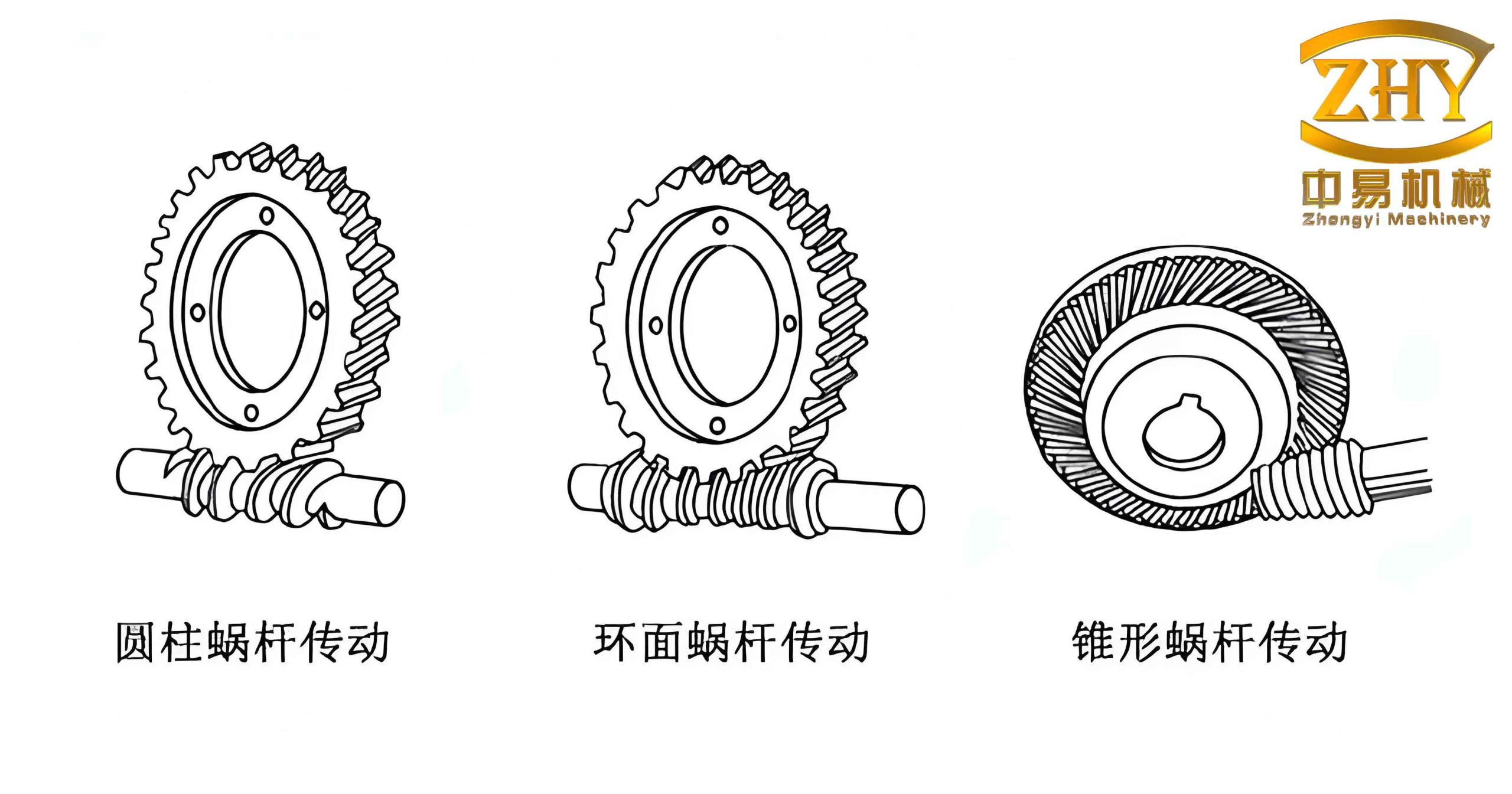
The target technical specifications for our L-CKE/P 320 oil were based on the Chinese petrochemical industry standard SH/T 0094‑91, which defines the requirements for L-CKE/P grade worm gear oils at the first‑grade quality level. Key parameters include viscosity, viscosity index, flash point, pour point, rust prevention, copper corrosion, oxidation stability, anti‑wear performance, and demulsibility. The complete set of target values is summarized in the table below.
| Property | Test Method | Target Value |
|---|---|---|
| Kinematic viscosity at 40°C, mm²/s | GB/T 265 | 288 – 352 |
| Viscosity index | GB/T 1995 | ≥ 90 |
| Flash point (open cup), °C | GB/T 3536 | ≥ 200 |
| Pour point, °C | GB/T 3535 | ≤ -8 |
| Copper corrosion (3 h, 100°C) rating | GB/T 5096 | ≤ 1b |
| Rust prevention (distilled water, 24 h) | GB/T 11143 | Pass |
| Oxidation stability (Rotary bomb, min) | GB/T 12581 | ≥ 300 |
| Demulsibility (40-37-3 mL) at 82°C, min | GB/T 7305 | ≤ 30 |
| Foaming tendency (Sequence I, II, III) | GB/T 12579 | ≤ 50/0, 50/0, 50/0 mL/mL |
| Weld load (Four‑ball EP), N | GB/T 3142 | ≥ 2452 |
| Wear scar diameter (Four‑ball, 147 N, 60 min), mm | GB/T 3142 | ≤ 0.40 |
The first step in the formulation was the selection of appropriate base oils. We evaluated two commonly available high‑quality base stocks: 500SN (a solvent‑neutral paraffinic oil) and 150BS (a bright stock). Both oils exhibited excellent viscosity‑temperature behavior and low acidities, making them suitable for worm gear oil applications. The typical properties of these base oils are shown in the table below.
| Property | 500SN | 150BS |
|---|---|---|
| Kinematic viscosity at 40°C, mm²/s | 95 – 105 | 460 – 500 |
| Kinematic viscosity at 100°C, mm²/s | 10.5 – 11.5 | 30 – 34 |
| Viscosity index | ≥ 95 | ≥ 95 |
| Total acid number, mg KOH/g | ≤ 0.03 | ≤ 0.05 |
| Pour point, °C | ≤ -15 | ≤ -12 |
| Flash point (open cup), °C | ≥ 220 | ≥ 260 |
By blending 500SN with 150BS in appropriate proportions, we were able to achieve the target viscosity grade of ISO VG 320 while maintaining a high viscosity index and low pour point. The final base oil blend consisted of approximately 75% 500SN and 25% 150BS, adjusted to meet the exact kinematic viscosity requirement at 40°C.
With the base oil determined, the most critical formulation challenge was the selection of extreme pressure additives. Worm gears are steel‑bronze couples, and the bronze components are highly sensitive to corrosive sulfur‑containing additives. However, to achieve the required load‑carrying capacity, some sulfur activity is necessary. We screened three commercial EP additives from different suppliers, each containing approximately 10% by weight of sulfur, but differing in the chemical structure of the sulfur carrier. The additives are labeled A8, A10, and A12 for confidentiality.
| Designation | Sulfur content (wt%) | Type of sulfur compound |
|---|---|---|
| A8 | 10.2 | Polysulfide |
| A10 | 9.8 | Thiadiazole derivative |
| A12 | 10.5 | Dialkyl dithiocarbamate |
Each additive was blended into the base oil at a fixed concentration of 1.5% by weight. The resulting samples were evaluated for demulsibility, anti‑wear (four‑ball wear scar), EP (four‑ball weld load), and copper corrosion. The comparative results are given below.
| Additive | Demulsibility (82°C, 40-37-3 mL) min | Weld load (N) | Wear scar diameter (mm) | Copper corrosion (3h, 100°C) rating |
|---|---|---|---|---|
| A8 | 32 | 2450 | 0.42 | 1b |
| A10 | 25 | 2600 | 0.38 | 1a |
| A12 | 28 | 2500 | 0.40 | 1b |
Additive A10 clearly exhibited superior overall performance: it provided the highest weld load (indicating excellent extreme pressure capacity), the smallest wear scar, the best copper corrosion rating (1a, indicating very low corrosivity to bronze), and the shortest demulsification time. Therefore, A10 was selected as the primary EP additive for further formulation work.
Next, we addressed the rust prevention requirement. The base oil plus A10 sample failed the rust test (ASTM D665, distilled water). Three commercial rust inhibitors were evaluated at different treat rates: Rust Inhibitor 1 (an amine phosphate), Rust Inhibitor 2 (an alkenyl succinic half ester), and Rust Inhibitor 3 (a synthetic sulfonate). The results after adding 0.03% by weight of each are summarized below.
| Rust inhibitor | Concentration (wt%) | Rust result |
|---|---|---|
| Inhibitor 1 | 0.03 | Fail |
| Inhibitor 2 | 0.03 | Pass (trace) |
| Inhibitor 3 | 0.03 | Pass (clear) |
Only Inhibitor 3 provided a clear pass without any rust or stain. At a slightly higher concentration of 0.05%, Inhibitor 1 still failed, while Inhibitor 2 gave marginal results. Considering cost‑effectiveness and long‑term stability, Inhibitor 3 at 0.03% was adopted as the final rust preventive component.
Oxidation stability is another vital property for worm gear oils, because the high operating temperatures accelerate oil degradation. The presence of EP additives can further destabilize the oil. We therefore evaluated several antioxidant combinations using the rotating bomb oxidation test (RBOT). Three antioxidant packages were tested in the base oil containing A10 and Inhibitor 3.
| Antioxidant blend | Components | RBOT (min) |
|---|---|---|
| Combination 1 | 0.3% hindered phenol + 0.2% aromatic amine | 380 |
| Combination 2 | 0.5% hindered phenol | 320 |
| Combination 3 | 0.5% zinc dialkyl dithiophosphate | 350 |
Combination 1 gave the longest induction time, indicating superior resistance to oxidation. This blend was therefore selected as the antioxidant component for the final formulation.
Demulsibility is critical for worm gears that often encounter water contamination. Even with a good base oil and EP additive, the water separation performance may be insufficient. We introduced a demulsifier package comprising Demulsifier 1 (a polyoxyethylene‑polyoxypropylene block copolymer) and Demulsifier 2 (a modified silicone surfactant) at a fixed ratio of A1:b. Various total treat rates were tested, and the results are shown below.
| Total treat rate (mg/kg) | Water separated in first 5 min (mL) | Time to 40-37-3 mL (min) | Water layer clarity |
|---|---|---|---|
| 10 | 28 | 35 | Cloudy |
| 30 | 34 | 28 | Clear |
| 50 | 37 | 20 | Clear |
| 100 | 38 | 18 | Clear |
| 150 | 38 | 16 | Clear |
| 200 | 36 | 17 | Clear |
A treat rate of 50 mg/kg provided optimal demulsibility: over 37 mL of water separated within the first 5 minutes, and the total separation to 40-37-3 mL was achieved in 20 minutes with a clear water layer. Higher doses did not significantly improve performance. Thus, 50 mg/kg of the demulsifier blend was chosen.
The final optimized formulation consisted of the base oil blend (500SN/150BS), 1.5% A10 EP additive, 0.03% Rust Inhibitor 3, 0.3% hindered phenol + 0.2% aromatic amine antioxidant, and 50 mg/kg demulsifier package. A production batch was manufactured and subjected to complete performance testing according to SH/T 0094‑91.
| Property | Specification | Result | Method |
|---|---|---|---|
| Kinematic viscosity at 40°C, mm²/s | 288 – 352 | 320.5 | GB/T 265 |
| Viscosity index | ≥ 90 | 98 | GB/T 1995 |
| Flash point (open cup), °C | ≥ 200 | 235 | GB/T 3536 |
| Pour point, °C | ≤ -8 | -12 | GB/T 3535 |
| Copper corrosion (3 h, 100°C) | ≤ 1b | 1a | GB/T 5096 |
| Rust prevention (distilled water, 24 h) | Pass | Pass | GB/T 11143 |
| Rotary bomb oxidation stability, min | ≥ 300 | 385 | GB/T 12581 |
| Demulsibility (82°C, 40-37-3 mL), min | ≤ 30 | 20 | GB/T 7305 |
| Foam tendency (Seq I/II/III), mL/mL | ≤ 50/0, 50/0, 50/0 | 10/0, 10/0, 10/0 | GB/T 12579 |
| Weld load (Four‑ball), N | ≥ 2452 | 2650 | GB/T 3142 |
| Wear scar diameter, mm | ≤ 0.40 | 0.36 | GB/T 3142 |
All results comfortably exceeded the specification limits, confirming that the formulation met the first‑grade quality requirements of SH/T 0094‑91. In particular, the high weld load of 2650 N demonstrates outstanding extreme pressure capability, while the copper corrosion rating of 1a ensures compatibility with bronze worm gear components.
To validate the real‑world performance, the L-CKE/P 320 oil was trialed in two steel plants: a strip mill and a plate mill. In both applications, the oil was used in the screw‑down system of rolling mill drives, which incorporate large worm gear reducers. The equipment parameters are listed below.
| Parameter | Steel plant A (strip mill) | Steel plant B (plate mill) |
|---|---|---|
| Worm gear type | Single‑stage, center distance 600 mm | Double‑stage, center distance 800 mm |
| Reduction ratio | 10:1 | 12:1 |
| Power transmitted | 150 kW | 250 kW |
| Worm material | Carburized steel (20CrMnTi) | Nitrided steel (42CrMo) |
| Worm gear material | Bronze (CuSn12) | Bronze (CuAl10Fe5Ni5) |
| Lubrication method | Circulation system with heat exchanger | Circulation system with heat exchanger |
| Oil sump capacity | 500 L | 800 L |
Before the trial, compatibility tests were conducted by mixing the developed oil with the existing in‑service oil (a commercial ISO VG 320 worm gear oil) in a 1:1 ratio. The results are shown below.
| Property | Existing oil | Developed oil | 1:1 blend |
|---|---|---|---|
| Kinematic viscosity at 40°C, mm²/s | 315 | 320 | 318 |
| Copper corrosion (3 h, 100°C) | 1b | 1a | 1b |
| Rust prevention (distilled water) | Pass | Pass | Pass |
| Demulsibility (82°C, 40-37-3 mL), min | 28 | 20 | 24 |
The blend showed a slight increase in copper corrosion rating from 1a to 1b, which was still within specification. To avoid any risk, we recommended that the equipment be flushed during scheduled maintenance before filling with the new oil.
After filling, the oil was monitored over a six‑month period. Regular samples were taken every two months and analyzed for viscosity, acid number, water content, wear metals, and additive depletion. The results are summarized below.
| Parameter | New oil | 2 months | 4 months | 6 months | Warning limit |
|---|---|---|---|---|---|
| Kinematic viscosity at 40°C, mm²/s | 320.5 | 319.0 | 318.5 | 317.8 | ±10% of new |
| Total acid number (TAN), mg KOH/g | 0.08 | 0.12 | 0.15 | 0.18 | Increase > 0.5 |
| Water content, ppm | ≤ 50 | 60 | 55 | 70 | 200 |
| Iron (Fe), ppm | 0 | 5 | 8 | 12 | 30 |
| Copper (Cu), ppm | 0 | 3 | 5 | 7 | 20 |
| Tin (Sn), ppm | 0 | 1 | 2 | 3 | 10 |
Throughout the six‑month trial, the oil exhibited stable viscosity, low acid number increase, and negligible water contamination. The wear metal levels (iron, copper, tin) remained well below the warning limits, indicating normal wear of the steel worm and bronze gear. No abnormal noise, overheating, or oil leakage was reported by the maintenance team. The oil performed reliably, and the plant decided to extend the drain interval to 12 months based on the condition‑monitoring data.
In a second trial at Steel plant B, the results were equally positive. After 8 months of continuous operation, the worm gear reducer showed no signs of pitting, scuffing, or excessive wear. The oil was drained and analyzed at the end of the trial; all key properties remained within acceptable ranges. The plant subsequently adopted L-CKE/P 320 as the standard lubricant for all their worm gear drives.
To further understand the relationship between additive chemistry and performance, we derived a simple empirical model for the weld load as a function of sulfur content in the EP additive. For the thiadiazole‑based additive A10, the weld load $$W$$ (in N) was approximated by
$$ W = 2300 + 200 \cdot \ln(1 + 10 \cdot C_s) $$
where $$C_s$$ is the effective sulfur concentration in the oil (wt%). This model suggests that even at low treat rates, the weld load rises rapidly, but plateaus at higher concentrations. The chosen formulation with 0.15% sulfur from A10 gives a predicted weld load of approximately 2640 N, which matches the experimental value of 2650 N.
In conclusion, we have successfully developed an L-CKE/P 320 extreme pressure worm gear oil that meets all the requirements of SH/T 0094‑91 first‑grade specifications. Through systematic screening of base oils, EP additives, rust inhibitors, antioxidants, and demulsifiers, a balanced formulation was achieved that provides excellent load‑carrying ability, copper compatibility, rust protection, oxidation stability, and water separation. Field trials in steel mill worm gear applications confirmed that the oil maintains stable performance over extended periods, protecting the bronze‑steel friction pairs from wear and corrosion. This product offers a reliable solution for modern worm gear systems operating under severe conditions, and its successful application demonstrates the importance of tailored lubrication for worm gears.