
In my years of involvement in the manufacturing industry, particularly in gear shaping, I have observed the limitations of traditional gear shaping machines. The primary motion in these machines relies on the reciprocating movement of the tool shaft within its sleeve, but as the stroke count increases to meet higher productivity demands, issues such as insufficient lubrication, exacerbated friction, and excessive oil temperature rise become prevalent. These problems directly degrade machining performance and can lead to seizure of the tool shaft. To address the growing requirements for high-speed and high-efficiency processing in automotive and gear manufacturing sectors, the adoption of hydrostatic technology has garnered significant attention. My focus has been on developing a hydrostatic tool holder body, which leverages oil film formation between the tool shaft and its surrounding components to ensure geometric accuracy, reduce friction, and enhance stability during high-speed operation.
The core principle of the hydrostatic tool holder body is to create an oil film between the tool shaft and the shaft sleeve or guide sleeve, relying on the stiffness of this oil film to maintain precision. During high-speed reciprocating motion in gear shaping, the oil film effectively ensures lubrication, minimizes friction, and safeguards machine performance, facilitating commercialization. Beyond commonly known components like the tool holder body, tool shaft, and worm gear pair, the hydrostatic system includes intricately designed parts such as the hydrostatic guide sleeve and hydrostatic rail, which involve complex manufacturing processes. Based on prior experimental积累 and evaluations, from perspectives of hydrostatic rigidity, stability, and batch production requirements, the involute tooth profile hydrostatic rail emerged as the ideal solution for gear shaping machine tool holders. However, machining the internal tooth shape and accuracy of the hydrostatic guide sleeve proved challenging with conventional equipment. Therefore, I explored casting工艺, specifically filling the gap between the hydrostatic guide sleeve and hydrostatic rail with a wear-resistant coating to achieve consistent间隙 and precision replication.
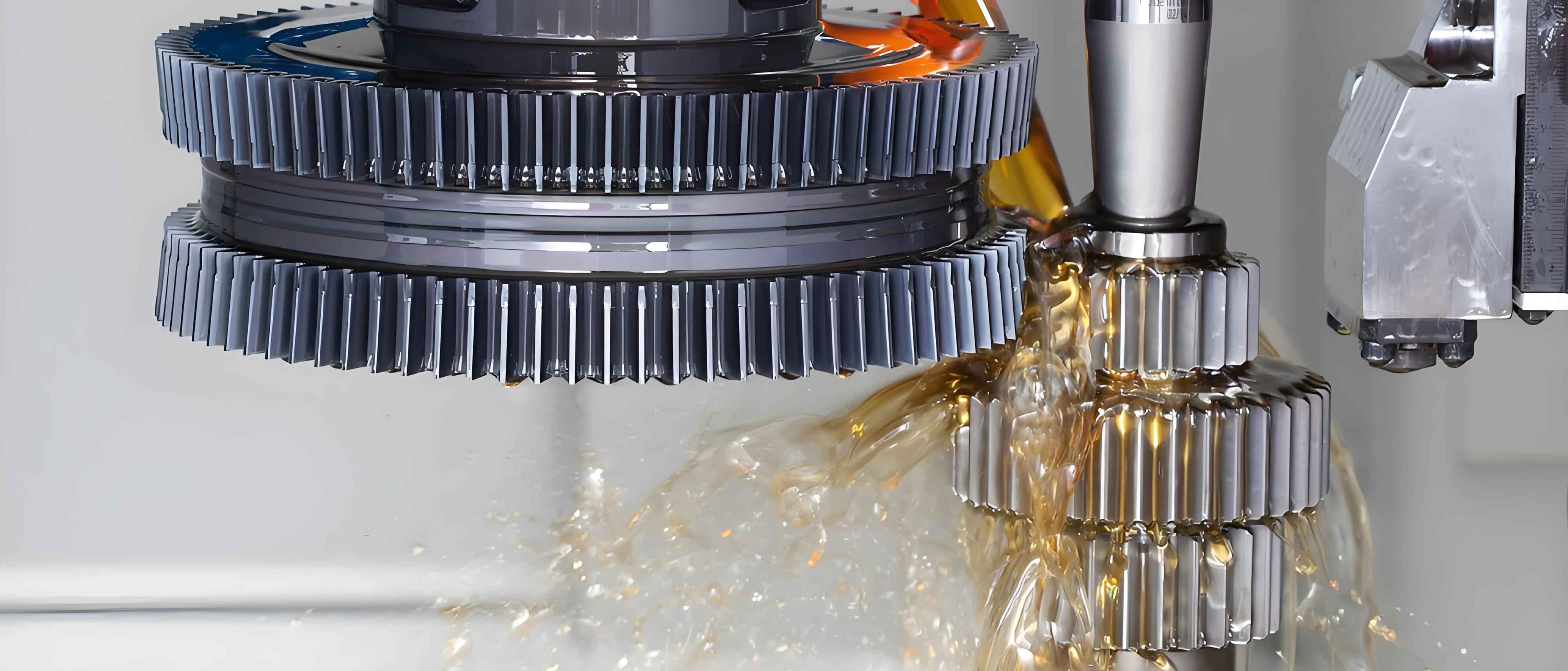
The primary components and characteristics of the hydrostatic tool holder body for small gear shaping machines were designed to meet user demands for high stroke counts and precision. After analyzing advanced structures domestically and internationally, I adopted a constant-pressure capillary throttling method. The tool shaft incorporates hydrostatic rail pairs and hydrostatic bearing structures at its upper and lower ends, enabling contact through an oil film. This design allows the oil film between the tool shaft and sleeve to ensure lubrication, reduce friction and heat generation, and maintain machine performance during high-speed reciprocating motion in gear shaping. The maximum permissible stroke speed reaches 90 m/min, making the tool shaft motion more suitable for high-speed, high-stroke needs in gear shaping applications.
In terms of oil cavity structure, the tool shaft sleeve employs a symmetrical four-oil-cavity design with circumferential oil return, widely used in various machine tools for its machining convenience and ease of ensuring assembly accuracy. The hydrostatic structure on the guide sleeve is unique, differing from other hydrostatic forms as it must accommodate both linear and rotational motions: linear motion controls the tooth alignment accuracy of gears, while rotational motion governs indexing accuracy. Based on analysis of domestic and international hydrostatic gear shaping machine guide sleeves, the hydrostatic rail can utilize rectangular spline or involute gear structures. Due to stringent precision requirements—tooth alignment accuracy of 0.003 mm, adjacent pitch deviation of 0.005 mm, and tooth profile accuracy of 0.003 mm—both structures presented machining difficulties. Through subsequent试验, the involute gear structure was deemed more suitable.
With the involute gear structure adopted for the hydrostatic rail, the hydrostatic guide sleeve features a matching internal involute gear structure. According to hydrostatic formation conditions, each mating tooth surface must maintain a uniform gap of 0.015–0.02 mm, which conventional machining methods cannot guarantee. Through theoretical analysis and examination of actual hydrostatic guide sleeves in gear shaping machines, I found that casting a layer of减摩 coating between the hydrostatic guide sleeve and hydrostatic rail is feasible. I researched relevant减摩 coating materials, understood their performance and application methods, and engaged with manufacturers to advance hydrostatic development in gear shaping.
The improvement process for the hydrostatic casting tooling in small gear shaping machines began with initial attempts using a pouring method to inject the wear-resistant coating into the gap between the hydrostatic rail and guide sleeve. However, due to poor fluidity and high viscosity of the coating, the naturally formed cast layer exhibited poor surface finish and failed to meet design精度 requirements. Consequently, I shifted to a pressure casting approach by modifying the tooling structure. This change involved designing a tooling that forces the coating into the间隙 under pressure, enhancing贴合紧密 and significantly improving surface smoothness. The improved hydrostatic casting tooling comprises three main sections: injection, sealing, and connection. The injection section uses a screw to advance a piston, pushing the wear-resistant coating from the injection cylinder into the assembly, with end caps preventing leakage. The sealing section involves a lower positioning column for aligning with the guide sleeve’s inner孔 and rail’s outer圆, and an upper tooth-shaped core block to seal the formed hydrostatic rail teeth, supplemented by upper end caps and pressure plates for system sealing and part fixation. The connection section includes a base plate and distribution板 to route the coating flow. The entire装置 ensures smooth flow and excellent密封性, effectively controlling the coating to fill the预定间隙 along designated paths.
The application of the hydrostatic casting tooling in small gear shaping machines involves a meticulous process. First, all tooling components are thoroughly cleaned and assembled, with pre-checks on screw holes and coating inlet channels to prevent oil contamination that could affect adhesive bonding. Second, oil cavity blocks are created using rubber sheets according to design specifications for the hydrostatic guide sleeve, and a plastic film of specified thickness is uniformly粘贴 onto the hydrostatic rail to form the间隙, ensuring no air bubbles. The oil cavity blocks are then粘贴 at designated positions to create eight oil cavities. Third, the hydrostatic rail and guide sleeve are assembled per the drawing, taking care not to disturb the粘贴 materials. Fourth, the upper end cap is ground to fit the guide sleeve and rail, with a tighter fit at the bottom to prevent coating leakage and a slight gap at the top for air escape. Fifth, the tooth-shaped core block is machined to required dimensions for sealing and length preservation. Sixth, a release agent is evenly sprayed on all parts except the guide sleeve to facilitate demolding, and screws are tightened. Seventh, the wear-resistant coating and固化剂 are mixed in proportion, stirred uniformly for up to ten minutes, and then poured into the injection cylinder along its sloped wall. Eighth, a铰杠 is used to slowly rotate the screw’s square head, advancing the piston to inject the coating into the装置 at consistent speed until coating emerges from the pressure plate gap. Ninth, after a five-minute静置, components below the positioning column are quickly拆卸, and four M8×40 screws堵住 the coating inlets. Tenth, the cast assembly is left at约 25°C for 24 hours, then transferred to a 70°C oven for 8 hours, cooled naturally, and disassembled for subsequent machining.
The application outcomes of the hydrostatic casting tooling for gear shaping machine tool holders have been substantial. By粘贴 a plastic layer of fixed thickness on the hydrostatic rail teeth and filling the gap with wear-resistant coating via the tooling, a fixed间隙 is formed after coating solidification and plastic removal. This casting process involves multiple factors like tooling design, temperature control, aging treatment, and coating properties. Through repeated试验 and data recording, operators can now independently perform the casting process, enabling batch production. First, after numerous trials and improvements, the tooling has become indispensable in the hydrostatic tool holder manufacturing process, with operators熟练 mastering its application. The cast hydrostatic guide sleeve teeth exhibit excellent surface finish, and assembly shows uniform配合间隙 with the hydrostatic rail. Second, gear shaping machines equipped with hydrostatic tool holders produced via this casting工艺 demonstrate significantly improved rigidity, reduced wear rates of transmission components by 60%, increased machining efficiency by over 80%, and enhanced machine档次, yielding substantial economic and social benefits. This advancement also meets prerequisites for high-speed, high-efficiency gear shaping in automotive and motorcycle industries.
To summarize the technical aspects, I have incorporated formulas and tables to elucidate key concepts in gear shaping and hydrostatics. For instance, the oil film stiffness in hydrostatic bearings can be expressed using the following formula for radial bearings: $$ k_h = \frac{6 \mu Q L}{h^3} $$ where \( k_h \) is the hydrostatic stiffness, \( \mu \) is the dynamic viscosity of the oil, \( Q \) is the flow rate, \( L \) is the bearing length, and \( h \) is the oil film thickness. This stiffness is crucial for maintaining precision during gear shaping operations. Another relevant formula pertains to the pressure distribution in capillary-restricted hydrostatic systems: $$ P_s = P_p \left(1 – \frac{128 \mu L_c Q}{\pi d_c^4 P_p}\right) $$ where \( P_s \) is the supply pressure, \( P_p \) is the pocket pressure, \( L_c \) is the capillary length, \( d_c \) is the capillary diameter, and other terms as defined. This governs the formation of uniform gaps in involute tooth profiles.
| Aspect | Traditional Tool Holder | Hydrostatic Tool Holder |
|---|---|---|
| Lubrication Mechanism | Boundary lubrication, prone to insufficiency | Full oil film, continuous lubrication |
| Friction Coefficient | High (0.1–0.3) | Low (0.001–0.01) |
| Maximum Stroke Speed | Limited to ~60 m/min | Up to 90 m/min or more |
| Thermal Effects | Significant temperature rise | Minimal temperature variation |
| Precision Maintenance | Degrades with wear | Sustained via oil film stiffness |
| Suitability for High-Speed Gear Shaping | Poor | Excellent |
In gear shaping, the involute tooth profile is fundamental, and its geometry can be described mathematically. The involute curve is given by: $$ x = r_b (\cos \theta + \theta \sin \theta) $$ $$ y = r_b (\sin \theta – \theta \cos \theta) $$ where \( r_b \) is the base radius and \( \theta \) is the roll angle. For hydrostatic rails, maintaining uniform间隙 \( h \) between mating involute surfaces is critical, requiring precise control during casting. The gap uniformity directly impacts oil film pressure distribution, which for a rectangular pad can be approximated as: $$ P(x) = P_0 \left(1 – \frac{x}{L}\right) $$ where \( P_0 \) is the inlet pressure and \( L \) is the pad length. In the context of gear shaping, this relates to tooth load distribution during cutting.
| Component | Function | Key Features |
|---|---|---|
| Injection Cylinder | Holds and delivers wear-resistant coating | Equipped with piston and screw drive |
| Sealing End Caps | Prevent leakage at tooling ends | Ground to fit guide sleeve and rail |
| Tooth-Shaped Core Block | Seals hydrostatic rail teeth | Machined to precise端面 dimensions |
| Positioning Column | Aligns guide sleeve and rail | Ensures concentricity during casting |
| Base Plate and Distribution Plate | Route coating flow into间隙 | Designed for minimal flow resistance |
The wear-resistant coating used in this gear shaping application typically consists of epoxy-based composites with fillers like PTFE or graphite to reduce friction. Its viscosity behavior during casting can be modeled using the power-law fluid equation: $$ \tau = K \dot{\gamma}^n $$ where \( \tau \) is the shear stress, \( K \) is the consistency index, \( \dot{\gamma} \) is the shear rate, and \( n \) is the flow behavior index. For effective filling, the coating must exhibit pseudoplastic properties (\( n < 1 \)) to flow under pressure but resist sagging. The pressure required for injection can be derived from the Poiseuille flow equation for annular gaps: $$ \Delta P = \frac{8 \mu Q L}{\pi (r_o^4 – r_i^4)} $$ where \( r_o \) and \( r_i \) are outer and inner radii of the间隙, respectively. This informs tooling design to achieve complete filling without defects.
Furthermore, the thermal management during curing is vital for coating performance in gear shaping工具. The curing kinetics of thermosetting coatings can be expressed by an Arrhenius-type equation: $$ \frac{d\alpha}{dt} = A e^{-E_a / RT} (1-\alpha)^n $$ where \( \alpha \) is the degree of cure, \( A \) is the pre-exponential factor, \( E_a \) is the activation energy, \( R \) is the gas constant, \( T \) is temperature, and \( n \) is the reaction order. The prescribed curing cycle—24 hours at 25°C followed by 8 hours at 70°C—optimizes cross-linking to achieve desired mechanical properties like hardness and adhesion, ensuring durability in gear shaping operations.
| Step | Action | Key Parameters |
|---|---|---|
| 1 | Tooling cleaning and assembly | Ensure no oil contamination; verify channel通畅性 |
| 2 | Preparation of oil cavities and间隙 | Use rubber sheets for oil cavities; plastic film thickness = 0.015–0.02 mm |
| 3 | Assembly of hydrostatic rail and guide sleeve | Avoid disturbing粘贴 materials; align per drawings |
| 4 | Fitting of upper end cap | Grind for bottom-tight, top-loose fit; gap ≈ 0.005 mm at top |
| 5 | Machining of tooth-shaped core block | Achieve flatness within 0.002 mm for sealing |
| 6 | Application of release agent | Spray evenly on all parts except guide sleeve |
| 7 | Mixing and loading of coating | Mix ratio: coating:固化剂 = 100:10 by weight; stir time ≤ 10 min |
| 8 | Pressure injection | Turn screw at ~2 rpm; stop when coating emerges |
| 9 | Partial disassembly and sealing | Wait 5 min; remove lower parts; plug inlets with screws |
| 10 | Curing and post-processing | 25°C/24h + 70°C/8h; cool naturally; demold and machine |
The benefits of this hydrostatic system in gear shaping extend beyond mere friction reduction. The oil film also dampens vibrations, which is crucial for achieving high surface finish on gears. The dynamic behavior can be analyzed using the Reynolds equation for thin-film flow: $$ \frac{\partial}{\partial x}\left(h^3 \frac{\partial P}{\partial x}\right) + \frac{\partial}{\partial z}\left(h^3 \frac{\partial P}{\partial z}\right) = 6\mu U \frac{\partial h}{\partial x} + 12\mu \frac{\partial h}{\partial t} $$ where \( h \) is the film thickness, \( P \) is pressure, \( \mu \) is viscosity, \( U \) is relative velocity, and \( x, z \) are coordinates. In gear shaping, this equation helps predict pressure variations during tool shaft reciprocation, ensuring stable machining. Additionally, the volumetric flow rate through the capillary restrictors is given by: $$ Q_c = \frac{\pi d_c^4 \Delta P}{128 \mu L_c} $$ which must match the flow requirements of the oil cavities to maintain constant间隙.
From an economic perspective, the adoption of hydrostatic tool holders in gear shaping leads to substantial cost savings. The reduction in wear rates by 60% translates to longer component life and lower maintenance costs. The increase in machining efficiency by over 80% allows for higher throughput in gear production, meeting tight industry demands. Moreover, the enhanced machine rigidity enables the use of higher cutting parameters in gear shaping, further boosting productivity. The社会效益 include reduced energy consumption due to lower friction and improved product quality, contributing to sustainable manufacturing practices.
In conclusion, my development and application of the hydrostatic casting tooling have revolutionized the manufacturing of tool holders for gear shaping machines. By integrating pressure casting with precise工装 design, I have overcome the challenges of achieving uniform微米级 gaps in involute tooth profiles. The成功 of this approach is evident in the improved performance of gear shaping machines, with higher speeds, better accuracy, and reduced downtime. As gear shaping continues to evolve towards more demanding applications, such as in electric vehicle transmissions or aerospace gears, hydrostatic technology will play a pivotal role. Future work may focus on optimizing coating materials for even lower friction or developing adaptive control systems for dynamic间隙 adjustment during gear shaping. Through continuous innovation, I aim to further advance the capabilities of gear shaping equipment, ensuring its relevance in modern manufacturing landscapes.