
In the field of precision manufacturing, the dynamic performance of machine tool structures, especially for gear shaping machines, is crucial for ensuring high-quality gear production. As a researcher focusing on mechanical design and dynamics, I have developed a novel approach to analyze and optimize the dynamic characteristics of gear shaping machine beds using unit structure theory. This method aims to enhance the structural integrity and vibrational stability of gear shaping equipment, which directly impacts machining accuracy and operational efficiency. In this article, I will detail my methodology, which integrates parametric modeling, response surface analysis, multi-objective optimization, and experimental validation, specifically applied to a gear shaping machine bed.
The bed of a gear shaping machine serves as a critical load-bearing component, supporting workpieces and connecting key parts like worktables and columns. Its dynamic properties, such as natural frequencies and mode shapes, significantly influence the overall performance of the gear shaping process. Traditional optimization methods often overlook the fundamental building blocks of the structure, leading to inefficiencies. To address this, I propose a unit structure-based approach, where the machine bed is decomposed into basic geometric elements called unit structures. By analyzing these unit structures, I can derive insights that guide the design of the entire gear shaping machine bed, enabling rapid optimization and improved dynamic behavior.
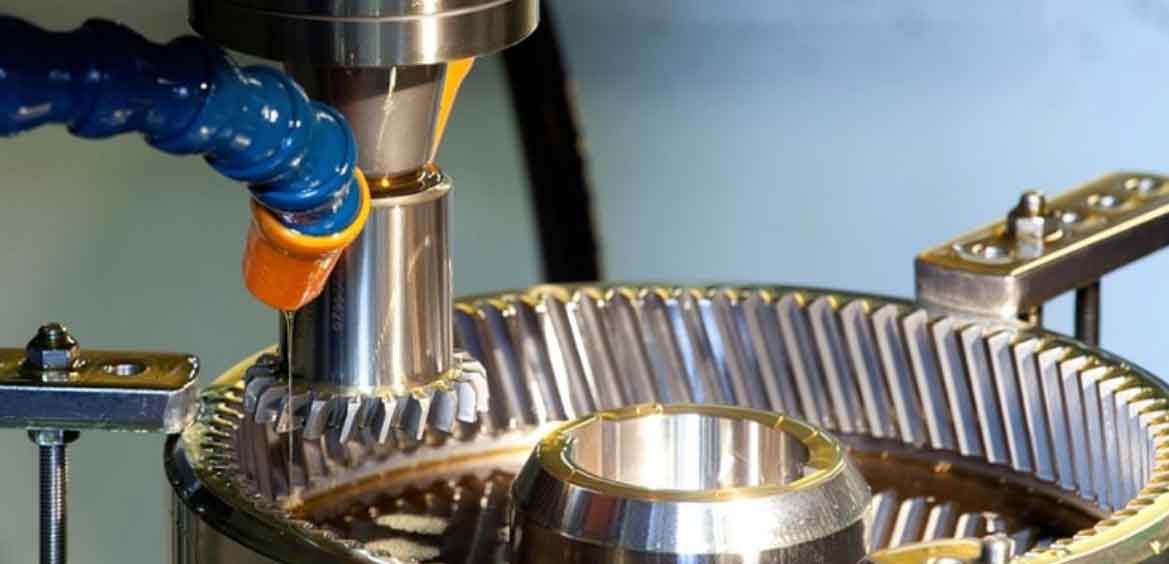
The concept of unit structure is central to my analysis. A unit structure represents a fundamental geometric element, such as a ribbed panel with openings, that forms the basis of larger mechanical assemblies like gear shaping machine beds. Each unit structure’s dynamic performance—including its natural frequencies and mass—directly affects the overall system. In gear shaping applications, these structures often feature sand-release holes, which reduce weight but also impact vibrational characteristics. By studying unit structures in isolation, I can quantify how design parameters influence dynamic responses, providing a foundation for optimizing full-scale gear shaping machine beds.
To implement this, I used Python programming language to create parametric models of unit structures. This allowed me to automate the design and analysis process, varying key parameters such as thickness, hole diameter, and side length. The parametric model facilitates rapid iteration and finite element analysis (FEA) for modal studies. For a typical unit structure in a gear shaping machine bed, the parameters include thickness (\(x_1\)), hole diameter (\(x_2\)), and side length (\(x_3\)). The ranges for these variables are summarized in Table 1, which serves as a basis for further analysis.
| Variable | Description | Lower Limit (mm) | Upper Limit (mm) | Mean Value (mm) |
|---|---|---|---|---|
| \(x_1\) | Thickness of unit structure | 30 | 50 | 40 |
| \(x_2\) | Hole diameter in unit structure | 40 | 80 | 60 |
| \(x_3\) | Side length of unit structure | 100 | 300 | 200 |
Using this parametric setup, I performed dynamic characteristic analyses to evaluate how each parameter affects the natural frequency and mass of the unit structure. The goal is to maximize natural frequency for better vibration resistance while minimizing mass for lightweight design in gear shaping machines. To model these relationships, I employed a second-order response surface methodology (RSM), which captures nonlinear interactions between variables. The general form of the response surface model is given by:
$$ y = \alpha_0 + \sum_{i=1}^{N} \alpha_i x_i + \sum_{i=1}^{N} \alpha_{ii} x_i^2 + \sum_{i < j} \alpha_{ij} x_i x_j $$
where \(y\) represents the response (e.g., natural frequency or mass), \(x_i\) are the design variables, \(N\) is the number of variables, and \(\alpha\) coefficients are determined via least squares regression. For the gear shaping unit structure, I conducted a series of simulations based on a design of experiments (DoE), as shown in Table 2, which includes 20 trials with varying parameter combinations and their corresponding natural frequencies and masses.
| Trial No. | Thickness \(x_1\) (mm) | Hole Diameter \(x_2\) (mm) | Side Length \(x_3\) (mm) | Natural Frequency \(f\) (Hz) | Mass \(m\) (kg) |
|---|---|---|---|---|---|
| 1 | 56.8 | 60 | 200 | 5941.3 | 52.8 |
| 2 | 40 | 60 | 368 | 2566.1 | 199 |
| 3 | 30 | 40 | 100 | 10061 | 6.1 |
| 4 | 30 | 80 | 100 | 3954.1 | 2.6 |
| 5 | 40 | 26.3 | 200 | 6362.2 | 48.3 |
| 6 | 30 | 40 | 300 | 2940.7 | 102 |
| 7 | 40 | 60 | 200 | 5718.4 | 45.4 |
| 8 | 50 | 80 | 100 | 1661 | 1.3 |
| 9 | 40 | 60 | 200 | 5718.4 | 45.4 |
| 10 | 50 | 40 | 100 | 9961.7 | 5.57 |
| 11 | 40 | 60 | 200 | 5718.4 | 45.4 |
| 12 | 30 | 80 | 300 | 3020 | 98.1 |
| 13 | 40 | 60 | 31.8 | 18867 | 0.07 |
| 14 | 50 | 40 | 300 | 3902 | 146 |
| 15 | 40 | 60 | 200 | 5718.4 | 45.4 |
| 16 | 40 | 60 | 200 | 5718.4 | 45.4 |
| 17 | 40 | 93.6 | 200 | 4386.8 | 40.3 |
| 18 | 50 | 80 | 300 | 3666.5 | 140 |
| 19 | 23.1 | 60 | 200 | 4632.5 | 31.9 |
| 20 | 40 | 60 | 200 | 5718.4 | 45.4 |
From this data, I derived the response surface equations for natural frequency (\(f\)) and mass (\(m\)). For natural frequency, the regression model is:
$$ f = 26582.4 – 487.3x_1 – 190.4x_2 – 31.2x_3 + 3.6x_1x_2 + 1.95x_1x_3 + 0.37x_2x_3 – 2.4x_1^2 – 0.53x_2^2 – 0.17x_3^2 $$
Similarly, for mass, the model is:
$$ m = 39.756 – 0.528x_1 + 0.140x_2 – 0.609x_3 – 0.0009x_1x_2 + 0.012x_1x_3 – 0.0004x_2x_3 – 0.013x_1^2 – 0.002x_2^2 + 0.002x_3^2 $$
These equations quantify the mapping between unit structure parameters and dynamic responses, highlighting that increasing hole diameter or side length generally reduces natural frequency, while thickness has a complex nonlinear effect. This insight is vital for designing gear shaping machine beds that require high stiffness and low weight.
Next, I applied multi-objective optimization using the NSGA-II (Non-dominated Sorting Genetic Algorithm II) to find Pareto-optimal solutions that balance natural frequency maximization and mass minimization. The optimization problem is formulated as:
$$ \text{Maximize } f(x_1, x_2, x_3) $$
$$ \text{Minimize } m(x_1, x_2, x_3) $$
$$ \text{Subject to: } 30 \leq x_1 \leq 50, \quad 40 \leq x_2 \leq 80, \quad 100 \leq x_3 \leq 300 $$
The Pareto front obtained from NSGA-II provides a set of non-dominated solutions, as summarized in Table 3. Each solution represents a trade-off between high dynamic performance and lightweight design for gear shaping applications. For instance, one optimal solution has \(x_1 = 30.38 \text{ mm}\), \(x_2 = 40.15 \text{ mm}\), \(x_3 = 102.98 \text{ mm}\), with \(f = 8070.33 \text{ Hz}\) and \(m = 7.40 \text{ kg}\). This Pareto set enables designers to select unit structure parameters based on specific requirements for gear shaping machine beds.
| Solution No. | Thickness \(x_1\) (mm) | Hole Diameter \(x_2\) (mm) | Side Length \(x_3\) (mm) | Natural Frequency \(f\) (Hz) | Mass \(m\) (kg) |
|---|---|---|---|---|---|
| 1 | 33.06 | 73.43 | 171.25 | 5113.38 | 22.67 |
| 2 | 41.98 | 77.43 | 216.12 | 4877.84 | 54.58 |
| 3 | 37.74 | 55.71 | 211.49 | 5811.71 | 52.74 |
| 4 | 41.67 | 58.58 | 161.38 | 5073.05 | 25.04 |
| 5 | 31.26 | 42.80 | 133.09 | 7756.61 | 13.69 |
| 6 | 33.06 | 73.43 | 171.25 | 5113.38 | 22.67 |
| 7 | 46.58 | 64.00 | 251.86 | 5251.28 | 92.86 |
| 8 | 31.26 | 41.72 | 133.09 | 7835.94 | 13.81 |
| 9 | 34.82 | 53.86 | 103.82 | 5710.67 | 5.13 |
| 10 | 36.42 | 68.70 | 146.61 | 4988.19 | 14.96 |
To validate these optimization results, I conducted experimental modal analysis using an LMS Test.Lab system. The tests focused on unit structures with different configurations, such as side lengths of 100 mm and 200 mm, each with varying hole diameters (40 mm, 60 mm, 80 mm). These unit structures were suspended with elastic ropes to simulate free boundary conditions, and accelerometers measured vibrational responses while an impact hammer provided excitation. The test setup ensured accurate extraction of natural frequencies and mode shapes relevant to gear shaping machine dynamics.
The experimental data revealed key trends: unit structures with smaller side lengths (e.g., 100 mm) exhibited higher natural frequencies compared to larger ones (e.g., 200 mm), and increasing hole diameter consistently reduced natural frequencies. For example, a 100 mm unit structure with a 40 mm hole had a first natural frequency around 2321 Hz, while a 200 mm unit structure with an 80 mm hole dropped to approximately 1323 Hz. This aligns with the parametric model predictions, confirming that unit structure design directly impacts dynamic performance in gear shaping machines. Table 4 compares experimental and simulated natural frequencies for selected unit structures, demonstrating good agreement and validating the response surface models.
| Unit Structure Type | Hole Diameter (mm) | Experimental Frequency (Hz) | Simulated Frequency (Hz) | Deviation (%) |
|---|---|---|---|---|
| 100 mm side length | 40 | 2321 | 2626 | 13.1 |
| 100 mm side length | 60 | 2312 | 2555 | 10.5 |
| 100 mm side length | 80 | 2301 | 2454 | 6.7 |
| 200 mm side length | 40 | 1379 | 1547 | 12.2 |
| 200 mm side length | 60 | 1350 | 1448 | 7.3 |
| 200 mm side length | 80 | 1323 | 1221.9 | 7.6 |
With the unit structure analysis validated, I applied this methodology to a full-scale gear shaping machine bed, specifically the YKW51250 model. This gear shaping machine consists of a bed, column, worktable, and other components, where the bed is constructed from an assembly of unit structures. I created two models: an original bed based on default unit structures (thickness 40 mm, hole diameter 60 mm, side length 200 mm) and an optimized bed using Pareto-optimal unit structures (thickness 30 mm, hole diameter 50 mm, side length 100 mm). The original bed comprised 720 unit structures, resulting in a total mass of 32688 kg and a first natural frequency of 277.05 Hz. In contrast, the optimized bed used 5760 smaller unit structures, reducing mass to 30989 kg (a 5.2% decrease) and increasing the first natural frequency to 361.04 Hz (a 30.3% improvement).
The dynamic performance improvements are summarized in Table 5, which lists the first six natural frequencies for both bed designs. The optimized gear shaping machine bed shows significant enhancements across all modes, underscoring the effectiveness of the unit structure approach. Additionally, the reduction in mass contributes to lower material costs and improved energy efficiency, which are critical for sustainable gear shaping operations.
| Mode | Original Bed Frequency (Hz) | Optimized Bed Frequency (Hz) | Improvement (%) |
|---|---|---|---|
| 1 | 277.05 | 361.04 | 30.3 |
| 2 | 277.62 | 367.47 | 32.4 |
| 3 | 470.11 | 582.49 | 23.9 |
| 4 | 562.11 | 646.55 | 15.0 |
| 5 | 629.76 | 702.03 | 11.5 |
| 6 | 681.27 | 778.12 | 14.2 |
The volume and mass comparisons further highlight the benefits, as shown in Table 6. The optimized gear shaping machine bed achieves a 5.2% reduction in both volume and mass, demonstrating that the unit structure-based optimization not only enhances dynamic characteristics but also promotes lightweight design. This is particularly advantageous for gear shaping machines, where stability and precision are paramount.
| Design | Volume (m³) | Mass (kg) | Change Relative to Original |
|---|---|---|---|
| Original Bed | 4.19 | 32688 | Baseline |
| Optimized Bed | 3.97 | 30989 | -5.2% in both volume and mass |
In conclusion, my proposed method based on unit structure theory offers a robust framework for analyzing and optimizing the dynamic characteristics of gear shaping machine beds. By leveraging parametric modeling with Python, response surface analysis, and multi-objective optimization via NSGA-II, I established clear mappings between design parameters and dynamic responses. Experimental validation with LMS modal testing confirmed the accuracy of the models, and the application to a YKW51250 gear shaping machine bed demonstrated practical improvements: a 30.3% increase in first natural frequency and a 5.2% reduction in mass. This approach enables rapid design iteration and customization for gear shaping applications, ensuring high performance and efficiency. Future work could extend this methodology to other machine tool components or incorporate more complex loading conditions relevant to gear shaping processes.
The integration of unit structure analysis into gear shaping machine design represents a significant advancement, as it allows engineers to quantitatively assess and enhance dynamic properties from the ground up. By focusing on fundamental elements, this method avoids the complexities of full-scale topology optimization and provides actionable insights for manufacturing. As gear shaping technology evolves toward higher precision and speed, such dynamic optimization techniques will become increasingly vital for maintaining competitiveness in the industry.
Throughout this study, the term “gear shaping” has been emphasized to underscore its relevance to the application context. The repeated mention of gear shaping highlights the specific focus on machines used for gear manufacturing, where dynamic stability is crucial for producing accurate gear profiles. This methodology is not limited to gear shaping alone but can be adapted to other machine tools, though the examples presented here centered on gear shaping to illustrate its effectiveness. The use of formulas and tables, as shown, facilitates clear communication of results and supports engineering decision-making in gear shaping machine design.
In summary, the unit structure-based approach provides a systematic way to achieve lightweight, high-frequency designs for gear shaping machine beds, contributing to improved machining accuracy and operational reliability. The combination of computational analysis and experimental verification ensures that the optimized structures meet real-world requirements, making this method a valuable tool for advancing gear shaping technology.