
In modern automotive engineering, the drivetrain system plays a critical role in transmitting torque from the engine to the wheels, ensuring efficient vehicle operation. Among its components, the main reducer—often utilizing hyperboloidal gears—is pivotal for speed reduction and torque multiplication. Hyperboloidal gears, known for their high strength, smooth operation, and low noise due to sliding and rolling contact during meshing, are widely adopted in automotive drive axles. However, their manufacturing and assembly require precision, as deviations can lead to significant quality issues, such as excessive vibration and noise. This article presents a comprehensive fault diagnosis method for hyperboloidal gear main reducers, leveraging vibration signals from running-in tests, combined with time-frequency analysis, wavelet packet decomposition, and BP neural networks. The goal is to provide an automated, quantitative quality assessment system that surpasses traditional subjective methods like印记 inspection or auditory noise detection.
The importance of hyperboloidal gears in automotive applications cannot be overstated. Their design allows for an offset between the driving and driven gears, facilitating flexible vehicle layout. Yet, this advantage comes with challenges: hyperboloidal gears are susceptible to distortions during heat treatment, installation errors in assembly, and material inconsistencies, all of which can degrade performance. In production, quality control is essential to ensure reliability and longevity. Traditional methods rely on human judgment, which is prone to subjectivity and environmental interference. Therefore, we propose an objective approach based on vibration analysis, as vibration signals directly correlate with noise emission and can reveal underlying faults through advanced signal processing techniques. This method not only identifies defects but also aids in root cause analysis, enhancing manufacturing efficiency and product quality for hyperboloidal gears.
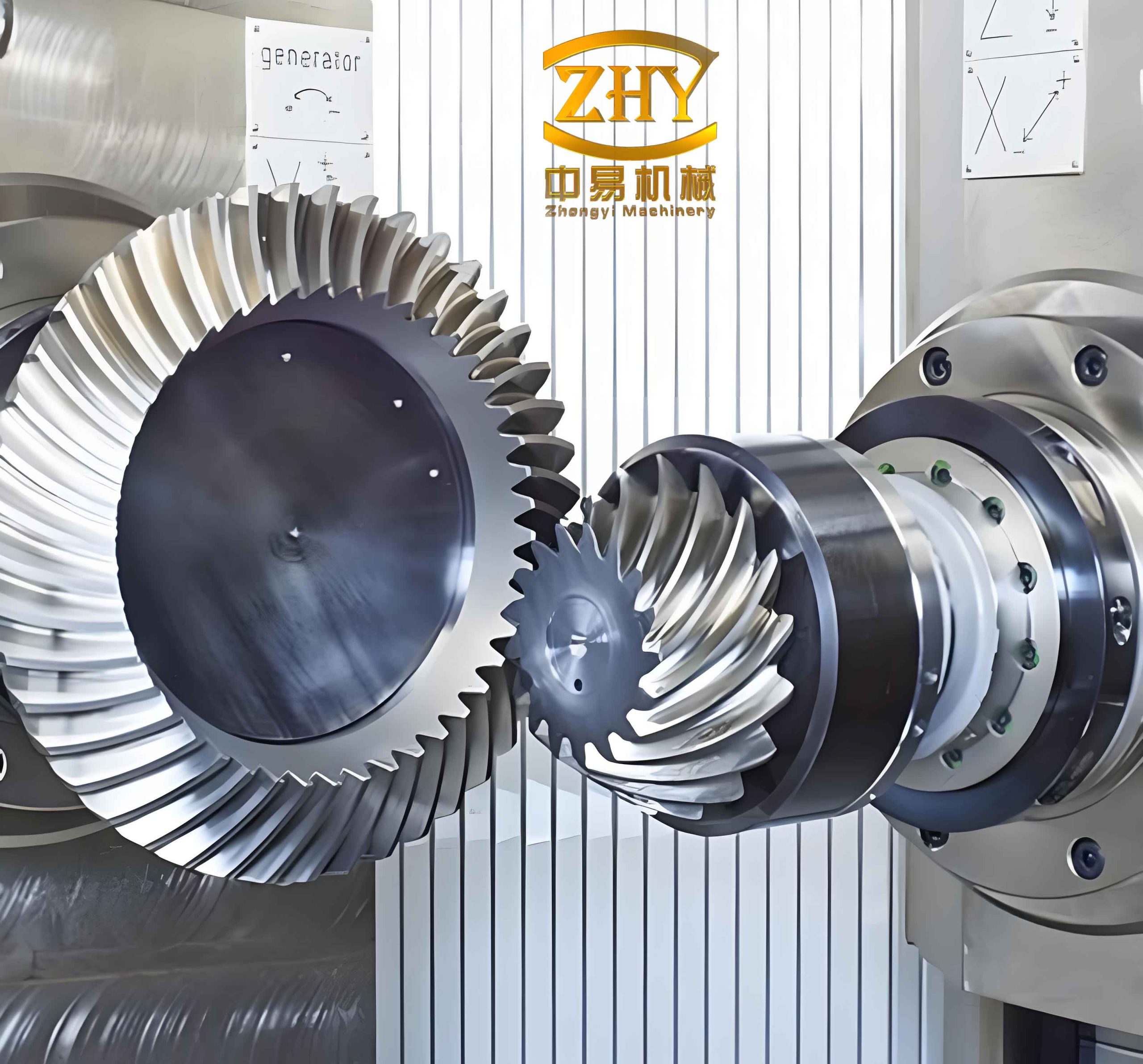
Hyperboloidal gears, like other precision components, face typical quality issues during manufacturing. Distortions post-carburizing and quenching are a primary concern, influenced by factors such as gear geometry, material properties, and heat treatment processes. For instance, non-uniform cooling can lead to microstructural defects like martensite with twin bands, increasing brittleness and failure risk. Additionally, installation errors—such as misalignment or incorrect mounting distances—can cause abnormal meshing, resulting in elevated vibration levels. To address these, our method focuses on extracting fault features from vibration data collected during running-in tests. We use sensors to capture signals, which are then processed to distinguish between normal operation and fault conditions like surface pitting or abnormal noise. By integrating time-domain statistics, frequency-domain parameters, and wavelet packet coefficients, we construct a robust feature vector for machine learning-based classification.
The relationship between vibration and noise is fundamental to our approach. According to acoustic theory, sound radiation from a vibrating structure is proportional to its surface vibration velocity, as expressed by:
$$W = \rho c S \sigma_r V$$
where \(W\) is the radiated sound power, \(\rho\) is the material density, \(c\) is the speed of sound, \(S\) is the radiation surface area, \(\sigma_r\) is the radiation efficiency, and \(V\) is the mean square vibration velocity. This equation confirms that vibration signals encapsulate noise characteristics, making them suitable for fault diagnosis. In hyperboloidal gear systems, faults like gear distortions or assembly errors alter vibration patterns, which can be detected through signal analysis. We employ a combination of time-domain analysis (e.g., statistical parameters), frequency-domain analysis (e.g., power spectrum), and wavelet packet decomposition to capture these changes. Wavelet packet analysis, in particular, offers superior time-frequency localization compared to traditional Fourier methods, enabling precise extraction of transient features from hyperboloidal gear vibration signals.
Time-domain analysis involves examining the raw vibration waveform and its statistical parameters. For hyperboloidal gears, we consider both dimensional and dimensionless parameters to assess fault sensitivity. Dimensional parameters, such as variance and root mean square (RMS), are influenced by operational conditions but provide insights into signal energy. Dimensionless parameters, like kurtosis and crest factor, are less affected by external factors and excel at detecting impulses from faults like surface pitting. Below is a table summarizing the sensitivity of various time-domain parameters to two common faults in hyperboloidal gears: abnormal noise and surface pitting (referred to as “包块” in the original text).
| Time-Domain Parameter | Formula | Sensitivity to Abnormal Noise | Sensitivity to Surface Pitting |
|---|---|---|---|
| Mean | \(\mu_x = \frac{1}{N} \sum_{i=1}^{N} x_i\) | Moderate | Moderate |
| Variance | \(\sigma_x^2 = \frac{1}{N} \sum_{i=1}^{N} (x_i – \mu_x)^2\) | Good | Good |
| Root Mean Square (RMS) | \(X_{\text{rms}} = \sqrt{\frac{1}{N} \sum_{i=1}^{N} x_i^2}\) | Good | Good |
| Root Amplitude | \(X_r = \left( \frac{1}{N} \sum_{i=1}^{N} \sqrt{|x_i|} \right)^2\) | Moderate | Good |
| Kurtosis | \(\beta = \frac{1}{N} \sum_{i=1}^{N} x_i^4\) | Poor | Good |
| Waveform Indicator | \(S_f = \frac{X_{\text{rms}}}{\mu_x}\) | Moderate | Moderate |
| Kurtosis Indicator | \(K = \frac{\frac{1}{N} \sum_{i=1}^{N} x_i^4}{X_{\text{rms}}^4}\) | Good | Good |
| Crest Factor | \(C_f = \frac{\max(|x_i|)}{X_{\text{rms}}}\) | Moderate | Moderate |
| Clearance Factor | \(C_{Lf} = \frac{\max(|x_i|)}{\left( \frac{1}{N} \sum_{i=1}^{N} \sqrt{|x_i|} \right)^2}\) | Good | Good |
| Sixth-Order Moment | \(R_6 = \frac{\sum_{i=1}^{N} x_i^6}{N \sigma_x^6}\) | Fair | Good |
| Eighth-Order Moment | \(R_8 = \frac{\sum_{i=1}^{N} x_i^8}{N \sigma_x^8}\) | Fair | Good |
Frequency-domain analysis complements time-domain methods by examining the spectral content of vibration signals. For hyperboloidal gears, faults often manifest as shifts in frequency components or changes in energy distribution. Key parameters include the power spectrum centroid, variance, and mean square frequency, which describe the concentration and dispersion of spectral energy. The table below evaluates the sensitivity of these parameters to the same faults in hyperboloidal gears.
| Frequency-Domain Parameter | Formula | Sensitivity to Abnormal Noise | Sensitivity to Surface Pitting |
|---|---|---|---|
| Power Spectrum Centroid | \(FC = \frac{\sum_{i=1}^{N} f_i p_i}{\sum_{i=1}^{N} p_i}\) | Moderate | Poor |
| Power Spectrum Variance | \(VF = \frac{\sum_{i=1}^{N} (f_i – FC)^2 p_i}{\sum_{i=1}^{N} p_i}\) | Moderate | Moderate |
| Mean Square Frequency | \(MSF = \frac{\sum_{i=1}^{N} f_i^2 p_i}{\sum_{i=1}^{N} p_i}\) | Moderate | Poor |
Wavelet packet decomposition is a powerful tool for non-stationary signal analysis, such as those from hyperboloidal gear vibrations. Unlike standard wavelet transforms, it recursively decomposes both low- and high-frequency subbands, providing finer resolution across the frequency spectrum. For a signal decomposed into \(N\) levels, we obtain \(2^N\) orthogonal frequency bands with corresponding coefficients. This allows for optimal basis selection to capture fault-specific features. In our method, we use Daubechies wavelets for their orthogonality and compact support, which are ideal for detecting singularities in hyperboloidal gear signals. A three-level wavelet packet decomposition yields eight frequency bands, and we extract energy spectrum values from selected bands to form part of the feature vector. The process can be visualized as:
$$ \text{Signal} \rightarrow \begin{cases}
L_1 \rightarrow \begin{cases}
L_2 \rightarrow \begin{cases}
L_3 \\
H_3
\end{cases} \\
H_2 \rightarrow \begin{cases}
L_3 \\
H_3
\end{cases}
\end{cases} \\
H_1 \rightarrow \begin{cases}
L_2 \rightarrow \begin{cases}
L_3 \\
H_3
\end{cases} \\
H_2 \rightarrow \begin{cases}
L_3 \\
H_3
\end{cases}
\end{cases}
\end{cases} $$
where \(L\) and \(H\) denote low- and high-frequency subbands, respectively, with subscripts indicating decomposition levels. For hyperboloidal gear diagnosis, we focus on coefficients from bands \(c_3\) to \(c_8\), which correspond to frequency ranges most sensitive to faults like pitting and noise. The energy of these coefficients, combined with time-domain parameters, creates a hybrid feature vector for machine learning.
Artificial neural networks, particularly Backpropagation (BP) networks, are employed for fault pattern recognition due to their nonlinear mapping capabilities and adaptability. A three-layer BP network—comprising input, hidden, and output layers—can approximate any continuous function, making it suitable for classifying hyperboloidal gear conditions. The network’s output for a given input vector \(\mathbf{x}\) is computed as:
$$y_j = f\left( \sum_{i=1}^{n} w_{ij} x_i – \theta_j \right) = f\left( \sum_{i=1}^{n} w_{ij} x_i \right)$$
where \(f\) is the activation function (e.g., sigmoid or hyperbolic tangent), \(w_{ij}\) are connection weights, and \(\theta_j\) is the threshold for neuron \(j\). The network is trained using supervised learning, where weights are adjusted via error backpropagation to minimize the difference between predicted and target outputs. For hyperboloidal gear diagnosis, we design the network with 12 input nodes (matching the feature vector dimension), a hidden layer with 9 nodes (determined experimentally), and 3 output nodes representing normal, pitting, and noise fault states. The target outputs are encoded as \((1,0,0)\) for normal, \((0,1,0)\) for pitting, and \((0,0,1)\) for noise. We use the scaled conjugate gradient (SCG) algorithm for training, along with normalization techniques to enhance generalization.
The feature vector for hyperboloidal gear fault diagnosis is constructed from six time-domain parameters and six wavelet packet energy values. Specifically, we select variance, RMS, kurtosis indicator, clearance factor, sixth-order moment, and eighth-order moment from the time domain, based on their high sensitivity to faults. From the wavelet packet decomposition, we use energy spectrum values from bands \(c_3\) to \(c_8\). This 12-dimensional vector serves as input to the BP network. The training dataset includes 18 samples: 6 normal hyperboloidal gear reducers, 6 with pitting faults, and 6 with noise faults. After training, the network is tested on unseen data to evaluate its diagnostic accuracy.
An example application demonstrates the effectiveness of our method for hyperboloidal gears. Vibration signals are acquired during running-in tests using piezoelectric accelerometers, digitized via data acquisition cards, and processed in a LabVIEW-MATLAB hybrid environment. The figures below show time-domain waveforms for normal, pitting-fault, and noise-fault hyperboloidal gear reducers. In normal operation, the signal exhibits relatively steady oscillations, whereas pitting faults introduce periodic impulses, and noise faults cause amplitude modulations. These visual cues align with the extracted features, validating our approach.
The BP network’s performance is assessed on test samples: 3 normal, 3 pitting-fault, and 3 noise-fault hyperboloidal gear reducers. The results, summarized in the table below, show high classification accuracy. For instance, normal reducers yield output probabilities close to \((1,0,0)\), while fault cases are correctly identified with minimal confusion. This indicates that our method can reliably diagnose single and multiple faults in hyperboloidal gears, outperforming manual inspection.
| Test Sample | Target Output | Actual Output | Probability of Normal (%) | Probability of Pitting (%) | Probability of Noise (%) |
|---|---|---|---|---|---|
| Normal 1 | (1,0,0) | (0.9994,0.0050,0.0079) | 98.72 | 0.50 | 0.78 |
| Normal 2 | (1,0,0) | (0.9999,0.0020,0.0005) | 99.75 | 0.20 | 0.05 |
| Normal 3 | (1,0,0) | (0.9604,0.0003,0.0039) | 99.57 | 0.03 | 0.40 |
| Pitting 1 | (0,1,0) | (0.0062,0.9942,0.0070) | 0.62 | 99.19 | 0.19 |
| Pitting 2 | (0,1,0) | (0.2988,0.9258,0.0070) | 24.26 | 75.17 | 0.57 |
| Pitting 3 | (0,1,0) | (0.0019,0.9995,0.0000) | 0.19 | 99.81 | 0.00 |
| Noise 1 | (0,0,1) | (0.0002,0.0044,0.9999) | 0.02 | 0.44 | 99.54 |
| Noise 2 | (0,0,1) | (0.0041,0.0025,0.9980) | 0.41 | 0.25 | 99.34 |
| Noise 3 | (0,0,1) | (0.0367,0.0000,0.8540) | 4.12 | 0.01 | 95.87 |
The success of this fault diagnosis method for hyperboloidal gears hinges on the synergistic use of signal processing and machine learning. By integrating time-domain statistics, frequency-domain analysis, and wavelet packet decomposition, we capture comprehensive fault features that are insensitive to operational variations. The BP neural network then leverages these features to achieve accurate classification, even for subtle defects in hyperboloidal gears. Compared to traditional methods, this approach offers automation, objectivity, and quantifiable results, making it suitable for industrial quality control. Future work could explore deep learning techniques or real-time monitoring systems to further enhance the diagnosis of hyperboloidal gear reducers.
In conclusion, we have developed and validated a fault diagnosis method for hyperboloidal gear main reducers based on vibration signal analysis. The method extracts hybrid features from running-in test data, combines wavelet packet energy spectra with time-domain parameters, and employs a BP neural network for pattern recognition. Testing on actual hyperboloidal gear samples demonstrates high accuracy in distinguishing normal, pitting-fault, and noise-fault conditions. This approach not only improves quality assessment for hyperboloidal gears but also provides insights into fault origins, supporting manufacturing optimization. As automotive systems evolve, such intelligent diagnostic tools will be crucial for ensuring the reliability and performance of hyperboloidal gear transmissions.