
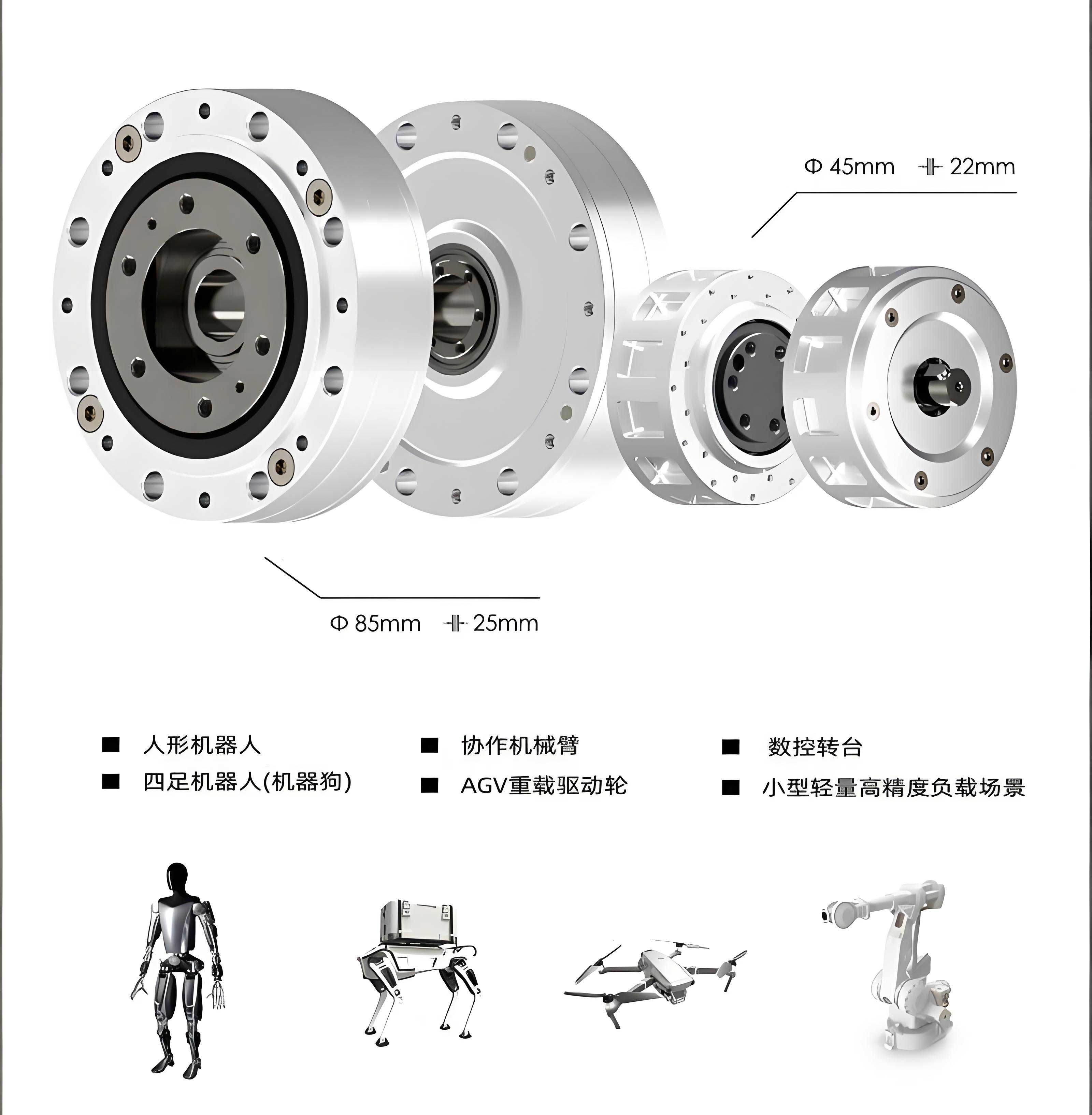
The reliable operation of industrial robots is paramount in modern automated manufacturing systems. At the heart of these robotic joints lies a critical component: the rotary vector (RV) reducer. The RV reducer is prized for its compact design, high torque capacity, large reduction ratio, and excellent torsional stiffness. However, due to its complex multi-stage transmission structure involving gears, crankshafts, cycloidal gears, and needle rollers, it operates under significant mechanical stress. Faults such as cracks, pitting, or wear in its internal bearings or gears can lead to unplanned downtime, reduced product quality, and substantial economic losses. Therefore, developing effective fault diagnosis techniques for the RV reducer is a crucial research area for ensuring system reliability and predictive maintenance.
The vibration signals generated by an RV reducer during operation contain rich information about its health state. When a localized fault occurs, such as a damaged bearing roller, it creates periodic impulsive excitations in the vibration signal. The core task of fault diagnosis is to extract these characteristic frequency components from the acquired signal. However, in practical industrial environments, the vibration signals from an RV reducer are invariably contaminated with strong background noise from motors, other machinery, and electromagnetic interference. This noise often buries the weak fault signatures, making direct analysis methods like Fast Fourier Transform (FFT) or conventional envelope spectrum analysis ineffective, as they fail to isolate the fault-related frequencies amidst the noise.
To address the challenge of strong noise, advanced signal processing techniques that can decompose a complex signal into its constituent modes are essential. Empirical Mode Decomposition (EMD) and its variants have been widely used. In particular, the Complete Ensemble Empirical Mode Decomposition with Adaptive Noise (CEEMDAN) offers a significant improvement. CEEMDAN solves the mode mixing problem inherent in EMD and reduces the reconstruction error present in Ensemble EMD (EEMD) by adaptively adding white noise at each stage of decomposition. For a target signal \( x[n] \), the CEEMDAN algorithm proceeds as follows. Let \( D_j(\cdot) \) denote the operator that produces the \( j \)-th intrinsic mode function (IMF) via EMD, and let \( \omega^i(n) \) be a realization of white Gaussian noise. The steps are:
1. Perform EMD on \( I \) realizations of \( x[n] + \epsilon_0 \omega^i(n) \) and compute the first mode:
$$ \overline{IMF}_1[n] = \frac{1}{I} \sum_{i=1}^{I} D_1(x[n] + \epsilon_0 \omega^i(n)) $$
2. Calculate the first residual:
$$ r_1[n] = x[n] – \overline{IMF}_1[n] $$
3. For \( k \geq 1 \), define the \( (k+1) \)-th mode as:
$$ \overline{IMF}_{k+1}[n] = \frac{1}{I} \sum_{i=1}^{I} D_1(r_k[n] + \epsilon_k D_k(\omega^i(n))) $$
4. Update the residual:
$$ r_{k+1}[n] = r_k[n] – \overline{IMF}_{k+1}[n] $$
5. Repeat steps 3-4 until the residual is no longer oscillatory. The final signal is reconstructed as:
$$ x[n] = \sum_{k=1}^{K} \overline{IMF}_k + r_K[n] $$
where \( K \) is the total number of IMFs. This process ensures a near-zero reconstruction error and reduces spurious modes.
While CEEMDAN is effective for denoising, selecting the most fault-informative IMFs is critical. The kurtosis value is a statistical measure sensitive to transient impulses. For a signal, a higher kurtosis often indicates stronger impulsive characteristics typical of faults. Therefore, after CEEMDAN decomposition, the IMF with the highest kurtosis value is typically selected for further analysis. However, the signal after initial CEEMDAN filtering may still contain residual noise and require more precise decomposition to isolate the specific modulated fault frequency. This is where Variational Mode Decomposition (VMD) excels.
VMD is a fully non-recursive, adaptive signal decomposition method. It fundamentally reformulates the decomposition problem as a variational optimization problem. The goal is to decompose a real-valued input signal \( f(t) \) into a discrete number of band-limited sub-signals or modes, \( u_k(t) \), each compacted around a center pulsation \( \omega_k \). The constrained variational problem is formulated as:
$$ \min_{\{u_k\},\{\omega_k\}} \left\{ \sum_{k=1}^{K} \left\| \partial_t \left[ \left( \delta(t) + \frac{j}{\pi t} \right) * u_k(t) \right] e^{-j\omega_k t} \right\|_2^2 \right\} $$
subject to
$$ \sum_{k=1}^{K} u_k(t) = f(t) $$
where \( K \) is the preset number of modes, \( \{u_k\} = \{u_1, u_2, …, u_K\} \) are the mode functions, and \( \{\omega_k\} = \{\omega_1, \omega_2, …, \omega_K\} \) are their center frequencies. The solution to this problem is found using the Alternating Direction Method of Multipliers (ADMM). The critical performance of VMD is highly dependent on two key parameters: the number of decomposition modes \( K \) and the penalty factor \( \alpha \), which controls the bandwidth of each mode. An inappropriate choice leads to under-decomposition or over-decomposition, causing loss of fault information or creation of spurious components.
To optimally select the \( [K, \alpha] \) pair, a metaheuristic optimization algorithm is employed. The Crested Porcupine Optimizer (CPO) is a novel nature-inspired algorithm that mimics the defensive behaviors of crested porcupines, balancing exploration and exploitation effectively. It utilizes four defense strategies: visual and sound (for exploration when a predator is distant), and scent and physical attack (for exploitation when the predator is close). The algorithm maintains a population of candidate solutions (porcupines). Their positions are updated based on strategies selected according to random conditions and a time-decreasing defense factor, allowing for a robust search of the parameter space. The objective is to minimize an adaptive fitness function. For fault diagnosis, the minimum envelope entropy principle is an excellent choice as the fitness function. Envelope entropy effectively measures the sparsity and complexity of the signal’s envelope; a lower value often corresponds to a clearer periodic impulse feature. For a signal \( x(i) \) with its envelope spectrum \( e(i) \) normalized to form a probability distribution \( p_i = e(i) / \sum_{i=1}^{N} e(i) \), the envelope entropy \( E_e \) is defined as:
$$ E_e = -\sum_{i=1}^{N} p_i \log_{10}(p_i) $$
The CPO algorithm searches for the \( [K, \alpha] \) combination that minimizes the envelope entropy of the most significant IMF resulting from the VMD decomposition of the pre-processed signal.
Based on the above principles, I propose a comprehensive fault diagnosis methodology for the RV reducer, termed the CEEMDAN-CPO-VMD method. The flowchart of this methodology is as follows. First, the raw vibration signal from the RV reducer is acquired. Second, the CEEMDAN algorithm is applied to the noisy signal to obtain a set of IMFs. The kurtosis value of each IMF is calculated, and the IMF with the maximum kurtosis is selected as the primary signal containing the most salient fault information, effectively achieving initial noise reduction. Third, the CPO algorithm is initialized. The search boundaries for parameters \( K \) (e.g., [2, 20]) and \( \alpha \) (e.g., [200, 2000]) are defined. For each candidate \( [K, \alpha] \) pair in the CPO population, VMD is performed on the selected IMF. The envelope entropy of the resulting VMD-IMF with the highest kurtosis is computed and used as the fitness value. The CPO iteratively updates the population to minimize this fitness. Once the stopping criterion (e.g., maximum iterations) is met, the optimal parameters \( [K_{opt}, \alpha_{opt}] \) are obtained. Fourth, VMD with the optimized parameters is executed on the CEEMDAN-selected IMF to obtain the final set of precise modal components. The component with the highest kurtosis from this VMD output is selected. Finally, the Hilbert transform is applied to this component to obtain its envelope signal, and the envelope spectrum is analyzed to identify the characteristic fault frequency and its harmonics.
To validate the proposed method, a case study was conducted on an RV reducer with a known fault: a broken roller in the crankshaft (eccentric) bearing. The transmission system of the RV reducer is a two-stage design. The first stage is a planetary gear train, and the second stage is a cycloidal-pin gear mechanism. The theoretical fault characteristic frequency (FCF) for the crankshaft bearing can be calculated based on its geometry and the input speed. Let \( z_1 \) be the sun gear teeth, \( z_2 \) the planetary gear teeth, \( z_3 \) the cycloidal gear teeth, and \( z_4 \) the pin gear teeth. Let \( D \) be the bearing pitch diameter, \( d \) the roller diameter, \( \alpha \) the contact angle (usually 0°), and \( N_b \) the number of rollers. For an input rotational frequency \( f_{in} \), the rotational frequency of the crankshaft \( f_{crank} \) is:
$$ f_{crank} = \frac{z_1 \cdot z_4}{(z_4 – z_3)(z_1 + z_2)} \cdot f_{in} $$
The outer race pass frequency of the crankshaft bearing (assuming a stationary outer race) is:
$$ f_{FCF} = \frac{N_b}{2} \left( 1 – \frac{d}{D} \cos\alpha \right) f_{crank} $$
For the test setup with \( f_{in} = 500/60 \approx 8.333 \text{ Hz} \), the calculated \( f_{FCF} \) was approximately 9.876 Hz.
The vibration signal was collected from the RV reducer’s housing with a sampling frequency of 25.6 kHz. To simulate a harsh environment, strong white noise at -10 dB was added to the original signal. The time-domain waveform of the noisy signal showed no obvious periodic impulses. Direct envelope spectrum analysis of this noisy signal yielded a cluttered spectrum with numerous sidebands and no identifiable peaks at the theoretical fault frequency or its harmonics, demonstrating the diagnostic challenge.
Applying the proposed method, the noisy signal was first processed by CEEMDAN, yielding 10 IMFs. Their kurtosis values were computed, and the results are summarized in the following table:
| IMF Component | Kurtosis Value |
|---|---|
| IMF1 | 3.844 |
| IMF2 | 2.982 |
| IMF3 | 2.818 |
| IMF4 | 2.519 |
| IMF5 | 2.347 |
| IMF6 | 2.163 |
| IMF7 | 1.964 |
| IMF8 | 1.756 |
| IMF9 | 1.258 |
| IMF10 | 1.097 |
IMF1, with the highest kurtosis of 3.844, was selected as the target for further processing. Subsequently, the CPO algorithm was configured with a population size of 30 and a maximum of 10 iterations to optimize the VMD parameters for this IMF1 component. The fitness function was the minimum envelope entropy. The optimization converged efficiently, identifying the optimal parameters as \( K_{opt} = 12 \) and \( \alpha_{opt} = 528 \). VMD was then performed on IMF1 using these parameters, producing 12 precise modal components. The kurtosis values of the first six resulting VMD-IMFs are shown below:
| VMD-IMF Component | Kurtosis Value |
|---|---|
| VMD-IMF1 | 1.964 |
| VMD-IMF2 | 3.242 |
| VMD-IMF3 | 3.012 |
| VMD-IMF4 | 2.854 |
| VMD-IMF5 | 2.455 |
| VMD-IMF6 | 1.854 |
VMD-IMF2, with the highest kurtosis, was selected for the final envelope analysis. Its envelope spectrum displayed clear and distinct spectral peaks at 10 Hz, 20 Hz, 30 Hz, and 40 Hz. The fundamental frequency of 10 Hz aligns closely with the theoretical fault frequency of 9.876 Hz, with a deviation of only about 1.25%. This successful identification of the FCF and its integer multiples (harmonics) confirms the presence of the bearing fault and validates the effectiveness of the CEEMDAN-CPO-VMD method in extracting weak fault features from a strong noisy background.
To further benchmark the performance of the proposed method, a comparative experiment was conducted. The popular Sparrow Search Algorithm (SSA) was used to optimize VMD parameters under the same conditions, forming a CEEMDAN-SSA-VMD approach. Using the same CEEMDAN-filtered IMF1 component, SSA optimized the VMD parameters to \( K=8 \) and \( \alpha=604 \). The envelope spectrum of the corresponding best component showed peaks at the fault frequency and some harmonics, but the second harmonic (20 Hz) was less prominent, and more residual noise sidebands were present compared to the CPO-optimized result. More quantitatively, the signal reconstructed and processed by the CPO-optimized pathway was evaluated against the SSA-optimized pathway using Signal-to-Noise Ratio (SNR) and Root Mean Square Error (RMSE) relative to a cleaned reference, alongside computational time. The results are compelling:
| Optimization Method | SNR (dB) | RMSE | Computation Time (s) |
|---|---|---|---|
| CPO-VMD | 9.38 | 0.036 | 36.59 |
| SSA-VMD | 8.57 | 0.042 | 50.24 |
The CPO-based method achieved a higher output SNR (by 0.81 dB), a lower RMSE, and completed the optimization process approximately 13.65 seconds faster than the SSA-based method. This demonstrates that the CPO algorithm not only finds superior decomposition parameters leading to clearer fault feature extraction but also does so with greater computational efficiency, highlighting its advantage for this application.
In conclusion, fault diagnosis of the RV reducer in noisy industrial settings presents a significant challenge. The hybrid CEEMDAN-CPO-VMD method developed here provides a robust solution. The process begins with CEEMDAN acting as an effective preliminary noise reducer, isolating the most impulse-rich component via kurtosis selection. The core innovation lies in using the Crested Porcupine Optimizer to automatically and efficiently determine the optimal parameters for the subsequent Variational Mode Decomposition. This data-driven parameter tuning avoids the pitfalls of manual selection and ensures that VMD performs an accurate and sparse decomposition of the fault signature. Finally, envelope spectrum analysis of the optimally decomposed component reveals the characteristic fault frequency with high clarity. Experimental results on a faulty RV reducer, even with artificially added strong noise, successfully identified the bearing fault frequency. Comparative analysis with another optimizer (SSA) confirmed the superior performance of CPO in terms of both diagnostic clarity (higher SNR, lower RMSE) and convergence speed. This methodology offers a powerful, adaptive, and automated tool for the condition monitoring and early fault diagnosis of RV reducers, contributing to improved reliability and maintenance strategies for robotic systems.