
In the realm of high-precision motion control, particularly within industrial robotics, aerospace mechanisms, and advanced automation systems, the reliable and efficient transmission of rotational power is paramount. Among the various power transmission components, the Rotary Vector (RV) reducer stands out due to its exceptional performance characteristics. The design of the RV reducer combines a first-stage involute planetary gear train with a second-stage cycloidal-pinwheel mechanism, resulting in a compact, two-stage planetary transmission system. This configuration bestows upon it a unique set of advantages, including high torsional stiffness, excellent positioning accuracy, substantial torque capacity within a small envelope, and remarkably smooth operation with minimal backlash. These attributes make the RV reducer the actuator of choice in critical applications such as robotic joint drives, where precision, reliability, and longevity are non-negotiable.
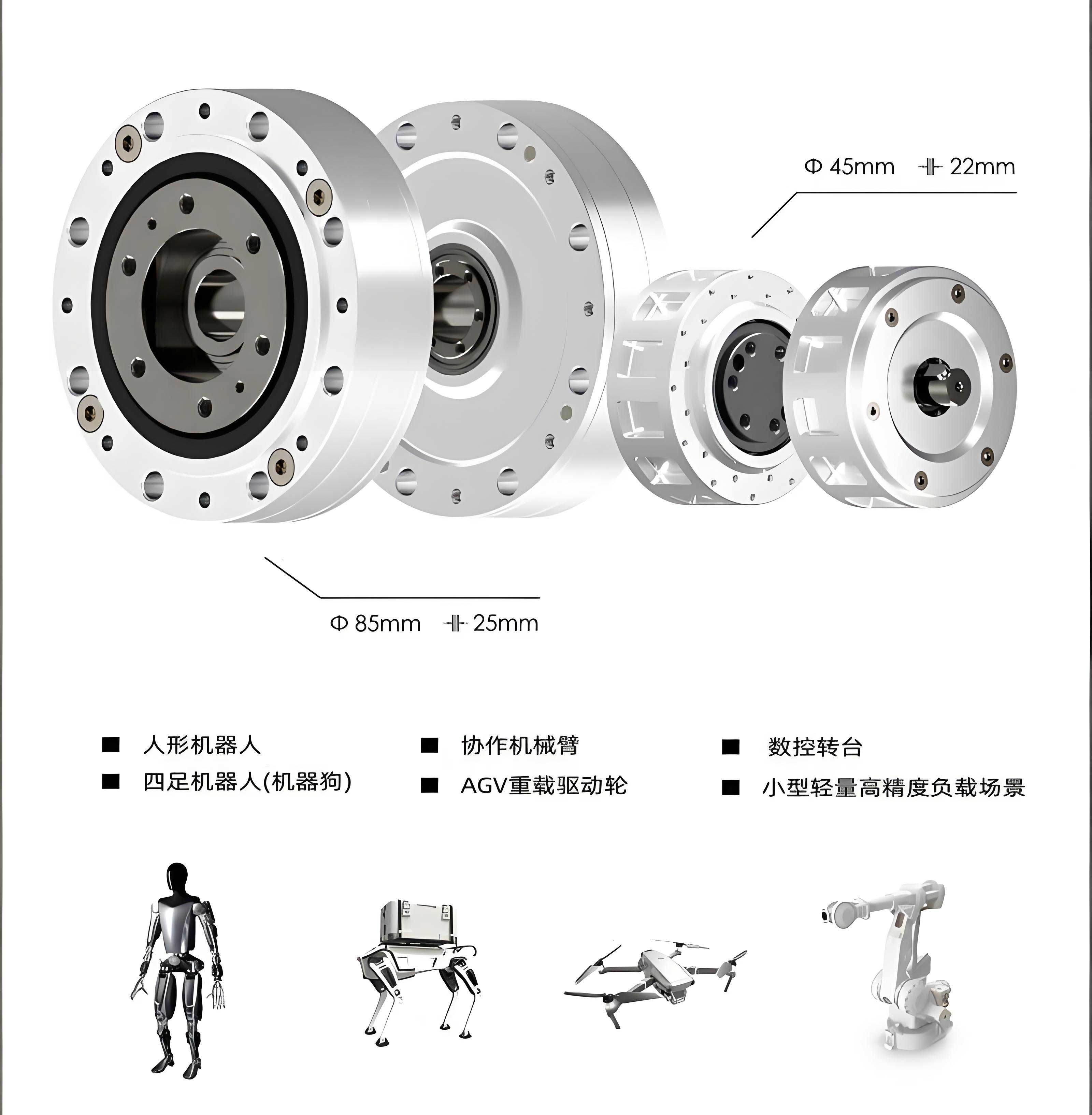
However, the very complexity that enables the superior performance of the RV reducer also renders its key components susceptible to degradation under prolonged and demanding operational conditions. The cycloidal gear, a central element of the second-stage reduction, is subject to high cyclic contact stresses. Over time, this can lead to the initiation and propagation of faults such as localized pitting, root cracking, tooth breakage, and general wear on the tooth flanks. The failure of a cycloidal gear within an RV reducer can lead to catastrophic system downtime, costly repairs, and significant safety risks. Therefore, developing robust and sensitive fault diagnosis methods specifically tailored for the cycloidal gears in an RV reducer is of critical importance for predictive maintenance and operational safety. This pursuit forms the core motivation behind our research.
The challenge in diagnosing faults in the cycloidal gear of an RV reducer is multifaceted. Primarily, the operational context poses significant hurdles. The output stage of an RV reducer typically operates at very low rotational speeds; for instance, common models have output speeds ranging from 5 to 60 RPM. In such low-speed regimes, the transient impacts generated by localized gear faults are inherently weak in energy. These subtle fault signatures are easily淹没 (submerged) within the ambient noise floor and masked by stronger deterministic components from healthy meshing and other rotating elements. Consequently, the signal-to-noise ratio (SNR) of the fault-related information is severely compromised, making extraction exceedingly difficult with conventional analysis tools.
Secondly, the planetary nature of the cycloidal stage introduces the well-documented issue of time-varying vibration transmission paths. When using externally mounted accelerometers—the standard tool in vibration analysis—the measured signal amplitude and phase from a specific gear mesh are modulated by the changing position of the planet (or in this case, the oscillating cycloidal gear) relative to the fixed sensor. This modulation complicates the direct observation of fault patterns. While techniques like windowed synchronous averaging (or vibration separation) have been proposed to reconstruct the signal of an individual planet gear, they require an impractically large amount of data for low-speed components. For example, to achieve an average of just 10 segments for a sun gear in a planetary system, one might need to collect vibration data over hundreds of carrier revolutions. For an RV reducer output shaft spinning at 10 RPM, this translates to hours of continuous data acquisition, which is inefficient and often impractical.
Furthermore, conventional piezoelectric accelerometers have a defined low-frequency cutoff (e.g., 0.5 Hz or higher). When monitoring the direct vibration from a component rotating at, say, 0.1 Hz (6 RPM), the signal may fall below the sensor’s usable frequency range, leading to significant signal distortion or loss. This fundamental hardware limitation makes traditional vibration monitoring less suitable for the direct fault diagnosis of low-speed stages in an RV reducer.
Given these constraints with vibration-based methods, our research explores an alternative sensing paradigm: the use of angular encoder signals. Rotary encoders, often already integrated into servo motors for precision control, offer several distinct advantages for this application. They are typically mounted co-axially with the shaft, providing a direct measurement of rotational kinematics without being influenced by the structural transfer path that plagues vibration sensors. They have no lower frequency limit, capturing very slow angular fluctuations perfectly. Most importantly, the Instantaneous Angular Speed (IAS) signal derived from an encoder is highly sensitive to load variations and torsional vibrations induced by faults in the transmission path, including those in the cycloidal gear of an RV reducer.
The core of our proposed methodology lies in processing this IAS signal to uncover the faint signatures of a cycloidal gear fault. The process begins with the acquisition of raw encoder pulse timings. Using a high-resolution encoder on the input motor shaft, we employ the “time-based” or “T-method” of measurement, recording the precise time intervals between successive angular increments. The Instantaneous Angular Speed is then calculated using a forward difference approximation. For an angular position $ \phi_i $ at time $ t_i $, the IAS $ v(\phi_i) $ is given by:
$$ v(\phi_i) = \frac{\Delta \phi_i}{\Delta t_i} = \frac{\phi_i – \phi_{i-1}}{t_i – t_{i-1}} $$
This IAS signal, $ v(\phi) $, contains a mixture of deterministic components (related to gear meshing, shaft rotations), fault-induced modulations, and random noise. The next critical step is enhancing the signal-to-noise ratio specific to the cycloidal gear. We achieve this through Angular Domain Synchronous Averaging (ADSA). Since the fault signature on the cycloidal gear is periodic with its rotation, we can segment the IAS signal in the angular domain based on the known cycloidal gear period, $ T_{cyc} $ (which corresponds to one complete revolution of the cycloidal gear in the output reference frame). By averaging many such synchronized segments, the non-synchronous components (noise, disturbances from other stages) tend to average toward zero, while the cycloidal-gear-synchronous components are reinforced. The averaged signal $ X(\phi) $ is computed as:
$$ X(\phi) = \frac{1}{P} \sum_{r=0}^{P-1} v(\phi + r \cdot T_{cyc}) $$
where $ P $ is the number of averaged segments. This process effectively acts as a comb filter, preserving content at harmonics of the cycloidal gear rotational frequency and suppressing unrelated content.
After ADSA, the signal $ X(\phi) $ reveals the spectral content more clearly. In the order spectrum (frequency spectrum normalized by a reference shaft speed), the meshing harmonics of the cycloidal-pinwheel stage and their sidebands become visible. A local fault on a cycloidal tooth, such as a crack, will cause a momentary change in the local mesh stiffness each time the faulty tooth engages. This periodic stiffness fluctuation amplitudemodulates and phasemodulates the meshing vibration, creating sidebands around the meshing harmonics in the spectrum. The spacing of these sidebands is equal to the fault frequency, which for a cycloidal gear is its rotational frequency, $ f_{cyc} $.
Standard spectrum analysis can reveal these sidebands, but it cannot definitively pinpoint the fault’s angular location or distinguish it from other sources of modulation. This is where Narrowband Demodulation (NBD) proves powerful. The principle is to isolate a single meshing harmonic and its immediate sidebands (the “narrowband”), then demodulate this signal to recover the modulating function, which contains the fault impact pattern. Traditionally, the choice of which meshing harmonic band to demodulate is made manually by an expert observing which harmonic appears to have the most prominent or cleanest sidebands. This reliance on human judgment limits automation and consistency.
A key contribution of our work is automating this selection process through an adaptive criterion. We propose a SideBand Signal-to-Noise Ratio (SBSNR) index. For each candidate meshing harmonic of order $ k $ (where $ k = 1, 2, …, K $, typically the first 10 harmonics), and for a proposed demodulation bandwidth (defined as $ \pm N $ times the cycloidal gear rotational frequency $ f_{cyc} $), we calculate the SBSNR. The index quantifies the “richness” of fault-related sideband energy within the band relative to the total energy and other interfering components.
Let $ X(f) $ represent the magnitude of the order spectrum. For the $ k $-th meshing harmonic $ k \cdot f_m $ (where $ f_m $ is the fundamental meshing order of the cycloidal stage) and a bandwidth extending $ \pm i_{max} \cdot f_{cyc} $, we define the sideband energy $ A_{k} $ and the total band energy $ B_{k} $ over a discrete set of orders. To account for spectral leakage and minor speed fluctuations, a small tolerance $ f_b $ (e.g., $ 0.1 \cdot f_{cyc} $) is used when summing energy around the precise sideband locations:
$$ A_{k} = \sum_{i=1}^{i_{max}} \left( \sum_{f = k f_m – i f_{cyc} – f_b}^{k f_m – i f_{cyc} + f_b} X(f) + \sum_{f = k f_m + i f_{cyc} – f_b}^{k f_m + i f_{cyc} + f_b} X(f) \right) $$
$$ B_{k} = \sum_{f = k f_m – i_{max} f_{cyc}}^{k f_m + i_{max} f_{cyc}} X(f) $$
The SBSNR for the $ k $-th harmonic band is then:
$$ \text{SBSNR}_k = \frac{A_{k}}{B_{k} – A_{k}} $$
A higher SBSNR value indicates that a greater proportion of the energy in that specific frequency band is concentrated in the fault-characteristic sidebands, suggesting it is a promising candidate for demodulation. Our algorithm scans the first $ K $ harmonics over a reasonable range of $ i_{max} $ (e.g., 1 to 10) and selects the $ (k, i_{max}) $ combination that yields the maximum SBSNR. This band is then isolated using a zero-phase bandpass filter.
The final step is the narrowband demodulation itself. Let $ X_{bp}(\phi) $ be the bandpass-filtered signal containing the chosen meshing harmonic and its adjacent sidebands. We first obtain its analytic signal $ c(\phi) $ via the Hilbert Transform $ \mathcal{H} $:
$$ c(\phi) = X_{bp}(\phi) + j \cdot \mathcal{H}[X_{bp}(\phi)] $$
The amplitude demodulation (or envelope) signal $ a(\phi) $ is derived by normalizing the magnitude of the analytic signal by the average meshing harmonic amplitude $ \bar{A} $ and subtracting its mean to highlight variations:
$$ a(\phi) = \frac{|c(\phi)|}{\bar{A}} – E[|c(\phi)|] $$
The phase demodulation signal $ b(\phi) $ is obtained by subtracting the expected linear phase progression of the carrier meshing harmonic (of order $ O_m $) and its initial phase $ \phi_0 $ from the instantaneous phase of the analytic signal:
$$ b(\phi) = \arg[c(\phi)] – (2\pi O_m \phi + \phi_0) $$
The fault manifests as a consistent, repeating pattern in these demodulated signals. Specifically, each time the faulty tooth enters the mesh, the temporary loss of stiffness causes a local minimum in the amplitude demodulation signal $ a(\phi) $. Simultaneously, at the same angular location, a distinct phase jump or discontinuity appears in the phase demodulation signal $ b(\phi) $. This synchronous occurrence of an amplitude trough and a phase shift once per cycloidal gear revolution is the definitive signature of a localized fault. This combined observation overcomes the ambiguity of using either amplitude or phase information alone.
To validate the proposed method, we conducted experiments on a dedicated RV reducer fault diagnosis test bench. The setup consisted of a servo motor drive, the RV reducer unit (model RV-40E), and a magnetic particle brake for applying load. The key parameters of the tested RV reducer are summarized in the table below.
| Component | Parameter |
|---|---|
| Input Pinion (Sun Gear) | Teeth: 16 |
| First-Stage Planetary Gears | Teeth: 32 |
| Cycloidal Gears | Teeth: 39 |
| Pinwheel Pins | Number: 40 |
| Standard Reduction Ratio | 81:1 |
The characteristic rotational orders of various components relative to the input shaft speed are crucial for order domain analysis. They are derived from the gear ratios and are listed in the following table.
| Component | Rotational Order |
|---|---|
| Input Sun Gear | $ O_{sun} = 1 $ |
| Cycloidal Gear (Output) | $ O_{cyc} \approx 1 / 81 \approx 0.0123 $ |
| First-Stage Meshing Order | $ O_{m1} = 16 $ |
| Second-Stage (Cycloidal) Meshing Order | $ O_{m2} = 39 \times O_{cyc} \approx 0.48 $ |
A seeded fault was introduced into one tooth of a cycloidal gear using Electrical Discharge Machining (EDM) to simulate a root crack. The crack was approximately 3 mm in length and 0.3 mm in width, creating a clear local defect. The servo motor was operated at a constant speed of 30 RPM, which, through the 81:1 reduction, resulted in an output shaft speed of approximately 0.37 RPM. The built-in 2500-line encoder of the servo motor provided the raw angular timing data.
The IAS signal was computed from the encoder data. The raw IAS waveform for the faulty case appeared highly noisy, dominated by various deterministic and random fluctuations. Its order spectrum showed a complex mixture of components, with the cycloidal meshing order and its sidebands barely discernible above the noise floor. Applying Angular Domain Synchronous Averaging (with $ P $ set to average over 50 cycloidal gear revolutions) produced a dramatic improvement. The averaged order spectrum showed a significant suppression of non-synchronous components, bringing the cycloidal meshing harmonic at approximately 0.48 order and its surrounding sidebands into clear view.
Our adaptive SBSNR algorithm was then applied to the averaged signal. We calculated the index for the first 10 meshing harmonics ($ k = 1$ to $10$) and for bandwidths corresponding to $ i_{max} = 1$ to $10$ sideband pairs. The results can be conceptualized in a matrix. The maximum SBSNR value was identified for the combination corresponding to the 2nd meshing harmonic ($ k=2 $) and a bandwidth encompassing $ \pm 3 $ sideband pairs ($ i_{max}=3 $). This band was automatically selected for demodulation.
| Harmonic (k) | Bandwidth (± i * f_cyc) | SBSNR Index |
|---|---|---|
| 1 | 3 | 0.45 |
| 2 | 3 | 1.82 |
| 3 | 4 | 1.15 |
| 4 | 2 | 0.67 |
The signals within this optimal band were extracted via bandpass filtering and subjected to the Hilbert transform-based narrowband demodulation process. For comparison, the same procedure was applied to data from a healthy, undamaged RV reducer under identical operating conditions.
The results were conclusive. For the healthy cycloidal gear, the amplitude demodulation signal $ a(\phi) $ and phase demodulation signal $ b(\phi) $ showed only random, non-synchronous variations. No consistent, periodic relationship between troughs in $ a(\phi) $ and jumps in $ b(\phi) $ was observed over multiple revolutions. In stark contrast, the demodulation results for the faulty cycloidal gear displayed a clear and repeatable pattern. Precisely once per revolution of the cycloidal gear (i.e., every 360 degrees in the output angular domain), a distinct local minimum appeared in the amplitude demodulation signal. At the exact same angular position, a sharp phase discontinuity was evident in the phase demodulation signal. This one-to-one, per-revolution correspondence between an amplitude trough and a phase jump is the unequivocal fingerprint of a localized tooth fault, successfully extracted by our method.
To underscore the advantage of our adaptive SBSNR band selection, we compared it with a manual selection based on visual inspection of the order spectrum. While a skilled analyst might choose a different harmonic band (e.g., the 1st harmonic which also showed sidebands), the demodulation results from such a manually chosen band often showed less pronounced phase jumps or more interference, leading to a less clear fault diagnosis. The SBSNR metric provides an objective, quantitative basis for selecting the most information-rich band, enhancing reliability and paving the way for fully automated diagnostic systems for the RV reducer.
In conclusion, the health monitoring of critical components within an RV reducer is a significant challenge, primarily due to low operational speeds and complex dynamics. Our research addresses this by formulating a novel fault feature extraction methodology specifically for the cycloidal gear. The method leverages the advantages of Instantaneous Angular Speed (IAS) sensing, which is immune to transfer path effects and has no low-frequency limit. The core innovation lies in the integration of Angular Domain Synchronous Averaging for noise reduction with an adaptive narrowband demodulation scheme. The introduction of the SideBand Signal-to-Noise Ratio (SBSNR) index automates the critical step of selecting the optimal demodulation band, removing subjective human judgment and optimizing the extraction of fault-related modulation. Experimental validation on an RV reducer test bench with a seeded cycloidal gear crack demonstrates the method’s efficacy. It successfully isolates the characteristic per-revolution signature of the localized fault in both amplitude and phase demodulation domains, providing a clear and robust diagnostic outcome. This approach offers a promising, practical pathway towards the condition-based monitoring and early fault diagnosis of RV reducers in demanding industrial applications, ultimately contributing to increased system reliability and reduced maintenance costs.