
The reliable transmission of motion and power in mechanical systems fundamentally depends on the integrity of gear teeth. Among various gear types, spur and pinion gears are extensively utilized due to their straightforward design, stable transmission ratio, high efficiency, and long service life. However, during operation, the meshing tooth surfaces are subjected to complex loading conditions involving combined rolling and sliding motions under significant contact pressure. This interaction, particularly under oscillatory or vibratory conditions, can lead to a specific damage mechanism known as fretting wear. This progressive, small-scale material loss at the contacting surfaces of spur and pinion gears degrades transmission accuracy, increases vibration and noise, reduces efficiency, and ultimately can lead to premature gear failure. Accurate prediction and analysis of this phenomenon are therefore critical for improving gear design, material selection, and maintenance strategies.
Traditional approaches to studying fretting wear in spur and pinion gears primarily fall into two categories: experimental testing and computational modeling. While physical experiments can provide macro-scale wear data, they are often time-consuming, costly, and may not fully capture the localized wear evolution and its underlying mechanisms across the entire tooth profile. Computational modeling, particularly Finite Element Analysis (FEA), offers a powerful alternative by simulating the complex contact mechanics and wear process. However, the accuracy of such simulations is highly sensitive to model parameters, boundary conditions, and the chosen wear model. A significant challenge remains in precisely quantifying the wear depth and its distribution, as well as in efficiently updating the gear geometry to reflect progressive wear over numerous operating cycles. To address these limitations and enhance the fidelity of fretting wear analysis for spur and pinion gears, this work introduces the concept of modal flexibility as a sensitive and efficient parameter for wear state identification and model refinement.
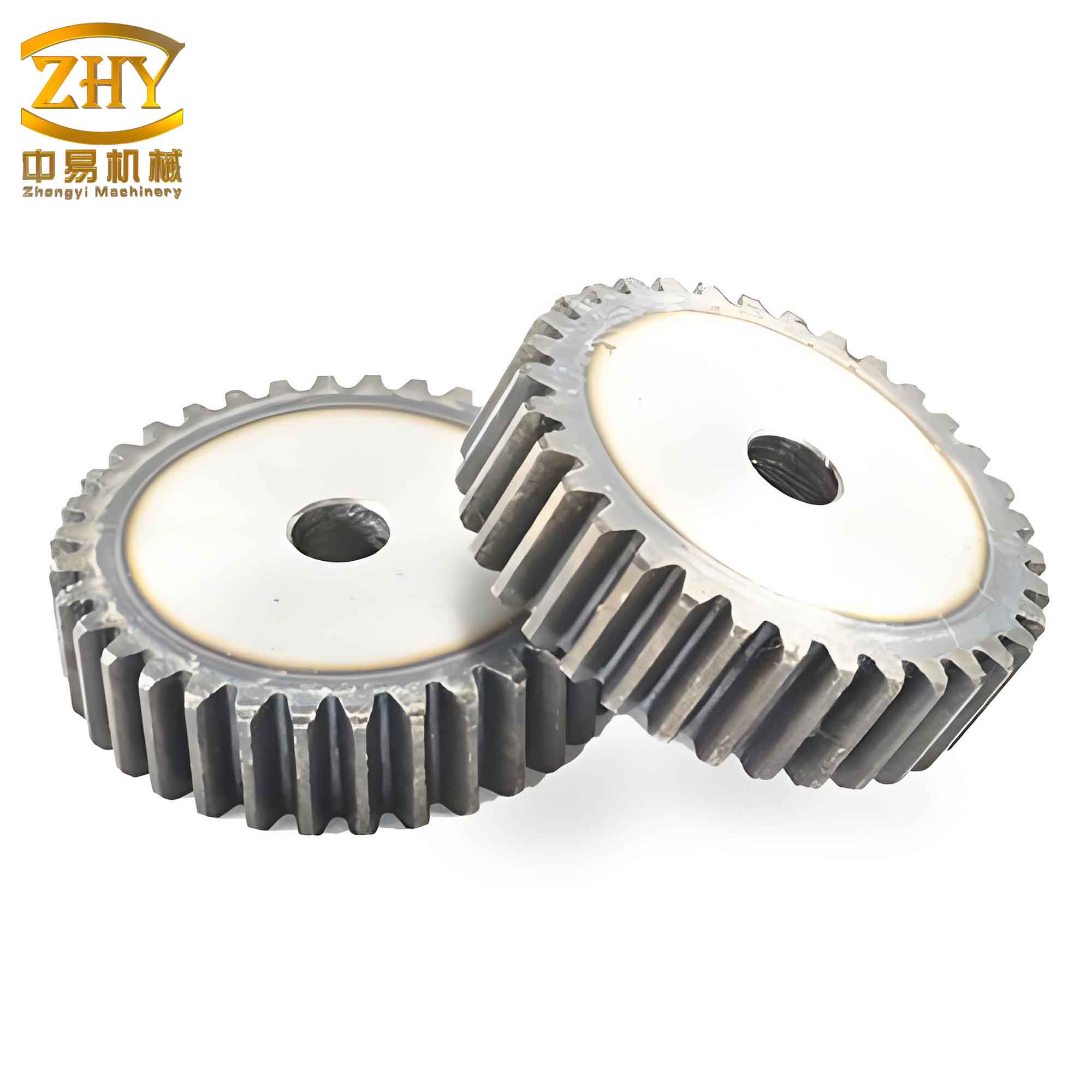
Fundamentals of Modal Flexibility in Structural Dynamics
Modal flexibility is a structural property derived from modal parameters (natural frequencies and mode shapes) and is intrinsically linked to the system’s stiffness characteristics. For a linear, time-invariant system with proportional damping, the flexibility matrix $\mathbf{G}$ at a specific frequency can be related to the mass-normalized mode shape matrix $\mathbf{\Phi}$ and the diagonal matrix of squared natural frequencies $\mathbf{\Omega}^2$:
$$\mathbf{G}(\omega) = \sum_{r=1}^{n} \frac{\mathbf{\Phi}_r \mathbf{\Phi}_r^T}{\omega_r^2 – \omega^2 + i 2 \zeta_r \omega_r \omega}$$
where $\mathbf{\Phi}_r$ is the $r$-th mass-normalized mode shape vector, $\omega_r$ is the $r$-th natural frequency, $\zeta_r$ is the $r$-th modal damping ratio, $\omega$ is the excitation frequency, and $n$ is the number of modes considered. At zero frequency ($\omega = 0$), the expression simplifies to the static flexibility matrix:
$$\mathbf{G} = \sum_{r=1}^{n} \frac{\mathbf{\Phi}_r \mathbf{\Phi}_r^T}{\omega_r^2}$$
The key insight is that local stiffness reduction, such as that caused by material loss from wear on the tooth flanks of spur and pinion gears, will alter the local and global dynamic properties of the gear. Specifically, wear leads to a localized decrease in stiffness at the contact surface. This stiffness reduction manifests as measurable changes in the system’s natural frequencies and mode shapes. Consequently, the derived modal flexibility, which is inversely proportional to stiffness, becomes a sensitive indicator of structural degradation. An increase in modal flexibility at points associated with the tooth surface suggests a loss of stiffness due to wear. By monitoring changes in modal flexibility from a baseline (unworn) state, one can identify the presence, location, and relative severity of fretting wear on spur and pinion gear teeth.
Finite Element Modeling and Pre-processing for Spur and Pinion Gears
Accurate finite element modeling is the cornerstone of this analysis. The process begins with obtaining the precise geometry of the spur and pinion gears. An automated 3D scanning device is employed to capture high-resolution point cloud data from the physical tooth surfaces of the spur and pinion gears. This data, representing the actual manufactured geometry including potential initial deviations, is processed using computational software like MATLAB to filter noise and organize coordinate points.
These processed coordinates are then imported into a dedicated finite element pre-processor (e.g., within ANSYS or similar software) to construct a solid geometric model of a gear segment or a full ring, depending on the symmetry and analysis goals. For efficiency in contact analysis, a sector model representing a few teeth is often sufficient due to the periodic nature of spur and pinion gears. The geometric model is meshed with high-quality solid elements, with particular attention to the contact regions on the tooth flanks. A refined mesh is necessary in these areas to accurately resolve the high stress gradients from Hertzian contact. The material properties (Young’s modulus $E$, Poisson’s ratio $\nu$, density $\rho$) for the spur and pinion gear materials are assigned. A typical material pairing, such as 42CrMo for the pinion and 40CrMo for the spur gear, is common. The boundary conditions are applied to replicate the mounting of the spur and pinion gears on shafts, typically involving constraints on the bore surface.
The initial, unworn tooth profile is defined mathematically. In an involute coordinate system with its origin at the gear’s rotational center, the coordinates $(x_0, y_0)$ of a point on the ideal involute profile are given by:
$$
\begin{aligned}
x_0 &= R_b (\cos(\alpha_k) + \alpha_k \sin(\alpha_k)) \\
y_0 &= R_b (\sin(\alpha_k) – \alpha_k \cos(\alpha_k))
\end{aligned}
$$
where $R_b$ is the base circle radius and $\alpha_k$ is the involute roll angle. This equation serves as the baseline geometry for the finite element model before wear simulation begins. The key parameters for a sample spur and pinion gear pair used in subsequent analysis are summarized in Table 1.
| Parameter | Pinion (Driver) | Spur Gear (Driven) |
|---|---|---|
| Material | 42CrMo Steel | 40CrMo Steel |
| Number of Teeth, $z$ | 30 | 60 |
| Module, $m$ (mm) | 2.0 | |
| Face Width, $B$ (mm) | 28 | 14 |
| Pressure Angle, $\alpha$ (°) | 18 | 13 |
| Young’s Modulus, $E$ (GPa) | 211 | 200 |
| Poisson’s Ratio, $\nu$ | 0.30 | 0.28 |
| Density, $\rho$ (kg/m³) | 7910 | 7855 |
| Center Distance, $a$ (mm) | 100 | |
Wear Analysis Methodology: Integration of Contact Mechanics and Wear Law
The core of the fretting wear simulation involves a two-step iterative process: 1) solving the contact mechanics problem to obtain pressure and slip distributions, and 2) updating the geometry based on a wear law. For a point on the tooth surface of the spur or pinion gear with initial coordinates $(x_0, y_0)$, material removal $\delta$ occurs along the local surface normal direction. The new coordinates $(x’, y’)$ after wear are calculated as:
$$
\begin{aligned}
x’ &= x_0 – \delta \cdot \sin(\beta) \\
y’ &= y_0 + \delta \cdot \cos(\beta)
\end{aligned}
$$
where $\beta$ is the slope angle of the tooth profile at point $(x_0, y_0)$, defining the direction normal to the surface. The wear depth $\delta$ is computed using a fundamental wear model. The Archard wear equation, widely used for adhesive and abrasive wear, is adapted for this purpose. The incremental wear volume $dV$ is given by:
$$ dV = k \frac{F_N}{H} dS $$
where $k$ is the dimensionless wear coefficient, $F_N$ is the normal contact force, $H$ is the hardness of the softer material in the spur and pinion gear pair, and $dS$ is the incremental sliding distance. For a contact node with area $A$, the wear depth $d\delta$ per cycle or time step can be expressed as:
$$ d\delta = \frac{dV}{A} = k \frac{p}{H} dS = K p dS $$
Here, $p = F_N/A$ is the contact pressure, and $K = k/H$ is a dimensional wear coefficient specific to the material pair of the spur and pinion gears. The sliding distance $dS$ is computed from the relative motion between the contacting surfaces of the spur and pinion gears during the meshing cycle, considering both rolling and sliding components.
The finite element analysis solves for the contact pressure $p(x,y)$ at each node on the tooth flank for a given angular position. The product $K \cdot p(x,y) \cdot dS(x,y)$ is then calculated to determine the incremental wear depth $d\delta$ for that loading cycle at that node. This wear depth is used to update the nodal coordinates according to the equation above, thereby modifying the geometry of the spur and pinion gear tooth. This “Wear Step -> Geometry Update -> New Contact Analysis” loop is repeated for the desired number of simulated operating cycles to predict the progressive wear profile.
Modal Flexibility as a Wear State Identifier and Updating Criterion
Directly running a full non-linear contact and wear simulation for millions of cycles is computationally prohibitive. Furthermore, validating the wear depth at every intermediate stage is difficult. This is where modal flexibility provides a crucial link between the simulated model and a potential real-world monitoring metric. The procedure is as follows:
- Baseline Modal Analysis: A modal analysis is performed on the finite element model of the unworn spur and pinion gear(s). This yields the initial set of natural frequencies $\omega_r^{(0)}$ and mode shapes $\mathbf{\Phi}_r^{(0)}$, from which the baseline modal flexibility matrix $\mathbf{G}^{(0)}$ is computed at selected degrees of freedom (e.g., nodes on the tooth surface).
- Wear Simulation Cycle: The contact/wear simulation runs for a block of $N$ operating cycles, updating the geometry of the spur and pinion gear teeth.
- Updated Modal Analysis: After the geometry update, a new modal analysis is conducted on the worn gear model. This gives updated modal parameters $\omega_r^{(i)}$, $\mathbf{\Phi}_r^{(i)}$, and a new flexibility matrix $\mathbf{G}^{(i)}$.
- Flexibility Change Detection: The change in modal flexibility, $\Delta \mathbf{G} = \mathbf{G}^{(i)} – \mathbf{G}^{(0)}$, is calculated. Nodes on the tooth surface showing a significant increase in flexibility are identified as zones where stiffness has decreased due to material loss from wear on the spur and pinion gear. The magnitude of $\Delta G$ can be correlated with the relative severity of wear.
- Validation and Calibration: The pattern and magnitude of flexibility change can be compared against experimental modal analysis data from a physically worn spur and pinion gear (if available) to calibrate the wear coefficient $K$ or validate the simulation’s accuracy.
- Iteration: Steps 2-4 are repeated for subsequent blocks of cycles. The evolution of $\Delta \mathbf{G}$ provides a computationally efficient, dynamic fingerprint of the ongoing wear process in the spur and pinion gears, without needing to run full static analyses at every single cycle.
This approach makes the analysis sensitive to wear-induced changes. Small amounts of material removal, which might only slightly affect global natural frequencies, can produce more pronounced and localized changes in the derived flexibility, especially for modes involving tooth bending or deformation.
Experimental Simulation and Results Analysis
To validate the proposed methodology, a simulation-based experiment was conducted. A finite element model of the spur and pinion gear pair described in Table 1 was created. The gears were simulated to operate under a constant torque condition in a power transmission setup. The wear coefficient $K$ was selected based on typical values for the steel material pair under boundary lubrication conditions, representative of fretting. The simulation progressed through increments representing total operational durations of 2, 6, 10, 14, 18, and 24 hours of continuous meshing.
After each duration increment, the wear depth distribution across the tooth profile of both the spur and pinion gears was extracted. Figure 1 conceptually illustrates the trend of wear depth versus profile position for both gears. The results consistently show that the maximum wear depth for both the pinion (driver) and the spur gear (driven) occurs at two critical regions: the dedendum (root) and the addendum (tip) of the tooth. The root region experiences high contact stress and sliding near the start of engagement, while the tip region experiences similar conditions near the end of engagement. The pitch point region, where pure rolling theoretically occurs, shows significantly less wear, though in practice, some wear is still present due to complex multi-axial stress states and other micro-mechanisms.
The absolute wear depths are on the scale of microns. To rigorously evaluate the accuracy of the proposed modal-flexibility-informed FEA method, its predictions were compared against a reference “true” value. In this simulation context, the reference value was generated using an extremely refined FEA model with a very small cycle increment, serving as a benchmark. The wear depth at a critical point (e.g., near the root) was compared. The proposed method’s results were also compared against those from two other computational methods from the literature: a standard FEA wear simulation without modal updating (Method A) and a simplified analytical contact-wear method (Method B). The errors (difference from the refined benchmark) are summarized in Table 2.
| Operating Time (hours) | Proposed Method (Pinion) | Method A (Pinion) | Method B (Pinion) | Proposed Method (Spur Gear) | Method A (Spur Gear) | Method B (Spur Gear) |
|---|---|---|---|---|---|---|
| 2 | -0.3 | +1.3 | +1.9 | 0.0 | -2.9 | +2.5 |
| 6 | 0.0 | -2.1 | -2.3 | +0.2 | +1.9 | +1.6 |
| 10 | +0.2 | -1.9 | +2.5 | -0.1 | +2.2 | -1.7 |
| 14 | +0.6 | -1.4 | -0.6 | 0.0 | +1.1 | +1.1 |
| 18 | +0.9 | +2.9 | +0.5 | +0.4 | -1.5 | +0.8 |
| 24 | 0.0 | -0.5 | -2.9 | -0.3 | +2.1 | -2.6 |
The data in Table 2 clearly demonstrates the superior stability and accuracy of the proposed method. The error for the proposed method fluctuates minimally around zero (between -0.3 and +0.9 µm for the pinion, and -0.3 and +0.4 µm for the spur gear), indicating a consistent and reliable prediction closely matching the reference benchmark. In contrast, Methods A and B exhibit larger error magnitudes and less predictable swings (e.g., from +2.9 to -2.9 µm), revealing their higher sensitivity to modeling assumptions and cumulative error over simulated cycles. The integration of modal flexibility provides a physical constraint that helps keep the wear simulation on a more accurate trajectory, effectively reducing drift and improving the quantification of wear depth in both the spur and pinion gears.
Furthermore, the evolution of modal flexibility values at key nodes on the tooth surface was tracked. A representative sample is shown in Table 3, displaying the normalized change in flexibility $\Delta G / G_0$ for the first bending mode of the pinion tooth at the root node.
| Operating Time (hours) | Normalized Flexibility Change ($\Delta G / G_0$) |
|---|---|
| 0 (Baseline) | 0.000 |
| 2 | +0.008 |
| 6 | +0.025 |
| 10 | +0.041 |
| 14 | +0.062 |
| 18 | +0.085 |
| 24 | +0.102 |
The monotonic increase in modal flexibility correlates directly with the accumulating wear depth, providing a clear, quantifiable dynamic signature of the degradation process. This relationship underscores the potential of using vibration-based modal measurements in practice to monitor the wear state of spur and pinion gears in service.
Conclusion
This work presents a robust and accurate framework for the finite element analysis of fretting wear in spur and pinion gears by integrating a dynamic parameter, modal flexibility. The method begins with constructing a precise finite element model from scanned gear geometry. It then employs an iterative simulation process that combines Archard’s wear law with contact mechanics to calculate progressive material loss. The innovative aspect lies in using periodic modal analyses to compute the change in modal flexibility of the spur and pinion gear structure as wear progresses. This change serves as a sensitive, physics-based indicator of localized stiffness reduction due to wear.
The simulation results confirm expected wear patterns, with the highest wear occurring at the root and tip regions of the teeth for both the driving pinion and the driven spur gear. Most importantly, comparative analysis demonstrates that the proposed modal-flexibility-informed method yields significantly more stable and accurate wear depth predictions compared to conventional simulation methods, with errors tightly clustered near zero. The correlated increase in modal flexibility with operating time provides a direct link between simulated wear and a measurable dynamic property, opening avenues for condition monitoring. Therefore, this methodology offers a powerful tool for improving the design, durability assessment, and predictive maintenance strategies for spur and pinion gear transmissions subjected to fretting wear.