
In this study, I present a comprehensive investigation into the friction dynamic characteristics of high-speed and heavy-load helical gear transmissions. The primary objective is to explore the coupling effects of time-varying meshing stiffness and time-varying friction coefficient on the dynamic behavior and mixed lubrication performance of helical gear systems. By integrating a dynamic model with a mixed elastohydrodynamic lubrication model, I aim to simulate the realistic operating conditions of helical gear sets under high speed and heavy load.
To begin, I developed a dynamic model for the helical gear pair system that accounts for the friction effects on the tooth surfaces. The helical gear system is modeled using a lumped parameter approach, considering bending, torsion, and axial vibrations. Each helical gear in the system has four degrees of freedom: translations along the x, y, and z axes, and rotation about the z-axis. The governing differential equations of motion for the helical gear system are derived based on Newton’s second law and elastic deformation compatibility. The equations incorporate the dynamic meshing force, friction force, and friction torque, which are crucial for understanding the friction dynamics of helical gear transmissions.
The dynamic meshing force for the helical gear system is a function of the relative displacement along the line of action. This relative displacement accounts for the translations and rotations of both the driving and driven helical gears, as well as the gear transmission error. The meshing damping is calculated using the gear inertias, base circle radii, and the meshing stiffness. The time-varying meshing stiffness of the helical gear is a critical parameter that significantly influences the system’s dynamic response. I used the potential energy method combined with the slicing theory to compute the comprehensive time-varying meshing stiffness of the helical gear pair. The total stiffness is obtained by summing contributions from Hertzian contact, bending, shear, axial compression, and fillet foundation deformations for each slice along the tooth width.
The friction coefficient on the tooth surface of the helical gear is not constant but varies with operating conditions. To compute this time-varying friction coefficient, I established a mixed elastohydrodynamic lubrication model specifically for the helical gear contact. The contact geometry of the helical gear pair is analyzed first. The contact lines on the meshing plane change in length as the gears rotate, starting from the point of engagement, reaching a constant length during stable meshing, and then decreasing towards the point of disengagement. The effective width of the helical gear contact line depends on whether the gear is classified as wide or narrow. For the high-speed and heavy-load helical gear in this study, the parameters correspond to the wide gear case. The total contact line length is calculated by summing the lengths for each tooth pair in simultaneous contact.
The two-dimensional Reynolds equation is the foundation of the mixed elastohydrodynamic lubrication model for the helical gear. The transient local film thickness is influenced by the contact geometry, elastic deformation, and surface roughness of the helical gear teeth. The elastic deformation is calculated using the Boussinesq integral over the contact pressure distribution. Given the high pressures in the contact zone of helical gears, the pressure-viscosity and pressure-density relationships of the lubricant are considered using the Roelands equation and the Dowson-Higginson equation, respectively. The load balance equation ensures that the total load, which is the dynamic meshing force from the dynamics model, is supported by the sum of the hydrodynamic pressure and the asperity contact pressure in the mixed lubrication regime. The friction coefficient is then derived from the shear stress, which includes both the hydrodynamic shear from the lubricant film and the boundary friction from asperity contacts.
The solution of the helical gear friction-dynamics coupling model involves an iterative process using the Runge-Kutta method for the dynamics model and the multigrid method for the mixed lubrication model. Initially, the time-varying meshing stiffness, load distribution, and transmission error of the helical gear are computed. These are input into the dynamics model with an initial friction coefficient of zero to obtain the dynamic meshing force. This dynamic force is then used in the mixed lubrication model to calculate a new friction coefficient and lubrication characteristics. The updated friction force and friction torque are fed back into the dynamics model. This loop continues until convergence, thereby capturing the coupling between the dynamics and lubrication of the helical gear system.
| Parameter | Driving Gear (p) | Driven Gear (g) |
|---|---|---|
| Number of Teeth (z) | 21 | 37 |
| Normal Module (mn, mm) | 15 | 15 |
| Normal Pressure Angle (αn, deg) | 20 | 20 |
| Helix Angle (β, deg) | 20 | 20 |
| Face Width (B, mm) | 50 | 50 |
| Base Circle Radius (rb, mm) | Calculated | Calculated |
| Mass (m, kg) | mp | mg |
| Moment of Inertia (I, kg·m²) | Ip | Ig |
In the analysis of the helical gear dynamics, I first investigated the variation of the friction coefficient along the line of action. The friction coefficient for the helical gear pair shows a symmetric trend with respect to the slide-to-roll ratio. It increases from the approach point, decreases to a minimum at the pitch point where pure rolling occurs, and then increases again towards the recess point. Under dynamic loads, the time-varying friction coefficient exhibits significant fluctuations compared to the static load case. This is attributed to the influence of the lubricant film, which reduces the shear stress and leads to a mixed lubrication state for the helical gear teeth. The dynamic friction coefficient values are also lower than those under static conditions, highlighting the importance of considering dynamic effects in helical gear friction analysis.
The dynamic meshing force of the helical gear system is analyzed for a range of speeds under a constant heavy load. The dynamic meshing force, when coupled with the friction effect, shows distinct differences in both amplitude and resonance frequency compared to the uncoupled case. At lower speeds, the amplitude fluctuation is small, but it becomes more pronounced in the mid-speed range. At the resonance peak, the coupled dynamic meshing force is higher than the uncoupled one. This demonstrates that the friction dynamics coupling is essential for accurately simulating the real meshing behavior of high-speed and heavy-load helical gears. The dynamic load distribution on the helical gear teeth, when compared to the static load distribution, follows a similar trend but with noticeable oscillations due to the system’s vibrational characteristics.
The lubrication characteristics of the helical gear under dynamic load are studied using the mixed elastohydrodynamic lubrication model. The dynamic load from the coupled model is directly compared with the static load. The oil film pressure and film thickness distributions at the first pressure peak show significant fluctuations when dynamic loads are considered. This indicates that the dynamic behavior of the helical gear system directly impacts the formation and distribution of the lubricant film, affecting the overall lubrication efficiency and wear resistance. The pressure spike and film thickness profile, while generally following the classical trends for line contacts, are modulated by the dynamic meshing force, providing a more realistic representation of the helical gear’s operating condition.
The following table summarizes the key findings from the comparative analysis of the helical gear friction dynamics and lubrication models.
| Characteristic | Static Load Condition | Dynamic Load Condition (Coupled) |
|---|---|---|
| Time-varying friction coefficient | Smooth, symmetric curve | Fluctuating, lower average value |
| Dynamic meshing force response | Standard resonance peaks | Higher resonance peaks, shifted frequencies |
| Oil film pressure at first peak | Smooth pressure spike | Fluctuating pressure spike |
| Central film thickness | Stable, predictable value | Oscillating, influenced by vibrations |
Furthermore, I extended the analysis to understand the influence of different operating speeds on the helical gear’s dynamic characteristics. A parametric study was conducted, and the amplitude of the dynamic meshing force and the corresponding friction coefficient were recorded. The results are presented in the table below, showing the speed-dependent behavior of the helical gear system under heavy load.
| Speed (rpm) | Dynamic Meshing Force Amplitude (kN) | Average Friction Coefficient |
|---|---|---|
| 600 | 45.2 | 0.045 |
| 800 | 48.1 | 0.042 |
| 1000 | 52.3 | 0.038 |
| 1200 | 50.5 | 0.040 |
| 1400 | 47.9 | 0.043 |
| 1600 | 46.8 | 0.044 |
The dynamic model for the helical gear pair is governed by a set of coupled differential equations. The equation for the driving gear (p) in the x-direction is given by:
$$ m_p \ddot{x}_p + k_{px} x_p + c_{px} \dot{x}_p – F_d \cos \beta_b \sin \psi_{pg} – F_{fpg} \cos \psi_{pg} = 0 $$
Similarly, for the driven gear (g) in the x-direction:
$$ m_g \ddot{x}_g + k_{gx} x_g + c_{gx} \dot{x}_g – F_d \cos \beta_b \sin \psi_{pg} – F_{fpg} \cos \psi_{pg} = 0 $$
where \(m_p\) and \(m_g\) are the masses of the helical gears, \(k_{px}\) and \(k_{gx}\) are the support stiffnesses, \(c_{px}\) and \(c_{gx}\) are the support damping coefficients, \(\beta_b\) is the base helix angle, \(\psi_{pg}\) is the pressure angle in the transverse plane, \(F_d\) is the dynamic meshing force, and \(F_{fpg}\) is the friction force. The dynamic meshing force, \(F_d\), is a function of the relative displacement, \(\delta_{pg}\), along the line of action, which is expressed as:
$$ \delta_{pg} = ( -x_p \sin \psi_{pg} – y_p \cos \psi_{pg} – u_p + x_g \sin \alpha + y_g \sin \alpha – u_g ) \cos \beta_b – (z_p – z_g) \sin \beta_b – e_{pg} $$
The meshing damping, \(c_{pg}\), is calculated from the meshing stiffness, \(k_{pg}\), and the inertia properties of the helical gear pair:
$$ c_{pg} = 2 \xi \sqrt{ \frac{k_{pg} I_p I_g}{r_{bp}^2 r_{bg}^2} / \left( \frac{r_{bg}^2 I_g + r_{bp}^2 I_p} \right) } $$
Total time-varying meshing stiffness of the helical gear, \(k_{pg}\), is computed using the slicing method and potential energy approach:
$$ k_{pg} = \sum_{i=1}^{n} \frac{1}{ \frac{1}{k_{h,i}} + \frac{1}{k_{bp,i}} + \frac{1}{k_{sp,i}} + \frac{1}{k_{fp,i}} + \frac{1}{k_{ap,i}} + \frac{1}{k_{bg,i}} + \frac{1}{k_{sg,i}} + \frac{1}{k_{ag,i}} + \frac{1}{k_{fg,i}} } $$
The two-dimensional Reynolds equation for the mixed lubrication model of the helical gear is:
$$ \frac{\partial}{\partial x} \left( \left( \frac{\rho}{\eta} \right)_e h^3 \frac{\partial p}{\partial x} \right) + \frac{\partial}{\partial y} \left( \left( \frac{\rho}{\eta} \right)_e h^3 \frac{\partial p}{\partial y} \right) = 12 u_r \frac{\partial (\rho^* h)}{\partial x} + 12 \frac{\partial (\rho_e h)}{\partial t} $$
where \(p\) is the contact pressure, \(h\) is the film thickness, \(\eta\) is the viscosity, \(\rho\) is the density, and \(u_r\) is the entrainment velocity. The local film thickness, \(h(x,y)\), for the helical gear contact includes the undeformed geometry, elastic deformation, and surface roughness:
$$ h(x,y) = h_0 + \frac{x^2}{2R_x} + \frac{y^2}{2R_y} + v(x,y) + s(x,y) $$
The elastic deformation, \(v(x,y)\), due to pressure \(p\) is:
$$ v(x,y) = \frac{2}{\pi E} \iint \frac{p(x’, y’)}{\sqrt{(x – x’)^2 + (y – y’)^2}} dx’ dy’ $$
The pressure-viscosity relationship is modeled by the Roelands equation:
$$ \eta = \eta_0 \exp \left\{ (\ln \eta_0 + 9.67) \left[ -1 + \left(1 + \frac{p}{p_0}\right)^2 \right] \right\} $$
The dynamic load is balanced by the integrated pressure:
$$ \iint p(x,y) dx dy = F_d(t) $$
Finally, the friction coefficient, \(\mu\), for the helical gear is calculated from the shear stress, \(q\), and asperity contact:
$$ \mu = \frac{ \iint q dx dy + \iint \mu_b p(x,y) dx dy }{ F_d } $$
Through this comprehensive coupling of dynamics and lubrication, I have demonstrated that the time-varying friction coefficient and dynamic meshing force in a helical gear system are intrinsically linked. The dynamic loads introduce significant fluctuations in the lubrication characteristics, such as oil film pressure and thickness, particularly at the pressure peak. This study highlights that for high-speed and heavy-load helical gear transmissions, neglecting the coupling between dynamics and mixed lubrication can lead to inaccurate predictions of performance, efficiency, and wear. The developed iterative coupling method provides a robust tool for analyzing the real-world behavior of helical gear systems.
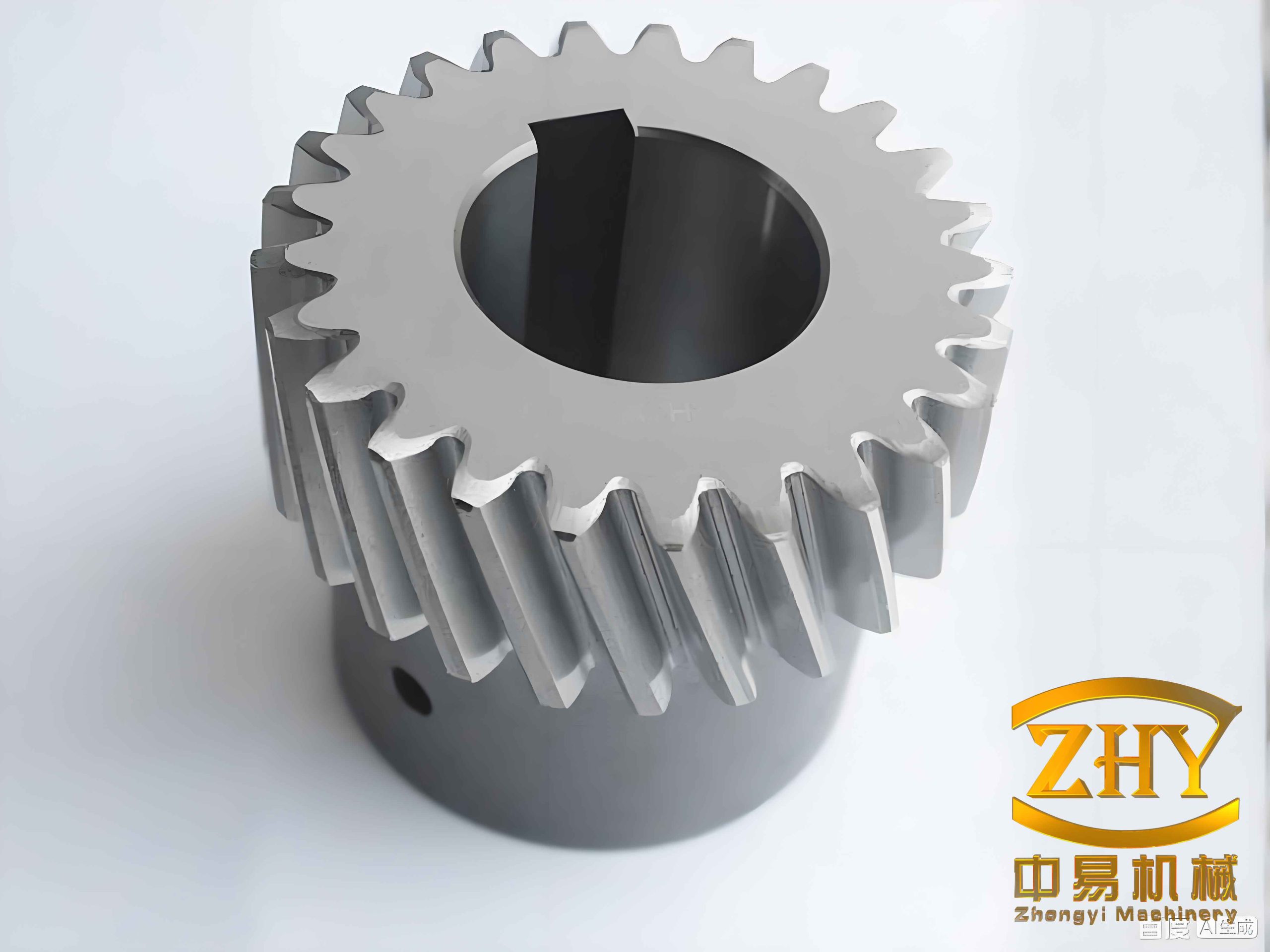
In conclusion, the friction dynamics of a helical gear system under high-speed and heavy-load conditions are complex and require a coupled approach for accurate analysis. My findings indicate that the dynamic friction coefficient for the helical gear deviates significantly from the static values, exhibiting fluctuations. The coupled dynamic meshing force provides a more realistic simulation of the gear’s engagement. The mixed lubrication model, when fed with dynamic loads, shows distinct variations in oil film parameters, which are critical for assessing the risk of surface failure and optimizing the design of high-performance helical gear transmissions. This work contributes to a deeper understanding of the helical gear’s operational physics, paving the way for improved gear design and reliability in demanding applications.
Based on this study, future work will focus on extending the analysis to include thermal effects, which are particularly important in high-speed helical gear applications where frictional heating can significantly alter lubricant properties. Furthermore, the wear evolution of helical gear teeth under these coupled dynamic and lubrication conditions will be investigated to provide a more complete picture of gear life prediction. The model developed here serves as a foundation for these more advanced studies, offering a validated framework for exploring the intricate interplay between mechanical dynamics and tribological phenomena in helical gear systems.