
Star herringbone gears are among the most effective solutions for high-speed and high-power transmission because they combine large load-carrying capacity, high overlap ratio, and cancellation of axial thrust. In my research I focus on the global dynamic evolution of a star herringbone gear transmission system under multi-source excitation. The transmission considered here consists of a central sun gear, three star gears, and an internal ring gear. The star gears are mounted on fixed axes, which gives the system a power-split layout with high structural stiffness and reliability. During operation, the system is disturbed by internal excitations such as time-varying mesh stiffness, backlash, and transmission errors, as well as by external torque fluctuations and random variations of operating parameters. These excitations are strongly nonlinear, and their interaction can lead to complicated vibration states, including multi-periodic responses, quasi-periodic motion, and chaos.
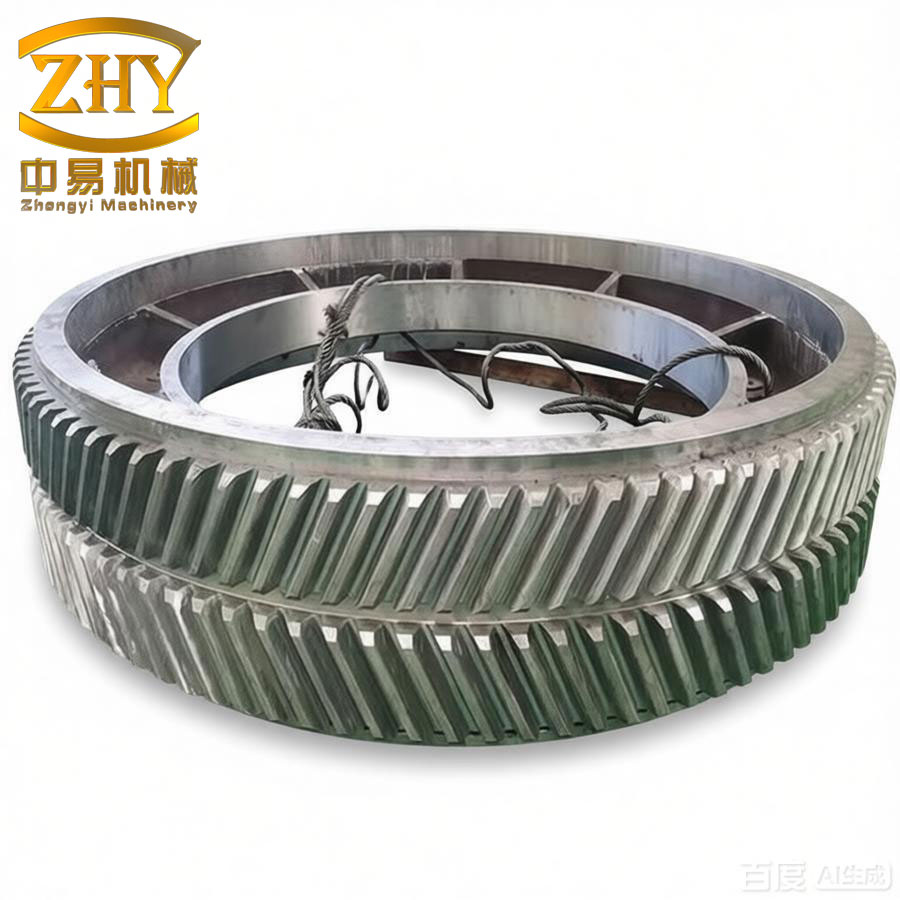
In this article I present a systematic study of star herringbone gears from a global perspective. I first establish a lumped-parameter torsional dynamic model and solve it with the fourth-order Runge-Kutta method. Then I investigate the dynamic load coefficients, load-sharing coefficients, and global bifurcation characteristics. After that I adopt cell mapping and spatial discretization to obtain the parameter solution domain boundaries and state-space basins of attraction. Finally, I introduce random fluctuations into the excitation parameters and study the global dynamic behavior of stochastic nonlinear star herringbone gears. This work provides a theoretical basis for parameter optimization, vibration suppression, and reliable operation of star herringbone gear transmission systems.
1 Introduction and Motivation
Gear transmission systems are essential in aircraft engines, marine propulsion, wind turbines, and heavy-duty industrial machines. Among the many types of gear trains, planetary and star gear systems are particularly attractive because of their compact structure, large transmission ratio, and high power density. In a star gear train, the sun gear drives several star gears, and the motion is collected by an internal gear ring. Unlike a planetary gear train, the star gears do not revolve around the sun gear, so the system is a fixed-axis train. This layout gives star herringbone gears better structural strength and more stable load sharing. The use of herringbone gears further improves meshing smoothness because the axial thrust generated by the two helical halves is self-balanced. Therefore, star herringbone gears are widely used in applications requiring high reliability and low vibration.
However, the dynamics of star herringbone gears is complicated by strong nonlinearities. The time-varying mesh stiffness is periodic but not sinusoidal, because the number of teeth in contact changes during meshing. The backlash introduces a piecewise-linear restoring force and can cause repeated impacts when the load is small. Transmission errors caused by manufacturing and assembly also provide periodic displacement excitations. In addition, the input speed, input power, damping ratio, and load fluctuation affect the system response. Many previous studies have analyzed gear dynamics by plotting phase diagrams, Poincaré maps, and bifurcation diagrams along one-parameter paths. These methods are useful for local analysis, but they cannot fully reveal the global structure of solution domains. Therefore, I use cell mapping and basin-of-attraction analysis to study star herringbone gears from a global viewpoint.
2 Dynamic Model of Star Herringbone Gear Transmission System
I constructed a pure torsional model of the star herringbone gear system using the lumped-mass method. The model includes a sun gear, three herringbone star gears, and an internal gear ring. Each herringbone gear is represented by two helical gears with opposite helix angles connected by a torsionally rigid web. The mesh forces act along the line of action, and the axial force is internally balanced. I neglect sliding friction and support compliance in the torsional model because the support stiffness is much larger than the mesh stiffness in the studied configuration.
Let \(\theta_s\), \(\theta_{p_i}\), and \(\theta_r\) be the rotational vibration displacements of the sun gear, the \(i\)-th star gear, and the ring gear, respectively. The equations of motion can be written in the form
$$
I_s\ddot{\theta}_s + \sum_{i=1}^{3}\left[c_{sp_i}\dot{x}_{sp_i}+k_{sp_i}g(x_{sp_i})\right]r_s\cos\beta_1 = T_s,
$$
$$
I_{p_i}\ddot{\theta}_{p_i} – \left[c_{sp_i}\dot{x}_{sp_i}+k_{sp_i}g(x_{sp_i})\right]r_{p_i}\cos\beta_1
+ \left[c_{rp_i}\dot{x}_{rp_i}+k_{rp_i}g(x_{rp_i})\right]r_{p_i}\cos\beta_1 = 0,
$$
$$
I_r\ddot{\theta}_r + \sum_{i=1}^{3}\left[c_{rp_i}\dot{x}_{rp_i}+k_{rp_i}g(x_{rp_i})\right]r_r\cos\beta_1 = -T_r,
$$
where \(k_{sp_i}\) and \(k_{rp_i}\) are the mesh stiffnesses between the sun gear and the \(i\)-th star gear and between the \(i\)-th star gear and the ring gear, respectively; \(c_{sp_i}\) and \(c_{rp_i}\) are the corresponding mesh damping coefficients; \(r_s\), \(r_{p_i}\), and \(r_r\) are the base-circle radii; \(\beta_1\) is the helix angle of one flank; and \(g(x)\) is the backlash displacement function. In the complete model I also distinguish the two helical flanks of each herringbone gear by using superscripts \((1)\) and \((2)\), so the full system has twelve relative displacement coordinates.
To eliminate rigid-body motion, I define the relative displacements along the mesh lines as
$$
x_{sp_i}^{(k)} = \left(r_s\theta_s – r_{p_i}\theta_{p_i}\right)\cos\beta_k – e_{sp_i}^{(k)}(t),
$$
$$
x_{rp_i}^{(k)} = \left(r_{p_i}\theta_{p_i} – r_r\theta_r\right)\cos\beta_k – e_{rp_i}^{(k)}(t),
$$
where \(k=1,2\) denotes the two helical flanks and \(e(t)\) is the combined transmission error. The dimensionless form of the equations is obtained by introducing a nominal time scale \(\omega_n\), a nominal displacement scale \(L\), and dimensionless time \(\tau\) and displacement \(u\) as
$$
\tau = \omega_n t, \qquad u = \frac{x}{L}, \qquad \omega_n = \sqrt{k_0\left(\frac{1}{M_s}+\frac{1}{M_p}\right)}, \qquad L = 10^{-4}\text{ m}.
$$
Here \(M_s = I_s/r_s^2\) and \(M_p = I_p/r_p^2\) are equivalent masses of the sun and star gears. After dimensionless transformation, the system can be written in the compact matrix form
$$
M\ddot{U} + C\dot{U} + K g(U) = F,
$$
where \(U\) is the vector of dimensionless relative displacements, \(M\) is the mass matrix, \(C\) is the damping matrix, \(K\) is the stiffness matrix, and \(F\) is the dimensionless external load vector. In the relative-coordinate formulation, \(M\) is an identity matrix. The matrices \(C\) and \(K\) are symmetric full-rank matrices, which ensures that the initial-value problem has a unique solution for prescribed initial conditions.
3 Excitation Parameters and Nonlinearities
The internal excitations of star herringbone gears include time-varying mesh stiffness, backlash, and transmission errors. I represent the time-varying mesh stiffness by a Fourier series as
$$
k(\tau) = k_0\left[1 + \sum_{n=1}^{N}\varepsilon_n \sin\left(n\omega\tau + \varphi_n\right)\right],
$$
where \(k_0\) is the mean mesh stiffness, \(\varepsilon_n\) is the stiffness fluctuation coefficient, \(\omega\) is the dimensionless meshing frequency, and \(\varphi_n\) is the phase angle. The backlash function is piecewise linear and is defined as
$$
g(u)=
\begin{cases}
u-\dfrac{b}{2}, & u > \dfrac{b}{2},\\[4pt]
0, & \left|u\right| \le \dfrac{b}{2},\\[4pt]
u+\dfrac{b}{2}, & u < -\dfrac{b}{2},
\end{cases}
$$
where \(b\) is the dimensionless backlash. The combined transmission error is given by
$$
e(t) = E\sin\left(\Omega t + \varphi_e\right),
$$
where \(E\) is the error amplitude and \(\Omega\) is the meshing frequency. In the dimensionless model, the meshing frequency becomes \(\omega = \Omega/\omega_n\). The initial mesh phasing between the sun-star meshes and the ring-star meshes is calculated according to the pressure angle and the number of star gears. For the three-star arrangement I used the phase relations
$$
\varphi_{sp,i} = (2i-1)\alpha_t, \qquad \varphi_{rp,i} = (2i+1)\alpha_t, \qquad i=1,2,3,
$$
where \(\alpha_t\) is the transverse pressure angle. These phase relations are important because they determine the interaction between the excitations acting on star herringbone gears.
The principal parameters of the star herringbone gear system used in my numerical study are listed in Table 1.
| Parameter | Sun gear | Star gear | Ring gear |
|---|---|---|---|
| Number | 1 | 3 | 1 |
| Module / mm | 4 | 4 | 4 |
| Tooth number | 36 | 32 | 100 |
| Mass / kg | 5.3018 | 4.5099 | 16.0843 |
| Moment of inertia / (kg·m²) | 0.0226 | 0.0149 | 0.6564 |
| Normal pressure angle | 20° | 20° | 20° |
| Base helix angle | 22.5° | 22.5° | 22.5° |
| Mean mesh stiffness / (N/m) | 2×10⁹ | 2×10⁹ | 2×10⁹ |
| Mesh damping ratio | 0.1 | 0.1 | 0.1 |
| Backlash / mm | 0.1 | 0.1 | 0.1 |
4 Dynamic Response and Bifurcation Analysis
I solved the dimensionless differential equations by the fourth-order Runge-Kutta method. The dynamic load coefficient is defined as
$$
K_v(t) = \frac{F_{\text{dyn}}(t)+F_{\text{damp}}(t)}{F_{\text{static}}},
$$
where \(F_{\text{dyn}}(t)=k_0 u(t) L\) is the elastic mesh force, \(F_{\text{damp}}(t)=c\omega_n L\dot{u}(t)\) is the damping force, and \(F_{\text{static}}=T/r\) is the static mesh force. A dynamic load coefficient close to one with small fluctuation indicates smooth transmission, whereas large peaks indicate impact and separation of tooth surfaces.
I also calculated the load-sharing coefficients of the sun-star mesh and the ring-star mesh for different values of input power, speed, damping ratio, stiffness fluctuation coefficient, and backlash. The results are summarized in Table 2.
| Parameter | Change observed | Influence on load-sharing coefficient |
|---|---|---|
| Input power ↑ | Load-sharing coefficient decreases | Positive for load sharing |
| Input speed ↑ | Load-sharing coefficient increases | Negative; avoid high speed |
| Mesh damping ratio ↑ | Slight increase near unity | Small effect |
| Stiffness fluctuation coefficient ↑ | Slight decrease | Small effect |
| Backlash ↑ | Load-sharing coefficient increases | Negative; use small backlash |
In the numerical examples, the sun-star meshes experienced larger dynamic loads than the ring-star meshes. This is an important feature of star herringbone gears, because the external mesh carries the total input power, while the internal mesh redistributes it to the ring gear.
4.1 Bifurcation with respect to input speed
The input speed was varied from 4000 r/min to 20000 r/min. I observed rich nonlinear phenomena including period-doubling bifurcations, inverse period-doubling bifurcations, jump discontinuities, and chaos. In the low-speed region, the system changes from period-1 motion to period-2 motion and then to period-4 motion, followed by sudden transition to chaos. There is a jump at about 4240 r/min. In the middle-speed region, the system passes through a short chaotic interval, re-enters period-2 motion, and jumps to another branch. Further increasing the speed leads to a period-4 window and then to chaos. At very high speed, the system returns to period-2 motion and finally to stable period-1 motion. This evolution shows that the dynamic response of star herringbone gears is extremely sensitive to the sun gear speed.
4.2 Bifurcation with respect to input power
I studied the input power range from 1500 kW to 4000 kW. With increasing input power, the chaotic oscillations gradually decay. The system passes through inverse period-doubling bifurcations and enters multi-periodic and then lower-periodic motions. The response amplitude becomes more regular and the vibration state is stabilised. Therefore, moderate high input power is beneficial for the vibration stability of star herringbone gears.
4.3 Bifurcation with respect to damping ratio
The mesh damping ratio was varied from 0.05 to 0.2. At low damping, the system shows chaos or quasi-periodic motion. Increasing the damping ratio causes the chaotic attractor to disappear through inverse bifurcations. The system enters a quasi-periodic state, then jumps into period-2 motion, and finally falls into period-1 motion at high damping. This confirms that damping can efficiently suppress chaos in star herringbone gears.
4.4 Bifurcation with respect to stiffness fluctuation and backlash
The stiffness fluctuation coefficient was varied from 0.1 to 0.4. The system remains in period-4 motion for small coefficients, but when the coefficient exceeds about 0.3, the response enters chaos. A small stiffness fluctuation coefficient is therefore recommended. The backlash was varied from 0.8 to 1.5 in dimensionless form. The system stays in a quasi-period-2 motion over this range, but the vibration amplitude increases with backlash. I also observed jump discontinuities near the boundaries of the response branches. These results confirm that backlash is a strong nonlinearity for star herringbone gears.
Table 3 summarises the bifurcation evolution of the system for different excitation parameters.
| Parameter | Range | Observed sequence |
|---|---|---|
| Sun gear speed | 4000–20000 r/min | P1→P2→P4→chaos; jumps; inverse bifurcations; final P2→P1 |
| Input power | 1500–4000 kW | Chaos→multi-period→P4→P2; improved stability |
| Damping ratio | 0.05–0.2 | Chaos→quasi-periodic→P2→P1 |
| Stiffness fluctuation | 0.1–0.4 | P4→chaos |
| Backlash | 0.8–1.5 | Quasi-P2; amplitude increases |
For selected points on the bifurcation paths I used phase portraits, Poincaré maps, and joint probability density functions to verify the nature of the attractors. For a period-\(K\) attractor, the Poincaré section contains \(K\) isolated points, and the joint probability density has \(K\) sharp peaks of nearly equal height. For a chaotic attractor, the Poincaré section contains fractal point clusters, and the probability density has irregular ridges. The joint probability density analysis confirmed that the deterministic bifurcation paths do not exhibit multiple coexisting attractors; rather, the system changes from one attractor to another through standard bifurcations.
5 Experimental Validation
To validate the theoretical model, I performed experiments on a star herringbone gear transmission test rig. The test rig consisted of a variable-frequency induction motor, a star herringbone gearbox with three star gears, and a magnetic powder brake as the load. The gear specifications were close to those used in the numerical model. I measured the vibration acceleration at the bearing caps with two accelerometers placed along the line of action of the sun-star mesh. The relative vibration acceleration of the mesh was obtained by subtracting the acceleration signal of one gear from that of the other gear. The time-domain signals were processed by the fast Fourier transform to obtain the frequency-domain acceleration amplitudes.
I carried out experiments at input speeds of 1000 r/min, 1250 r/min, and 1500 r/min with a load of 2 N·m. The sampling frequencies were chosen according to the expected mesh frequencies. Table 4 lists the first two mesh frequencies for these speed conditions.
| Input speed (r/min) | First mesh frequency (Hz) | Second mesh frequency (Hz) |
|---|---|---|
| 1000 | 2352 | 4704 |
| 1250 | 2940 | 5880 |
| 1500 | 3528 | 7056 |
The measured acceleration amplitude spectra were compared with the theoretical frequency-domain responses. The overall shape and the dominant mesh harmonics agreed well with the theoretical predictions. Small differences can be attributed to manufacturing tolerances, assembly errors, bearing flexibility, and the fact that the model does not include couplings and bearing compliance. The close agreement confirmed that the lumped-parameter model of star herringbone gears is reliable and that the bifurcation and global analysis based on this model is credible.
6 Global Analysis Based on Cell Mapping
The traditional local analysis provides valuable information, but it does not reveal how different excitation parameters interact in the global parameter space. To solve this problem, I adopted the simple cell mapping method together with spatial discretization. The continuous parameter domain or state space is divided into many cells, and each cell is mapped according to the system dynamics. Cells with the same periodic response form a solution region, while cells from which the trajectories do not converge to a periodic state are classified as chaotic cells.
The cell mapping process is described by the relation
$$
Z^*(m+1)=C\left(Z^*(m)\right),
$$
where \(Z^*(m)\) is the cell visited after \(m\) mappings. If a sequence of \(K\) different cells satisfies
$$
Z^*(m+1)=C\left(Z^*(m)\right), \qquad Z^*(1)=C\left(Z^*(K)\right),
$$
then these cells form a period-\(K\) cell cycle, denoted P-\(K\) cells. For a non-autonomous gear system, the mapping is evaluated on a Poincaré section. For each cell, I compute the state after the transient has decayed and then examine four successive return points. The classification condition is
$$
\left|x_{\Delta-k}-x_{\Delta-k-1}\right| < \epsilon_1, \qquad
\left|\dot{x}_{\Delta-k}-\dot{x}_{\Delta-k-1}\right| < \epsilon_2,
$$
for \(k=0,1,2,3\), where \(x\) and \(\dot{x}\) are the displacement and velocity on the Poincaré section, \(\Delta\) is the current iteration number, and \(\epsilon_1\), \(\epsilon_2\) are small tolerances. If the condition is satisfied, the cell belongs to a period-\((\Delta-1)\) attractor. If the condition is never satisfied within the maximum number of mappings, the cell is considered to be a chaotic cell.
6.1 Parameter solution domains
I constructed two-dimensional solution domain maps for pairs of excitation parameters. The first map is the speed-power domain with the sun-gear speed from 3000 r/min to 20000 r/min and the input power from 1500 kW to 4000 kW. The solution domain contains period-1, period-2, period-4, multi-periodic, and chaotic regions. Along the speed axis, the response changes frequently, confirming that the rotational speed has a strong influence on star herringbone gears. Along the power axis, the response tends to become more stable as power increases. At high speeds, the power axis also becomes sensitive, and period-4 and period-5 islands appear inside period-2 regions.
The second map is the speed-damping domain, in which the damping ratio varies from 0.05 to 0.2. The system again shows strong speed dependence. Increasing the damping ratio gradually eliminates chaotic cells and drives the system into period-2 and period-1 domains. At high speed, some nested P-3 and P-4 islands appear in a larger P-2 region, indicating a complicated coupling between damping and speed.
The third map is the power-damping domain. At low power and low damping, the parameter space is dominated by chaotic cells. As both parameters increase, the chaotic domain shrinks and is replaced by period-4 and period-2 domains. For damping ratios larger than about 0.17, the system remains in a period-2 domain almost independently of power. These maps allow me to identify safe parameter regions and, equally important, to avoid dangerous boundary regions where jump phenomena and chaotic bands are likely to occur.
6.2 State-space basins of attraction
The global dynamic performance of star herringbone gears also depends on the initial state. To investigate this dependence, I discretized a two-dimensional initial condition region in the \(u\)-\(\dot{u}\) plane. I fixed the speed at 9000 r/min and computed the basins of attraction for different values of the input power. At 2800 kW, the global basin is dominated by chaotic cells, which occupy about 60% of the total region. Period-2 cells account for about 21%, while period-4 and higher-period cells occupy the remainders. The attractors are interwoven, and the boundary cells are numerous, so small changes in the initial state can move the system from one attractor to another.
When the power is increased to 3000 kW, the area of the chaotic basin decreases sharply to about 7%, and multi-periodic cells become dominant. At 3200 kW, the basin is entirely periodic: period-2 cells occupy about 34%, period-4 cells about 30%, and the remaining cells are higher-period cells. This evolution shows that increasing input power reduces the sensitivity of the response to initial conditions and improves the global stability of star herringbone gears.
I also studied the effect of the mesh damping ratio at a fixed speed of 9000 r/min and power of 3000 kW. At a damping ratio of 0.08, chaotic cells occupy about 85% of the basin. At 0.1, the chaotic area decreases dramatically. At 0.12, the basin consists only of period-2 and period-4 attractors, with period-4 cells occupying about 65% and period-2 cells about 35%. Thus, damping is a stronger global stabiliser than power for the studied star herringbone gears. Table 5 summarises the basin area fractions for the selected cases.
| Condition | P-2 | P-4 | P-n (n>4) | Chaotic |
|---|---|---|---|---|
| \(n=9000\) r/min, \(P=2800\) kW | 21% | 1% | 18% | 60% |
| \(n=9000\) r/min, \(P=3000\) kW | 23% | small | remaining | 7% |
| \(n=9000\) r/min, \(P=3200\) kW | 34% | 30% | 36% | 0% |
| \(n=9000\) r/min, \(P=3000\) kW, \(K_{em}=0.08\) | small | small | small | 85% |
| \(n=9000\) r/min, \(P=3000\) kW, \(K_{em}=0.12\) | 35% | 65% | 0% | 0% |
The state-space basin analysis reveals a close connection between the parameter solution domain and the global attractors of star herringbone gears. The same parameter variations that suppress chaos in the bifurcation diagrams also reduce the fractal nature of the basins of attraction. Therefore, cell mapping provides a practical way to evaluate global stability and to choose safe parameter regions for the design of star herringbone gears.
7 Global Dynamics under Random Excitation
In real operating conditions, the excitation parameters of star herringbone gears are not constant. Manufacturing errors, temperature changes, torque fluctuations, and vibration feedback cause the parameters to fluctuate around their nominal values. To model this randomness, I used the central limit theorem and an approximate method to generate normally distributed pseudo-random numbers. Let \(U_j\), \(j=1,2,\ldots,12\), be independent random numbers uniformly distributed in \((0,1)\). Then the random variable
$$
\xi = \sum_{j=1}^{12}U_j – 6
$$
approximately follows a standard normal distribution \(N(0,1)\). A random excitation parameter with mean \(\mu\) and standard deviation \(\sigma\) is generated by
$$
\eta = \mu + \sigma \xi.
$$
I checked that every generated value lies in the interval \([\mu-3\sigma,\mu+3\sigma]\) so that the generated random sequence is bounded and reasonably represents a truncated normal distribution. At every mesh period I produced a new random value and inserted it into the system equations. The cell mapping algorithm was then applied to classify the basins of attraction of the stochastic nonlinear system. This approach is more realistic than the deterministic analysis because it accounts for the small random fluctuations that always exist in gear systems.
7.1 Random fluctuation of mesh damping ratio
I first considered the mesh damping ratio \(K_{em}\) with distribution \(N(0.1,0.0002^2)\). The basin of attraction was still composed of period-2, period-4, and multi-periodic cells, but the boundary cells increased and the boundaries became fuzzy. The period-2 cell fraction was about 33%, and the system response became quasi-periodic with small random fluctuations. When I increased the standard deviation to \(0.0004\), the period-2 fraction decreased to about 25%, the period-4 fraction increased to about 32%, and chaotic cells appeared with a fraction of about 1.7%. The phase trajectory and Poincaré points showed visibly increased fluctuation. I therefore conclude that random damping fluctuations deteriorate the global stability of star herringbone gears, and the deterioration becomes more serious as the variance increases.
7.2 Random fluctuation of input power
I then set the input power as \(P\sim N(3200,3^2)\). Surprisingly, the global basin did not become worse. The period-2 cell fraction increased from 34% to about 34.5%, and the period-4 fraction increased from 30% to about 31%. A few period-6 cells appeared, but chaotic cells were almost absent. The dynamic response of the selected initial state remained a stable period-2 motion. This indicates that star herringbone gears are weakly sensitive to small random fluctuations of the input power. The global attractor structure remains periodic and the response remains regular under power fluctuations.
7.3 Random fluctuation of input speed
I considered the input speed \(n_1\sim N(9000,3^2)\). According to the parameter solution domain, the point \(n_1=9000\) r/min lies close to the boundary between periodic and chaotic regions. Therefore, small random fluctuations in speed can push the system into a chaotic domain. The computed global basin of attraction became dominated by chaotic cells, which occupied about 63% of the state space. Multi-periodic cells occupied about 20%, while period-2 and period-4 cells were almost completely lost. The selected cell response became chaotic, with fragmented Poincaré points. This result demonstrates that star herringbone gears are extremely sensitive to speed fluctuation. To avoid serious vibration, the input speed must be accurately controlled and should not be selected near a fractural basin boundary.
7.4 Random fluctuation of backlash
Backlash is a strong nonlinearity in gear systems, so I also studied the random case \(b\sim N(1,0.002^2)\). The global basin became largely chaotic, with chaotic cells occupying about 69% of the state space. Multi-periodic cells occupied about 18%, and the total periodic cells were only about 13%. The basins were scattered and no clear periodic basin could be identified. The response of the selected cell was chaotic. This shows that backlash fluctuations are extremely harmful to the global dynamics of star herringbone gears. The only effective measures are to reduce the backlash value and to improve the manufacturing and assembly accuracy so that the fluctuation of backlash is minimized.
Table 6 summarises the effects of the random excitation parameters on the global dynamics of star herringbone gears.
| Random factor | Distribution | Dominant basin | Response state |
|---|---|---|---|
| Damping ratio | \(N(0.1,0.0002^2)\) | P-2 33%; P-4/P-n mixed | Quasi-P-2 |
| Damping ratio | \(N(0.1,0.0004^2)\) | P-2 25%; P-4 32%; chaos 1.7% | Quasi-P-2, more fluctuation |
| Input power | \(N(3200,3^2)\) | P-2 34.5%; P-4 31%; P-6 0.3% | P-2 stable |
| Input speed | \(N(9000,3^2)\) | Chaos 63%; P-n 20% | Chaotic |
| Backlash | \(N(1,0.002^2)\) | Chaos 69%; P-n 18% | Chaotic |
The random excitation analysis provides a more realistic evaluation of the global performance of star herringbone gears. It shows that some parameter fluctuations, such as those of power and damping, have a limited effect, while other fluctuations, such as speed and backlash, can cause severe deterioration of the global dynamic behavior. If a certain random factor causes the global basin to become chaotic, it is necessary to adjust the operating point according to the parameter solution domain and to avoid sensitive parameter cells, chaotic domains, and basin boundaries. By combining the solution domain information with the random excitation model, I can better predict and control the vibration state of star herringbone gears in engineering practice.
8 Conclusions
In this work I systematically studied the global dynamic evolution of star herringbone gears under multi-source excitation. Based on the lumped-parameter torsional model, the dimensionless differential equations were solved and validated by experiments. I obtained the following main conclusions.
First, the dynamic response of star herringbone gears is highly sensitive to the sun gear speed. The bifurcation diagram contains period-doubling cascades, inverse period-doubling cascades, jump discontinuities, and chaotic regions. Increasing the input power and the mesh damping ratio stabilizes the system, while increasing the stiffness fluctuation coefficient and the backlash promotes chaos and large vibration amplitudes.
Second, the cell mapping global analysis shows that the parameter solution domains are composed of period-1, period-2, period-4, multi-periodic, and chaotic regions. The speed-power, speed-damping, and power-damping maps reveal that damping is an effective global stabilizer. State-space basin analysis shows that the chaotic fraction decreases as power and damping increase. At sufficiently large power and damping, the entire basin is covered by period-2 and period-4 attractors, and the sensitivity to initial conditions is greatly reduced.
Third, the introduction of random excitation changes the global dynamics in a realistic way. Random fluctuations of damping, speed, and backlash deteriorate the basin structure and produce chaotic cells. Speed fluctuation and backlash fluctuation are especially harmful, while power fluctuation has little negative influence and may even increase the periodic basin fraction in the studied case. Therefore, in the design and operation of star herringbone gears, the speed and backlash should be carefully controlled, and the parameter values should be chosen away from basin boundaries and chaotic domains.
Finally, the combination of dimensionless nonlinear dynamics, cell mapping, parameter solution domains, and random excitation analysis provides a powerful framework for studying the global behavior of star herringbone gears. The conclusions can be used to optimize the operating conditions, reduce vibration and noise, and improve the reliability of high-speed and high-power star herringbone gear transmission systems.