
In my years of design and research work on high-precision heavy-duty transmission systems, I have focused extensively on the hydrostatic worm gear and rack pair. This transmission mechanism converts rotary motion into linear displacement with exceptional accuracy and stiffness. The key innovation lies in a high-stiffness, vibration-damping oil film that separates the worm gear and the rack teeth, eliminating wear, improving repeatability, and stabilizing servo control in CNC applications. The oil film also averages out manufacturing errors, enhances load capacity, and eliminates low-speed stick-slip. Below, I present a comprehensive analysis of the structure, precision requirements, and hydraulic system parameters for this advanced transmission.
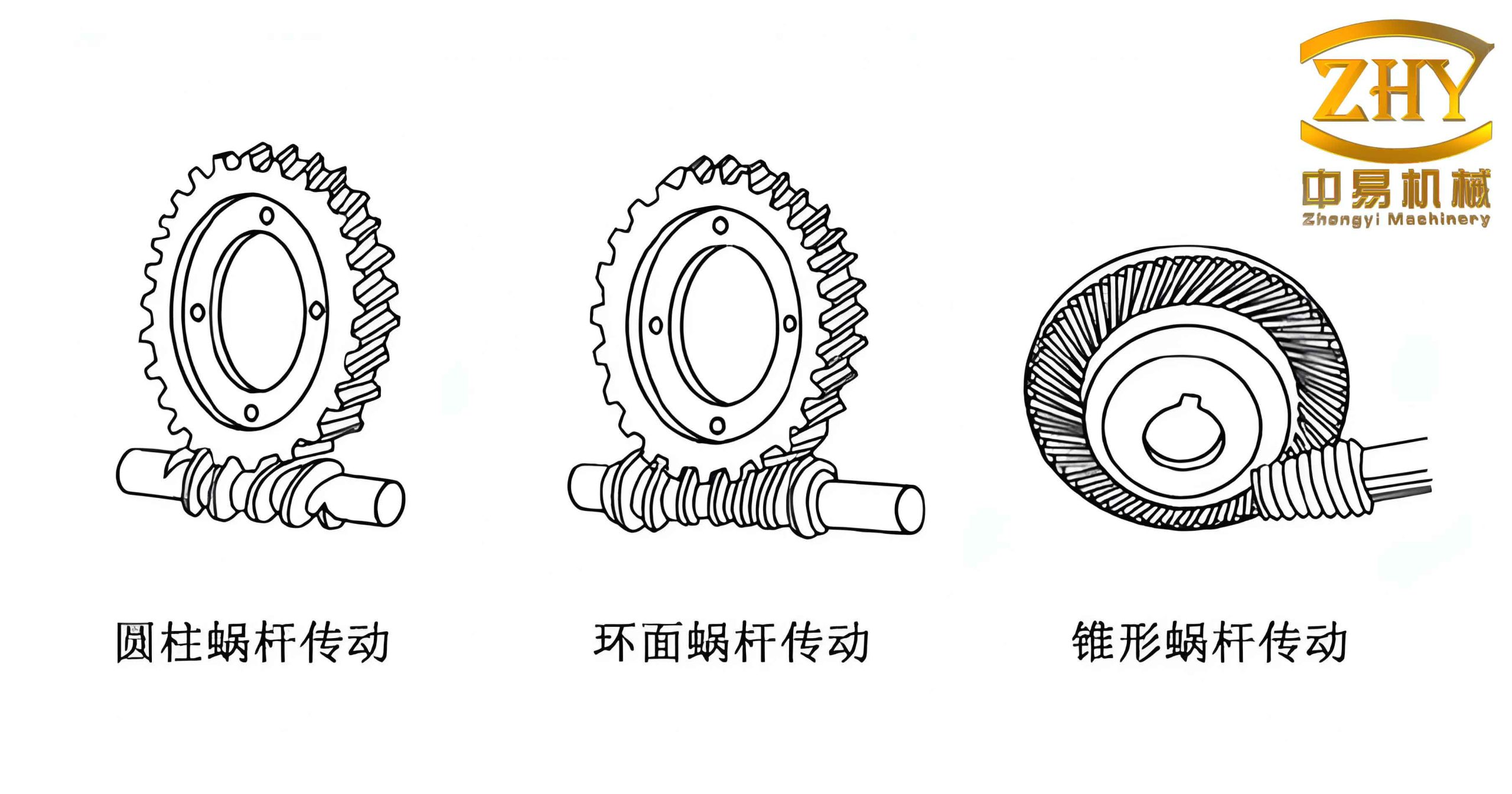
1. Structure of the Hydrostatic Worm Gear and Rack Pair
The hydrostatic worm gear and rack transmission consists of a worm (typically multi-start, up to 4–10 starts) and a rack with teeth shaped to match the worm. The rack is often assembled from multiple segments to achieve long travel. During operation, only a portion of the worm circumference (defined by the engagement angle \(\theta\)) is active. Oil is supplied to the tooth flanks within this region to create a load-bearing hydrostatic pocket. The oil distribution system must ensure continuous supply to the pockets in the engagement zone and pre-fill the worm’s axial oil passages before they enter the zone to expel air.
Two main oil distribution methods exist: radial distribution and axial distribution. Furthermore, the hydrostatic pockets can be machined either on the worm teeth or on the rack teeth. Placing pockets on the rack teeth offers approximately 5% higher effective load area compared to placing them on the worm, making it the preferred choice despite added manufacturing complexity. The pockets are typically located at the pitch diameter, with width \(b = 4\text{–}6\text{ mm}\) and depth \(h = 1.5\text{–}2.5\text{ mm}\), and are not open at the ends to maintain sealing lands.
To minimize radial unbalanced forces and improve precision, a tooth profile half-angle of \(20^\circ\) or \(25^\circ\) is commonly selected, combined with high-stiffness bearings that reduce radial deflection of the worm. The engagement angle \(\theta\) is typically kept at \(60^\circ\) to \(90^\circ\) to balance load capacity and oil film stability. The tooth height is often chosen as 0.6–0.7 times the pitch to enhance sealing.
2. Precision and Accuracy Requirements
The oil film thickness is designed to lie in the range \(0.02\text{–}0.06\text{ mm}\). Manufacturing tolerances must be controlled so that tooth flank contact does not occur over the entire engagement length. I adopt the following rules:
- Single pitch error: ≤ 1/3 of oil film thickness
- Cumulative pitch error over total length: ≤ 1/2 of oil film thickness
- Tooth profile angle error: ±2′ to ±3′ (much stricter than standard worm gear pairs)
Even if individual components meet a Grade 3 accuracy standard (ISO or equivalent), the combined relative cumulative error of the worm and rack may exceed the allowable film thickness if their error trends are opposite. Therefore, the cumulative error signatures of the worm and rack should be aligned, or the difference between them must be within the specified tolerance. For a multi-segment rack, all segments must have identical basic parameters and consistent accuracy, and the joints must be precisely aligned.
Table 1: Precision Tolerances for Hydrostatic Worm Gear and Rack
| Parameter | Tolerance (mm or angle) | Remarks |
|---|---|---|
| Oil film thickness | 0.02 – 0.06 | Design gap |
| Single pitch error | ≤ 0.007 – 0.02 | 1/3 of film thickness |
| Cumulative pitch error (worm or rack alone) | ±0.02 – 0.03 | Depends on length |
| Relative cumulative error (worm + rack) | ≤ 0.015 – 0.03 | Must not exceed 1/2 film |
| Tooth profile half-angle error | ±2′ – ±3′ | Much tighter than Grade 3 |
The manufacturing process for hydrostatic worm gears and racks is more demanding than for conventional pairs because the worm is longer and the rack segments must be interchangeable. In practice, a special grinding or lapping procedure is used to achieve the required accuracy.
3. Hydraulic System Parameters and Static Characteristics
The hydraulic supply system can be classified as constant flow (e.g., dual pump) or constant pressure with flow restrictors. Common restrictors include fixed capillary or orifice, double-diaphragm variable restrictors (flow dividers), and pressure regulators. I will now derive the key equations for the hydrostatic pockets and the system behavior.
3.1 Effective Pocket Area and Flow Rate
For a pocket machined on the rack tooth, the effective load-bearing area \(A_e\) per tooth side is given by:
$$A_e = \frac{1}{2} \left( l_1 + l_2 \right) b \cdot \eta$$
where \(l_1, l_2\) are the land lengths along the tooth flank, \(b\) is the pocket width, and \(\eta\) is the utilization factor (typically 0.6–0.8 depending on the pocket shape). However, for the entire worm gear pair, the total effective area projected onto the axial direction is:
$$A_{eff} = z_w \cdot \frac{\theta}{360^\circ} \cdot \frac{2 A_e}{\cos \alpha \cos \lambda}$$
where \(z_w\) is the number of worm starts, \(\alpha\) is the tooth profile half-angle, and \(\lambda\) is the lead angle of the worm. For a pocket on the rack, the utilization factor \(\eta\) is higher compared to pockets on the worm.
The flow rate \(Q\) through one pocket (both sides) under no-load condition (equal clearances \(h_0\) on both sides) is:
$$Q = \frac{b h_0^3}{6 \mu L} \left( p_s – p_0 \right)$$
where \(\mu\) is dynamic viscosity, \(L\) is the flow length along the lands, \(p_s\) is supply pressure, and \(p_0\) is the pocket pressure (equal to half supply pressure when balanced). For a dual-pump constant-flow system, each pump supplies a fixed flow, and the pocket pressure adjusts according to the load.
3.2 Load Capacity and Film Stiffness
Under an external axial load \(F_a\), the clearances on the loaded side and unloaded side become \(h_1\) and \(h_2\) respectively. The pressure difference \(\Delta p = p_1 – p_2\) generates a force that balances the load. The load capacity can be expressed as:
$$F_a = A_{eff} \left( p_1 – p_2 \right)$$
For a constant-flow system using a dual pump, the relationship between pressure difference and clearance change is:
$$\frac{p_1}{p_s} = \frac{1}{1 + \left( \frac{h_1}{h_0} \right)^3}, \quad \frac{p_2}{p_s} = \frac{1}{1 + \left( \frac{h_2}{h_0} \right)^3}$$
and the flow continuity gives:
$$Q_1 = \frac{b h_1^3}{6 \mu L} p_1, \quad Q_2 = \frac{b h_2^3}{6 \mu L} p_2, \quad Q_1 = Q_2 = Q = \text{constant}$$
From these, we can derive the film stiffness \(K\):
$$K = \frac{dF_a}{dh_1} \approx \frac{3 A_{eff} p_s}{h_0} \cdot \phi(\varepsilon)$$
where \(\varepsilon = (h_0 – h_1)/h_0\) is the relative film thickness change. The stiffness is inversely proportional to the film thickness, making thinner films desirable but limited by manufacturing accuracy.
Table 2: Typical Design Parameters for a Hydrostatic Worm Gear Pair
| Parameter | Symbol | Typical Value | Unit |
|---|---|---|---|
| Worm starts | \(z_w\) | 4 – 10 | – |
| Engagement angle | \(\theta\) | 60 – 90 | deg |
| Tooth profile half-angle | \(\alpha\) | 20 – 25 | deg |
| Lead angle | \(\lambda\) | 5 – 15 | deg |
| Oil film thickness (no load) | \(h_0\) | 0.03 – 0.05 | mm |
| Effective pocket area (total axial) | \(A_{eff}\) | 1000 – 5000 | mm² |
| Supply pressure | \(p_s\) | 2 – 5 | MPa |
| Dynamic viscosity | \(\mu\) | 0.03 – 0.06 | Pa·s |
| Flow rate per pocket | \(Q\) | 0.5 – 2.5 | L/min |
3.3 Radial Unbalanced Force
Because of the tooth profile half-angle \(\alpha\), the axial load generates a radial component that pushes the worm away from the rack. The radial force \(F_r\) is:
$$F_r = F_a \tan \alpha$$
This force causes a radial deflection of the worm, which must be absorbed by high-stiffness bearings. The radial offset \(\delta_r\) can be estimated from bearing stiffness \(K_{bearing}\):
$$\delta_r = \frac{F_r}{K_{bearing}}$$
To maintain uniform film thickness, \(\delta_r\) should be less than 0.1\(h_0\). Therefore, bearing stiffness is a critical design element, often using preloaded tapered roller or hydrostatic bearings.
4. Supply Systems and Their Characteristics
4.1 Dual-Pump Constant-Flow System
In this system, two identical pumps supply fixed flows to the loaded and unloaded sides of the worm gear pockets. The pressure difference builds automatically to balance the load. The static characteristic is depicted by curves of relative displacement versus load. The actual stiffness of the transmission is slightly lower than the theoretical oil film stiffness due to worm bearing compliance and tooth deformation. Nevertheless, the predicted stiffness agrees well with measurements when those factors are included.
Table 3: Comparison of Supply Systems
| System Type | Components | Advantages | Disadvantages |
|---|---|---|---|
| Dual pump (constant flow) | Two matched pumps | Simple, robust, high stiffness | Two pumps needed, efficiency lower at idle |
| Single pump + flow divider | Single pump + diaphragm-type divider | Fewer pumps, adjustable stiffness | Potential self-excited vibration if diaphragm too flexible |
| Fixed restrictor | Single pump + capillaries/orifices | Very simple, low cost, reliable | Lower stiffness, higher flow loss |
| Pressure regulator (servo valve) | Single pump + regulator | Very high stiffness, good adaptability | Complex, prone to instability, expensive |
4.2 Flow Divider (Double-Diaphragm) System
A flow divider uses a flexible diaphragm to split the flow from a single pump. Under load, the diaphragm deflects, increasing flow to the loaded side and decreasing to the unloaded side, thereby maintaining near-constant sum of pocket pressures. The stiffness can be up to twice that of the dual-pump system for the same total flow. The characteristic is influenced by the dimensionless parameter \(\Pi = \frac{k_d h_0^3}{6 \mu L Q_d}\), where \(k_d\) is the diaphragm stiffness and \(Q_d\) the flow through the divider. Optimum performance occurs when the diaphragm is not too stiff; otherwise self-excited vibrations may appear. A safe design limits \(\Pi\) to avoid instability.
4.3 Fixed Restrictor System
Fixed capillaries or orifices are the simplest and most reliable. The stiffness is lower than that of active systems, but for many heavy-duty machine tools it is sufficient. The design equations are identical to those for conventional hydrostatic bearings. The pressure drop across the restrictor is constant, and the pocket pressure varies linearly with load over a limited range.
4.4 Pressure Regulator System
Using a servo valve or pressure regulator provides the highest theoretical stiffness, but the complexity and risk of instability make it less common in worm gear applications. The load–displacement curve can even show negative stiffness (displacement opposite to the load direction) at low loads, which may cause hunting. Therefore, I recommend regulator systems only when absolutely necessary and with careful dynamic analysis.
5. Design Procedure and Worked Example
I now outline a step-by-step design procedure for a hydrostatic worm gear and rack transmission for a heavy-duty gantry mill.
- Define requirements: Maximum axial load \(F_{a,max}\), desired stiffness \(K_{req}\), maximum allowable deflection, and available supply pressure.
- Select geometry: Number of worm starts \(z_w\), engagement angle \(\theta\), tooth profile half-angle \(\alpha\), lead angle \(\lambda\). Typical values: \(z_w = 6\), \(\theta = 80^\circ\), \(\alpha = 22.5^\circ\), \(\lambda = 10^\circ\).
- Determine oil film thickness: \(h_0\) based on accuracy and stiffness. For example, if cumulative error is ±0.015 mm, choose \(h_0 = 0.04\) mm to have safety margin.
- Calculate effective area \(A_{eff}\): Use geometry and pocket dimensions. Suppose rack tooth pitch = 20 mm, pocket width = 5 mm, land length = 8 mm. For 6 starts and 80° engagement, \(A_{eff} \approx 2400\) mm².
- Select supply pressure \(p_s\): The load capacity is approximately \(F_a = A_{eff} \cdot (0.5 p_s)\) for balanced double-sided pockets. For \(F_{a,max} = 200\) kN, \(p_s \approx 3.3\) MPa.
- Choose restrictor type: For simplicity, use fixed capillary restrictors. Design capillary length and diameter to achieve optimal damping ratio (commonly 0.5–0.7).
- Compute flow rate: Use viscosity \(\mu = 0.04\) Pa·s, \(h_0=0.04\) mm, land length=8 mm, \(p_s=3.3\) MPa, then per-pocket flow \(Q \approx 1.2\) L/min. Total system flow = \(2 \times z_w \times Q\) ≈ 14.4 L/min.
- Check stiffness: With the above parameters, theoretical film stiffness \(K \approx 300\) N/μm. Including bearing compliance (e.g., 100 N/μm), overall stiffness ≈ 75 N/μm, which may be acceptable.
- Finalize manufacturing tolerances: Single pitch error ≤ 0.013 mm, cumulative error ≤ 0.02 mm. Tooth profile angle error ≤ ±2.5′.
Table 4: Design Calculation Summary for Example
| Step | Parameter | Value | Unit |
|---|---|---|---|
| 1 | Maximum axial load \(F_{a,max}\) | 200 | kN |
| 2 | Worm starts \(z_w\) | 6 | – |
| 3 | Engagement angle \(\theta\) | 80 | deg |
| 4 | Oil film thickness \(h_0\) | 0.04 | mm |
| 5 | Total effective area \(A_{eff}\) | 2400 | mm² |
| 6 | Supply pressure \(p_s\) | 3.3 | MPa |
| 7 | Dynamic viscosity \(\mu\) | 0.04 | Pa·s |
| 8 | Flow per pocket \(Q\) | 1.2 | L/min |
| 9 | Total system flow | 14.4 | L/min |
| 10 | Film stiffness (theoretical) | 300 | N/μm |
6. Performance Curves and Comparison
The film thickness variation under load can be plotted as a function of dimensionless load. Both theoretical curves and actual measured curves (including bearing compliance) show good agreement when the worm bearing stiffness is included. For a dual-pump system, the relative displacement \(\epsilon = (h_0 – h_1)/h_0\) increases almost linearly with applied load up to \(\epsilon \approx 0.4\), after which the stiffness drops rapidly. The flow divider system exhibits a more linear characteristic and higher stiffness in the same range, provided the diaphragm stiffness is selected correctly (usually \(\Pi \approx 0.5\)–2). The regulator system shows a region of negative stiffness at low loads, which can be problematic for servo control.
In practice, I have found that the constant-flow dual-pump system offers the best balance of simplicity, reliability, and performance for most heavy-duty machine tools. The flow divider is an excellent alternative when only one pump is available and higher stiffness is required, but careful attention must be paid to the damping to avoid resonance. Fixed restrictors are reserved for lower-precision applications where cost is the primary driver.
7. Coated vs. All-Metal Racks
The analysis above applies directly to all-metal hydrostatic worm gear and rack pairs. When the rack teeth are coated with a polymer or bronze layer (e.g., for lower friction), the manufacturing tolerances are harder to maintain, and the oil film thickness must be increased to avoid contact. This reduces stiffness and increases flow. Coated racks are often used in retrofits where existing components are salvaged, but their lifespan is limited by coating wear or delamination. All-metal constructions, though harder to manufacture, offer superior long-term accuracy and reliability, and I recommend them for new high-precision machines.
8. Conclusion
The hydrostatic worm gear and rack transmission is a powerful solution for high-precision, heavy-duty linear motion applications. By designing the oil film thickness, pocket geometry, and hydraulic supply system in harmony with stringent manufacturing tolerances, one can achieve zero-wear, high-stiffness, and excellent servo stability. I have provided the fundamental equations, design tables, and a worked example to guide engineers in selecting the appropriate parameters for their specific needs. Whether using dual-pump, flow-divider, or fixed-restrictor systems, the principles outlined here ensure that the worm gear pair operates reliably under demanding conditions.