
In my years of working with agricultural machinery, I have come to appreciate the critical role that transmissions play in the efficiency and longevity of equipment like three-wheeled farm vehicles. Among the various components, hyperbolic gears stand out due to their unique design and performance requirements. These gears, often found in rear axle differentials, provide smooth power transmission and high load capacity, but they demand meticulous care during disassembly, assembly, and lubrication. Through firsthand experience, I have developed a comprehensive approach to maintaining these systems, which I will share here, emphasizing the importance of hyperbolic gears throughout. This article delves into the拆卸 and assembly procedures for transmissions, the specifics of hyperbolic gear oil, and best practices to ensure optimal performance.
When a transmission failure occurs in an agricultural three-wheeler, it necessitates a complete拆卸 and repair process. I always begin by thoroughly understanding the transmission structure, ensuring a clean workspace, and gathering all necessary tools and replacement parts. The拆卸 sequence is methodical to prevent damage. First, I loosen the drain plug bolts to completely evacuate the lubricating oil from the transmission case. This step is crucial, as residual oil can contaminate parts and hinder inspection. Next, I remove the transmission cover and the bearing covers on both sides, taking care not to damage定位销, rubber seals, or paper gaskets. These components are often delicate and require gentle handling.
The input shaft, also known as the clutch shaft, is then拆卸. I carefully pull the shaft out from the clutch end. If the gears or bearings are tightly fitted, I use a soft mallet to tap the shaft end, protecting it with a piece of soft material to avoid deformation. Finally, I extract the bearings from both ends. Following this, I proceed to the shift fork shaft. By loosening the紧固 screws, I pull out the shift fork shaft and remove the shift forks. It is essential to prevent the定位钢球 and springs from popping out and getting lost—a common pitfall I have encountered. For the output shaft, I pull it out from the sprocket side and then remove the bearings. The reverse gear shaft (or intermediate shaft) and the reverse gear are拆卸 last. Throughout this process, I handle gears with utmost care to avoid chipping or misalignment, and I arrange all拆卸 parts in order of assembly to prevent errors.
To summarize the拆卸 steps, I have found that a tabular representation helps in organizing the sequence and key points, as shown below:
| Step | Component | Key Actions | Precautions |
|---|---|---|---|
| 1 | Drain Plug | Loosen bolts to drain oil | Ensure complete drainage to avoid contamination |
| 2 | Transmission Cover & Bearing Covers | Remove covers | Do not damage定位销, seals, or gaskets |
| 3 | Input Shaft (Clutch Shaft) | Pull shaft from clutch end; remove bearings | Use soft material for tapping if tight |
| 4 | Shift Fork Shaft | Loosen screws; pull out shaft and forks | Secure定位钢球 and springs to prevent loss |
| 5 | Output Shaft | Pull shaft from sprocket side; remove bearings | Check for gear alignment issues |
| 6 | Reverse Gear Shaft & Gear | Remove shaft and gear | Handle gears carefully to prevent damage |
Assembly is essentially the reverse of拆卸, but it requires even greater attention to detail. I ensure that all gear meshing surfaces and配合面 are aligned precisely. The定位装置, including springs and steel balls, must be installed together to function correctly. During assembly, I frequently rotate the配合件 to verify smooth movement and apply grease or oil to bearings beforehand for initial lubrication. I检查 all washers and seals for any omissions, assess gear axial play, confirm that washer thickness is appropriate, and inspect paper gaskets for integrity. After assembly, I rotate the input shaft and engage each gear sequentially to check the meshing间隙 and width of the main and driven gears. Once all gears and shafts rotate flexibly, I add the appropriate amount of lubricant before fitting the transmission cover. Throughout, I maintain cleanliness,清洗 parts with diesel if necessary, to prevent abrasive contamination.
The assembly process can be encapsulated in a similar table for clarity:
| Step | Component | Key Actions | Precautions |
|---|---|---|---|
| 1 | Reverse Gear Shaft & Gear | Install shaft and gear | Align gears properly to ensure smooth engagement |
| 2 | Output Shaft | Insert shaft from sprocket side; install bearings | Verify bearing seating and lubrication |
| 3 | Shift Fork Shaft | Insert forks and shaft; tighten screws | Ensure定位钢球 and springs are correctly placed |
| 4 | Input Shaft (Clutch Shaft) | Install bearings and shaft | Apply grease to bearings; check for free rotation |
| 5 | Transmission Cover & Bearing Covers | Attach covers with new gaskets | Seal properly to prevent oil leaks |
| 6 | Drain Plug | Tighten bolts after oil filling | Use correct torque specifications |
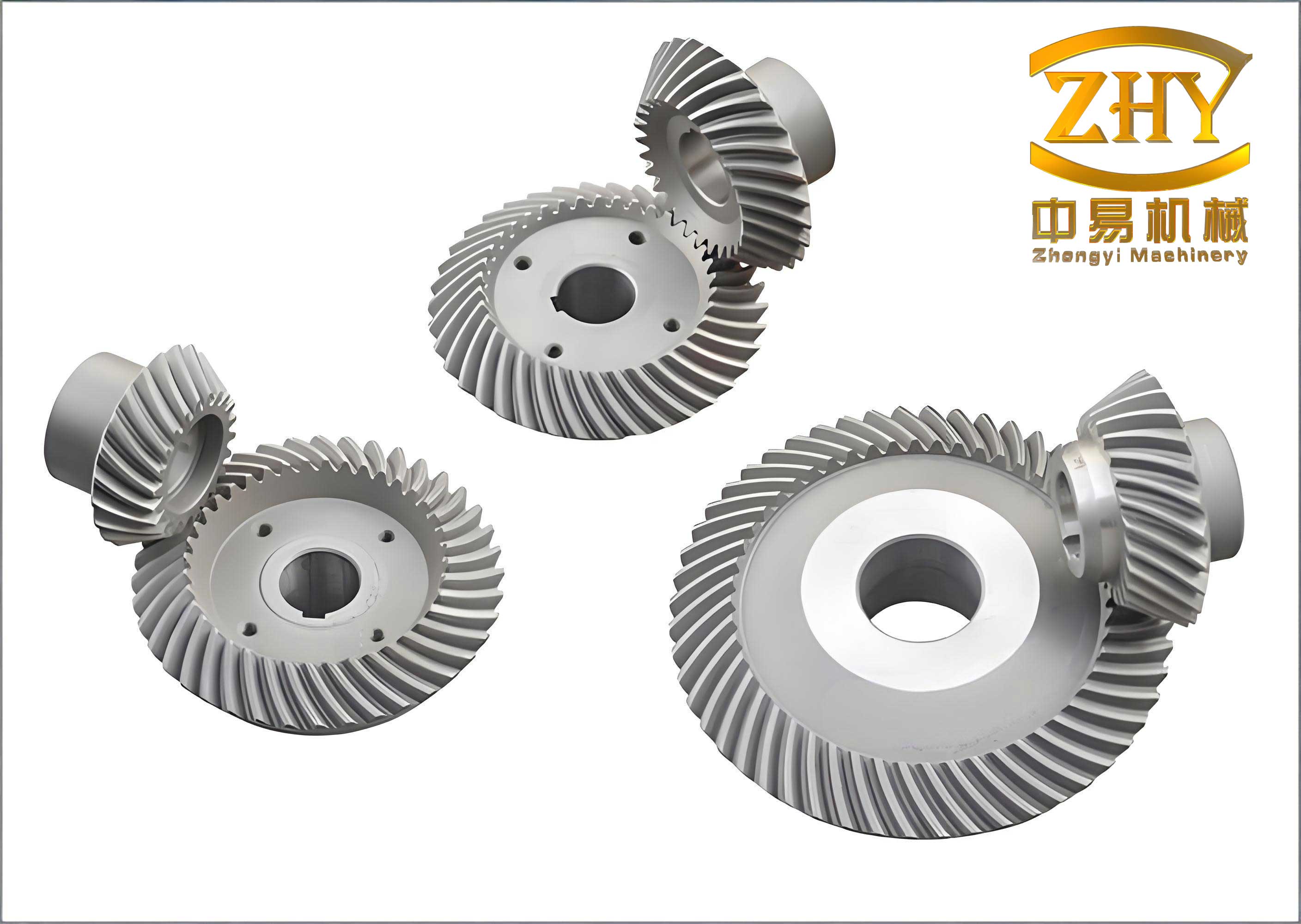
Beyond mechanical assembly, the lubrication of hyperbolic gears is a topic I consider paramount. In many four-wheel agricultural vehicles, the rear axle’s main reducer employs hyperbolic gears for their螺旋传动, which offers平稳 operation, high load capacity, and reduced noise. However, these advantages come with stringent lubrication demands. Hyperbolic gears have a unique tooth geometry that results in sliding contact, requiring specialized oils to prevent wear and scuffing. The lubricant must form a protective film under extreme pressure conditions, a characteristic that standard gear oils lack.
In my experience, using high-quality hyperbolic gear oil is non-negotiable. These oils, such as the馏分型双曲线齿轮油 produced domestically, exhibit excellent oxidation stability, long service life, and superior抗磨性 under挤压. They protect gears from wear and corrosion, significantly extending equipment overhaul intervals and reducing repair costs. The performance of hyperbolic gear oil can be described through lubricant film thickness calculations. For instance, in弹性流体动力润滑 (EHL), the minimum film thickness \( h_{\text{min}} \) between gear teeth can be approximated by the Dowson-Higginson formula:
$$ h_{\text{min}} = 2.65 \frac{G^{0.54} U^{0.7}}{W^{0.13}} R’ $$
where \( G \) is the material parameter, \( U \) is the speed parameter, \( W \) is the load parameter, and \( R’ \) is the effective radius of curvature. For hyperbolic gears, the sliding action increases the importance of maintaining \( h_{\text{min}} \) above a critical value to prevent metal-to-metal contact. This is why hyperbolic gear oils are formulated with添加 that react chemically with gear surfaces under heat to form a low-shear-strength metal化合物 film, enhancing protection.
When applying hyperbolic gear oil, I adhere to several key practices. First, I never substitute普通齿轮油, as it lacks the necessary extreme-pressure additives. Hyperbolic gear oils are typically棕红色 and浅 in color, so I store them separately to avoid confusion with other lubricants like engine oil. During oil changes, I completely drain the old oil, clean the gear housing thoroughly, and then refill with fresh oil. The used oil is stored separately for potential recycling. In winter, I resist the temptation to dilute hyperbolic gear oil with low-凝固点柴油, as this drastically reduces its挤压性能, leading to inadequate film strength and potential gear damage. Instead, I select the appropriate viscosity grade: GL-5 for winter and a higher viscosity for summer, adhering to standards like GB 13895-1992.
The换油周期 for hyperbolic gear oil varies with operating conditions. In my practice, I recommend changes at intervals around 20,000 kilometers for domestic oils, but this can extend with proper maintenance. To illustrate the properties and usage of hyperbolic gear oils, I have compiled a table below:
| Property | Description | Impact on Hyperbolic Gears |
|---|---|---|
| Oxidation Stability | Resists degradation under heat | Extends oil life and prevents sludge formation |
| Extreme Pressure (EP) Additives | Form protective films under high load | Prevents scuffing and wear in hyperbolic gears |
| Viscosity Grade | e.g., GL-5 for winter, higher for summer | Ensures proper film thickness across temperatures |
| Color & Identification | Typically reddish-brown; store separately | Avoids mix-ups with other lubricants |
| Change Interval | ~20,000 km under normal conditions | Maintains performance; adjust based on usage |
To further emphasize the importance of hyperbolic gears, I often discuss their geometric and operational principles. The tooth profile of hyperbolic gears is based on a hyperboloid, which can be described mathematically. For a hyperbolic gear pair, the gear ratio \( i \) is given by:
$$ i = \frac{N_2}{N_1} = \frac{\omega_1}{\omega_2} $$
where \( N_1 \) and \( N_2 \) are the numbers of teeth on the driving and driven gears, and \( \omega_1 \) and \( \omega_2 \) are their angular velocities. The sliding velocity \( V_s \) between teeth, critical for lubrication needs, can be expressed as:
$$ V_s = \left| \omega_1 r_1 – \omega_2 r_2 \right| $$
where \( r_1 \) and \( r_2 \) are the pitch radii. This sliding action is why hyperbolic gears require oils with enhanced film strength. In my maintenance routines, I calculate these parameters to tailor lubrication schedules, especially for heavy-duty agricultural applications where hyperbolic gears are subjected to variable loads.
Another aspect I consider is the thermal management of hyperbolic gears. The heat generated during operation can affect oil viscosity and film formation. The temperature rise \( \Delta T \) in the gear contact can be estimated using:
$$ \Delta T = \frac{\mu P V_s}{J \rho c} $$
where \( \mu \) is the friction coefficient, \( P \) is the load, \( V_s \) is the sliding velocity, \( J \) is the mechanical equivalent of heat, \( \rho \) is the density, and \( c \) is the specific heat capacity. Hyperbolic gear oils are designed to withstand such temperature fluctuations, maintaining their protective qualities. I always monitor gear housing temperatures during operation to detect early signs of lubrication failure.
In terms of故障排除, I have developed a checklist for common issues related to hyperbolic gears. For example, if I notice excessive noise or vibration, I inspect the gear meshing and oil quality. A table helps systematize this:
| Symptom | Possible Cause | Corrective Action |
|---|---|---|
| Growling Noise | Incorrect gear alignment or worn hyperbolic gears | Reassemble with precise alignment; replace gears if necessary |
| Overheating | Inadequate lubrication or wrong oil type | Use proper hyperbolic gear oil; ensure sufficient oil level |
| Oil Leaks | Damaged seals or gaskets | Replace seals during assembly; apply correct torque |
| Poor Shifting | Contaminated oil or shift mechanism issues | Change oil and clean transmission; adjust shift forks |
Throughout my career, I have emphasized preventive maintenance for hyperbolic gears. Regular inspections of oil color and consistency can reveal oxidation or contamination. I also advocate for oil analysis every 10,000 kilometers to监测 additive depletion and wear metals. This proactive approach has saved numerous transmissions from catastrophic failure, particularly in remote agricultural settings where repairs are costly and time-consuming.
In conclusion, the maintenance of agricultural transmissions, especially those featuring hyperbolic gears, is a multifaceted task that blends mechanical skill with lubrication science. From meticulous拆卸 and assembly to the judicious use of specialized hyperbolic gear oil, every step impacts the longevity and performance of the machinery. By adhering to the practices outlined here—using tables for organization, applying formulas to understand underlying principles, and consistently highlighting the role of hyperbolic gears—I have achieved reliable operation in demanding environments. Hyperbolic gears, with their unique demands, remind us that precision in maintenance is not just a recommendation but a necessity for sustainable agriculture.