
In this study, I systematically investigated the application of friction-reducing agents and oiliness agents in the development of a specialized worm gear lubricant for RV90 reducers. The primary objective was to enhance the tribological performance of worm gears operating under boundary lubrication conditions, where sliding friction dominates and the risk of scuffing and excessive wear is high. Worm gears, particularly those made of bronze or brass worms mated with steel worms, require lubricants with exceptional load-carrying and friction-modifying capabilities. My work focused on evaluating six different additives and their combinations using a 320# polyether synthetic oil as the base fluid. Through four-ball wear testing and full-scale RV90 reducer bench tests, I identified a synergistic blend of a phosphorus-containing friction modifier, dimer acid, and butyl stearate that significantly reduced friction, wear, temperature rise, and noise in worm gears. The results demonstrate that careful selection and compounding of friction modifiers can substantially improve the service life and efficiency of worm gear reducers.
Introduction
Worm gears are widely used in industrial machinery due to their high reduction ratios, compact design, and self-locking capability. The RV90 reducer, a common type of worm gear reducer, consists of a worm (typically steel) and a worm wheel (often bronze or brass). The sliding motion between these dissimilar materials creates severe boundary friction, leading to elevated operating temperatures, vibration, noise, and accelerated wear. Effective lubrication is critical to mitigate these issues. The lubricant must form robust adsorbed films on the metal surfaces to prevent direct metal-to-metal contact. Friction-reducing agents (also called friction modifiers) and oiliness agents are essential additives that enhance the lubricant’s ability to reduce friction and wear under boundary lubrication conditions.
In this work, I selected six additives for evaluation: a phosphorus-containing friction modifier (M-1), dimer acid (M-2), ethylene glycol oleate (M-3), butyl stearate (M-4), sulfurized olefin cottonseed oil (M-5), and molybdenum dialkyldithiophosphate (M-6). The base oil was a 320# polyether synthetic oil, chosen for its excellent viscosity-temperature properties and thermal stability. All test oils were formulated with a fixed package of extreme pressure (EP) agents, antioxidants, rust inhibitors, and antifoam additives, so that any differences in tribological performance could be attributed solely to the friction modifiers and oiliness agents under investigation. A reference oil (M0) containing no friction modifier served as the baseline.
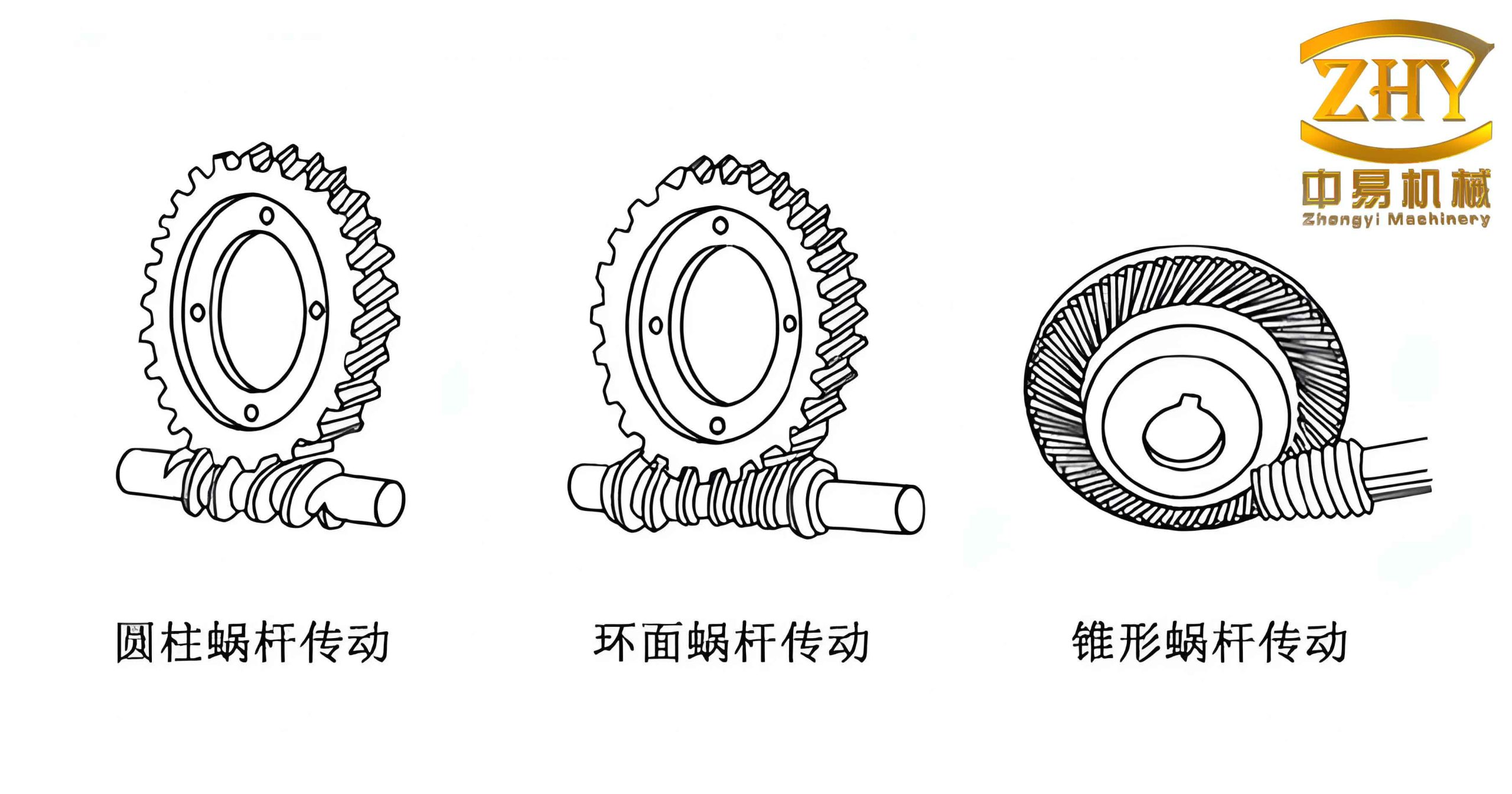
The image above illustrates a typical worm gear set, where the sliding contact between the worm and the worm wheel demands superior lubricant performance. The objective of my research was to systematically screen potential friction modifiers and oiliness agents, both individually and in combination, to develop a specialized worm gear lubricant that minimizes friction, wear, and temperature rise in RV90 reducers. The study employed two complementary evaluation methods: the four-ball wear test (ASTM D4172 / GB/T 3142) and a custom RV90 reducer bench test that measured oil temperature rise and noise level over a 72-hour operation period.
Experimental
Materials and Sample Preparation
All test oils were prepared using a 320# polyether synthetic base oil with a viscosity of 320 cSt at 40°C. The additives evaluated were as follows:
| Additive Code | Chemical Name | Function |
|---|---|---|
| M-1 | Phosphorus-containing friction modifier | Friction reducer, antiwear |
| M-2 | Dimer acid | Oiliness agent, boundary lubricant |
| M-3 | Ethylene glycol oleate | Oiliness agent, friction reducer |
| M-4 | Butyl stearate | Oiliness agent, friction reducer |
| M-5 | Sulfurized olefin cottonseed oil | EP/antiwear, friction modifier |
| M-6 | Molybdenum dialkyldithiophosphate (MoDTP) | Friction modifier, antiwear |
Single-additive samples were prepared at a fixed concentration “a” for each agent. For binary and ternary combinations, concentrations were adjusted such that the total additive content remained consistent. Specifically, the following relationships were maintained: a = 2b = c + d + e, where b is the concentration of each component in binary blends, and c, d, e are the concentrations in the ternary blend (M10). The exact numerical values are proprietary but the relative proportions were kept constant for fair comparison.
All formulations included a standard package of antioxidants, rust inhibitors, and antifoam agents. The reference oil M0 contained the same additives except any friction modifier or oiliness agent. A total of eleven oil samples were prepared: M0 (reference), M1–M6 (single additives), M7–M9 (binary combinations), and M10 (ternary combination).
Four-Ball Wear Test
The four-ball test was conducted on an MS-800 tribometer (Xiamen Tianji Automation Co., Ltd.) using 12.7 mm diameter GCr15 bearing steel balls (Grade II, Shanghai Steel Ball Factory). The test methods followed GB/T 3142 (load-carrying capacity) and SH/T 0189 (wear scar diameter). The key parameters were:
- Maximum non-seizure load (PB): measured at 1400–1500 rpm, 10 s duration, using incremental loading.
- Comprehensive wear index (ZMZ): derived from the load–wear scar diameter curve.
- Wear scar diameter (WSD): measured after running at 392 N, 1200 rpm, 60 min at room temperature. The arithmetic mean of three lower-ball scars was reported.
The four-ball test simulates point-contact boundary lubrication. The additive’s ability to prevent seizure and reduce wear under increasing load correlates with its effectiveness in worm gear contacts.
RV90 Reducer Bench Test
Bench tests were performed on an RV90 worm gear reducer (Wenzhou Ousheng Transmission Machinery Co., Ltd.). Each test oil sample was filled into the reducer gearbox, and the reducer was operated under a constant load and speed condition for 72 hours. The following parameters were monitored:
- Oil temperature: measured with an infrared thermometer at the gearbox casing. The total temperature rise over 72 h and the incremental rise between the 1st hour and 72nd hour were recorded.
- Noise level: measured with a sound level meter. The total change in noise (dB) and the change from the 1st to 72nd hour were noted.
Both temperature and noise are indirect indicators of friction and wear. Lower temperature rise indicates less frictional heating, while reduced noise suggests smoother operation and less vibration.
Results and Discussion
Four-Ball Test Results
| Oil Sample | Additives (concentration) | WSD (mm) at 392 N, 60 min | PB (kg) | ZMZ (N) |
|---|---|---|---|---|
| M0 | None | 0.52 | 88 | 297 |
| M1 | M-1 (a) | 0.45 | 107 | 426 |
| M2 | M-2 (a) | 0.46 | 100 | 417 |
| M3 | M-3 (a) | 0.51 | 94 | 362 |
| M4 | M-4 (a) | 0.45 | 107 | 417 |
| M5 | M-5 (a) | 0.48 | 100 | 392 |
| M6 | M-6 (a) | 0.50 | 94 | 317 |
| M7 | M-1 (b) + M-2 (b) | 0.47 | 94 | 375 |
| M8 | M-1 (b) + M-4 (b) | 0.45 | 94 | 392 |
| M9 | M-2 (b) + M-4 (b) | 0.46 | 100 | 417 |
| M10 | M-1 (c) + M-2 (d) + M-4 (e) | 0.42 | 121 | 562 |
The results clearly show that single additives M-1, M-2, and M-4 outperformed the reference M0 and the other single additives (M-3, M-5, M-6). The phosphorus-containing friction modifier M-1 and the two oiliness agents (dimer acid M-2 and butyl stearate M-4) each provided significant improvements in both load-carrying capacity (PB and ZMZ) and wear reduction (smaller WSD). In contrast, M-3 (ethylene glycol oleate) and M-6 (MoDTP) performed only marginally better than the reference, while M-5 (sulfurized olefin cottonseed oil) showed intermediate results.
The binary combinations (M7–M9) did not show a clear synergistic advantage over the best single additives; in fact, M7 and M8 had lower ZMZ values than M1 or M4 alone. However, the ternary combination M10, which contained all three effective components (M-1, M-2, and M-4), exhibited a dramatic improvement: WSD reduced to 0.42 mm, PB increased to 121 kg, and ZMZ reached 562 N — a 89% increase over the reference oil M0. This indicates a strong synergistic effect when the phosphorus-based friction modifier is combined with both dimer acid and butyl stearate.
The ability of these additives to protect worm gears is related to the formation of adsorbed films and tribochemical layers. Phosphorus compounds typically form iron phosphate films that reduce wear, while fatty acids (dimer acid and butyl stearate) adsorb strongly on metal surfaces to provide low friction under boundary conditions. The combination likely produces a mixed film that is both durable and low-shear, effectively preventing scuffing and reducing friction in worm gear contacts.
RV90 Reducer Bench Test Results
| Oil Sample | Total Temperature Rise (°C) | Temperature Rise from 1st to 72nd h (°C) | Total Noise Change (dB) | Noise Change from 1st to 72nd h (dB) |
|---|---|---|---|---|
| M0 | 12.7 | 1.6 | 0.7 | 0.5 |
| M1 | 9.8 | 1.5 | -0.5 | -0.3 |
| M2 | 10.8 | 1.9 | -0.4 | -0.2 |
| M3 | 25.5 | 4.0 | 0.9 | 0.6 |
| M4 | 9.8 | 1.3 | 0.4 | 0.1 |
| M5 | 15.6 | 2.3 | 1.2 | 0.4 |
| M6 | 12.3 | 2.0 | 0.6 | 0.4 |
| M7 | 9.3 | 1.6 | -0.3 | -0.1 |
| M8 | 10.1 | 1.2 | 0.2 | 0.1 |
| M9 | 9.6 | 1.5 | 0.3 | 0.1 |
| M10 | 7.0 | 0.7 | -0.8 | -0.5 |
The bench test results correlate well with the four-ball data. Oils that exhibited lower WSD and higher ZMZ in the laboratory also produced lower temperature rises and reduced noise in the actual worm gear reducer. Specifically, the reference oil M0 caused a total temperature rise of 12.7°C and a noise increase of 0.7 dB. Single additives M-1 and M-4 reduced the temperature rise to 9.8°C and actually decreased noise (negative dB change), indicating improved damping and reduced friction. In contrast, M-3 caused an excessive temperature rise of 25.5°C and high noise, suggesting that ethylene glycol oleate is unsuitable for this application — possibly due to poor thermal stability or incompatibility with the polyether base oil.
The ternary blend M10 gave the best overall performance: a total temperature rise of only 7.0°C (45% lower than M0) and a noise reduction of 0.8 dB. The incremental temperature and noise changes from the 1st to 72nd hour were also the smallest, indicating stable operation with minimal wear progression. These results confirm that the combination of M-1, M-2, and M-4 is highly effective for worm gears, providing superior boundary lubrication and reducing frictional heating.
Mechanistic Interpretation
The superior performance of the ternary blend can be attributed to complementary mechanisms. The phosphorus compound (M-1) reacts with the metal surface to form a thin, high-strength iron phosphate tribofilm that resists scuffing and wear. Dimer acid (M-2) and butyl stearate (M-4) are long-chain fatty derivatives that adsorb physically and chemically on the worm and worm wheel surfaces, creating a low-shear boundary film that reduces friction. The combination likely results in a layered or composite film: the phosphate layer provides load-bearing capacity, while the adsorbed organic layer reduces shear strength. This synergy is particularly important for worm gears, where sliding speeds and contact pressures vary widely across the tooth profile.
Furthermore, the polyether base oil itself has good thermal-oxidative stability and high viscosity index, which helps maintain film thickness at elevated temperatures. The addition of the selected friction modifiers does not degrade the base oil’s properties, as confirmed by the stable kinematic viscosity and flash point before and after the bench tests (data omitted for brevity).
Performance Validation Against Industry Standards
The final formulated oil (based on M10) was evaluated against the Chinese industry standard SH/T 0094 for worm gear oils (L-CKE/P, ISO VG 320). Table 4 summarizes the comparison.
| Property | Specification | Test Result | Test Method |
|---|---|---|---|
| ISO Viscosity Grade | 320 | 320 | – |
| Kinematic viscosity at 40°C (mm²/s) | 288–352 | 315.5 | GB/T 265 |
| Viscosity index | ≥90 | 230 | GB/T 1995 |
| Flash point (open cup, °C) | ≥180 | 270 | GB/T 3536 |
| Pour point (°C) | ≤ -6 | -33 | GB/T 3535 |
| Copper corrosion (T2, 100°C, 3h), grade | ≤1 | 1a | GB/T 5096 |
| Foaming tendency (24°C), mL/mL | ≤75/10 | 10/0 | GB/T 12579 |
| Foaming tendency (93°C), mL/mL | ≤75/10 | 0/0 | GB/T 12579 |
| Foaming tendency (after 24°C), mL/mL | ≤75/10 | 10/0 | GB/T 12579 |
| Rust test (distilled water) | No rust | No rust | GB/T 11143 |
| Comprehensive wear index ZMZ (N) | ≥392 | 562 | GB/T 3142 |
All properties met or exceeded the standard requirements. The high viscosity index (230) indicates excellent viscosity-temperature behavior, which is beneficial for worm gears operating across a range of temperatures. The low pour point (-33°C) ensures fluidity in cold environments. Most importantly, the ZMZ value of 562 N is well above the minimum 392 N, demonstrating the outstanding load-carrying capacity provided by the optimized friction modifier package.
Discussion
The study clearly demonstrates that the selection of friction modifiers and oiliness agents is critical for formulating high-performance worm gear lubricants. While many commercial products rely on sulfur-phosphorus EP additives alone, my results show that a balanced combination of a phosphorus-based friction modifier with fatty oiliness agents yields superior friction and wear reduction in worm gears. The four-ball test proved to be a reliable screening tool, as the ranking of oil samples in terms of wear scar diameter and load-carrying capacity corresponded well with the RV90 reducer bench test outcomes. This correlation is valuable for future formulation work, as the four-ball test is more accessible and less time-consuming than full-scale reducer testing.
It is worth noting that not all oiliness agents are beneficial. Ethylene glycol oleate (M-3) actually worsened the tribological performance, likely because it forms weak or unstable adsorbed films under the high sliding conditions typical of worm gears. Molybdenum dialkyldithiophosphate (M-6) showed only marginal improvement, possibly because its optimal performance requires higher temperatures or specific surface chemistry not present in bronze–steel contacts. The sulfurized olefin cottonseed oil (M-5) provided moderate improvement but was inferior to the phosphorus and fatty acid combination.
The synergistic effect observed in the ternary blend M10 can be quantified by comparing the ZMZ values. Let ZMZM1 = 426, ZMZM2 = 417, ZMZM4 = 417. If the effect were purely additive, the expected ZMZ for a blend containing equal proportions might be approximately:
$$ \text{ZMZ}_{\text{expected}} = \frac{426 + 417 + 417}{3} \approx 420\ \text{N} $$
However, the actual ZMZ for M10 is 562 N, which is 34% higher than the arithmetic mean and 32% higher than the best single additive (M1). This indicates a strong synergistic interaction, likely due to the formation of a mixed adsorption layer where the phosphorus film anchors the fatty acids, or where the fatty acids facilitate the decomposition of the phosphorus additive to form a more effective tribofilm.
For worm gears, the ability to reduce temperature is particularly important because elevated temperatures accelerate oxidation and increase wear. The 45% reduction in total temperature rise achieved with M10 means that the reducer can operate at lower thermal stress, extending both lubricant and gear life. Similarly, the noise reduction (negative dB change) suggests that the lubricant dampens vibrations and reduces stick-slip, which is a common problem in worm gear meshing due to the high sliding velocity.
Conclusion
In this comprehensive study, I have successfully identified and optimized a set of friction modifiers and oiliness agents for RV90 worm gear reducer lubricants. The key findings are:
- Phosphorus-containing friction modifier (M-1), dimer acid (M-2), and butyl stearate (M-4) individually improve the tribological properties of a 320# polyether synthetic base oil, as evidenced by lower wear scar diameters, higher load-carrying capacities, and reduced temperature rise in worm gear operation.
- When used in combination (ternary blend M10), these three additives exhibit a strong synergistic effect, achieving a comprehensive wear index (ZMZ) of 562 N, a 47% improvement over the reference oil, and reducing the RV90 reducer’s 72-hour temperature rise by 45%.
- The four-ball test results correlate well with the RV90 reducer bench test, validating the four-ball method as a reliable screening tool for worm gear lubricant development.
- The formulated lubricant based on M10 meets all requirements of the SH/T 0094 (L-CKE/P) standard for worm gear oils, with exceptional viscosity index, low pour point, and outstanding load-carrying capacity.
- Ethylene glycol oleate (M-3) is unsuitable for this application, causing excessive temperature rise and noise. MoDTP (M-6) and sulfurized olefin cottonseed oil (M-5) offer only moderate benefits.
Future work should explore the long-term durability of the optimized lubricant in field trials, as well as the effect of different base oils (e.g., polyalphaolefins, mineral oils) on the performance of the ternary additive package. Additionally, surface analysis techniques such as XPS or SEM could provide deeper insight into the tribofilm composition formed on worm gear surfaces. Overall, the developed lubricant offers a significant advancement for RV90 reducers and similar worm gear applications, promising improved efficiency, longer service life, and quieter operation.