
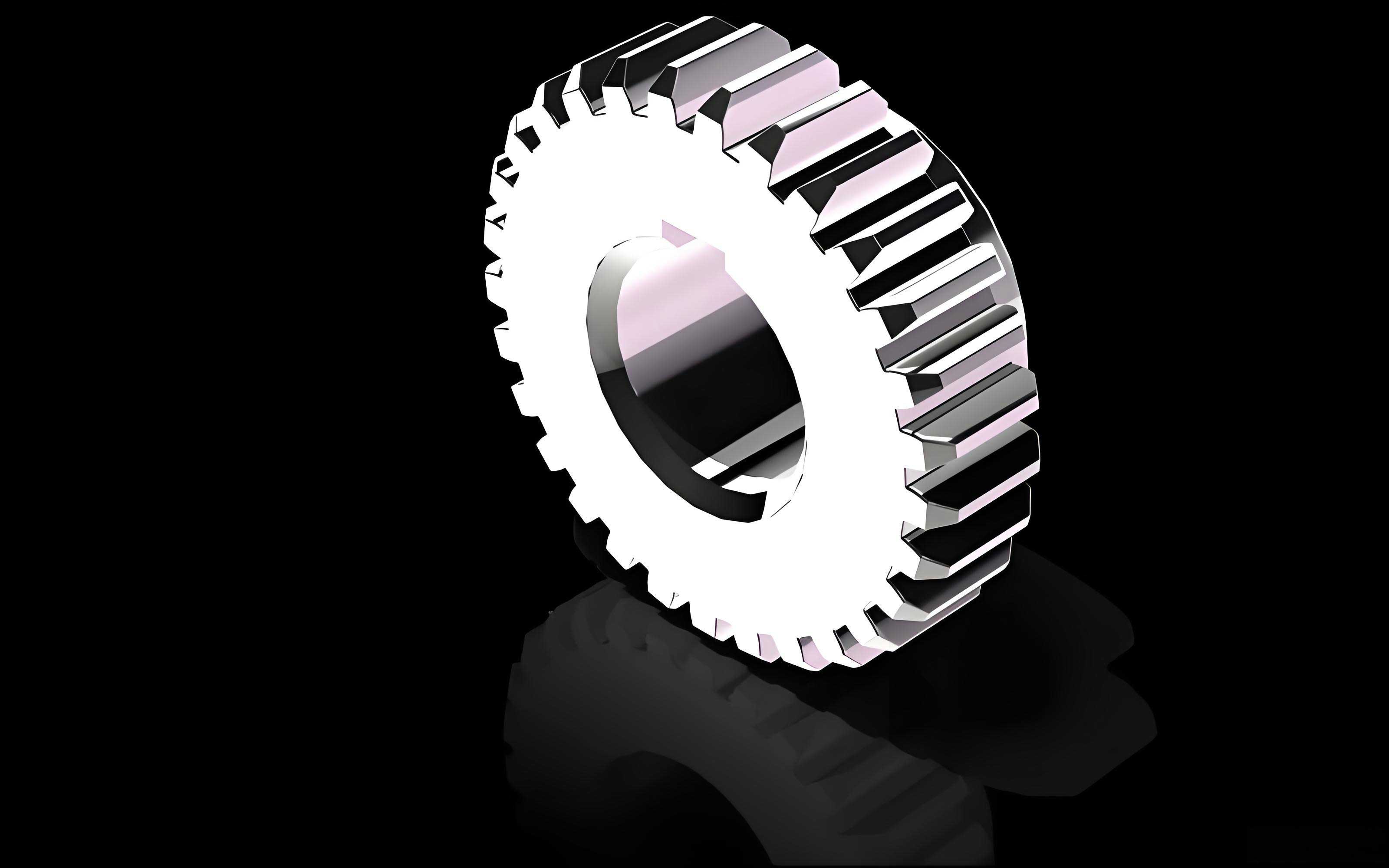
Gears are among the most widely used mechanical transmission components, renowned for their compact structure, high power transmission capacity, efficiency, longevity, reliability, and accurate transmission ratios. The precision forging of spur gears, in particular, has been a persistent research focus due to its significant advantages in material utilization, mechanical properties, and near-net-shape manufacturing.
The accuracy of cold-forged precision components is influenced by a complex interplay of factors: the macro- and micro-geometric, physical, and mechanical characteristics of the blank material; the geometric shape, surface quality, wear resistance, and thermal sensitivity of the dies; the structural design, rigidity, and load-bearing capacity of the tooling; the kinematic accuracy, stiffness, and thermal transmission sensitivity of the forming equipment; and finally, the process parameters themselves, including lubrication, strain, strain rate, and internal temperature distribution of the workpiece. Achieving optimal control requires simultaneous consideration of all these variables, presenting a formidable engineering challenge. This work focuses on a critical aspect of this challenge: the optimization of die geometry to minimize forming load in the cold precision forging of a spur gear.
The dimensional details of the target spur gear for this study are as follows: number of teeth, $z = 18$; normal module, $m_n = 2.0$ mm; normal pressure angle, $\alpha_n = 20^\circ$; and face width, $h_g = 15$ mm. The initial billet is a cylindrical slug. Its dimensions are calculated using the volume constancy principle, accounting for necessary post-forging machining allowances. The designed billet dimensions are $\varnothing 28.5$ mm $\times$ 16.2 mm.
Process Scheme and Numerical Simulation
Two primary process schemes were investigated and compared. The first is the conventional floating die process. In this scheme, the outer ring (die) containing the tooth profile is allowed to float axially, while the upper and lower punches move to compress the billet and form the gear teeth. The second, novel scheme introduces an additional feature: tooth-end overflow cavities. Here, cavities are machined into the end faces of both the upper and lower punches, aligned with the tooth tips of the spur gear. This modification is applied in conjunction with the floating die principle.
The core idea is that during the final stages of tooth cavity filling, excess material is directed to flow into these overflow cavities instead of creating excessive resistance against the punch faces. This design aims to transform the axial frictional force, which typically hinders radial material flow, into a driving force that aids in filling the tooth tips, thereby reducing the overall forming load and improving fill quality, particularly at the tooth ends. The key geometric design parameters for this new scheme are the width $W_u$ and height $H_u$ of the upper punch overflow cavity, and the width $W_l$ and height $H_l$ of the lower punch overflow cavity.
Finite Element Analysis Model
To analyze these processes, a three-dimensional finite element model was established. Exploiting the symmetry of the spur gear, only one tooth sector was modeled to significantly reduce computational time. The 3D models for the upper punch, lower punch, floating die, and billet were created using CAD software and then imported into the finite element simulation environment.
The dies were modeled as rigid bodies. The billet material was modeled as a rigid-viscoplastic material, appropriate for large deformation cold forging analysis. The material selected for simulation was AISI-1015 steel. The flow stress behavior of the material during cold forging is often described by a power-law relationship, which can be approximated for many steels as:
$$
\bar{\sigma} = K \cdot (\bar{\varepsilon} + \varepsilon_0)^n
$$
where $\bar{\sigma}$ is the effective stress, $K$ is the strength coefficient, $\bar{\varepsilon}$ is the effective strain, $\varepsilon_0$ is a pre-strain constant, and $n$ is the strain-hardening exponent. For AISI-1015 in cold working, typical values might be $K \approx 750$ MPa, $n \approx 0.2$, and $\varepsilon_0 \approx 0.01$.
The friction condition at the die-workpiece interface was modeled using the shear friction model:
$$
\tau_f = m \cdot \frac{\sigma_s}{\sqrt{3}}
$$
where $\tau_f$ is the frictional shear stress, $m$ is the friction factor, and $\sigma_s$ is the current yield shear stress of the material. A friction factor of $m = 0.15$ was applied, representative of cold forging with good lubrication.
The simulation was conducted under isothermal conditions at room temperature. The upper punch and the floating die were given a velocity of 1.0 mm/s, while the lower punch remained stationary. Due to the complex geometry of the spur gear tooth cavity, an automatic remeshing algorithm with tetrahedral elements was employed. Local mesh refinement was activated in the tooth cavity region to ensure accurate geometry approximation. The direct constraint method was used for contact handling, and a full Newton-Raphson iterative method was applied to solve the nonlinear equations.
Comparison of Process Schemes
The simulation results for the two schemes were compared. The conventional floating die process resulted in incomplete filling at the upper tooth tips, manifesting as a “flash-free” defect or underfill. Furthermore, the forming load was high. In contrast, the scheme incorporating the tooth-end overflow cavities demonstrated complete and饱满 filling of the spur gear tooth profile. Crucially, the load-stroke curve showed a significant reduction in the maximum forming load compared to the conventional method. This initial finding validated the feasibility of the new spur gear forging scheme and established a foundation for its parametric optimization.
Optimization Model and Orthogonal Experimental Design
The objective of the optimization is to minimize the total forming load, $F_{total}$, required to forge the spur gear. The design variables are the four key geometric parameters of the overflow cavities: $W_u$, $H_u$, $W_l$, and $H_l$. The optimization problem can thus be formulated as:
$$
\begin{aligned}
&\text{Minimize:} \quad F_{total} = f(W_u, H_u, W_l, H_l) \\
&\text{Subject to:} \quad W_u^{\text{min}} \leq W_u \leq W_u^{\text{max}} \\
&\quad \quad \quad \quad \quad H_u^{\text{min}} \leq H_u \leq H_u^{\text{max}} \\
&\quad \quad \quad \quad \quad W_l^{\text{min}} \leq W_l \leq W_l^{\text{max}} \\
&\quad \quad \quad \quad \quad H_l^{\text{min}} \leq H_l \leq H_l^{\text{max}}
\end{aligned}
$$
The constraints represent practical manufacturing limits for the cavity dimensions.
To efficiently explore the influence of these four factors, an orthogonal experimental design (OED) method was employed. OED is a highly efficient statistical method for studying multi-factor, multi-level problems. It uses specially designed orthogonal arrays to arrange experiments, allowing for a comprehensive analysis of factor effects with a minimal number of simulation runs. For this study, a four-factor, four-level design was chosen. The factors and their selected levels are detailed in Table 1. The selection of levels was based on preliminary simulations and geometric constraints of the spur gear tooth.
| Level | $W_u$ (mm) | $H_u$ (mm) | $W_l$ (mm) | $H_l$ (mm) |
|---|---|---|---|---|
| 1 | 1.5 | 1.5 | 1.5 | 1.5 |
| 2 | 2.5 | 2.0 | 2.5 | 2.0 |
| 3 | 3.5 | 2.5 | 3.5 | 2.5 |
| 4 | 4.5 | 3.0 | 4.5 | 3.0 |
An $L_{16}(4^5)$ orthogonal array was used, which can accommodate up to five four-level factors. One column was left empty to estimate experimental error. The 16 simulation runs defined by the orthogonal array are listed in Table 2, along with the resulting forming load $F_{total}$ obtained from each finite element simulation.
| Exp. No. | $W_u$ | $H_u$ | $W_l$ | $H_l$ | Empty Column | $F_{total}$ (kN) |
|---|---|---|---|---|---|---|
| 1 | 1 | 1 | 1 | 1 | 1 | 224.51 |
| 2 | 1 | 2 | 2 | 2 | 2 | 223.87 |
| 3 | 1 | 3 | 3 | 3 | 3 | 231.34 |
| 4 | 1 | 4 | 4 | 4 | 4 | 234.59 |
| 5 | 2 | 1 | 2 | 3 | 4 | 218.76 |
| 6 | 2 | 2 | 1 | 4 | 3 | 219.31 |
| 7 | 2 | 3 | 4 | 1 | 2 | 226.45 |
| 8 | 2 | 4 | 3 | 2 | 1 | 220.89 |
| 9 | 3 | 1 | 3 | 4 | 2 | 217.89 |
| 10 | 3 | 2 | 4 | 3 | 1 | 219.50 |
| 11 | 3 | 3 | 1 | 2 | 4 | 215.67 |
| 12 | 3 | 4 | 2 | 1 | 3 | 221.34 |
| 13 | 4 | 1 | 4 | 2 | 3 | 219.67 |
| 14 | 4 | 2 | 3 | 1 | 4 | 220.45 |
| 15 | 4 | 3 | 2 | 4 | 1 | 221.78 |
| 16 | 4 | 4 | 1 | 3 | 2 | 219.56 |
Analysis of Optimization Results
Range Analysis
The first method of analyzing the orthogonal experimental results is range analysis. For each factor, the average forming load ($K_i$) is calculated for each level $i$. The range ($R$) for a factor is the difference between the maximum and minimum average values across its levels: $R = \max(K_i) – \min(K_i)$. A larger range indicates a greater influence of that factor on the forming load of the spur gear. The calculated average values and ranges are summarized in Table 3.
| Factor | Level 1 | Level 2 | Level 3 | Level 4 | Range ($R$) | Rank |
|---|---|---|---|---|---|---|
| $W_u$ | 228.58 | 221.35 | 218.60 | 220.37 | 9.98 | 2 |
| $H_u$ | 220.21 | 220.78 | 223.81 | 224.10 | 3.89 | 4 |
| $W_l$ | 219.76 | 221.44 | 222.39 | 225.30 | 5.54 | 3 |
| $H_l$ | 223.19 | 219.73 | 222.32 | 223.65 | 3.46 | 1 |
The ranking of factors based on range magnitude is: $H_l$ (1st, most influential) $>$ $W_u$ (2nd) $>$ $W_l$ (3rd) $>$ $H_u$ (4th, least influential). This suggests that the height of the lower overflow cavity ($H_l$) and the width of the upper overflow cavity ($W_u$) are the primary drivers of forming load variation in this spur gear forging process. The optimal level for each factor, corresponding to the minimum average load, can be identified from the $K_i$ values: $W_u$ at Level 3 (3.5 mm), $H_u$ at Level 1 (1.5 mm), $W_l$ at Level 1 (1.5 mm), and $H_l$ at Level 2 (2.0 mm). This combination ($W_u$=3.5, $H_u$=1.5, $W_l$=1.5, $H_l$=2.0) was not among the original 16 test runs. A confirmation simulation with this parameter set yielded a forming load of approximately 217.2 kN, which was indeed lower than any result in the orthogonal array and significantly lower (approximately 14.6% reduction) than the load required for the conventional floating die process without overflow cavities (simulated at ~254 kN).
Analysis of Variance (ANOVA)
While range analysis identifies influential factors and suggests optimal levels, Analysis of Variance (ANOVA) provides a more rigorous statistical framework. It partitions the total variation in the response (forming load) into contributions from each factor and the experimental error, allowing for a test of significance. The results of the ANOVA are presented in Table 4.
| Source | Sum of Squares (SS) | Degrees of Freedom (df) | Mean Square (MS) | F-value | Significance |
|---|---|---|---|---|---|
| $W_u$ | 209.52 | 3 | 69.84 | 15.23 | * |
| $H_u$ | 32.87 | 3 | 10.96 | 2.39 | |
| $W_l$ | 68.14 | 3 | 22.71 | 4.95 | * |
| $H_l$ | 26.48 | 3 | 8.83 | 1.92 | |
| Error | 13.76 | 3 | 4.59 | ||
| Total | 350.77 | 15 |
* Significant at $\alpha = 0.10$ level (Critical $F_{0.10}(3,3) = 5.39$)
The ANOVA results indicate that among the four factors studied for the spur gear forging process, the width of the upper overflow cavity ($W_u$) and the width of the lower overflow cavity ($W_l$) have a statistically significant effect on the forming load at the 10% significance level. The heights of the cavities ($H_u$ and $H_l$) do not show a statistically significant effect within the tested range, although $H_l$ was identified as most influential in the range analysis. This discrepancy highlights that range analysis indicates the magnitude of effect but not its statistical reliability. The significant factors should guide the primary focus of optimization. The optimal level selection from the range analysis—minimizing the average load for each factor—remains a valid engineering approach, and the confirmation run validated its effectiveness.
Discussion and Mechanism
The success of the tooth-end overflow cavity in reducing the forging load for the spur gear can be explained through metal flow mechanics. In conventional closed-die forging, the final stage involves filling sharp corners and thin sections, which requires very high pressure due to intense localized deformation and high frictional constraints. The overflow cavities provide a “relief valve” for material at the tooth tips. This alters the stress state and flow pattern. The material flowing into the cavity experiences lower resistance than material trying to completely fill the final corner of the die tooth tip against the punch face. This分流 (flow division) reduces the peak pressure required. The optimization essentially finds the cavity dimensions that provide the most efficient relief without compromising the quality of the forged spur gear tooth form. The finding that cavity width is more statistically significant than height may relate to the circumferential flow component necessary to fill the spur gear teeth; a wider cavity offers a larger entrance for material to escape the high-pressure zone radially.
Conclusion
This study demonstrates the effectiveness of integrating tooth-end overflow cavities with a floating die for the cold precision forging of spur gears. Numerical simulation using the finite element method confirmed that this novel scheme significantly reduces forming load and ensures complete tooth filling compared to the traditional floating die approach. A systematic optimization based on orthogonal experimental design and statistical analysis was successfully conducted. The width of the upper overflow cavity ($W_u$) and the width of the lower overflow cavity ($W_l$) were identified as the most significant design parameters affecting the forming load. The optimal combination of parameters within the studied ranges was determined, achieving a load reduction of approximately 14.6% relative to the conventional process. This work provides a clear methodology and valuable design insights for optimizing die geometry in spur gear cold forging, contributing to more energy-efficient and robust manufacturing processes for high-quality spur gears. Future work could explore the interaction effects between factors, incorporate multi-objective optimization including die stress and wear, and validate the findings with physical experiments.