
The adoption of cold forging for producing spur and pinion gears represents a significant advancement over traditional machining methods. This process offers substantial benefits including superior material utilization, energy savings, high production efficiency, and reduced cost. Crucially, it enhances the microstructure and mechanical properties of the forged components. Gears manufactured through cold forging exhibit improved impact strength and extended service life, making the technology increasingly vital for high-performance applications. The extrusion of a spur and pinion involves forming the gear teeth by forcing metal to flow into a complex, shaped cavity under high pressure, which places immense demands on the die tooling.
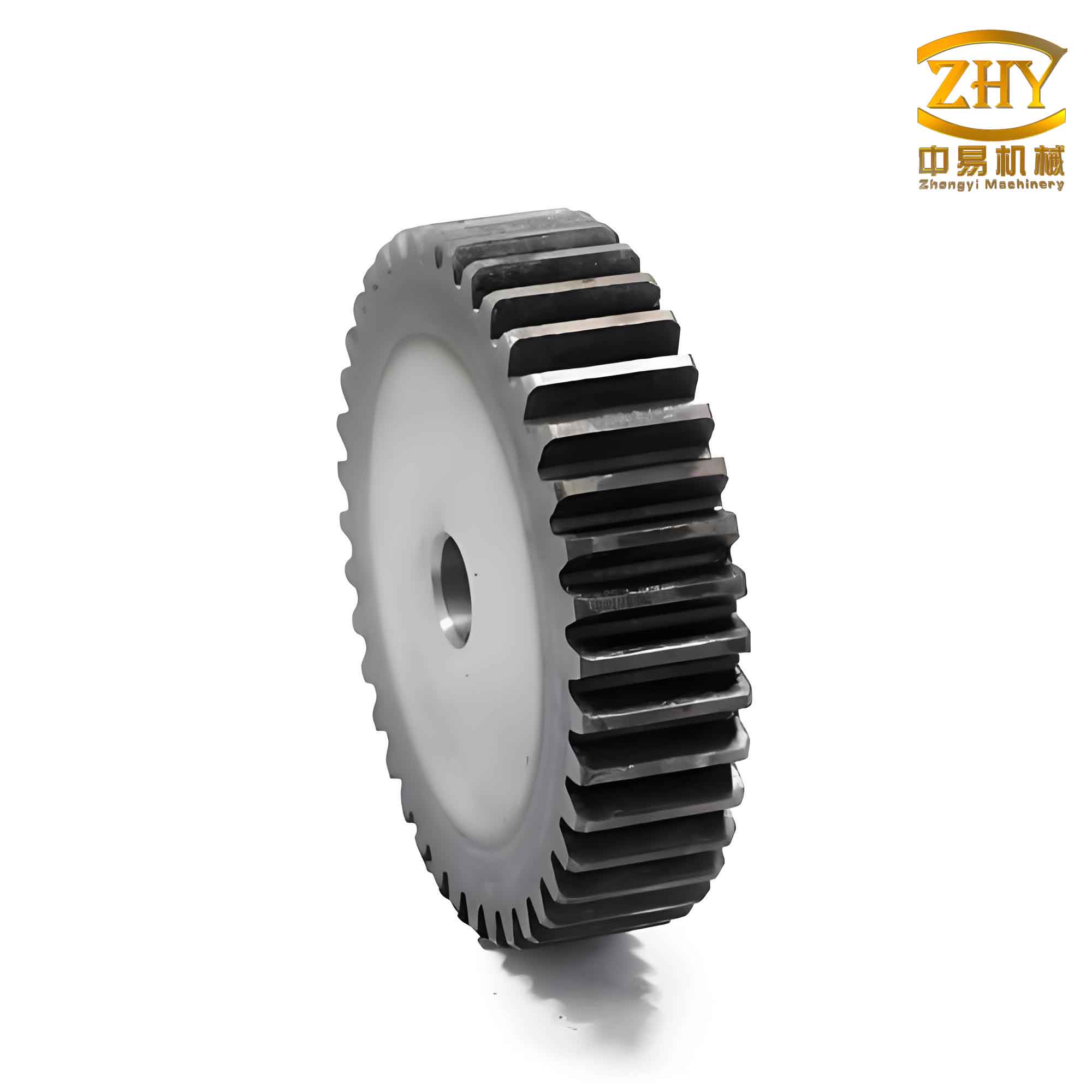
The primary challenge in cold extrusion of a spur and pinion lies in the design of the die cavity, which must withstand extreme internal pressures often exceeding 2000 MPa. A monolithic die would be prone to catastrophic failure due to tensile stresses developing at the inner wall of the tooth-shaped cavity. To mitigate this, a prestressed combined (or multi-layer) die structure is universally employed. This design typically consists of two or three concentric rings assembled with interference fits. The resulting compressive pre-stresses counteract the tensile working stresses during extrusion, thereby preventing fatigue cracking and allowing the use of high-grade, brittle materials like cemented carbide for the inner ring. However, optimizing this combined die for a spur and pinion cavity is non-trivial. The classical optimization formulas derived from thick-walled cylinder theory are not directly applicable due to the non-cylindrical geometry of the tooth profile. This article details a robust, hybrid optimization methodology that integrates analytical preliminary design with finite element simulation and iterative numerical techniques to achieve an optimal design for spur and pinion extrusion dies.
Preliminary Analytical Design Based on Thick-Walled Cylinder Theory
The initial design phase simplifies the complex spur and pinion die cavity into an equivalent thick-walled cylinder. For a three-layer combined die, the objective is to determine the optimal radial dimensions of each ring (inner, middle, outer) and the initial interference values at their interfaces. The design aims to maximize the allowable internal pressure $$p_1$$ while ensuring the stress state at the inner wall of the inner ring remains compressive or neutral.
Consider a generic thick-walled cylinder with inner radius $$R_1$$, outer radius $$R_2$$, internal pressure $$p_1$$, and external pressure $$p_2$$. The Lamé equations for radial ($$\sigma_r$$) and hoop ($$\sigma_{\theta}$$) stresses at any radius $$r$$ are:
$$
\sigma_{\theta} = \frac{R_1^2 p_1 – R_2^2 p_2}{R_2^2 – R_1^2} + \frac{(p_1 – p_2) R_1^2 R_2^2}{r^2 (R_2^2 – R_1^2)}
$$
$$
\sigma_{r} = \frac{R_1^2 p_1 – R_2^2 p_2}{R_2^2 – R_1^2} – \frac{(p_1 – p_2) R_1^2 R_2^2}{r^2 (R_2^2 – R_1^2)}
$$
For a spur and pinion combined die, we define the geometry as shown in the schematic below, with pressures at each interface. Let $$r_1$$ be the inner radius (approximated by the spur gear’s tip circle radius), $$r_2$$ the interface between inner and middle ring, $$r_3$$ the interface between middle and outer ring, and $$r_4$$ the outer radius of the assembly. The corresponding interfacial pressures are $$p_1$$ (working pressure), $$p_2$$, $$p_3$$, and $$p_4$$ (often atmospheric, i.e., 0).
We define dimensionless ratios for optimization:
$$Q_1 = r_1 / r_2, \quad Q_2 = r_2 / r_3, \quad Q_3 = r_3 / r_4, \quad Q = r_1 / r_4 = Q_1 Q_2 Q_3$$
Applying the condition of zero hoop stress at the inner wall ($$r = r_1$$) for a brittle inner ring material (e.g., cemented carbide) yields:
$$
p_1 = \frac{2p_2}{1 + Q_1^2}
$$
Using the maximum shear stress (Tresca) criterion for the middle and outer rings (typically made of tool steels like H13 and 40Cr) gives:
$$
p_2 – p_3 = \frac{[\sigma_2]}{2}(1 – Q_2^2), \quad p_3 = \frac{[\sigma_3]}{2}(1 – Q_3^2)
$$
where $$[\sigma_2]$$ and $$[\sigma_3]$$ are the allowable stresses for the middle and outer ring materials, respectively.
The core principle of optimal design is to distribute the ratios $$Q_1$$, $$Q_2$$, and $$Q_3$$ such that the sustainable internal pressure $$p_1$$ is maximized. This leads to the following optimality conditions derived from $$\partial p_1 / \partial Q_1 = 0$$ and $$\partial p_1 / \partial Q_2 = 0$$:
$$
Q_2 = \frac{p_1}{[\sigma_2]} Q_1, \quad Q_3 = \frac{p_1}{[\sigma_3]} Q_1
$$
The total ratio $$Q$$ is typically constrained between 1/4 and 1/6 for heavy-duty forging dies. For a spur and pinion extrusion with high pressure, we select $$Q = 1/6$$. Solving the system of equations with known material allowables (e.g., $$[\sigma_2]=1750 \text{ MPa}$$, $$[\sigma_3]=1600 \text{ MPa}$$) and an estimated working pressure $$p_1$$ (from prior FE analysis, e.g., 2283 MPa) provides optimal values for $$Q_1$$, $$Q_2$$, and $$Q_3$$, and consequently all radii.
The theoretical interference values at the interfaces are then calculated. For the interference between the inner and middle rings, $$\Delta d_2$$:
$$
\Delta d_2 = d_2 \cdot p_2 \cdot \frac{1+Q_1^2}{1-Q_1^2} \cdot \frac{1}{2} \left[ \frac{1}{E_1}\left(\frac{1+Q_1^2}{1-Q_1^2} – \mu_1\right) + \frac{1}{E_2}\left(\frac{1+Q_2^2 Q_3^2}{1-Q_2^2 Q_3^2} + \mu_2\right) \right]
$$
where $$d_2 = 2r_2$$, and $$E_1, \mu_1$$ and $$E_2, \mu_2$$ are the Young’s modulus and Poisson’s ratio for the inner and middle ring materials.
The interference between the middle and outer rings, $$\Delta d_3$$, can be approximated by:
$$
\Delta d_3 \approx d_3 \cdot \frac{ [\sigma_3] – p_1 Q_2^2 }{E_2}
$$
Applying these formulas to a sample spur and pinion geometry yields the preliminary design parameters summarized in Table 1.
| Component | Inner Diameter (mm) | Outer Diameter (mm) |
|---|---|---|
| Inner Ring (Cavity) | 66.0 (Tip Circle) | 133.0 |
| Middle Ring | 133.0 | 234.6 |
| Outer Ring | 234.6 | 396.0 |
| Theoretical Interference: Δd₂ = 0.585 mm, Δd₃ = 0.580 mm | ||
Iterative Optimization of Interference via Finite Element Analysis and Golden Section Search
The preliminary design based on cylindrical analogy provides a valuable starting point but is insufficient for the final spur and pinion die. The complex tooth profile in the inner ring creates stress concentrations and alters the load distribution, meaning the theoretical interferences often lead to suboptimal or even overstressed conditions when analyzed with accurate numerical tools. Therefore, the second phase involves refining the interference values using a combination of Finite Element Analysis (FEA) and an iterative optimization algorithm.
The objective is to find the set of interference values (Δd₂, Δd₃) that result in the maximum beneficial pre-stress without overloading any component, particularly the brittle inner ring. A practical target is to make the maximum effective (von Mises) stress in the inner ring under the combined pre-stress and working load equal to, but not exceeding, its allowable stress $$[\sigma_1]$$ (e.g., 3300 MPa for cemented carbide YG20). The theoretical interference values from Table 1 define the upper bound of the search space, while zero interference defines the lower bound.
The Golden Section Search, an efficient iterative technique for finding the extremum of a unimodal function, is perfectly suited for this one-dimensional optimization along the interference variable. The process for optimizing the primary interference Δd₂ is as follows (a similar process can be applied to Δd₃, often simplified by keeping a fixed ratio based on preliminary design):
- Define Search Interval: Initial interval [a, b] = [0, Δd₂_theoretical].
- Evaluate Function: The “function” to evaluate is the maximum effective stress in the inner ring from an FEA simulation of the assembled die under the working load. This requires building a parameterized FE model of the spur and pinion combined die, applying the interference fit, and then applying the extrusion pressure $$p_1$$ to the tooth surfaces.
- Iterate: For iteration k, choose two internal points within the current interval:
$$x_1 = a + (1-\phi)(b-a), \quad x_2 = a + \phi(b-a)$$
where $$\phi = (\sqrt{5}-1)/2 \approx 0.618$$ (the golden ratio). Run FEA simulations for interferences Δd₂ = x₁ and Δd₂ = x₂. Compare the resulting maximum effective stresses (σ_vM1, σ_vM2) in the inner ring against the target allowable stress. - Narrow Interval: Based on the stress values (seeking to minimize the difference from the target allowable), discard the subinterval that does not contain the optimum. For example, if |σ_vM1 – [σ₁]| < |σ_vM2 – [σ₁]|, then the new interval becomes [a, x₂]. Otherwise, it becomes [x₁, b].
- Repeat: Continue the process until the interval length is smaller than a specified tolerance (e.g., 0.01 mm). The midpoint of the final interval gives the optimized interference value.
Table 2 illustrates the progression of this iterative optimization for a specific spur and pinion case. The theoretical Δd₂ was 0.585 mm. The allowable stress for the inner ring was 3300 MPa.
| Iteration | Search Interval [a, b] (mm) | Test Point Δd₂ (mm) | FEA Result: Max σ_vM in Inner Ring (MPa) | New Interval |
|---|---|---|---|---|
| 0 | [0.000, 0.585] | – | – | – |
| 1 | [0.000, 0.585] | x₁ = 0.361 x₂ = 0.224 |
σ_vM1 = 2308 σ_vM2 = 1895 |
[0.361, 0.585] |
| 2 | [0.361, 0.585] | x₁ = 0.494 x₂ = 0.452 |
σ_vM1 = 3166 σ_vM2 = 2780 |
[0.494, 0.585] |
| 3 | [0.494, 0.585] | x₁ = 0.547 x₂ = 0.532 |
σ_vM1 = 3512 σ_vM2 = 3365 |
[0.494, 0.547] |
| 4 | [0.494, 0.547] | x₁ = 0.514 x₂ = 0.527 |
σ_vM1 = 3294 σ_vM2 = 3401 |
Stop (Interval ~0.053) |
The fourth iteration yields an optimal interference value of approximately 0.514 mm, resulting in a maximum stress of 3294 MPa, which is remarkably close to the 3300 MPa allowable. For practical manufacturing, this value is rounded to 0.51 mm. A final verification FEA run at Δd₂ = 0.51 mm confirms a stress of 3268 MPa, which is safe and efficient. The optimized parameters for the spur and pinion die are finalized in Table 3.
| Component | Inner Diameter (mm) | Outer Diameter (mm) | Optimized Interference (mm) |
|---|---|---|---|
| Inner Ring (Cavity) | 66.0 | 133.0 | Δd₂ = 0.51 |
| Middle Ring | 133.0 | 234.6 | Δd₃ = 0.51 |
| Outer Ring | 234.6 | 396.0 | – |
Summary of the Integrated Optimization Methodology
The complete, robust methodology for optimizing a combined extrusion die for a spur and pinion can be summarized in a clear, three-step procedure:
Step 1: Analytical Preliminary Sizing. Treat the gear-shaped cavity as an equivalent thick-walled cylinder. Use classical Lamé equations and optimality conditions for multi-layer cylinders to calculate the preliminary radial dimensions (r₁, r₂, r₃, r₄) and theoretical interference fits (Δd₂, Δd₃). This provides a physically reasoned starting point for the numerical optimization.
Step 2: Iterative Interference Refinement. Recognize that the theoretical interferences from Step 1 are not optimal for the actual spur and pinion profile. Employ the Golden Section Search algorithm to define a systematic search within the bounds [0, Δd_theoretical]. At each candidate interference value, perform a detailed Finite Element Analysis of the fully assembled die under working load. The objective function is the deviation of the maximum effective stress in the inner ring from its allowable stress. The iteration converges to the optimal interference value that maximizes pre-stress utility without causing failure.
Step 3: Design Finalization. Combine the optimized interference values from Step 2 with the radial dimensions from Step 1. This results in the final, optimized design specifications for the spur and pinion combined extrusion die. A final verification FEA is recommended to confirm the stress state under both assembly (interference fit) and operational (extrusion pressure) conditions.
Conclusion
The successful design of a combined extrusion die for spur and pinion gears necessitates a hybrid approach that marries analytical foundations with computational power. Relying solely on formulas for simple cylinders is inadequate due to the stress concentration effects inherent in the tooth geometry. Conversely, pure numerical trial-and-error is inefficient and lacks guidance. The methodology presented herein—starting with an analytical optimal preliminary design, followed by a focused, iterative optimization of the critical interference fits using FEA and the Golden Section Search—provides a systematic and efficient path to an optimized die. This process ensures that the high-strength, often brittle material of the inner die ring is utilized to its maximum safe capacity, directly contributing to die longevity, process reliability, and the economic production of high-quality spur and pinion gears through cold forging. This integrated approach is a powerful tool for advancing the design of complex forging tooling.