
The transmission of motion and power through angular drives is a fundamental requirement in countless mechanical systems, particularly in the automotive industry where space constraints and reliability are paramount. Traditionally, the worm and worm gear assembly has been the go-to solution for right-angle power transmission, prized for its high reduction ratios, smooth operation, and compact design. A significant characteristic of this pair, especially with a single-start worm, is its potential for self-locking—a state where the drive cannot be back-driven from the output side. However, this feature comes at the cost of relatively low transmission efficiency. While multi-start worms can improve efficiency, they introduce complexities in manufacturing, requiring dedicated, matched hobbing tools for the worm gear, which increases cost and lead time.
To circumvent these limitations while retaining the benefits of a right-angle drive, the combination of a worm with a helical gear has emerged as a highly effective alternative. This configuration maintains a compact form factor but offers superior transmission efficiency and, critically, enables greater standardization, generalization, and serialization of cutting tools. The kinematic interface shifts from the enveloping line/surface contact of a worm-worm gear pair to a point or limited line contact with helical gears. Although this may slightly reduce the absolute load-carrying capacity compared to a fully conjugate pair, the performance in terms of noise, durability, and application range in automotive subsystems is largely comparable and often advantageous.
The central design parameter that differentiates applications in this context is back-drive torque, also referred to as reverse driving torque. This is the torque required at the output shaft (the helical gear shaft) to cause the worm, and consequently the motor, to rotate in reverse. This torque must overcome the sum of all internal resistances: the friction in the gear train, the specific sliding friction at the worm-helical gear interface, and the counter-torque generated by the motor when back-driven. The ability to precisely control—whether to minimize or maximize—this back-drive torque is what unlocks diverse functionalities in modern automotive mechanisms.
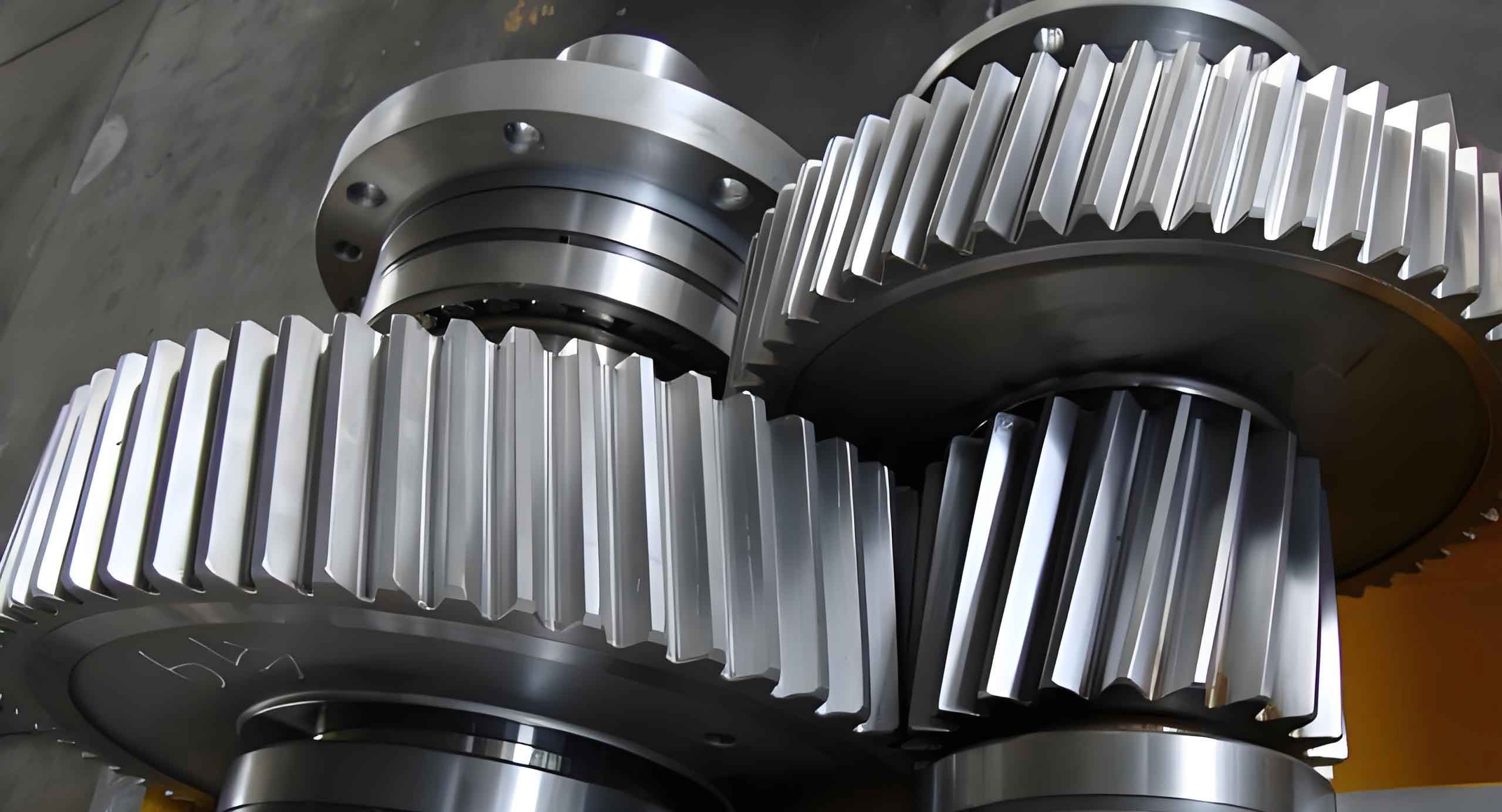
Fundamental Mechanics of Worm and Helical Gear Interaction
The interaction between a worm and a helical gear is governed by the principles of screw mechanics. The worm, essentially a screw thread, meshes with the inclined teeth of the helical gear. The key parameters defining this mesh and its back-drivability are the lead angle of the worm (γ) and the coefficient of friction (μ) at the interface.
The transmission efficiency (η) for the forward drive (motor to output) can be approximated by:
$$
\eta_{forward} = \frac{\cos \alpha_n – \mu \tan \gamma}{\cos \alpha_n + \mu \cot \gamma}
$$
where $\alpha_n$ is the normal pressure angle. The condition for self-locking, where back-driving is theoretically impossible without an external torque exceeding infinity, is given by:
$$
\mu \geq \tan \gamma \cos \alpha_n
$$
In practice, a small lead angle and high friction promote self-locking. However, when paired with helical gears, the contact conditions often result in a lower effective friction than a worm-worm gear pair, making the strict self-locking condition harder to achieve. Instead, we typically deal with a finite and designable back-drive torque.
The theoretical back-drive torque ($T_{back}$) at the helical gear output, required to overcome the worm drive’s resistance, can be related to the input torque ($T_{in}$) and efficiencies:
$$
T_{back} \approx \frac{T_{in}}{\eta_{forward} \cdot \eta_{reverse}}
$$
where $\eta_{reverse}$ is the efficiency in the back-drive direction, which is lower than $\eta_{forward}$ due to friction losses. A more direct mechanical model considers the forces at the mesh. The tangential force required to back-drive the system is a function of the worm’s axial load, friction, and lead angle.
| Feature | Worm and Worm Gear | Worm and Helical Gear |
|---|---|---|
| Contact Type | Line/Surface (enveloping) | Point/Limited Line |
| Transmission Efficiency | Lower (especially single-start) | Higher |
| Self-Locking Tendency | High (with single-start) | Controllable, typically lower |
| Tooling Standardization | Low (matched hob required) | High (standard helical gear cutters) |
| Load Capacity | Higher | Moderate (sufficient for many apps) |
| Primary Design Focus | Ratio, compactness, lock | Ratio, efficiency, controlled back-drive |
Applications Demanding Minimal Back-Drive Torque
In numerous automotive comfort and convenience systems, the mechanism must perform an electric actuation but also allow for easy manual override. This requires the back-drive torque to be as low as possible. A high back-drive torque in these scenarios would make manual operation feel stiff, jerky, or even impossible, compromising user experience and safety.
- Hidden Door Handles: The electric motor extends the handle. After entry, if the system fails or for manual operation, a light push should retract the handle smoothly.
- Charge Port Covers: After charging, the user should be able to close the cover effortlessly with a manual push, even if an electric close function exists.
- Power Sliding Doors/Tailgates: In the event of a power failure or an emergency, it must be possible to open or close the door with minimal manual force for egress or rescue. A high back-drive torque from the actuator would present a significant safety hazard.
The core challenge is to design the worm and helical gear reducer such that the inherent friction and mechanical deformation that resist back-driving are minimized. Two primary architectural strategies are employed to achieve this, both focusing on managing the alignment and deflection of the worm shaft under the reverse load from the helical gear.
Strategy 1: Integrated Worm-Motor Shaft Design
In this high-precision approach, the worm is machined as an integral part of the motor shaft or is permanently and rigidly attached with minimal runout. The shaft is supported by bearings at both ends, with one end in the motor and the other in a dedicated bearing or bushing in the gearbox housing. The critical requirements are:
- Precise alignment between motor bearing seats and the external worm support (typically ≤ 0.1 mm coaxiality).
- Minimal axial play of the worm shaft (≤ 0.25 mm).
- High rigidity to keep shaft deflection under reverse meshing loads very low (≤ 0.1 mm).
When the helical gear is back-driven, its tooth applies a force to the worm flank. In this rigid, well-aligned system, the worm deflects minimally, and the mesh geometry (pressure angle, contact pattern) remains close to the ideal forward-drive condition. The primary resistance is then just the sliding friction at the interface and motor cogging, resulting in a low and consistent back-drive torque. This method relies on high-precision manufacturing and assembly to eliminate parasitic resistances from misalignment.
Strategy 2: Decoupled Worm-Motor Shaft Design
This is a more robust and cost-effective method that explicitly introduces compliance to tolerate misalignment and prevent jamming. The worm is a separate component, supported at both ends within the gearbox. It is connected to the motor shaft via a coupling designed with intentional clearance.
- Coupling Types: Splined connections, hexagonal sockets, D-shaped bores, or Oldham-style couplings.
- Key Feature: The coupling has a clearance fit with both the motor shaft and the worm shaft (e.g., a few hundredths of a millimeter).
This clearance serves as a mechanical filter. When the helical gear tries to back-drive the worm, any resulting bending moment or lateral force on the worm is not directly transmitted to the motor shaft. The coupling “floats” within its clearances, absorbing the misalignment and preventing the worm from binding in its supports or altering its mesh geometry with the helical gear in a way that increases friction. This method is highly effective at achieving very low back-drive torque without demanding extreme precision from individual components, making it the prevalent choice for high-volume automotive applications.
| Design Strategy | Mechanism | Key Advantages | Key Challenges/Costs |
|---|---|---|---|
| Integrated Shaft | Maintains perfect mesh geometry under reverse load via high rigidity and alignment. | Very smooth, predictable, low back-drive torque; compact. | High precision machining & assembly required; higher cost; sensitive to housing tolerances. |
| Decoupled Shaft (with Coupling) | Uses coupling clearance to isolate worm deflection/misalignment, preventing binding. | Robust, tolerant of component & assembly variations; lower overall cost. | Slightly larger package; coupling adds a component; requires careful clearance specification. |
Applications Requiring High Back-Drive Torque or Self-Locking
Conversely, many applications require the actuator to hold a position securely after the motor stops. Without a braking mechanism in the motor, the system must resist movement due to external forces like vibration, gravity, or incidental impacts. Here, the worm and helical gear drive must be designed to have a high back-drive torque or a functional self-lock. Since the natural self-locking tendency with helical gears is weak, it must be deliberately engineered through mechanisms that introduce controlled friction or geometric interference during reverse motion.
Method 1: Intentional Worm Deflection via Cantilever or Slender Support
This method deliberately creates a non-ideal, high-friction mesh condition under back-drive. The worm is designed as a cantilever (supported only at the motor end) or is supported at its far end by a very slender shaft or bushing. When the helical gear applies reverse torque, the significant bending deflection of the worm changes the nominal pressure angle and contact pattern. The worm tooth may dig into the flank of the helical gear or experience greatly increased surface pressure, leading to a sharp rise in friction and effective back-drive torque. The relationship between deflection (δ) and induced binding friction is complex but can be modeled as a function of the applied back-drive force ($F_{t,back}$), worm length (L), and support stiffness (k):
$$
\delta \approx \frac{F_{t,back} \cdot L^3}{3 k}
$$
A large δ catastrophically degrades mesh efficiency in reverse. This method is simple but can cause wear and is typically used where the required holding torque is moderate, precision is secondary, and cost is a major driver.
Method 2: Exploiting Axial Play for Geometric Interference
This is a highly effective and widely used technique, particularly with integrated worm shafts. The worm shaft is allowed a defined amount of axial play (significantly more than in Strategy 1 for low back-drive). When the motor drives forward, centrifugal force or designed pre-load keeps the worm in one axial position. However, when a reverse torque is applied from the helical gear, the axial component of the meshing force pushes the worm axially into its end-play zone. In this new position, the worm teeth are no longer correctly aligned with the helical gear teeth valleys. Contact shifts towards the tip of the worm and the root of the helical gear (or vice-versa), creating an interference condition that drastically increases friction and can achieve near-perfect self-locking. The back-drive torque ($T_{back, lock}$) in this state is no longer governed by sliding friction alone but by a jamming condition:
$$
T_{back, lock} \gg \frac{T_{in}}{\eta_{forward} \cdot \eta_{reverse}}
$$
The axial play and helix angles are carefully chosen to trigger this jamming reliably under reverse load while allowing free movement during motor-driven operation.
Method 3: Deliberate Misalignment (Eccentricity)
This method relies on introducing a controlled, static misalignment between the axis of the worm supports and the axis of the motor mounting. The worm, therefore, runs slightly eccentric relative to its nominal centerline. This eccentricity (e) is smaller than the worm’s elastic deflection limit. During forward motor-driven operation, the system runs with slightly elevated noise and wear. When back-driven, the inherent misalignment causes a non-uniform load distribution across the worm-helical gear mesh. This uneven contact creates localized high-pressure zones and increased sliding resistance, thereby raising the effective back-drive torque. The effect can be tuned by adjusting the magnitude of eccentricity (e). It is a lower-cost method for applications where noise and efficiency in the forward direction are less critical, but a holding function is needed.
| Design Method | Physical Principle | Typical Back-Drive Torque Outcome | Trade-offs & Best For |
|---|---|---|---|
| Cantilever/Slender Worm | Induced bending under reverse load degrades mesh geometry, causing binding. | Moderate to high increase; not always consistent. | Low-cost, non-precision holds; potential for wear. |
| Controlled Axial Play | Axial shift under reverse load causes tooth interference/jamming. | Very high, reliable, near-absolute self-lock possible. | High-performance position holding; requires precise axial play design. |
| Deliberate Eccentricity | Static misalignment creates uneven contact & high local pressure on helical gears. | Moderate increase; may have hysteresis or “breakaway” feel. | Cost-sensitive holds where forward noise is acceptable. |
Synthesis and Design Selection Guidelines
The choice between minimizing or maximizing back-drive torque in a worm and helical gear drive is fundamentally dictated by the system’s functional requirements. The designer’s toolkit involves a careful selection of parameters and architectural features.
A holistic design equation for the resultant back-drive torque ($T_{back, total}$) can be conceptualized as a sum of contributing factors:
$$
T_{back, total} = T_{friction} + T_{deflection} + T_{motor} + T_{geartrain}
$$
Where:
- $T_{friction}$ is the base sliding friction at the worm-helical gear interface, dependent on μ, γ, and $\alpha_n$.
- $T_{deflection}$ is the added torque from geometric changes due to shaft/worm bending (designed to be near-zero in low-back-drive designs, or intentionally large in hold designs).
- $T_{motor}$ is the resistance from the motor’s back-EMF and cogging.
- $T_{geartrain}$ is the friction from other gears in the reducer stage.
The design strategies previously discussed primarily target the $T_{deflection}$ term. A decoupled shaft with clearance aims to make $T_{deflection} \approx 0$. The axial play method deliberately makes $T_{deflection}$ the dominant, non-linear term that defines the holding capability.
When selecting helical gears for these applications, considerations include:
- Pressure Angle ($\alpha_n$): A higher pressure angle can improve torque capacity and provide a slightly stronger “wedging” effect that can aid in hold functions, but may increase axial loads.
- Helix Angle: Must be matched to the worm’s lead angle. The choice of this angle pair is the first-order determinant of the base efficiency and back-drivability.
- Material and Surface Finish: The choice of material pairing (e.g., steel worm vs. polymer or sintered metal helical gear) and surface treatments (lubrication, coatings) directly controls the coefficient of friction (μ), affecting both forward efficiency and back-drive characteristics.
In conclusion, the worm and helical gear drive represents a versatile and efficient solution for right-angle power transmission in automotive systems. Its true advantage lies in the engineer’s ability to tailor the back-drive torque behavior—from near-frictionless manual override for safety and convenience, to robust, self-sustaining position locks for stable actuation. This flexibility is achieved not by chance, but through deliberate design choices in shaft integration, coupling design, axial play management, and alignment control. By mastering these parameters, designers can leverage the efficiency and standardization benefits of helical gears while precisely delivering the dynamic behavior required for advanced automotive functions, making this combination a cornerstone of modern vehicle mechatronics.