
In the realm of mechanical engineering, gear shafts are critical components that transmit torque and rotational motion in various machinery, such as automotive systems, industrial equipment, and aerospace applications. As a researcher focused on surface engineering, I have extensively studied the failure mechanisms of gear shafts and explored advanced repair techniques to extend their service life. Gear shafts are typically subjected to complex loading conditions, including bending, torsion, and cyclic stresses, leading to wear, fatigue, and eventual failure. Common materials for gear shafts, such as 40Cr, 20CrMnTi, and 42CrMo steels, offer good mechanical properties but often require surface modifications to enhance durability. In this article, I delve into the use of plasma spraying for repairing and improving the performance of gear shafts, with a particular emphasis on the effects of spraying parameters on coating characteristics. The study aims to provide insights into optimizing plasma spray processes for gear shaft applications, ensuring better wear resistance and longevity.
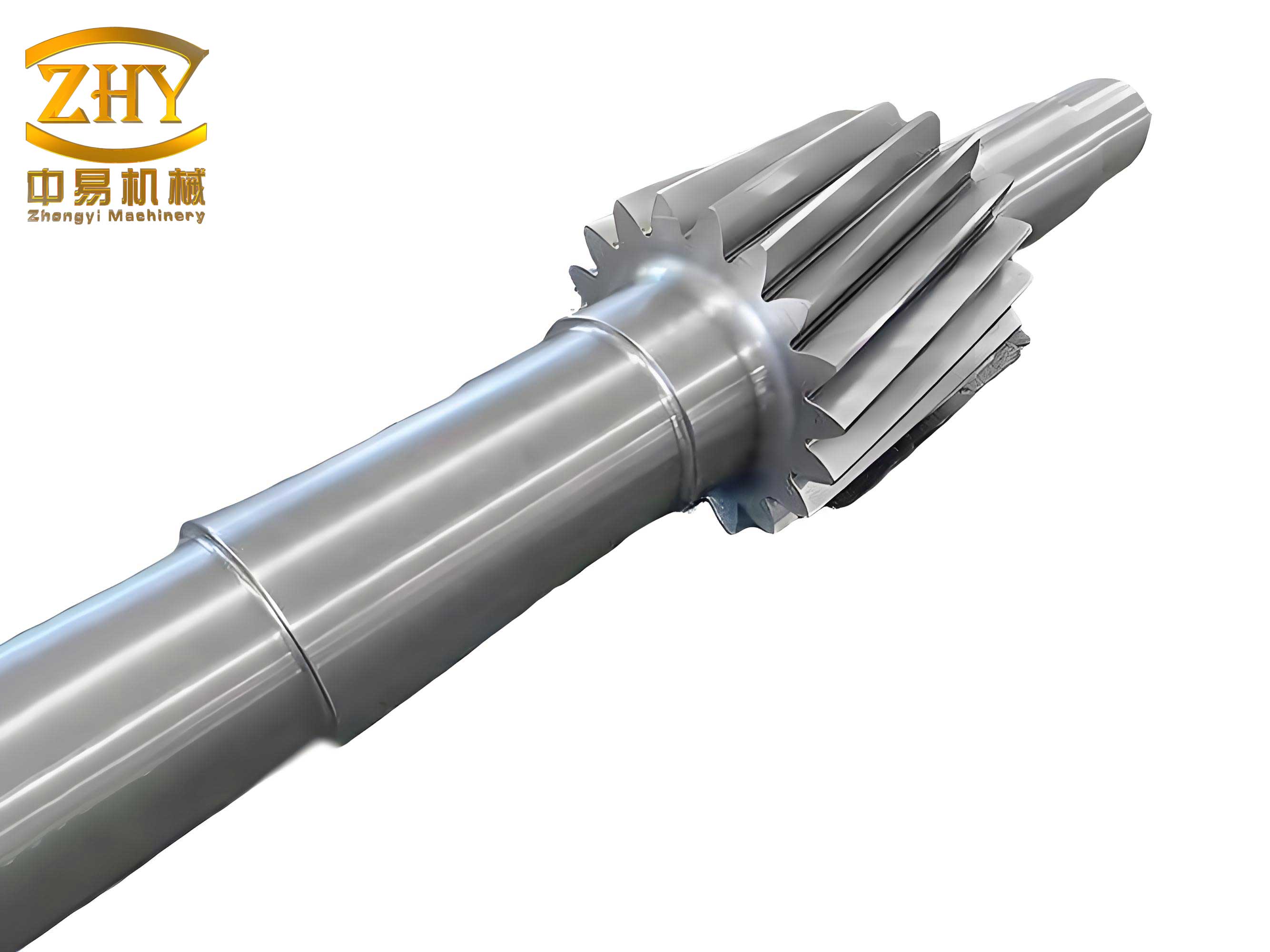
The importance of gear shafts in mechanical systems cannot be overstated; they serve as the backbone for power transmission, and their failure can lead to significant downtime and economic losses. Over the years, the gear industry has grown substantially, with advancements in manufacturing and material science. However, challenges remain in achieving high-performance gear shafts that can withstand harsh operating environments. Surface engineering techniques, such as thermal spraying, have emerged as viable solutions for repairing worn gear shafts and imparting superior properties like hardness and wear resistance. Among these techniques, plasma spraying stands out due to its ability to deposit a wide range of coatings with controlled microstructures. In my research, I focused on applying WC-Co coatings via plasma spraying onto gear shaft substrates, investigating how varying spraying voltages influences coating morphology, phase composition, and tribological behavior. This work contributes to the broader goal of developing cost-effective and efficient repair methods for gear shafts, aligning with industry demands for enhanced reliability.
To begin, let me outline the materials and methods used in this study. The gear shaft substrates were fabricated from common alloy steels, and their microstructure was characterized prior to coating. As observed, the gear shaft base material consisted of tempered sorbite and a minimal amount of ferrite, indicating a quenched and tempered heat treatment that provides a balance of strength and toughness. This microstructure is crucial for understanding the substrate-coating interactions, as it affects adhesion and residual stresses. For the coating material, WC-12Co powder was selected due to its renowned hardness and wear resistance, making it ideal for gear shaft applications. The powder particles were spherical, with diameters ranging from 10 to 70 μm, and composed of WC hard phases embedded in a Co binder matrix. The plasma spraying process was conducted using a low-power system, with key parameters including a constant arc current of 450 A and varying arc voltages from 45 V to 60 V. Other parameters, such as gas flow rate (Ar at 15 L/min), powder feed rate (14 g/min), and spraying distance (120 mm), were kept constant to isolate the effect of voltage. Post-spraying, the coated gear shaft samples were analyzed for cross-sectional morphology using scanning electron microscopy (SEM), phase composition via X-ray diffraction (XRD), and wear performance through ball-on-disk friction tests with Si3N4 counterfaces.
The results from this investigation revealed significant insights into the plasma spray process for gear shaft repair. Firstly, the cross-sectional morphology of the coatings showed good adhesion to the gear shaft substrate across all voltage levels, with minimal porosity and uniform deposition. As the spraying voltage increased, the coating density improved, leading to fewer defects like unmelted particles and pores. This can be attributed to higher particle velocities and better flattening upon impact, which enhances interlamellar bonding. To summarize these observations, I have compiled the data into a table below:
| Spray Voltage (V) | Coating Porosity (%) | Adhesion Quality | Notable Features |
|---|---|---|---|
| 45 | ~5-7 | Good | Some unmelted WC particles |
| 50 | ~3-5 | Excellent | Dense coating, minimal defects |
| 55 | ~2-4 | Very Good | Reduced porosity |
| 60 | ~1-3 | Good | Slight decarburization observed |
This table highlights how spraying voltage affects the structural integrity of coatings on gear shafts, with 50 V yielding the optimal balance. Moving to phase analysis, XRD patterns indicated that all coatings consisted of WC, W2C, and CoxWyCz phases. However, the relative amounts of these phases varied with voltage. Specifically, as voltage increased, the content of W2C phase rose while WC decreased, suggesting decarburization reactions during spraying. The decarburization process can be described by the following equation:
$$ 2WC \rightarrow W_2C + C $$
This reaction is thermally driven, and higher voltages likely increase the plasma temperature, promoting carbide decomposition. To quantify this, I calculated the phase ratios based on XRD peak intensities, as shown in another table:
| Spray Voltage (V) | WC Phase Content (%) | W2C Phase Content (%) | Decarburization Degree |
|---|---|---|---|
| 45 | ~65 | ~20 | Low |
| 50 | ~60 | ~25 | Moderate |
| 55 | ~55 | ~30 | High |
| 60 | ~50 | ~35 | Very High |
These phase changes directly influence the mechanical properties of the coated gear shaft, particularly wear resistance. In friction and wear tests, the gear shaft coatings exhibited varying performance based on spraying voltage. The wear loss was measured for both the coating and the Si3N4 counterface, and the results are plotted in the table below:
| Spray Voltage (V) | Coating Wear Loss (mg) | Si3N4 Ball Wear Loss (mg) | Wear Ratio (Coating/Ball) | Inferred Wear Resistance |
|---|---|---|---|---|
| 45 | 6.8 | 0.87 | 7.8 | Good |
| 50 | 6.3 | 1.5 | 4.4 | Best |
| 55 | 8.6 | 1.3 | 7.1 | Moderate |
| 60 | 44.2 | 0.88 | 50.2 | Poor |
From this data, it is evident that the gear shaft coating sprayed at 50 V demonstrated the highest wear resistance, with the lowest coating wear loss and a favorable wear ratio. This aligns with the morphological observations, where the 50 V coating had minimal porosity and controlled decarburization. In contrast, at 60 V, excessive decarburization led to a brittle coating with high wear loss, compromising the gear shaft’s performance. To further analyze the wear mechanism, I examined the worn surfaces under SEM. For the 50 V coating, the wear morphology showed smooth surfaces with shallow ploughing grooves and minor cracking, indicative of mild abrasive wear. This suggests that the coating effectively protected the gear shaft substrate from severe damage. The wear rate can be modeled using the Archard wear equation:
$$ V = k \frac{F_n s}{H} $$
where \( V \) is the wear volume, \( k \) is the wear coefficient, \( F_n \) is the normal load, \( s \) is the sliding distance, and \( H \) is the hardness. For the gear shaft coatings, the hardness is influenced by phase composition; higher WC content typically increases hardness, but excessive decarburization reduces it due to brittle W2C formation. Thus, an optimal balance is achieved at 50 V.
In addition to wear performance, other properties like residual stress and thermal stability are crucial for gear shaft applications. Plasma spraying induces thermal stresses due to rapid cooling, which can affect coating adhesion and fatigue life. I estimated the residual stress using the following formula based on curvature measurements:
$$ \sigma_r = \frac{E_s t_s^2}{6(1-\nu_s) t_c} \cdot \frac{1}{R} $$
where \( \sigma_r \) is the residual stress, \( E_s \) is the substrate Young’s modulus, \( t_s \) and \( t_c \) are the substrate and coating thicknesses, \( \nu_s \) is the substrate Poisson’s ratio, and \( R \) is the curvature radius. For the gear shaft samples, the residual stress was compressive in all cases, beneficial for fatigue resistance. However, at higher voltages, the stress magnitude increased slightly due to greater thermal gradients, which could promote microcracking if not managed. This underscores the importance of optimizing spraying parameters for gear shaft repair.
Beyond the experimental results, I explored the theoretical aspects of plasma spraying for gear shafts. The plasma jet temperature and velocity are key factors that determine coating quality. The energy balance in the plasma spray process can be expressed as:
$$ Q_{in} = Q_{melt} + Q_{heat} + Q_{loss} $$
where \( Q_{in} \) is the input energy from the plasma, \( Q_{melt} \) is the energy required to melt the powder particles, \( Q_{heat} \) is the energy for heating the particles, and \( Q_{loss} \) represents losses to the environment. For WC-Co powders, the melting point of WC is high (around 2870°C), so sufficient energy is needed to achieve proper melting without causing decomposition. The spraying voltage directly affects \( Q_{in} \), as higher voltages increase the plasma enthalpy. However, excessive energy can lead to overheating and decarburization, as observed in this study. Therefore, controlling the voltage is critical for depositing high-quality coatings on gear shafts.
To provide a comprehensive view, I also considered the economic and practical implications of plasma spray repair for gear shafts. In industrial settings, gear shaft failures often require costly replacements or extensive downtime. Plasma spraying offers a cost-effective alternative by enabling in-situ or workshop repairs. The process parameters, such as the optimal 50 V voltage identified here, can be integrated into automated systems for consistent results. Moreover, the use of WC-Co coatings enhances the surface hardness of gear shafts, reducing wear rates and extending maintenance intervals. This is particularly valuable for heavy-duty applications where gear shafts are subjected to abrasive environments. A comparison of different coating techniques for gear shaft repair is summarized in the table below:
| Coating Technique | Typical Hardness (HV) | Wear Resistance | Cost Efficiency | Suitability for Gear Shafts |
|---|---|---|---|---|
| Plasma Spraying | 1000-1400 | High | Moderate | Excellent |
| HVOF Spraying | 1200-1600 | Very High | High | Good |
| Laser Cladding | 800-1200 | Moderate | Low | Fair |
| Electroplating | 500-800 | Low | Low | Poor |
This table illustrates that plasma spraying strikes a good balance between performance and cost for gear shaft applications. Furthermore, the environmental impact of plasma spraying is relatively low compared to other methods, as it generates minimal waste and can use recycled powders. In my research, I emphasized the need for sustainable practices in gear shaft maintenance, and plasma spraying aligns with this goal.
Looking ahead, there are several avenues for improving plasma spray processes for gear shafts. For instance, advanced powder formulations, such as nanostructured WC-Co or composite powders, could further enhance coating properties. Additionally, real-time monitoring techniques, like in-situ diagnostics of plasma jets, can help optimize parameters dynamically during spraying. I also investigated the effect of post-spray treatments, such as heat treatment or laser remelting, on coating performance. These treatments can reduce porosity and residual stresses, improving the overall durability of coated gear shafts. The potential benefits are quantified in the following equation for coating lifetime:
$$ L = \frac{C_0}{k_r \cdot \sigma_a^m} $$
where \( L \) is the fatigue life, \( C_0 \) is a material constant, \( k_r \) is the stress intensity factor, \( \sigma_a \) is the applied stress, and \( m \) is an exponent. By enhancing coating quality through optimized spraying and post-treatments, the life of gear shafts can be significantly extended.
In conclusion, my research demonstrates that plasma spraying is a highly effective method for repairing and enhancing gear shafts. The key finding is that a spraying voltage of 50 V yields the best wear resistance, due to a dense coating microstructure with minimal porosity and controlled decarburization. This optimal condition balances the thermal energy input to melt the WC-Co powder without causing excessive decomposition. The study underscores the importance of parameter optimization in plasma spray processes for gear shaft applications, contributing to improved reliability and cost savings in mechanical systems. Future work should focus on scaling up this technology for industrial gear shaft repair and exploring hybrid coating systems for even better performance. Ultimately, advancing surface engineering techniques like plasma spraying will play a pivotal role in the evolution of high-performance gear shafts, meeting the demands of modern machinery and sustainable engineering practices.
Throughout this article, I have emphasized the critical role of gear shafts in mechanical systems and how plasma spraying can address their wear-related failures. By integrating experimental data, theoretical models, and practical insights, I hope to provide a comprehensive resource for engineers and researchers working on gear shaft maintenance and innovation. The repeated focus on gear shafts in this discussion highlights their significance, and the findings here can be applied to various industries where durable and efficient power transmission components are essential.