
I began this investigation because the market for automobile steering gear grease, especially for rack and pinion gears, has been dominated by imported products. Domestic technical literature and formulation experience for rack and pinion gears lubricants were limited. Therefore, I aimed to develop a grease that could satisfy the severe operating conditions of rack and pinion gears while using commercially available base oils, thickeners, and additives.
Industrial data for 2014 showed that China produced 23.7229 million automobiles and sold 23.4919 million units, with year-on-year increases of 7.3% and 6.9%, respectively. This large automotive volume created a substantial demand for steering gear grease. Because rack and pinion gears are widely used in passenger cars, the demand for a dedicated rack and pinion gears grease is particularly high. My objective was to formulate a grease for rack and pinion gears that could operate from -40 °C to 150 °C, provide good friction and wear control, resist oxidation, protect metals from rust, and remain compatible with sealing materials.
1. Steering Gear Types and the Focus on Rack and Pinion Gears
Automotive steering gears generally fall into three categories: recirculating ball steering gears, worm and crank pin steering gears, and rack and pinion gears. I reviewed these types to understand why rack and pinion gears require a specialized lubricant. The recirculating ball type uses circulating steel balls between a screw and a nut, converting sliding friction into rolling friction. It offers light steering, low wear, and long life, but its structure is complex and its cost is high. The worm and crank pin type uses a worm as the driving member and a crank pin as the driven member; it is often used in heavy trucks where steering force is large. Rack and pinion gears use a pinion gear to rotate and move a rack left and right. Their structure is simple, their layout is convenient, and they integrate easily with hydraulic or electric power steering systems. For these reasons, rack and pinion gears dominate passenger car applications.
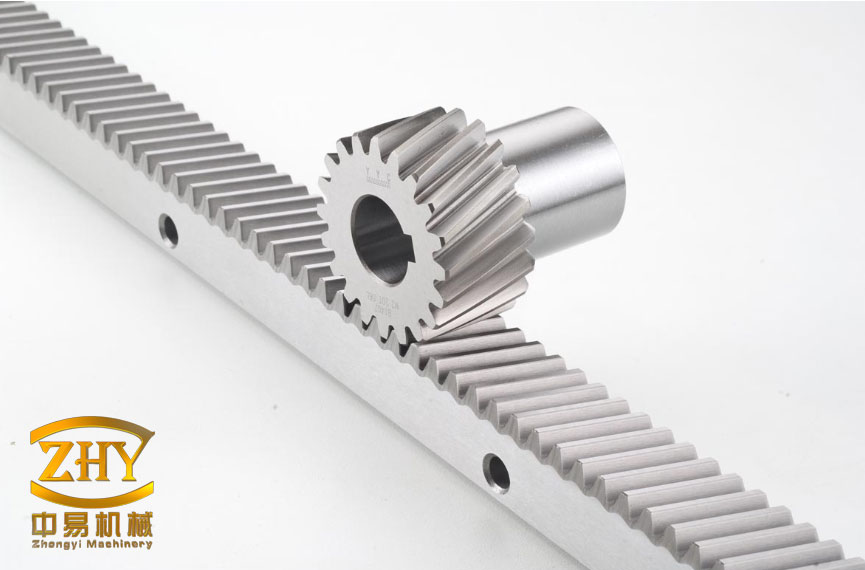
For rack and pinion gears, the contact between the pinion teeth and the rack teeth involves a combination of rolling and sliding. The sliding component is significant at low speed and high load, which makes anti-wear and extreme-pressure performance essential. I therefore treated the rack and pinion gears contact as a boundary-lubricated or mixed-lubricated tribological system. The friction coefficient \(\mu\) can be written as:
$$ \mu = \frac{F_f}{F_N} $$
where \(F_f\) is the friction force and \(F_N\) is the normal load. For rack and pinion gears, the normal load varies with steering torque, road feedback, and tooth geometry. The relative sliding velocity \(v_s\) at the tooth contact can be approximated from the pitch line velocity \(v_p\) and the sliding ratio \(S\):
$$ v_s = S \, v_p $$
Because rack and pinion gears operate under oscillatory motion rather than continuous rotation, the lubricant must maintain a film under repeated reversals. This is one reason I focused on a lithium soap grease with a balanced base oil viscosity and a carefully selected additive package.
| Steering Gear Type | Working Principle | Advantages | Limitations | Typical Use |
|---|---|---|---|---|
| Recirculating ball | Circulating steel balls between screw and nut | Light steering, low wear, long life | Complex, high cost, lower sensitivity than rack and pinion gears | Some passenger cars and light trucks |
| Worm and crank pin | Worm drives crank pin | High steering force capacity | Large size, less compact | Heavy trucks |
| Rack and pinion gears | Pinion rotates and moves rack linearly | Simple, compact, easy layout, easy power steering integration | Requires good sealing and wear control | Passenger cars and light commercial vehicles |
2. Performance Requirements for Rack and Pinion Gears Grease
Rack and pinion gears operate in an outdoor environment. Winter temperatures in northern regions can reach -40 °C, while summer temperatures in southern regions under direct sunlight can exceed 70 °C. Therefore, the grease for rack and pinion gears must have excellent high- and low-temperature performance. If the base oil separates at high temperature, the rack and pinion gears lose lubrication and wear increases. Thus, the oil separation must be low, and the colloidal stability must be good. To ensure long-term lubrication of rack and pinion gears, the grease must resist oxidation. Because rack and pinion gears run at low speed but under severe sliding friction, the grease must provide good lubricity and anti-wear performance. Metal protection and seal compatibility are also required.
I set the target technical specifications for the rack and pinion gears grease after reviewing the performance of a well-known imported product. The target use temperature range was -40 °C to 150 °C. The target values are summarized in Table 2.
| Property | Target Value | Test Method |
|---|---|---|
| Worked penetration at 25 °C | 310–340 units | GB/T 269 |
| Unworked micro penetration at -40 °C | ≥46 units | GB/T 269 |
| Similar viscosity at -40 °C, 10 s-1 | ≤1800 Pa·s | SH/T 0048 |
| T2 copper strip corrosion at 100 °C, 24 h | No green or black change | GB/T 7326 method B |
| Oxidation pressure drop at 99 °C, 100 h | ≤20.0 kPa | SH/T 0325 |
| Drop point | ≥190 °C | GB/T 4929 |
| Steel mesh oil separation at 100 °C, 24 h | ≤5.8% | SH/T 0324 |
| Evaporation loss at 99 °C, 22 h | ≤0.25% | GB/T 7325 |
| Maximum non-seizure load | ≥1000 N | SH/T 0202 |
| Weld load | ≥1960 N | SH/T 0202 |
These targets reflect the need for a rack and pinion gears grease that remains soft enough at -40 °C but does not leak or separate at 150 °C. The penetration and micro penetration targets are related to the consistency and low-temperature pumpability of the grease. The similar viscosity target controls the low-temperature flow resistance. The oxidation pressure drop and evaporation loss targets control the service life. The anti-wear and extreme-pressure targets ensure that rack and pinion gears can survive boundary lubrication events.
3. Base Oil Design for Rack and Pinion Gears Grease
I designed the base oil from two perspectives: the low-temperature environment of rack and pinion gears and the cost-performance balance of the grease. A high-viscosity-index API Group II mineral oil was blended with a poly-alpha-olefin (PAO) that has excellent low-temperature properties. The resulting blend had a kinematic viscosity at 40 °C between 61.2 mm²/s and 74.8 mm²/s. This range was chosen based on practical experience: it is thick enough to form a film under load but not so thick that it prevents low-temperature operation. The typical properties of the blended base oil are shown in Table 3.
| Property | Typical Value |
|---|---|
| Kinematic viscosity at 40 °C | 65.45 mm²/s |
| Viscosity index | 101 |
| Pour point | -35 °C |
The viscosity index (VI) is a measure of how much the viscosity changes with temperature. A higher VI means a smaller change. For rack and pinion gears, a high VI helps maintain a stable lubricating film from cold start to high-temperature operation. The VI can be estimated from the kinematic viscosities at 40 °C and 100 °C using the ASTM D2270 method. In a simplified form:
$$ VI = \frac{L – U}{L – H} \times 100 $$
where \(U\) is the kinematic viscosity at 40 °C of the oil being evaluated, \(L\) is the viscosity at 40 °C of a reference oil with VI = 0 that has the same viscosity at 100 °C, and \(H\) is the viscosity at 40 °C of a reference oil with VI = 100 that has the same viscosity at 100 °C. The blend I selected had a VI of 101, which is adequate for a rack and pinion gears grease that must operate across a wide temperature range.
The low-temperature flowability of the base oil is also important. The pour point of -35 °C indicated that the blend would not solidify at the lowest expected ambient temperature. However, because the grease contains a thickener, the low-temperature performance of the final rack and pinion gears grease depends on both the base oil and the thickener structure. I therefore evaluated the base grease before adding performance additives.
4. Thickener Selection for Rack and Pinion Gears Grease
I selected lithium 12-hydroxystearate soap as the thickener. This soap provides excellent mechanical stability, a long service life, and good water resistance. These properties are important for rack and pinion gears because the steering system may be exposed to humid environments and temperature cycling. The soap also has strong thickening ability, which allows a relatively low soap content while still achieving the desired consistency. The saponification reaction can be represented as:
$$ \text{12-hydroxystearic acid} + \text{LiOH} \rightarrow \text{lithium 12-hydroxystearate} + \text{H}_2\text{O} $$
I prepared a base grease by thickening the blended base oil with lithium 12-hydroxystearate soap. The typical properties of this base grease are listed in Table 4.
| Property | Typical Value |
|---|---|
| Appearance | Uniform white ointment |
| Worked penetration at 25 °C | 315 units |
| Unworked micro penetration at -40 °C | 50 units |
| Drop point | 201 °C |
| Steel mesh oil separation at 100 °C, 24 h | 4.0% |
| Similar viscosity at -40 °C, 10 s-1 | 1212 Pa·s |
The base grease showed good high- and low-temperature performance. The drop point of 201 °C was above the target of 190 °C. The oil separation of 4.0% was below the target of 5.8%. The micro penetration at -40 °C was 50 units, which was above the minimum of 46 units. The similar viscosity at -40 °C was 1212 Pa·s, which was below the maximum of 1800 Pa·s. These results confirmed that the combination of the blended base oil and lithium 12-hydroxystearate soap was suitable for further additive optimization. For rack and pinion gears, this base grease provided a good foundation, but it still required anti-wear, extreme-pressure, antioxidant, metal deactivator, and rust inhibitor additives to meet the full performance requirements.
5. Additive Selection for Rack and Pinion Gears Grease
5.1 Anti-Wear and Extreme-Pressure Additives
Rack and pinion gears operate at low speed and under severe sliding friction. The lubrication regime is often boundary or mixed, so anti-wear and extreme-pressure additives are essential. I evaluated several combinations of sulfur-, phosphorus-, molybdenum-, and zinc-containing additives. The results are shown in Table 5. The wear scar diameter was measured under a four-ball test at 392 N, 1200 r/min, and 5 min.
| Additive Combination | Weld Load (N) | Wear Scar Diameter (mm) |
|---|---|---|
| 0.5% sulfur additive + 1.0% phosphorus additive + 1.0% molybdenum compound | 1960 | 0.363 |
| 1.0% molybdenum compound + 1.0% zinc salt | 1960 | 0.357 |
| 1.0% phosphorus additive + 0.5% molybdenum compound + 1.0% zinc salt | 1960 | 0.332 |
The combination of 1.0% phosphorus additive, 0.5% molybdenum compound, and 1.0% zinc salt gave the smallest wear scar diameter of 0.332 mm. Its weld load was 1960 N, which met the target. Therefore, I selected a 2.5% complex anti-wear and extreme-pressure additive package with this composition. This package was expected to form a protective tribofilm on the rack and pinion gears surfaces. The tribofilm reduces direct metal-to-metal contact and lowers the friction coefficient. The anti-wear performance can be related to the wear scar diameter \(d\) and the applied load \(F_N\):
$$ d = \frac{1}{n}\sum_{i=1}^{n} d_i $$
$$ k = \frac{V}{F_N L} $$
where \(d_i\) are individual wear scar measurements, \(k\) is the specific wear rate, \(V\) is the wear volume, and \(L\) is the sliding distance. I used these relationships to rank the additive packages. The selected package provided the best balance for rack and pinion gears.
5.2 Antioxidants and Metal Deactivators
To extend the service life of the rack and pinion gears grease, I evaluated antioxidants and a thiadiazole derivative metal deactivator. Antioxidants inhibit oxidation of the base oil, while metal deactivators reduce the catalytic activity of metal surfaces and thereby support the antioxidants. The oxidation pressure drop test at 99 °C and 100 h was used to compare performance. The results are shown in Table 6.
| Additive Combination | Oxidation Pressure Drop (kPa) |
|---|---|
| 2.0% phenolic antioxidant + 0.1% thiadiazole derivative | 30.0 |
| 2.0% amine antioxidant | 23.6 |
| 2.0% amine antioxidant + 0.1% thiadiazole derivative | 15.0 |
The combination of 2.0% amine antioxidant and 0.1% thiadiazole derivative gave the lowest oxidation pressure drop of 15.0 kPa. This value was well below the target of 20.0 kPa. The amine antioxidant and thiadiazole derivative worked synergistically to protect the rack and pinion gears grease from oxidative degradation. The oxidation pressure drop \(\Delta P\) can be expressed as:
$$ \Delta P = P_0 – P_t $$
where \(P_0\) is the initial oxygen pressure and \(P_t\) is the oxygen pressure after time \(t\). A smaller pressure drop indicates better oxidation stability. For rack and pinion gears, long-term oxidation stability is critical because the grease may remain in the steering gear for many years.
5.3 Rust Inhibitors
Rack and pinion gears are exposed to humid and high-temperature environments. Rust can damage the tooth surfaces and increase friction and wear. I evaluated several rust inhibitors using the EMCOR bearing rust test with distilled water. The results are shown in Table 7. All tested rust inhibitors achieved a rating of 0, which means no rust. I selected a combination of 0.2% organic ester and 0.8% nitrogen heterocyclic compound because it provided excellent rust protection and good compatibility with the other additives.
| Rust Inhibitor | EMCOR Rust Test Rating |
|---|---|
| 1.0% carboxylate rust inhibitor | 0 |
| 1.0% sulfonate rust inhibitor | 0 |
| 1.0% organic amine rust inhibitor | 0 |
| 0.2% organic ester + 0.8% nitrogen heterocyclic compound | 0 |
5.4 Final Composition
Based on the additive evaluations, I determined the final composition of the rack and pinion gears grease. It contains the blended base oil, lithium 12-hydroxystearate soap thickener, and the following additives: 2.5% complex anti-wear and extreme-pressure additive (1.0% phosphorus additive + 0.5% molybdenum compound + 1.0% zinc salt), 2.0% amine antioxidant, 0.1% thiadiazole derivative metal deactivator, and 1.0% complex rust inhibitor (0.2% organic ester + 0.8% nitrogen heterocyclic compound). Table 8 summarizes the formulation.
| Component | Function | Mass Fraction |
|---|---|---|
| Blended base oil (high-VI mineral oil + PAO) | Base fluid | Balance |
| Lithium 12-hydroxystearate soap | Thickener | As required for consistency |
| Phosphorus additive | Anti-wear and extreme-pressure | 1.0% |
| Molybdenum compound | Anti-wear and friction modifier | 0.5% |
| Zinc salt | Anti-wear and extreme-pressure | 1.0% |
| Amine antioxidant | Oxidation inhibition | 2.0% |
| Thiadiazole derivative | Metal deactivation | 0.1% |
| Organic ester | Rust inhibition | 0.2% |
| Nitrogen heterocyclic compound | Rust inhibition | 0.8% |
6. Manufacturing Process for Rack and Pinion Gears Grease
I prepared the rack and pinion gears grease in a pressure reaction vessel. The process steps were as follows. First, I added part of the blended base oil and heated it to 75 °C. Then I added 12-hydroxystearic acid and an aqueous lithium hydroxide solution to carry out the saponification reaction. After saponification, I raised the temperature to 210 °C for refining. After refining, I added the remaining blended base oil to quench the mixture to 80 °C. At that point, I added the antioxidant, metal deactivator, anti-wear and extreme-pressure additives, and rust inhibitor. Finally, I homogenized the mixture to obtain the finished rack and pinion gears grease.
The temperature profile is important because it controls the soap crystal structure. The saponification temperature affects the completeness of the reaction:
$$ \text{Conversion} = \frac{C_0 – C_t}{C_0} \times 100\% $$
where \(C_0\) is the initial concentration of 12-hydroxystearic acid and \(C_t\) is its concentration at time \(t\). A high conversion ensures that free acid is minimized and the soap structure is well developed. The refining temperature of 210 °C promotes the formation of a stable soap fiber network. The quenching step to 80 °C controls the rate of crystallization. A controlled cooling rate generally produces a finer and more uniform soap structure, which improves the mechanical stability and oil separation resistance of the rack and pinion gears grease.
7. Physicochemical Performance of the Rack and Pinion Gears Grease
I evaluated the physicochemical properties of the developed rack and pinion gears grease and compared them with a well-known imported rack and pinion gears grease. The results are shown in Table 9. The developed grease met all the target specifications. Its worked penetration at 25 °C was 320 units, and its unworked micro penetration at -40 °C was 48 units. The similar viscosity at -40 °C and 10 s-1 was 1257 Pa·s, which was lower than the imported grease value of 1796 Pa·s. The copper strip corrosion test showed no green or black change. The oxidation pressure drop was 15.0 kPa, which was slightly higher than the imported value of 10.0 kPa but still within the target of 20.0 kPa. The drop point was 193 °C, which was lower than the imported value of 202 °C but above the target of 190 °C. The steel mesh oil separation was 5.0%, which was lower than the imported value of 5.8%. The evaporation loss was 0.20%, which was slightly higher than the imported value of 0.18% but below the target of 0.25%. The maximum non-seizure load was 1019 N, and the weld load was 1961 N, matching the imported grease.
| Property | Developed Rack and Pinion Gears Grease | Imported Rack and Pinion Gears Grease |
|---|---|---|
| Worked penetration at 25 °C (units) | 320 | 318 |
| Unworked micro penetration at -40 °C (units) | 48 | 46 |
| Similar viscosity at -40 °C, 10 s-1 (Pa·s) | 1257 | 1796 |
| T2 copper strip corrosion at 100 °C, 24 h | No green or black change | No green or black change |
| Oxidation pressure drop at 99 °C, 100 h (kPa) | 15.0 | 10.0 |
| Drop point (°C) | 193 | 202 |
| Steel mesh oil separation at 100 °C, 24 h (%) | 5.0 | 5.8 |
| Evaporation loss at 99 °C, 22 h (%) | 0.20 | 0.18 |
| Maximum non-seizure load (N) | 1019 | 1019 |
| Weld load (N) | 1961 | 1961 |
The developed rack and pinion gears grease reached the target technical index and showed physicochemical performance comparable to the imported product. The lower similar viscosity at -40 °C suggests better low-temperature flowability, which is beneficial for cold-climate steering response. The oil separation was slightly lower, indicating good colloidal stability. The oxidation pressure drop was slightly higher than the imported grease, but the difference was not expected to significantly affect service life under normal rack and pinion gears operation. The overall balance of properties supported the use of the developed grease in rack and pinion gears from -40 °C to 150 °C.
8. Friction and Wear Performance of the Rack and Pinion Gears Grease
Because rack and pinion gears experience severe sliding friction, I further evaluated the friction and wear performance of the developed grease using a four-ball machine to simulate the contact conditions. I tested different temperatures, speeds, and loads and compared the results with the imported rack and pinion gears grease. The results are shown in Table 10. The friction coefficient and wear scar diameter were measured under each condition.
| Test Condition | Parameter | Developed Rack and Pinion Gears Grease | Imported Rack and Pinion Gears Grease |
|---|---|---|---|
| Low temperature, low speed (-40 °C, 92 r/min, 392 N, 60 min) | Friction coefficient | 0.075 | 0.088 |
| Low temperature, low speed (-40 °C, 92 r/min, 392 N, 60 min) | Wear scar diameter (mm) | 0.329 | 0.335 |
| High temperature, high speed (75 °C, 1200 r/min, 392 N, 60 min) | Friction coefficient | 0.041 | 0.072 |
| High temperature, high speed (75 °C, 1200 r/min, 392 N, 60 min) | Wear scar diameter (mm) | 0.369 | 0.374 |
| 392 N load (30 °C, 1200 r/min, 10 min) | Friction coefficient | 0.048 | 0.060 |
| 392 N load (30 °C, 1200 r/min, 10 min) | Wear scar diameter (mm) | 0.343 | 0.333 |
| 588 N load (30 °C, 1200 r/min, 10 min) | Friction coefficient | 0.064 | 0.051 |
| 588 N load (30 °C, 1200 r/min, 10 min) | Wear scar diameter (mm) | 0.379 | 0.387 |
| 784 N load (30 °C, 1200 r/min, 10 min) | Friction coefficient | 0.069 | 0.054 |
| 784 N load (30 °C, 1200 r/min, 10 min) | Wear scar diameter (mm) | 0.437 | 0.435 |
At low temperature and low speed, the developed rack and pinion gears grease had a lower friction coefficient (0.075 vs. 0.088) and a slightly smaller wear scar diameter (0.329 mm vs. 0.335 mm). At high temperature and high speed, the developed grease again had a lower friction coefficient (0.041 vs. 0.072), while the wear scar diameters were comparable (0.369 mm vs. 0.374 mm). Under 392 N at 30 °C, the developed grease had a lower friction coefficient (0.048 vs. 0.060) but a slightly larger wear scar diameter (0.343 mm vs. 0.333 mm). Under 588 N, the developed grease had a higher friction coefficient (0.064 vs. 0.051) but a slightly smaller wear scar diameter (0.379 mm vs. 0.387 mm). Under 784 N, the friction coefficients were 0.069 and 0.054, and the wear scar diameters were 0.437 mm and 0.435 mm, respectively.
Overall, the friction and wear performance of the developed rack and pinion gears grease was comparable to or slightly better than that of the imported product. The additive package formed a protective film that reduced friction and wear under most conditions. The friction coefficient \(\mu\) and wear scar diameter \(d\) are related to the contact pressure \(p\) and sliding speed \(v\) through the Stribeck curve:
$$ \mu = f\left(\frac{\eta v}{p}\right) $$
where \(\eta\) is the dynamic viscosity of the lubricant. For rack and pinion gears, the contact pressure is high and the sliding speed is low, so the system operates in the boundary or mixed lubrication regime. The anti-wear and extreme-pressure additives are therefore critical. The molybdenum compound and phosphorus additive likely formed MoS\(_2\) and phosphate films, while the zinc salt contributed to a protective tribofilm. These films reduce the shear strength at the contact and prevent severe adhesive wear. The results support the use of the developed grease in rack and pinion gears.
9. Rig Test for Rack and Pinion Gears Grease
I used a rack and pinion gears test rig to evaluate the service performance of the developed grease. The rig parameters are shown in Table 11. The rack had 30 teeth, the contact number was 22, the friction length of the rack was 177 mm, the tooth height was 4 mm, the single-tooth contact length was 3 mm, the tooth top width was 18 mm, and the contact width was 18 mm. The pinion had 8 teeth. The angle between the pinion shaft and the rack was 70°. The single-side single-stroke friction time was 6.125 s. The rack running speed was 28.90 mm/s. For a unit area of 1 mm², the total friction length for 100,000 cycles was 100 m, the friction speed was 30.74 mm/s, and the total friction time for 100,000 cycles was 3253 s.
| Parameter | Value |
|---|---|
| Rack teeth | 30 |
| Contact number | 22 |
| Rack friction length | 177 mm |
| Tooth height | 4 mm |
| Single-tooth contact length | 3 mm |
| Tooth top width | 18 mm |
| Contact width | 18 mm |
| Pinion teeth | 8 |
| Angle between pinion shaft and rack | 70° |
| Single-side single-stroke friction time | 6.125 s |
| Rack running speed | 28.90 mm/s |
| Unit area total friction length for 100,000 cycles | 100 m |
| Unit area friction speed | 30.74 mm/s |
| Unit area total friction time for 100,000 cycles | 3253 s |
The total sliding distance \(L_{total}\) for a given number of cycles \(N\) can be calculated from the single-stroke length \(L_s\):
$$ L_{total} = N \times L_s $$
For the unit-area friction length of 100 m over 100,000 cycles, the average single-cycle length is:
$$ L_s = \frac{100 \, \text{m}}{100,000} = 1.0 \times 10^{-3} \, \text{m} = 1.0 \, \text{mm} $$
This is consistent with the small oscillatory motion of rack and pinion gears. The contact area \(A_c\) can be estimated from the contact width \(w\) and the contact length \(l\):
$$ A_c = w \times l $$
Using the given contact width of 18 mm and a single-tooth contact length of 3 mm, the nominal contact area per tooth is \(18 \times 3 = 54 \, \text{mm}^2\). However, because the contact number is 22, the total nominal contact area is larger. The contact pressure \(p\) is then:
$$ p = \frac{F_N}{A_c} $$
For rack and pinion gears, the contact pressure can be high enough to cause plastic deformation if the lubricant film fails. The rig test therefore provides a realistic evaluation of the grease under conditions that mimic actual rack and pinion gears operation.
I ran 100,000 cycles on the rack and pinion gears test rig with both the developed grease and the imported grease. After the test, the rack lubricated with the developed grease remained bright, and the appearance was slightly better than that of the rack lubricated with the imported grease. This indicated that the developed rack and pinion gears grease provided good anti-wear and rust protection. The used grease did not show severe oil separation or hardening. The tooth surfaces did not show obvious scratches or adhesive wear. These observations confirmed that the developed grease can maintain lubrication in rack and pinion gears over an extended period.
| Evaluation Item | Developed Rack and Pinion Gears Grease | Imported Rack and Pinion Gears Grease |
|---|---|---|
| Rack surface appearance after 100,000 cycles | Bright, slight improvement | Bright, reference |
| Tooth wear | No obvious scratches or adhesive wear | No obvious scratches or adhesive wear |
| Grease condition | No severe oil separation or hardening | No severe oil separation or hardening |
| Overall service performance | Comparable or slightly better | Reference |
10. Discussion
The development of a rack and pinion gears grease requires a careful balance among base oil viscosity, thickener structure, and additive chemistry. I chose a blended base oil with a kinematic viscosity at 40 °C of 61.2 mm²/s to 74.8 mm²/s. This range provided sufficient film thickness while maintaining low-temperature flow. The high-viscosity-index mineral oil improved the viscosity-temperature behavior, and the PAO improved the pour point and low-temperature fluidity. The lithium 12-hydroxystearate soap provided good mechanical stability and water resistance. The additive package addressed the specific tribological and chemical needs of rack and pinion gears: anti-wear and extreme-pressure protection, oxidation inhibition, metal deactivation, and rust prevention.
The oxidation pressure drop of the developed grease was 15.0 kPa, which was higher than the imported grease value of 10.0 kPa. Although a lower value is generally better, the difference of 5.0 kPa is not large. The target was 20.0 kPa, and the developed grease was well within that limit. The amine antioxidant and thiadiazole derivative worked synergistically. The thiadiazole derivative also acts as a metal deactivator, reducing the catalytic effect of copper and iron on oxidation. For rack and pinion gears, the metal surfaces are primarily steel, but copper alloys may be present in seals or bushings. The T2 copper strip corrosion test showed no green or black change, indicating that the additive package was compatible with copper-containing materials.
The low-temperature similar viscosity of the developed grease was 1257 Pa·s, which was lower than the imported grease value of 1796 Pa·s. This means that the developed rack and pinion gears grease is easier to pump and circulate at -40 °C. In a rack and pinion gears steering system, low-temperature flowability affects steering effort and response. A lower similar viscosity can reduce the initial steering torque after a cold start. The micro penetration at -40 °C was 48 units, which was above the minimum of 46 units. This indicates that the grease remains soft enough at low temperature to permit movement of the rack and pinion gears.
The drop point of the developed grease was 193 °C, which was higher than the target of 190 °C but lower than the imported grease value of 202 °C. The drop point is the temperature at which the grease changes from a semi-solid to a liquid. A higher drop point generally indicates better high-temperature stability. However, the operating temperature of rack and pinion gears is not expected to exceed 150 °C, so a drop point of 193 °C provides a sufficient safety margin. The steel mesh oil separation at 100 °C for 24 h was 5.0%, which was lower than the imported value of 5.8% and below the target of 5.8%. Lower oil separation means that the base oil is better retained in the soap structure, which helps maintain lubrication over time.
The evaporation loss at 99 °C for 22 h was 0.20%. This was slightly higher than the imported value of 0.18% but below the target of 0.25%. Evaporation loss affects the long-term composition of the grease. A low evaporation loss helps maintain the base oil content and prevents the grease from hardening. The maximum non-seizure load and weld load were 1019 N and 1961 N, respectively, matching the imported grease. These values indicate that the developed rack and pinion gears grease can withstand high contact loads without seizure. The extreme-pressure additives formed a protective film that prevents welding of the metal surfaces under severe conditions.
The friction and wear results showed that the developed grease performed well across a range of temperatures, speeds, and loads. At low temperature and low speed, the friction coefficient was lower than that of the imported grease. At high temperature and high speed, the friction coefficient was also lower. Under higher loads, the friction coefficient was sometimes higher, but the wear scar diameter was comparable. This behavior suggests that the additive package may be more effective at reducing friction under low-to-moderate loads, while at high loads the extreme-pressure film controls wear. The molybdenum compound may contribute to friction reduction by forming MoS\(_2\)-like layers. The phosphorus additive may form phosphate glasses that reduce wear. The zinc salt may form a sacrificial film that protects the rack and pinion gears surfaces.
The rig test provided the most realistic evaluation. The rack and pinion gears rig reproduced the oscillatory motion, contact geometry, and load conditions of an actual steering gear. After 100,000 cycles, the rack lubricated with the developed grease remained bright. This indicates that the grease prevented rust and wear. The slightly better appearance compared with the imported grease may be due to the rust inhibitor combination and the anti-wear additive package. The used grease did not show severe oil separation or hardening, which means that the soap structure remained stable. The absence of obvious scratches or adhesive wear on the tooth surfaces confirms that the lubricating film was maintained throughout the test.
The temperature range of the developed rack and pinion gears grease is -40 °C to 150 °C. This range covers the ambient conditions in most automotive applications. At -40 °C, the grease remains sufficiently fluid, as indicated by the micro penetration and similar viscosity. At 150 °C, the grease maintains its structure, as indicated by the drop point and oil separation. The oxidation stability and evaporation loss ensure that the grease can withstand long-term exposure to high temperatures. The rust inhibitors protect the rack and pinion gears from corrosion in humid environments. The seal compatibility was not directly reported in the data, but the use of PAO and lithium soap generally provides good compatibility with common elastomers. For rack and pinion gears, seal compatibility is important because the steering gear contains seals that retain the grease and prevent contamination.
11. Lubrication Mechanisms in Rack and Pinion Gears
To better understand the performance of the developed grease in rack and pinion gears, I analyzed the lubrication mechanisms. The contact between the pinion and rack can be described as a line contact under load. The theoretical contact half-width \(b\) for a line contact can be estimated using Hertzian theory:
$$ b = \sqrt{\frac{4 F_N R_e}{\pi L_e E’}} $$
where \(F_N\) is the normal load, \(R_e\) is the equivalent radius of curvature, \(L_e\) is the effective contact length, and \(E’\) is the effective elastic modulus. The maximum contact pressure \(p_{max}\) is then:
$$ p_{max} = \frac{2 F_N}{\pi b L_e} $$
For rack and pinion gears, the contact pressure can be on the order of hundreds to thousands of megapascals. This high pressure promotes elastohydrodynamic lubrication (EHL) if the entrainment speed is sufficient. However, because rack and pinion gears often operate at low speed and with oscillatory motion, the film thickness may be insufficient to fully separate the surfaces. The central film thickness \(h_c\) in EHL can be approximated by the Hamrock-Dowson equation:
$$ h_c = 2.69 \, U^{0.67} G^{0.53} W^{-0.067} \left(1 – 0.61 e^{-0.73 k}\right) R_e $$
where \(U\) is the dimensionless speed parameter, \(G\) is the dimensionless material parameter, \(W\) is the dimensionless load parameter, and \(k\) is the ellipticity ratio. In the boundary and mixed lubrication regimes, the lubricant film is thin and the surface asperities interact. The anti-wear and extreme-pressure additives in the rack and pinion gears grease react with the metal surfaces to form tribofilms. These films reduce friction and wear by lowering the shear strength of the interface and preventing direct metal-to-metal contact.
The oscillatory motion of rack and pinion gears creates a unique challenge. The entrainment velocity reverses direction, which can cause the lubricant film to collapse and reform. The grease must have sufficient thixotropy and yield stress to remain in the contact and re-form the film quickly. The lithium soap thickener provides a fiber network that helps retain the base oil and maintain a reservoir of lubricant. The base oil viscosity and the additive package then control the friction and wear performance. The developed rack and pinion gears grease was designed to have a balanced rheology and additive response so that it can maintain lubrication under these conditions.
12. Rheological and Thermal Considerations
The rheology of the rack and pinion gears grease affects its pumping, dispensing, and film-forming behavior. Grease is a non-Newtonian fluid with a yield stress \(\tau_y\). The shear stress \(\tau\) can be described by a Bingham plastic model:
$$ \tau = \tau_y + \eta_p \dot{\gamma} \quad \text{for} \quad \tau > \tau_y $$
where \(\eta_p\) is the plastic viscosity and \(\dot{\gamma}\) is the shear rate. In the low-shear-rate regime, the grease behaves like a solid and resists flow. In the high-shear-rate regime, it flows like a viscous liquid. The yield stress of the developed rack and pinion gears grease was controlled by the soap content and the manufacturing process. A moderate yield stress is desirable because it prevents leakage and oil separation while still allowing the grease to be pumped and distributed.
The apparent viscosity \(\eta_a\) is defined as:
$$ \eta_a = \frac{\tau}{\dot{\gamma}} $$
The low-temperature similar viscosity at -40 °C and 10 s-1 was 1257 Pa·s. This value was below the target of 1800 Pa·s and lower than the imported grease value of 1796 Pa·s. The lower apparent viscosity indicates that the developed rack and pinion gears grease can flow more easily at low temperature. This is beneficial for cold-climate operation because it reduces the torque required to move the rack and pinion gears.
The thermal stability of the grease is governed by the thickener and the base oil. The drop point of 193 °C indicates that the soap structure remains stable up to that temperature. The oil separation at 100 °C for 24 h was 5.0%, which indicates good colloidal stability. The evaporation loss at 99 °C for 22 h was 0.20%, which indicates that the base oil is not lost rapidly at high temperature. The oxidation pressure drop at 99 °C for 100 h was 15.0 kPa, which indicates good oxidative stability. The Arrhenius equation can be used to estimate the temperature dependence of oxidation:
$$ k = A e^{-E_a / (R T)} $$
where \(k\) is the oxidation rate constant, \(A\) is the pre-exponential factor, \(E_a\) is the activation energy, \(R\) is the gas constant, and \(T\) is the absolute temperature. A lower oxidation rate constant at a given temperature means better oxidation resistance. The amine antioxidant and thiadiazole derivative in the developed rack and pinion gears grease reduce the oxidation rate and extend the service life.
13. Quality Control and Scale-Up
For the developed rack and pinion gears grease to be produced at commercial scale, quality control is essential. I identified several critical control points. The base oil blend must have a kinematic viscosity at 40 °C within 61.2 mm²/s to 74.8 mm²/s and a viscosity index above 95. The soap content must be controlled to achieve the target penetration. The saponification temperature and time must be controlled to ensure complete reaction. The refining temperature must be maintained at 210 °C to develop the soap structure. The quenching rate must be controlled to obtain a uniform soap crystal size. The additive addition temperature must be below 80 °C to prevent degradation. The homogenization step must be sufficient to disperse the additives uniformly.
The consistency of the rack and pinion gears grease can be monitored by the worked penetration test. The penetration \(P\) is measured in tenths of a millimeter and is related to the consistency. A lower penetration indicates a harder grease, while a higher penetration indicates a softer grease. The target penetration at 25 °C was 310 to 340 units. The micro penetration at -40 °C was used to evaluate low-temperature stiffness. The target was at least 46 units. The similar viscosity at -40 °C was used to evaluate low-temperature flowability. The target was no more than 1800 Pa·s. These tests ensure that the rack and pinion gears grease has the correct consistency and low-temperature performance.
The oxidative stability of the rack and pinion gears grease was monitored by the oxidation pressure drop test. The target was no more than 20.0 kPa after 100 h at 99 °C. The evaporation loss was monitored by heating the grease at 99 °C for 22 h. The target was no more than 0.25%. The oil separation was monitored by the steel mesh method at 100 °C for 24 h. The target was no more than 5.8%. The drop point was monitored to ensure it was at least 190 °C. The copper strip corrosion test was used to ensure compatibility with copper alloys. The four-ball tests were used to verify the anti-wear and extreme-pressure performance. The maximum non-seizure load had to be at least 1000 N, and the weld load had to be at least 1960 N.
14. Environmental and Economic Aspects
The developed rack and pinion gears grease uses a blend of mineral oil and PAO. PAO is a synthetic base oil with good low-temperature performance and oxidative stability. The use of PAO reduces the pour point and improves the viscosity index. The mineral oil component reduces cost while maintaining good solubility for additives. The lithium 12-hydroxystearate soap is a common thickener with a well-established manufacturing process. The additive package uses commercially available components. The formulation does not use excessive amounts of critical or expensive materials. The manufacturing process is scalable and uses standard grease-making equipment.
From an environmental perspective, the developed rack and pinion gears grease can help reduce dependence on imported lubricants. It can be produced locally, which reduces transportation-related emissions and costs. The grease has a long service life, which reduces the frequency of maintenance and the amount of waste grease. The low evaporation loss and good oxidation stability reduce the release of volatile organic compounds and degradation products. The rust inhibitors and anti-wear additives are selected to be compatible with the base oil and thickener, which minimizes the risk of additive depletion and sludge formation. The developed rack and pinion gears grease is therefore a practical and sustainable option for automotive steering gear lubrication.
15. Conclusion
I developed a rack and pinion gears grease using a blended base oil of high-viscosity-index refined mineral oil and poly-alpha-olefin with a kinematic viscosity at 40 °C of 61.2 mm²/s to 74.8 mm²/s. The thickener was lithium 12-hydroxystearate soap. The additive package consisted of 2.5% complex anti-wear and extreme-pressure additive (1.0% phosphorus additive, 0.5% molybdenum compound, and 1.0% zinc salt), 2.0% amine antioxidant, 0.1% thiadiazole derivative metal deactivator, and 1.0% complex rust inhibitor (0.2% organic ester and 0.8% nitrogen heterocyclic compound).
The developed rack and pinion gears grease met the target technical specifications. Its worked penetration at 25 °C was 320 units, unworked micro penetration at -40 °C was 48 units, drop point was 193 °C, steel mesh oil separation at 100 °C for 24 h was 5.0%, similar viscosity at -40 °C and 10 s-1 was 1257 Pa·s, evaporation loss at 99 °C for 22 h was 0.20%, oxidation pressure drop at 99 °C for 100 h was 15.0 kPa, maximum non-seizure load was 1019 N, and weld load was 1961 N. These values were comparable to or better than those of the imported rack and pinion gears grease.
The friction and wear performance of the developed rack and pinion gears grease was evaluated under various temperatures, speeds, and loads. The results showed that the developed grease had friction coefficients and wear scar diameters that were comparable to or slightly better than those of the imported grease. The simulation tests and rig tests demonstrated that the developed rack and pinion gears grease has good friction and wear performance and service performance. It can be used in the temperature range of -40 °C to 150 °C and can satisfy the lubrication requirements of rack and pinion gears.
In summary, the formulated rack and pinion gears grease provides a viable domestic alternative to imported products. It balances low-temperature flowability, high-temperature stability, oxidation resistance, rust protection, and anti-wear performance. The results support its use in rack and pinion gears for passenger cars and light commercial vehicles. Further optimization could focus on reducing the oxidation pressure drop to match the imported grease more closely and on verifying long-term seal compatibility. Nevertheless, the current formulation already meets the demanding requirements of rack and pinion gears and offers a practical solution for automotive steering gear lubrication.
I conclude that the developed rack and pinion gears grease is suitable for rack and pinion gears operating from -40 °C to 150 °C. Its performance is equivalent or slightly superior to the imported rack and pinion gears grease in friction, wear, and service tests. The formulation uses commercially available raw materials and a scalable manufacturing process. Therefore, it has practical value for the domestic production of rack and pinion gears grease and can help reduce dependence on imported lubricants for rack and pinion gears.