
In the realm of aero-engine design, the transmission systems, particularly those within accessory gearboxes, play a critical role in ensuring reliable power transfer to various engine components. As an engineer specializing in this field, I have observed that the demand for higher thrust-to-weight ratios directly translates to more stringent requirements for structural stability and efficiency. Central to this is the performance of spur gears, which are fundamental elements in these gearboxes. This article delves into the intricate aspects of accuracy design for involute spur gears used in aero-engines, emphasizing how precision levels and surface finish profoundly impact operational stability, load distribution, and overall reliability. Through detailed analysis, formulas, and tabular data, I aim to elucidate the significance of optimizing gear accuracy and roughness, ultimately contributing to safer and more efficient engine operations.
The accessory gearbox in modern aero-engines is essentially a complex gear train responsible for transmitting power from the engine core to auxiliary systems such as fuel pumps, generators, and hydraulic units. Within this system, multiple pairs of involute spur gears engage to facilitate motion transfer. The smoothness and reliability of this gear transmission are paramount, as any inefficiency can lead to increased wear, vibration, or even catastrophic failure. Over years of engineering practice, I have noted that spur gears in such high-performance applications are typically manufactured to precision grades like 6-5-5, as per historical standards. However, with advancements pushing engines toward higher speeds and loads, these traditional tolerances may no longer suffice. This realization prompts a thorough investigation into gear accuracy design, focusing on how enhanced precision can mitigate issues like gear tooth scuffing, which has been observed in certain engine models. By exploring the interplay between gear accuracy, surface roughness, and mechanical strength, we can develop guidelines for designing spur gears that meet the rigorous demands of next-generation aviation.
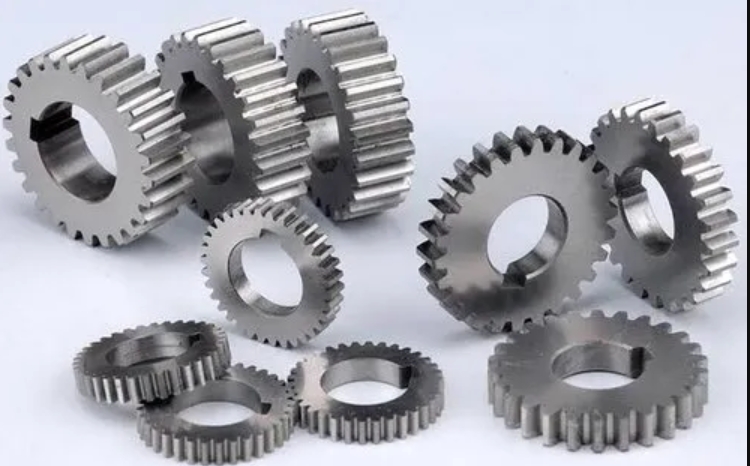
Gear accuracy fundamentally refers to the degree of conformity between the manufactured gear and its ideal theoretical geometry. It encompasses several aspects: kinematic accuracy (related to motion transmission fidelity), smoothness of operation (affecting noise and vibration), and contact pattern uniformity (influencing load distribution). For spur gears in aero-engines, these factors are critical due to the high rotational speeds and substantial transmitted torques. The selection of an appropriate accuracy grade is not arbitrary; it depends on operational parameters such as peripheral speed, power rating, and environmental conditions. In aviation standards, spur gears are classified into precision grades from 3 to 8, with lower numbers indicating higher accuracy. For instance, as per common guidelines, spur gears with peripheral speeds exceeding 50 m/s should attain Grade 3 accuracy, while those above 20 m/s require at least Grade 5. This correlation underscores the need for meticulous design, as higher speeds amplify the effects of geometric errors.
To illustrate, consider the peripheral speeds of spur gears in a typical turbofan engine accessory gearbox. Based on operational data, we can categorize gears as follows:
| Gear Pair Identifier | Peripheral Speed (m/s) | Recommended Minimum Accuracy Grade |
|---|---|---|
| Spur Gear Set A | 22 | 5 |
| Spur Gear Set B | 30 | 5 |
| Spur Gear Set C | 20 | 5 |
| Spur Gear Set D | 35 | 4 |
| Spur Gear Set E | 64 | 3 |
| Spur Gear Set F | 52 | 3 |
| Spur Gear Set G | 85 | 3 |
This table highlights that many high-speed spur gears necessitate Grade 3 accuracy, yet traditional designs often settle for Grade 6-5-5. This discrepancy can lead to performance shortfalls. The accuracy grade directly governs manufacturing tolerances, which are grouped into three categories: Group I (affecting motion accuracy), Group II (influencing smoothness), and Group III (determining contact uniformity). For spur gears, key tolerance items include profile deviation, pitch error, and helix deviation. Reducing these errors through higher precision grades enhances the spur gear’s ability to transmit power smoothly, minimizes dynamic loads, and extends service life. In my analysis, I have found that even minor improvements in accuracy can yield substantial benefits, particularly in reducing the impulsive forces during gear meshing.
The meshing process of spur gears is inherently dynamic, and geometric inaccuracies can induce significant impact loads. When a spur gear tooth engages or disengages, deviations in tooth profile or base pitch create a “synthetic base pitch error,” leading to sudden accelerations and decelerations. This results in impact forces that superimpose on the normal operational loads. To quantify this, we can model the impact force during meshing. The force during meshing-out, for instance, can be expressed as:
$$ F_{impact} = \frac{\Delta V_n}{\sqrt{q_s \cdot b}} \cdot \sqrt{\frac{J_1 \cdot J_2}{r_{b1}’^2 + r_{b2}’^2}} $$
where:
– $\Delta V_n$ is the冲击 velocity due to error,
– $J_1$ and $J_2$ are the moments of inertia of the spur gears,
– $r_{b1}’$ and $r_{b2}’$ are the instantaneous base radii at the meshing point,
– $q_s$ is the total compliance of the tooth pair at engagement,
– $b$ is the face width of the spur gear.
Applying this to typical spur gear pairs in an aero-engine accessory gearbox, with accuracy Grade 6-5-5, the impact forces can be substantial. For example, calculations for three different spur gear sets reveal:
| Spur Gear Pair | Normal Load (N) | Meshing-In Impact Force (N) | Meshing-Out Impact Force (N) | Impact as % of Normal Load (Meshing-In) | Impact as % of Normal Load (Meshing-Out) |
|---|---|---|---|---|---|
| Spur Gears 01-04 | 2256.7 | 888.68 | 828.63 | 39.38% | 36.72% |
| Spur Gears 01-02 | 3451.3 | 1136.8 | 1114.5 | 32.94% | 32.29% |
| Spur Gears 02-03 | 3451.3 | 1094.3 | 1041.0 | 31.71% | 30.16% |
These results indicate that impact loads can instantaneously increase the normal tooth load by over 30% for spur gears with Grade 6-5-5 accuracy. Such spikes not only elevate stress levels but also accelerate fatigue and wear mechanisms. Therefore, upgrading the accuracy grade of spur gears is imperative to dampen these dynamic effects. Higher precision reduces profile and pitch errors, thereby decreasing the冲击 velocity $\Delta V_n$ and the subsequent impact force. Moreover, incorporating tooth modifications, such as tip and root relief, can further alleviate meshing shocks by compensating for deflections and errors. In my design practice, I advocate for spur gears with at least Grade 4 accuracy for high-speed applications, as this significantly curtails dynamic factors and enhances overall stability.
Beyond geometric accuracy, surface roughness of spur gear teeth is another pivotal factor influencing performance. The texture of the tooth flank, characterized by parameters like Ra (arithmetical mean deviation), directly affects friction, lubrication, and contact mechanics. In high-load, high-speed spur gear engagements, a rough surface can lead to increased heat generation, poor oil film formation, and heightened risk of scuffing or pitting. From a strength perspective, surface roughness impacts both contact fatigue strength and scoring resistance. The allowable contact stress for a spur gear can be derived from the Hertzian theory and adjusted for various factors, including roughness. The basic formula for contact stress is:
$$ \sigma_H = \sigma_{H0} \cdot \sqrt{K_A \cdot K_V \cdot K_{H\beta} \cdot K_{H\alpha}} $$
where $\sigma_{H0}$ is the nominal contact stress, calculated as:
$$ \sigma_{H0} = Z_H \cdot Z_E \cdot Z_\varepsilon \cdot Z_\beta \cdot \sqrt{\frac{F_t}{b \cdot d_1} \cdot \frac{u+1}{u}} $$
Here, $F_t$ is the tangential load, $b$ the face width, $d_1$ the pitch diameter of the pinion spur gear, $u$ the gear ratio, and $Z$ factors account for geometry, elasticity, contact ratio, and helix angle. The permissible contact stress $\sigma_{HP}$ is then:
$$ \sigma_{HP} = \sigma_{Hlim} \cdot \frac{Z_N \cdot Z_L \cdot Z_V \cdot Z_R}{S_{Hlim}} $$
In this equation, $Z_R$ is the roughness coefficient, which diminishes as surface roughness decreases. For spur gears, reducing Ra from 0.8 μm to 0.4 μm enhances $Z_R$, thereby increasing $\sigma_{HP}$. Based on computational studies, this improvement translates to a 5.7% to 6% boost in contact fatigue strength. This might seem modest, but in the context of spur gear design, where safety margins are tight, such gains are substantial and can prolong operational life significantly.
Similarly, surface roughness critically influences the scoring or gluing resistance of spur gears. Scoring is a surface damage mechanism caused by localized welding and tearing of tooth flanks due to excessive friction and temperature. The integral temperature method is widely used to assess scoring risk. The integral temperature $\theta_{int}$ is computed as:
$$ \theta_{int} = \theta_M + C_2 \cdot \theta_{flaint} $$
where $\theta_M$ is the bulk temperature, $\theta_{flaint}$ is the average flash temperature rise along the path of contact, and $C_2$ is a weighting factor. The average flash temperature is given by:
$$ \theta_{flaint} = \theta_{flaE} \cdot X_\varepsilon \cdot X_Q \cdot X_{ca} $$
with $\theta_{flaE}$ being the flash temperature at the pinion tip point E:
$$ \theta_{flaE} = \mu_m \cdot X_M \cdot X_{BE} \cdot \sqrt[4]{W_t \cdot V’} \cdot \sqrt{\frac{V’}{a’}} $$
Here, $\mu_m$ is the mean coefficient of friction, which is sensitive to surface roughness—rougher surfaces yield higher friction. $X_M$, $X_{BE}$, and other coefficients account for thermal and geometric properties. For spur gears, reducing surface roughness lowers $\mu_m$ and thus $\theta_{flaint}$, reducing the integral temperature. When the integral temperature exceeds a critical threshold $\theta_{Sint}$, scoring occurs. Calculations show that improving Ra from 0.8 μm to 0.4 μm for typical spur gear pairs increases the scoring safety factor by 10% to 11%. This is a remarkable enhancement, underscoring that surface finish is not merely a cosmetic attribute but a vital design parameter for spur gears in aero-engines.
To put this into perspective, let’s compare surface roughness standards across different aviation industries. Historically, some domestic aero-engine spur gears specified Ra 0.8 μm, whereas Russian and Western engines commonly adopt Ra 0.4 μm. In contemporary projects, especially for power transmission systems, there is a trend toward even finer finishes, such as Ra 0.2 μm. This evolution reflects growing recognition that surface roughness governs tribological performance and longevity. In my experience, specifying Ra 0.4 μm as a minimum for spur gears in high-speed applications is prudent, and aspiring for Ra 0.2 μm as manufacturing capabilities advance is advisable. The following table summarizes the impact of roughness on strength factors for two spur gear pairs:
| Spur Gear Pair (Driver/Driven) | Surface Roughness Ra (μm) | Scoring Safety Factor | Contact Safety Factor |
|---|---|---|---|
| Spur Gears 02-03 | 0.8 | 1.5339 | 1.1788 |
| Spur Gears 02-03 | 0.4 | 1.6992 | 1.2506 |
| Spur Gears 01-02 | 0.8 | 1.2857 | 1.0855 |
| Spur Gears 01-02 | 0.4 | 1.4353 | 1.1474 |
This data clearly demonstrates that finer surface finishes yield higher safety margins, making spur gears more resilient against failure modes. It is worth noting that achieving such finishes requires advanced grinding, honing, or superfinishing processes, which add to manufacturing cost but are justified by the performance benefits. For spur gears operating in extreme conditions, investing in superior surface quality is a strategic imperative.
Another aspect to consider is the interaction between accuracy and roughness. A spur gear with high geometric accuracy but poor surface finish may still suffer from premature wear due to asperity contact. Conversely, a finely finished spur gear with large profile errors will exhibit dynamic issues. Therefore, an integrated approach is essential. In design phases, we must specify both tolerance grades and surface texture requirements for spur gears. Finite element analysis and dynamic simulation tools can help optimize these parameters. For instance, by modeling spur gear meshing with realistic error distributions, we can predict contact patterns and stress concentrations. Additionally, lubrication plays a mediating role; proper oil selection and cooling can mitigate some roughness effects, but they cannot compensate for fundamental inaccuracies.
Looking at industry trends, there is a push toward digitization and smart manufacturing for spur gears. Techniques like gear grinding with CNC controls enable tighter tolerances and consistent surface finishes. Metrology advancements allow for 3D inspection of spur gear teeth, ensuring compliance with design intent. These technological enablers make it feasible to produce spur gears with Grade 3 accuracy and Ra 0.2 μm at scalable costs. In my projects, I have collaborated with manufacturers to implement such processes, resulting in spur gears that demonstrate reduced noise levels and enhanced durability in bench tests.
Furthermore, the design of spur gears must account for thermal and centrifugal effects at high speeds. As rotational velocity increases, centrifugal forces can cause tooth distortion, altering the contact pattern. This interaction between dynamics and accuracy necessitates comprehensive modeling. Equations of motion for spur gear systems can be extended to include time-varying mesh stiffness due to errors. For example, the dynamic load factor $K_V$ in contact stress calculations can be refined based on accuracy grade. Research indicates that for spur gears with Grade 3 accuracy, $K_V$ values are significantly lower than for Grade 6, leading to lower dynamic stresses. This reinforces the importance of precision in high-speed spur gear applications.
In conclusion, the accuracy design of involute spur gears for aero-engines is a multifaceted discipline that balances geometric precision, surface quality, and operational demands. From my analysis, several key takeaways emerge. First, the accuracy grade of spur gears should be selected based on peripheral speed, with Grade 3 recommended for speeds over 50 m/s, Grade 4 for over 40 m/s, and so forth. Adhering to these guidelines minimizes impact loads, which can otherwise surge by over 30% for lower-grade spur gears. Second, surface roughness is a critical driver of strength; improving Ra from 0.8 μm to 0.4 μm boosts contact strength by 5.7-6% and scoring resistance by 10-11%. For future designs, targeting Ra 0.2 μm is advisable as manufacturing matures. Third, an integrated design approach that couples accuracy with tooth modifications and lubrication strategies yields optimal spur gear performance. As aero-engines evolve toward higher power densities, these considerations will become even more pivotal. By prioritizing accuracy and finish in spur gear design, we can ensure transmission systems that are not only reliable but also contribute to the overall efficiency and safety of aviation propulsion.
To facilitate further research, I encourage the adoption of standardized testing protocols for spur gears under simulated engine conditions. This will generate empirical data to validate theoretical models. Additionally, continuous collaboration between designers, metallurgists, and manufacturers will foster innovations in spur gear technology. The journey toward perfecting spur gear accuracy is ongoing, but with diligent effort, we can achieve transmissions that meet the soaring demands of modern aviation.