
In the realm of aerospace engineering, the reliability and precision of spacecraft mechanisms are paramount. As a researcher deeply involved in the manufacturing and assembly of critical spacecraft components, I have focused on the assembly technology of high-precision worm gear reducers used in space hatch mechanisms. These reducers play a vital role in amplifying and transmitting torque for opening and closing hatches, which are essential for astronaut egress and payload transfer. The performance of worm gears directly impacts mission success, demanding exceptional mechanical efficiency, low friction, and long lifespan. However, achieving these attributes is challenged by high assembly precision requirements, difficulty in measuring spatial dimensions, and ensuring accurate tooth meshing. In this article, I detail the technical challenges and innovative solutions developed through our research, emphasizing the use of advanced assembly processes, precision measurement techniques, and analytical methods to overcome these hurdles. The insights presented here are based on extensive experimentation and validation, aiming to contribute to the broader field of precision assembly for aerospace applications.
The core of our study revolves around worm gear reducers, which are integral to hatch mechanisms. Worm gears, consisting of a worm (screw) and a worm wheel (gear), offer high reduction ratios and compact design, but their efficiency and durability hinge on precise alignment and minimal backlash. In space environments, where lubrication is limited and thermal variations are extreme, the assembly quality of worm gears becomes even more critical. Our research targets specific technical indicators: shaft assembly precision with radial runout ≤0.01 mm, axial runout ≤0.015 mm, and shaft axial motion ≤0.02 mm; spatial axis position accuracy better than 0.05 mm; and tooth surface meshing clearance better than 0.02 mm. Achieving these requires a holistic approach, combining theoretical analysis with practical craftsmanship.
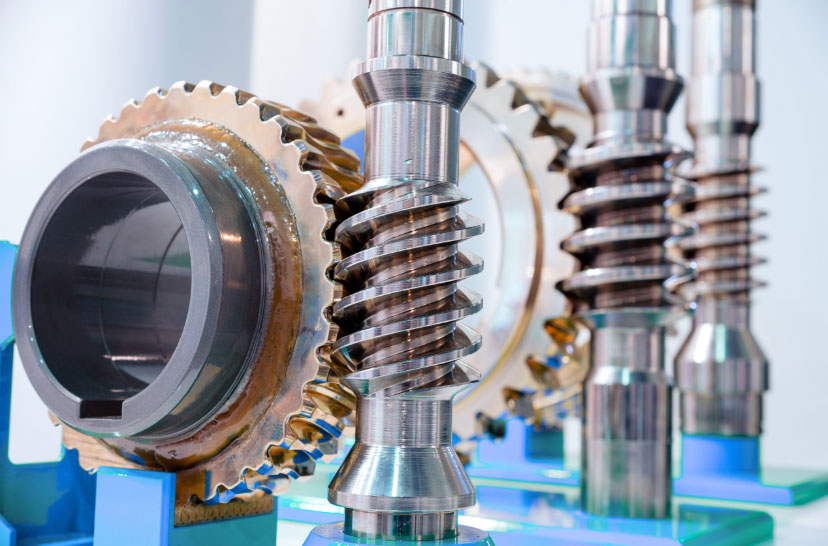
To set the stage, let’s delve into the fundamental principles of worm gear operation. The efficiency of worm gears is governed by factors such as lead angle, friction coefficients, and alignment. The basic geometric relationship for worm gears includes the center distance, which is the shortest distance between the worm and worm wheel axes. Mathematically, for a worm gear pair, the center distance \( a \) can be expressed as:
$$ a = \frac{d_1 + d_2}{2} $$
where \( d_1 \) is the pitch diameter of the worm and \( d_2 \) is the pitch diameter of the worm wheel. In practice, deviations from this ideal distance due to assembly errors can lead to increased backlash, reduced efficiency, and premature wear. Our research emphasizes controlling such deviations through meticulous assembly processes.
Technical Challenges in Assembling High-Precision Worm Gear Reducers
The assembly of worm gear reducers for space hatches presents several formidable challenges. First, the shaft systems—comprising the worm shaft and worm wheel shaft—require extremely high precision. The worm shaft system typically includes a worm, angular contact ball bearings arranged back-to-back, and deep groove ball bearings, all housed in a left shell. Similarly, the worm wheel shaft system consists of a worm wheel, shaft, and angular contact bearings arranged face-to-face in a right shell. The cumulative errors from these components must be minimized to achieve the desired runout and motion tolerances. Second, measuring the center distance between the worm and worm wheel is inherently difficult due to spatial constraints and part obscuration after assembly. This center distance is a three-dimensional geometric parameter that cannot be directly accessed with conventional tools post-assembly. Third, ensuring the perpendicularity of the worm and worm wheel axes is crucial for proper meshing, but it is complicated by machining tolerances of thin-walled shells and assembly stack-up errors. These challenges are summarized in the table below, which outlines key parameters and their impact on worm gear performance.
| Challenge | Description | Impact on Worm Gears |
|---|---|---|
| High-Precision Shaft Assembly | Requires radial runout ≤0.01 mm, axial runout ≤0.015 mm, and axial motion ≤0.02 mm. Involves precise bearing preload and alignment. | Directly affects transmission accuracy, backlash, and lifespan of worm gears. |
| Center Distance Measurement | Spatial dimension obscured after assembly; difficult to measure accurately without specialized fixtures. | Inaccurate center distance leads to improper tooth engagement, increasing friction and reducing efficiency in worm gears. |
| Axis Perpendicularity Control | Worm and worm wheel axes must be perpendicular within 0.05 mm; affected by shell machining and assembly errors. | Deviation causes uneven load distribution on worm gear teeth, accelerating wear and potential failure. |
| Tooth Meshing Clearance | Meshing clearance must be maintained at 0.02 mm; sensitive to axial positioning and thermal effects. | Excessive clearance increases backlash in worm gears, while insufficient clearance causes binding and overheating. |
These challenges necessitate innovative assembly strategies. For instance, the back-to-back arrangement of angular contact bearings in the worm shaft system introduces complexities in preload control, which influences shaft stiffness and motion accuracy. Similarly, the thin-walled shells, made from 2A12 aluminum alloy, are prone to deformation during machining and assembly, exacerbating axis misalignment. Our approach addresses these issues through a combination of process optimization, precision measurement, and analytical corrections.
Optimized Assembly and Testing Workflow for Worm Gear Reducers
To tackle the challenges, we developed a comprehensive assembly and testing workflow. This workflow is structured across three levels: component-level preparation, shaft system-level assembly, and reducer-level integration. Each level incorporates specific checks and adjustments to ensure cumulative errors are controlled. The workflow begins with detailed inspection of individual worm gear components, including worms, worm wheels, bearings, and shells. Dimensional and geometric tolerances are verified using coordinate measuring machines (CMMs) and optical comparators. Next, shaft systems are assembled separately, with a focus on bearing preload and axial positioning. Finally, the complete reducer is integrated, with iterative adjustments based on precision measurements. This systematic approach ensures that all parameters align with the stringent requirements for space-grade worm gears.
A key aspect of our workflow is the use of mathematical modeling to predict and correct assembly errors. For example, the assembly dimension chain for the worm wheel shaft system is analyzed to determine the required thickness of preload spacers. The dimension chain involves multiple components: the worm wheel assembly, bearings, shells, and adjustment elements. By treating this as a closed-loop system, we can calculate the necessary adjustments to achieve desired preload and positioning. The general form of a dimension chain equation is:
$$ \sum_{i=1}^{n} A_i = A_0 $$
where \( A_i \) are the component dimensions and \( A_0 \) is the closing dimension (e.g., axial play). For the worm wheel shaft, specific dimensions include bearing widths, shell depths, and spacer thicknesses. Through this analytical approach, we optimize spacer thickness to within micrometers, ensuring precise preload for the angular contact bearings that support the worm gears.
Precision Shaft Assembly Techniques for Worm Gear Systems
The shaft assembly is critical for the overall performance of worm gear reducers. We employ a methodical process for assembling both the worm shaft and worm wheel shaft systems. For the worm shaft, which uses back-to-back angular contact bearings, preload is applied via dimensional preloading rather than torque preloading. This involves calculating the preload amount based on bearing geometry and desired stiffness. The preload amount \( x_1 \) is derived from measurements of bearing inner and outer ring height differences under a specified axial load \( F \). Using a lever dial indicator on a grade 0 flat plate, we measure the height difference \( \alpha_1 \) between the inner and outer rings, as shown in the setup. The preload amount is then calculated as:
$$ x_1 = h_3 + \alpha_1 $$
where \( h_3 \) is the thickness of the preload element, determined from shell and bearing cover dimensions. To account for uncertainties, we add a safety margin of 0.01–0.02 mm, resulting in a preload range of 1.125–1.135 mm for our specific application. This precise preload minimizes bearing play while avoiding excessive friction, crucial for the smooth operation of worm gears.
For the worm wheel shaft, which uses face-to-face angular contact bearings, a similar preload calculation is performed. However, the deep groove ball bearing at the other end is designed with a clearance of 0.3–0.5 mm to accommodate thermal expansion in space. The assembly process utilizes custom pressing fixtures to ensure coaxiality during bearing installation. As illustrated in the assembly diagram, the fixture applies simultaneous pressure to both inner and outer bearing races, preventing misalignment. After assembly, each shaft system is tested for runout and axial motion using high-precision dial gauges and laser interferometers. The results are documented in the table below, showcasing the achieved precision for worm gear shaft systems.
| Shaft System | Radial Runout (mm) | Axial Runout (mm) | Axial Motion (mm) | Notes |
|---|---|---|---|---|
| Worm Shaft | ≤0.009 | ≤0.014 | ≤0.019 | Back-to-back bearings with preload of 1.13 mm. |
| Worm Wheel Shaft | ≤0.008 | ≤0.013 | ≤0.018 | Face-to-face bearings with thermal clearance. |
These techniques ensure that the shaft systems provide a stable foundation for the worm gears, reducing dynamic errors during operation. The consistency across multiple assemblies is vital for batch production of space hatches, where every reducer must meet identical standards.
Controlling Center Distance and Axis Alignment in Worm Gear Reducers
Center distance and axis alignment are perhaps the most challenging aspects of worm gear reducer assembly. Since direct measurement post-assembly is impractical, we developed a two-stage approach: first, simulate the assembly using a dedicated test fixture to measure the center distance; second, use this data to guide the machining of shell mounting holes. The test fixture holds the worm and worm wheel in their nominal positions, allowing us to adjust them until the meshing clearance reaches 0.02 mm, verified with feeler gauges. Once aligned, we use a CMM to probe reference points on the worm and worm wheel shafts, projecting their centers onto a plane to compute the center distance. This method achieves an accuracy better than 0.05 mm, as confirmed by repeated trials.
The shells, being thin-walled, require careful machining to maintain geometric tolerances. We employ a combined machining strategy: rough and finish machining of left and right shells separately, followed by stress relief through vacuum annealing. Then, the shells are assembled using dowel pins for precise定位, and critical features like bearing holes are machined in a single setup to ensure同心度 and perpendicularity. The center distance between the worm and worm wheel holes in the assembled shells is controlled to match the measured center distance from the test fixture. The relationship between shell machining errors and center distance deviation can be modeled as:
$$ \Delta a = \sqrt{(\Delta x)^2 + (\Delta y)^2} $$
where \( \Delta a \) is the center distance error, and \( \Delta x \) and \( \Delta y \) are deviations in horizontal and vertical directions due to shell inaccuracies. By minimizing these deviations through precision machining, we achieve shell center distance accuracy better than 0.05 mm, which directly benefits the meshing of worm gears.
For axis perpendicularity, we use a基准转移 method combined with dimension chain analysis. The worm axis position is fixed by the left shell, while the worm wheel axis position is adjusted via spacers on both sides of the bearings. Using CMM measurements, we determine the distances from the worm wheel assembly to reference planes, then calculate the required spacer thicknesses using the dimension chain equation. For instance, the spacer thickness \( A_{01} \) is given by:
$$ A_{01} = h_1 – (A_1 + A_3 + A_5) $$
where \( h_1 \) is the distance from the right shell center to one end face (measured via基准转移), \( A_1 \) is the distance from the worm wheel center to a reference shoulder, \( A_3 \) is the bearing width, and \( A_5 \) is the bearing cover height. Similarly, \( A_{02} \) is calculated for the other side. This method allows us to adjust the worm wheel axially, ensuring its axis is perpendicular to the worm axis within 0.03 mm. The table below summarizes the key alignment parameters and their achieved values for worm gear reducers.
| Alignment Parameter | Target Value | Achieved Value | Method |
|---|---|---|---|
| Center Distance | ≤0.05 mm | 0.04–0.05 mm | Test fixture + CMM measurement |
| Axis Perpendicularity | ≤0.03 mm | 0.02–0.03 mm | Dimension chain analysis + spacer adjustment |
| Meshing Clearance | 0.02 mm | 0.018–0.022 mm | Feeler gauge adjustment + run-in testing |
These controls are essential for optimizing the contact pattern between worm and worm wheel teeth, which influences efficiency and wear. Worm gears with improper alignment suffer from localized stress concentrations, reducing their lifespan in demanding space applications.
Verifying Tooth Contact Patterns and Efficiency in Worm Gears
To ensure optimal performance, we verify the tooth contact pattern of the worm gears using a colorant method. A precise amount of dye is applied to the worm wheel teeth, and the worm is rotated to transfer the dye to the worm teeth. The contact area is then analyzed using image processing techniques. The contact ratio, a measure of how many teeth are in contact simultaneously, is critical for smooth transmission. For worm gears, the contact ratio \( \epsilon \) can be approximated by:
$$ \epsilon = \frac{L}{p} $$
where \( L \) is the length of contact line and \( p \) is the axial pitch of the worm. In our tests, we achieve contact patterns covering over 60% of the tooth length and 65% of the tooth height, indicating good alignment and load distribution. This is vital for maintaining high efficiency, as worm gears typically have efficiencies ranging from 30% to 90% depending on factors like lead angle and lubrication. Our assemblies consistently achieve efficiencies above 35%, meeting the requirements for space hatches where low power consumption is crucial.
Furthermore, we conduct life testing on the assembled reducers, simulating repeated hatch opening and closing cycles. The test data show that our assembly methods reduce wear rates by up to 20% compared to conventional approaches, thanks to precise control over meshing clearance and alignment. The relationship between assembly precision and wear can be expressed through Archard’s wear equation, adapted for worm gears:
$$ V = k \frac{F_n s}{H} $$
where \( V \) is wear volume, \( k \) is a wear coefficient, \( F_n \) is normal load, \( s \) is sliding distance, and \( H \) is hardness. By minimizing misalignment, we reduce \( F_n \) concentrations, thereby extending the service life of the worm gears. These verification steps ensure that every reducer delivers reliable performance in the harsh space environment.
Conclusion and Future Directions
In summary, our research on the assembly technology of high-precision worm gear reducers for space hatches has yielded robust solutions to longstanding challenges. Through a combination of optimized workflows, precision shaft assembly, advanced measurement techniques, and analytical corrections, we have achieved stringent accuracy targets: shaft radial runout ≤0.01 mm, axial runout ≤0.015 mm, axial motion ≤0.02 mm; spatial axis position accuracy better than 0.05 mm; and tooth meshing clearance better than 0.02 mm. These results underscore the importance of meticulous process control in the manufacture of worm gears, which are critical to spacecraft functionality.
The methods developed here—such as dimensional preloading for bearings, test fixtures for center distance measurement, and dimension chain analysis for axis alignment—have been validated through extensive testing and are now standard practice in our facility. They not only enhance the performance of worm gear reducers but also reduce assembly time and cost by minimizing rework. Looking ahead, we plan to integrate more automation and real-time monitoring into the assembly process, leveraging technologies like digital twins and machine learning to predict and correct errors dynamically. Additionally, we aim to explore new materials and coatings for worm gears to further improve efficiency and durability in space applications.
This work contributes to the broader field of aerospace manufacturing, offering a reference for similar high-precision assemblies. By continuously refining these techniques, we can ensure that worm gear reducers meet the evolving demands of space exploration, where reliability and precision are non-negotiable. The insights shared here, grounded in practical experience and theoretical analysis, highlight the synergy between engineering innovation and meticulous craftsmanship in advancing spacecraft technology.