
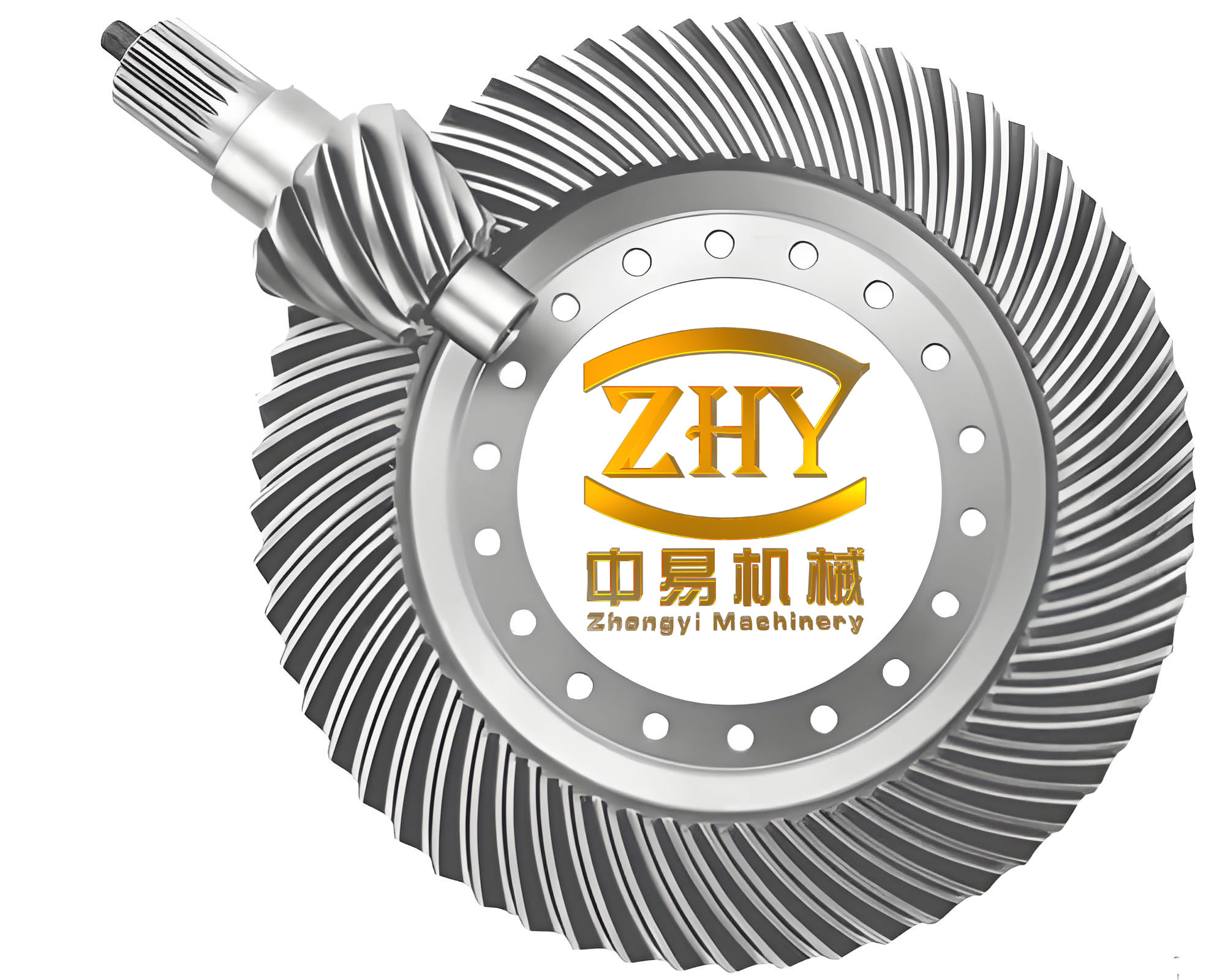
The challenge was clear from the outset. Our engineering fleet had integrated several heavy-duty diesel trucks, including models with significant payload capacities. The core of the powertrain in these vehicles, particularly in the drive axles, relied on complex hypoid bevel gear sets. These gears are essential for transmitting power at right angles with offset axes, allowing for lower driveline tunnels and higher torque capacity. However, the specific lubrication requirement for these imported vehicles presented a significant problem. The original equipment manufacturer (OEM) specified a single lubricant to service not just the main rear axle differential housing the hypoid bevel gear, but also the wheel-end bearings and the planetary gear sets within the hub reduction units. This multi-purpose, common-sump lubrication system was atypical for domestic vehicles at the time, and no suitable domestically produced gear oil could meet this multifaceted demand. The absence of a proper replacement lubricant risked equipment failure, increased maintenance costs, and threatened the progress of critical construction projects. This pressing need initiated a comprehensive research and development program to formulate, test, and industrialize a new generation of vehicle gear oil.
The heart of the lubrication challenge lay in the unique design of the axle system. The hypoid bevel gear pair itself operates under conditions of extreme pressure and sliding action due to the offset of the gear axes. This generates high localized temperatures and stress at the tooth contact interface, demanding a lubricant with exceptional extreme pressure (EP) and anti-wear (AW) properties to prevent scuffing, scoring, and pitting. Simultaneously, the same lubricant must circulate to lubricate high-speed tapered roller bearings at the wheel ends. Bearings require a lubricant with good film strength and oxidative stability but are generally less tolerant of very high-viscosity oils that increase churning losses and heat generation. Finally, the planetary hub reduction gears, while also requiring EP protection, operate in a different contact geometry. A single oil must balance all these needs.
This multi-role function dictated a stringent set of performance criteria for the target lubricant, far exceeding those of conventional gear oils:
- Optimized Viscosity and Flow Properties: The oil must have a viscosity low enough to ensure efficient pumpability and circulation at low temperatures for quick startup protection, and adequate flow to cool the hypoid bevel gear and bearings under high-speed operation. Yet, it must be high enough to maintain a protective film under the heavy loads of the hypoid bevel gear. The viscosity index (VI) needed to be high to minimize viscosity change with temperature.
- Superior Oxidation Stability: High-speed travel and heavy loads generate significant heat. The lubricant must resist thermal degradation and the formation of sludge, varnish, and acidic oxidation products that could clog oil passages, corrode components, and degrade the base oil’s properties.
- Exceptional Extreme Pressure and Anti-Wear Performance: This is non-negotiable for protecting the highly stressed hypoid bevel gear teeth. The lubricant must form a durable protective film under the severe sliding/rolling contact to prevent metal-to-metal contact and subsequent failure.
- Excellent Low-Temperature Fluidity: For reliable winter operation in harsh environments, the lubricant must have a very low pour point to remain fluid and ensure immediate lubrication during cold starts.
- Robust Anticorrosion and Antirust Properties: The lubricant must protect ferrous and non-ferrous metals (like copper in synchronizers) from corrosion caused by moisture and acidic by-products.
- Effective Antifoam Characteristics: High-speed churning in the gear case can aerate the oil; foam reduces lubrication efficiency and heat transfer, so effective foam suppression is critical.
The development process began with a thorough analysis of the incumbent OEM fluid to establish a performance benchmark. Key physical and chemical properties were assessed, providing a target profile. Concurrently, a review of international gear oil specifications (e.g., API GL-5, MIL-PRF-2105E) informed the formulation of a new, demanding provisional specification for the multi-purpose oil. The target was not merely to replicate but to optimize for the specific common-sump application. The comparative data for the original oil is summarized below:
| Property | Original OEM Gear Oil (Analysis) | Test Method |
|---|---|---|
| Kinematic Viscosity @ 100°C, cSt | ~15.5 | ASTM D445 |
| Viscosity Index | >90 | ASTM D2270 |
| Pour Point, °C | < -30 | ASTM D97 |
| Copper Strip Corrosion (3h @ 100°C) | 1b (Slight tarnish) | ASTM D130 |
Based on this analysis and the performance requirements, a definitive technical standard was established for the new lubricant, designated here as the Multi-Purpose Hypoid Bevel Gear Oil (MPHGO).
| Property | MPHGO Specification | Test Method |
|---|---|---|
| Kinematic Viscosity @ 100°C, cSt | 14.0 – 16.0 | ASTM D445 |
| Apparent Viscosity @ -26°C, cP (max) | 150,000 | ASTM D2983 |
| Viscosity Index (min) | 90 | ASTM D2270 |
| Pour Point, °C (max) | -30 | ASTM D97 |
| Flash Point (COC), °C (min) | 210 | ASTM D92 |
| Copper Strip Corrosion (3h @ 100°C) (max) | 1b | ASTM D130 |
| Extreme Pressure – Timken OK Load, lbs (min) | 60 | ASTM D2782 |
| Extreme Pressure – Four-Ball Weld Load, kgf (min) | 280 | ASTM D2783 |
| Foam Tendency/Stability, mL/mL (max) Seq I @ 24°C Seq II @ 93.5°C Seq III @ 24°C |
25/0 50/0 25/0 |
ASTM D892 |
| Rust Prevention (Distilled Water) | Pass | ASTM D665A |
The cornerstone of the formulation was the selection of a suitable base oil. A deeply refined, medium-viscosity mineral oil fraction with a naturally low pour point was chosen. This feedstock underwent a dedicated hydrofinishing process to dramatically improve its oxidation stability and color, while removing undesirable polar compounds. The hydrofinishing reaction can be conceptually represented as the saturation of aromatics and removal of heteroatoms (S, N, O):
$$ \text{Aromatics} + H_2 \xrightarrow[\text{Catalyst}]{\text{High Pressure}} \text{Naphthenes/Paraffins} $$
$$ \text{Organic Sulfur} (R-S-R’) + 2H_2 \rightarrow 2RH + H_2S \uparrow $$
The properties of the base oil before and after refining are critical. The process achieved a yield of 85-90% of high-quality base stock.
| Property | Feedstock | Hydrofinished Base Oil |
|---|---|---|
| Kinematic Viscosity @ 40°C, cSt | ~95 | ~92 |
| Kinematic Viscosity @ 100°C, cSt | ~10.5 | ~10.3 |
| Viscosity Index | ~85 | ~95 |
| Pour Point, °C | -15 | -30 |
| Sulfur Content, wt% | ~1.2 | <0.1 |
With a stable, high-VI, low-pour-point base oil secured, the next phase involved the sophisticated selection and balancing of additives. A modern, synergistic additive package was required. After extensive bench testing of multiple chemistries and formulations, an optimal package was identified, comprising:
- Sulfur-Phosphorus Extreme Pressure/Anti-wear Agents: These additives thermally decompose at the high-contact temperatures of the hypoid bevel gear mesh to form protective tribofilms of iron sulfide and iron phosphate, preventing adhesive wear and scuffing. The chemical activity is carefully controlled to be strong enough for the gear teeth but not overly corrosive to yellow metals.
- Polymeric Viscosity Index Improvers: To achieve the required high VI and ensure adequate low-temperature viscosity without compromising the high-temperature film strength.
- Ashless Dispersants and Antioxidants: To suspend potential contaminants and, most importantly, inhibit the oxidation of the base oil at high temperatures, extending service life.
- Metal Passivators and Corrosion/Rust Inhibitors: To protect copper alloys (synchronizers, bushings) from chemical attack and ferrous surfaces from rusting in the presence of water.
- Silicone-based Antifoam Agents: To rapidly collapse air bubbles formed during gear churning.
The formulated MPHGO was subjected to rigorous laboratory evaluation. The results from multiple independent laboratories confirmed that the product consistently met or exceeded the stringent provisional specification.
| Critical Performance Test | MPHGO Specification | Lab A Result | Lab B Result |
|---|---|---|---|
| Kinematic Viscosity @ 100°C, cSt | 14.0-16.0 | 15.2 | 15.5 |
| Apparent Viscosity @ -26°C, cP | < 150,000 | 135,000 | 128,000 |
| Four-Ball Weld Load (PB), kgf | > 280 | 308 | 315 |
| Timken OK Load, lbs | > 60 | 65 | 65 |
| Copper Strip Corrosion (3h @ 100°C) | ≤ 1b | 1a | 1b |
| Foam Seq II (93.5°C), mL/mL | 50/0 | 10/0 | 20/0 |
The ultimate validation, however, could only come from extended field trials under the most severe operating conditions. The test fleet operated in mountainous terrain with poor gravel roads, extreme temperature variations, and a mix of short-haul and long-distance transport. This environment placed immense stress on the entire drivetrain and was the perfect proving ground. The primary focus was monitoring the condition of the hypoid bevel gear set, wheel bearings, and planetary gears lubricated by the common oil sump.
Oil drain intervals were extended beyond standard recommendations to stress-test the lubricant’s durability. Periodic used oil analysis (UOA) became a crucial diagnostic tool. Key UOA parameters track lubricant health and component wear:
- Viscosity Increase: Indicator of oxidation, polymerization, or contamination.
- Flash Point Drop: Can indicate fuel dilution.
- Elemental Spectroscopy (Fe, Cu, Pb, Sn): Tracks wear metals from gears (Fe), bearings (Cu, Pb), and bushings (Sn).
- Additive Elements (P, S, Zn, Ca): Monitors additive depletion.
- PQ Index (Particle Quantifier): Measures ferrous debris load, a direct indicator of hypoid bevel gear and bearing wear.
Data from vehicles after tens of thousands of kilometers was highly encouraging.
| Used Oil Analysis from Field Trial Vehicles (Main Rear Axle) | |||||
|---|---|---|---|---|---|
| Vehicle | Mileage (km) | KV @ 100°C (cSt) | Fe (ppm) | Cu (ppm) | PQ Index |
| Unit #1 | 45,000 | 16.8 | 38 | 12 | 25 |
| Unit #2 | 52,000 | 17.1 | 45 | 15 | 31 |
| Unit #3 | 60,000 | 18.0 | 52 | 18 | 38 |
The steady, low rate of iron (Fe) wear metal generation, typically below 100 ppm even at extended drains, was a clear indicator of effective protection for the hypoid bevel gear. The copper (Cu) levels were also minimal, indicating no corrosive attack on yellow metals and low bearing wear. Crucially, during major scheduled teardowns and inspections by OEM technicians, the hypoid bevel gear teeth in test vehicles were found to be in excellent condition—smooth, bright, and free from pitting, spalling, or scoring. The lubricant was deemed by field engineers to be “close to the original OEM fluid” in performance. In contrast, comparable vehicles using a conventional, higher-viscosity domestic gear oil showed significantly accelerated wear, component damage, and heavy sludge deposits in the same operating environment. The low viscosity of the MPHGO reduced fluid friction (churning losses), leading to lower operating temperatures for the hypoid bevel gear assembly. This thermal advantage can be conceptualized through the relationship for power loss due to churning: $$ P_{churn} \propto \mu \cdot \omega^2 \cdot R^4 $$ where \( \mu \) is the dynamic viscosity of the oil, \( \omega \) is the rotational speed, and \( R \) is a characteristic gear dimension. Reducing \( \mu \) directly reduces parasitic power loss and heat generation.
The successful implementation of the MPHGO translated into substantial and multi-faceted economic benefits. The financial impact can be broken down into direct and indirect savings.
| Economic Benefit Analysis | ||
|---|---|---|
| Benefit Category | Calculation Basis | Annualized Saving |
| Direct Lubricant Cost Saving | Replacing imported OEM oil (CostImport) with domestic MPHGO (CostDom). Saving = (CostImport – CostDom) × Annual Consumption Volume. |
~$45,000 |
| Fuel Economy Improvement | Reduced churning losses from lower viscosity oil. Measured 1.5-2.5% improvement in fleet fuel consumption. Saving = Fuel Price × Annual Fuel Use × 0.02. |
~$20,000 |
| Maintenance & Downtime Reduction | Extended drain intervals, fewer unscheduled repairs, increased component life (gears, bearings). Quantified via reduced parts/labor costs and higher vehicle availability. | ~$30,000 |
| Total Tangible Annual Benefit | ~$95,000 | |
In conclusion, the research and development program successfully addressed a critical industrial need by creating a high-performance, multi-purpose lubricant specifically engineered for advanced common-sump axle systems employing hypoid bevel gear technology. The formulated MPHGO demonstrated that through careful base oil selection and advanced additive technology, a single lubricant could simultaneously meet the divergent needs of a hypoid bevel gear, wheel-end bearings, and planetary reduction gears. Its lower viscosity, compared to traditional gear oils, coupled with robust EP/AW performance, provided superior protection, enhanced energy efficiency, and extended component life. The extensive field validation under severe conditions proved its reliability and parity with premium international products. This project not only solved an immediate logistical and technical problem but also served as a successful case study in the modernization of domestic lubricant technology, highlighting the path towards next-generation, fuel-efficient, and multi-functional driveline fluids. The principles demonstrated—balancing viscosity for efficiency with film strength for protection, and formulating for system-wide compatibility—are essential for future lubricants designed for increasingly integrated and demanding vehicle transmission systems.