
In the automotive industry, the demand for high-performance steering systems has grown significantly, particularly with the widespread adoption of Electric Power Steering (EPS) systems. As a researcher in lubricant development, I have focused on addressing the critical lubrication challenges in EPS screw gear mechanisms, which are essential for vehicle safety and reliability. The screw gear, consisting of a worm and a worm wheel, is a key component in EPS systems, providing precise steering control. However, this gear system operates under harsh conditions, including wide temperature ranges, high contact stresses, and sliding friction, necessitating specialized lubricating greases. Historically, high-end EPS screw gear lubricants have been dominated by foreign manufacturers, creating a dependency that hinders local automotive innovation. In this study, I aim to develop a domestically produced lubricating grease for EPS screw gear applications, ensuring performance parity or superiority over imported counterparts while enhancing sustainability and cost-effectiveness.
The screw gear in EPS systems operates within a temperature spectrum from -40°C to 120°C, reflecting the extreme environmental variations vehicles encounter. This gear pair typically involves a metal worm and a plastic worm wheel (e.g., nylon or glass-fiber reinforced nylon), forming a steel-plastic friction pair. The contact mechanics are characterized by line contact due to the curved profile of the worm wheel, leading to high contact stresses. The lubrication regime is predominantly boundary lubrication, with significant sliding friction, which can cause wear, noise, and stick-slip phenomena if not properly managed. Additionally, the screw gear is expected to last the lifetime of the vehicle, often exceeding 10 years, and may be exposed to contaminants like water and dust. Based on these operational parameters, the lubricating grease must meet several stringent requirements: lifetime lubrication capability, excellent anti-wear and load-carrying properties, broad temperature performance, low low-temperature torque, and compatibility with non-metallic materials such as plastics and rubbers. To quantify these needs, I derived technical specifications for the target grease, as summarized in Table 1.
| Property | Specification | Test Method |
|---|---|---|
| Worked Penetration (25°C) / 0.1 mm | 265-295 | GB/T 269 |
| Dropping Point / °C | ≥190 | GB/T 4929 |
| Corrosion Protection (52°C, 48 h) | Pass | GB/T 5018 |
| Low-Temperature Torque (-40°C) / mN·m | Start ≤980, Run ≤490 | SH/T 0338 |
| Water Washout (38°C, 1 h) / % | ≤8.0 | SH/T 0109 |
| Change in Prolonged Worked Penetration (100,000 strokes) / 0.1 mm | ≤30 | GB/T 269 |
| Copper Corrosion (T2, 100°C, 24 h) | Pass | GB/T 7326 |
| Cone Oil Separation (100°C, 24 h) / % | ≤5.0 | NB/SH/T 0324 |
| Oxidation Pressure Drop (99°C, 100 h, 758 kPa) / kPa | ≤50 | SH/T 0325 |
| Maximum Non-Seizure Load / N | ≥785 | GB/T 12583 |
| Weld Load / N | ≥1961 | GB/T 12583 |
| Wear Scar Diameter (392 N, 75°C, 1200 rpm, 60 min) / mm | ≤0.60 | SH/T 0204 |
These specifications emphasize the grease’s anti-wear, extreme pressure, low-temperature, and oxidation stability properties. However, given the unique steel-plastic friction pair in screw gear systems, special attention must be paid to the grease’s tribological behavior on such surfaces. The friction coefficient, for instance, can be modeled using the basic equation for boundary lubrication: $$ \mu = \frac{F_f}{F_n} $$ where $\mu$ is the friction coefficient, $F_f$ is the frictional force, and $F_n$ is the normal load. In screw gear applications, reducing $\mu$ is critical for minimizing energy loss and wear.
To develop the grease, I first selected the thickener system. Based on market analysis, most high-end screw gear lubricants use lithium-based thickeners, particularly 12-hydroxystearic acid lithium soap, due to its excellent thermal stability, mechanical shear resistance, water resistance, and cost-effectiveness. This thickener can maintain grease structure across the required temperature range. I opted for 12-hydroxystearic acid lithium soap at a concentration of 7-13% by mass. The base oil constitutes over 80% of the grease and dictates key properties like viscosity-temperature behavior and low-temperature flow. For screw gear lubrication, I chose polyalphaolefin (PAO) synthetic oil because of its superior low-temperature fluidity, high viscosity index, low volatility, and oxidation resistance. The PAO’s kinematic viscosity at 40°C was controlled between 40-60 mm²/s to balance film formation and low-temperature torque. Typical properties of the PAO base oil are shown in Table 2.
| Property | Value | Test Method |
|---|---|---|
| Kinematic Viscosity at 40°C / mm²/s | 48.95 | GB/T 265 |
| Kinematic Viscosity at 100°C / mm²/s | 8.096 | GB/T 265 |
| Viscosity Index | 137 | GB/T 2541 |
| Pour Point / °C | -55 | GB/T 3535 |
The high viscosity index ensures stable lubricant film across temperatures, which is vital for screw gear performance. The additive package was then optimized to enhance specific properties. Antioxidants are crucial for lifetime lubrication; I evaluated various antioxidants in a base grease (thickened with 10% 12-hydroxystearic acid lithium soap in PAO) using oxidation tests. Results are summarized in Table 3.
| Antioxidant Formulation (by mass) | Oxidation Pressure Drop / kPa |
|---|---|
| 1.0% Diphenylamine | 49 |
| 1.0% Alkylated Diphenylamine | 20 |
| 1.0% Hindered Phenol | 36 |
| 0.5% Diphenylamine + 0.5% Hindered Phenol | 30 |
| 0.5% Alkylated Diphenylamine + 0.5% Hindered Phenol | 12 |
The combination of 0.5% alkylated diphenylamine and 0.5% hindered phenol showed the lowest pressure drop, indicating superior oxidation inhibition. This synergistic effect can be described by the Arrhenius equation for oxidation kinetics: $$ k = A e^{-\frac{E_a}{RT}} $$ where $k$ is the rate constant, $A$ is the pre-exponential factor, $E_a$ is the activation energy, $R$ is the gas constant, and $T$ is temperature. Additives that increase $E_a$ or decrease $A$ can retard oxidation, and the composite antioxidant likely does both.
For anti-wear and extreme pressure (AW/EP) performance, I tested several additive blends in the base grease, focusing on their efficacy in steel-plastic contacts. The screw gear’s sliding friction necessitates robust AW/EP agents. Results are shown in Table 4.
| AW/EP Blend (by mass) | Weld Load / N | Wear Scar Diameter / mm |
|---|---|---|
| 0.5% Thiophosphate + 1.0% Phosphate Ester + 1.5% Amino Thioester | 2452 | 0.38 |
| 2.0% Amino Thioester + 1.0% Carboxylic Molybdenum | 1961 | 0.40 |
| 1.0% Thiophosphate + 1.0% Phosphate Ester + 1.0% Amino Thioester + 1.0% Carboxylic Molybdenum | 1961 | 0.38 |
The blend of 0.5% thiophosphate, 1.0% phosphate ester, and 1.5% amino thioester yielded the highest weld load and lowest wear scar, making it ideal for screw gear applications. These additives likely form protective tribofilms on metal surfaces, reducing wear. The wear volume $V$ can be approximated by Archard’s wear equation: $$ V = K \frac{F_n L}{H} $$ where $K$ is the wear coefficient, $F_n$ is the normal load, $L$ is the sliding distance, and $H$ is the hardness. Effective AW/EP additives reduce $K$ by promoting surface reactions.
Given the steel-plastic friction pair, solid lubricants were incorporated to improve lubricity on plastic surfaces. I evaluated polytetrafluoroethylene (PTFE), melamine cyanurate (MCA), and molybdenum disulfide (MoS₂) using a steel-plate-on-plastic-disk test (ASTM D7420). The wear thickness on the plastic disk was measured, as shown in Table 5.
| Solid Lubricant Formulation (by mass) | Wear Thickness on Plastic Disk / mm |
|---|---|
| 4.0% PTFE | 0.046 |
| 4.0% MCA | 0.063 |
| 4.0% MoS₂ | 0.153 |
| 2.0% PTFE + 2.0% MCA | 0.050 |
| 2.0% MCA + 2.0% MoS₂ | 0.099 |
| 2.0% PTFE + 2.0% MoS₂ | 0.082 |
PTFE alone exhibited the best anti-wear performance, likely due to its low friction coefficient and ability to transfer films onto both metal and plastic surfaces. Therefore, I included 4.0% PTFE in the final formulation. The complete screw gear lubricating grease composition is: 7-13% 12-hydroxystearic acid lithium soap, 75-90% PAO base oil (40°C kinematic viscosity 40-60 mm²/s), 1.0% composite antioxidant (0.5% alkylated diphenylamine + 0.5% hindered phenol), 3.0% composite AW/EP additive (0.5% thiophosphate + 1.0% phosphate ester + 1.5% amino thioester), and 4.0% PTFE solid lubricant.
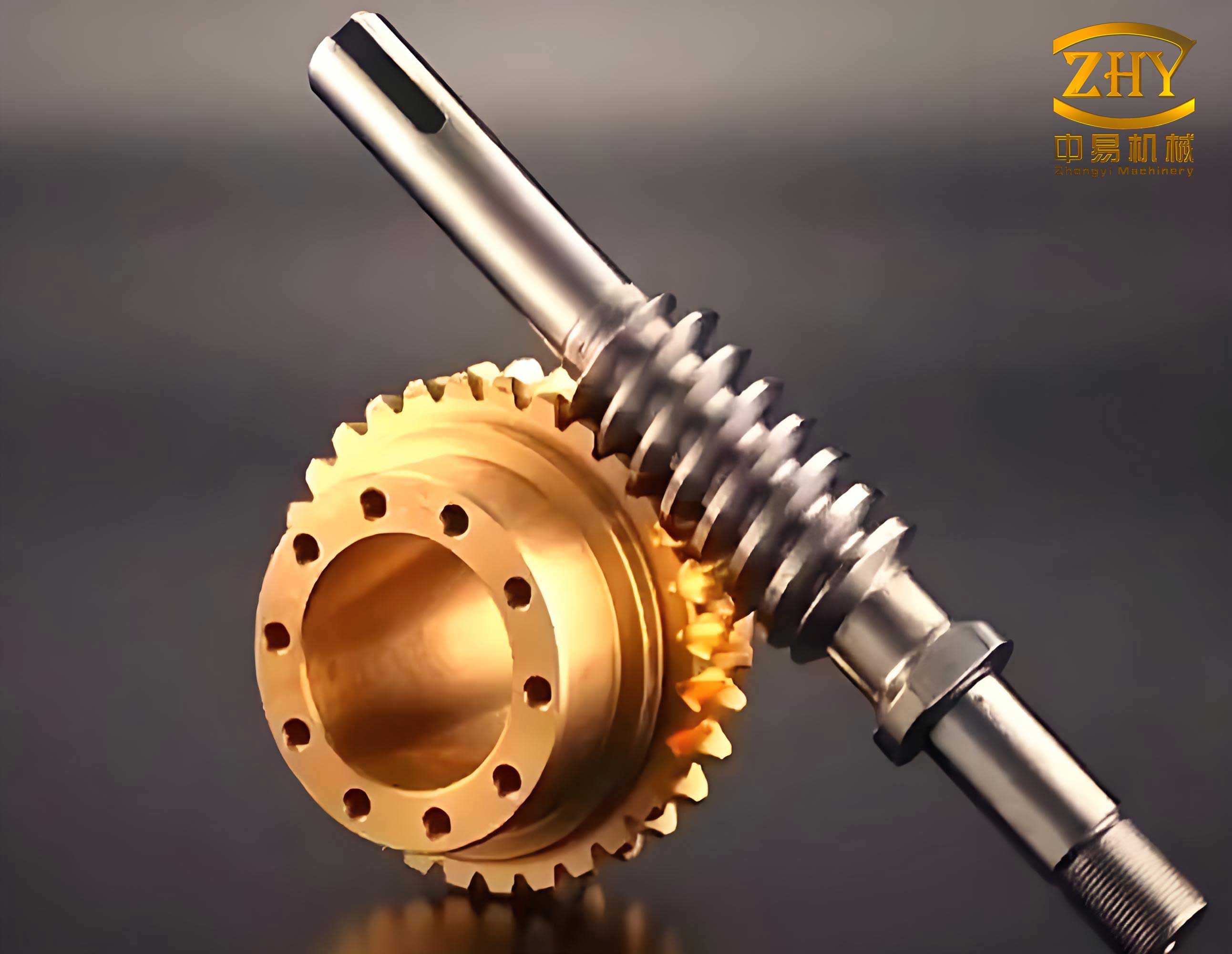
This image illustrates a typical screw gear assembly in an EPS system, highlighting the worm and worm wheel engagement where lubrication is critical. The geometry of the screw gear directly influences contact stresses and lubrication efficiency. The contact pressure $p$ can be estimated using Hertzian contact theory: $$ p = \sqrt{\frac{F_n E^*}{\pi R}} $$ where $E^*$ is the effective elastic modulus and $R$ is the effective radius of curvature. Proper grease formulation mitigates these stresses to prevent wear.
I then prepared the grease and evaluated its properties comprehensively. The physicochemical performance was compared with an imported high-end screw gear lubricant, as detailed in Table 6.
| Property | Developed Grease | Imported Grease |
|---|---|---|
| Worked Penetration (25°C) / 0.1 mm | 280 | 277 |
| Dropping Point / °C | 203 | 198 |
| Corrosion Protection (52°C, 48 h) | Pass | Pass |
| Low-Temperature Torque (-40°C) / mN·m | Start: 220, Run: 23 | Start: 341, Run: 33 |
| Water Washout (38°C, 1 h) / % | 2.0 | 3.0 |
| Change in Prolonged Worked Penetration / 0.1 mm | 20 | 28 |
| Copper Corrosion (T2, 100°C, 24 h) | Pass | Pass |
| Cone Oil Separation (100°C, 24 h) / % | 1.5 | 1.3 |
| Oxidation Pressure Drop (99°C, 100 h, 758 kPa) / kPa | 15 | 37 |
| Maximum Non-Seizure Load / N | 785 | 696 |
| Weld Load / N | 2452 | 1961 |
| Wear Scar Diameter (392 N, 75°C, 1200 rpm, 60 min) / mm | 0.45 | 0.50 |
The developed grease outperformed the imported product in key areas like low-temperature torque, weld load, and oxidation stability, meeting or exceeding all specifications. The tribological behavior on steel-plastic pairs was assessed using an SRV tester with a steel disk (AISI 52100, 60 HRC) against a plastic disk (PA66 + 30% glass fiber). The test conditions were 50°C, 2.0 mm amplitude, 20 Hz frequency, and 400 N load. The friction coefficient was monitored over time, as shown in Figure 1 (described textually). The imported grease had an average friction coefficient of 0.081, while the developed grease averaged 0.066, a reduction of approximately 18.5%. This reduction enhances energy efficiency in screw gear systems, which can be expressed as a power loss saving: $$ P_{loss} = \mu F_n v $$ where $v$ is the sliding velocity. Lower $\mu$ directly reduces $P_{loss}$, improving overall system efficiency.
To validate performance in real-world conditions, I conducted transmission efficiency and durability rig tests on an EPS steering gear. The screw gear was lubricated with the developed grease, and efficiency was measured under various rotational speeds with a 90 Nm load applied to the worm wheel end. The transmission efficiency $\eta$ is defined as: $$ \eta = \frac{P_{out}}{P_{in}} \times 100\% $$ where $P_{out}$ is output power and $P_{in}$ is input power. Results indicated that the developed grease consistently yielded higher efficiency across speeds, with an average of 84.12%, compared to 82.62% for the imported grease—a 1.5% improvement. This enhancement is significant for automotive applications where energy conservation is prioritized.
Following efficiency tests, a 100,000-cycle durability test was performed under a 7-stage loading profile. Post-test inspection revealed no significant wear or deformation on the worm and worm wheel surfaces, confirming the grease’s long-term reliability. The wear depth $d$ after $N$ cycles can be modeled as: $$ d = \alpha N^\beta $$ where $\alpha$ and $\beta$ are material-dependent constants. The negligible wear observed suggests $\alpha$ is very low for this grease-screw gear combination.
Field validation involved a 30,000-kilometer road test on a vehicle equipped with a C-EPS screw gear system lubricated with the developed grease. The test covered diverse driving conditions, including extreme temperatures and urban traffic. Post-trial analysis showed no lubrication-related issues, such as noise, leakage, or steering performance degradation. The grease maintained its consistency and lubricating properties, demonstrating full compliance with EPS screw gear requirements. This successful implementation marks a milestone in localizing high-end screw gear lubricants, reducing dependency on imports and supporting the domestic automotive industry.
In conclusion, the developed screw gear lubricating grease, formulated with 12-hydroxystearic acid lithium soap, PAO base oil, composite antioxidants, AW/EP additives, and PTFE, exhibits superior physicochemical and tribological properties. It reduces friction on steel-plastic pairs by 18.5%, improves transmission efficiency by 1.5%, and passes rigorous durability and field tests. This research underscores the importance of tailored lubrication solutions for screw gear systems in EPS applications, contributing to vehicle safety, efficiency, and sustainability. Future work may explore advanced nano-additives or biodegradable base oils to further enhance performance and environmental compatibility. The screw gear, as a critical component, will continue to benefit from such innovations in lubricant technology.