
In the steelmaking industry, reducing refractory material costs has always been a critical challenge. At our facility, we focused on innovating ladle nozzle systems to achieve significant savings. This article details our development and trial of a screw gear type new rotary nozzle, which has demonstrated superior performance compared to traditional slide gate nozzles. The screw gear mechanism, central to this design, offers enhanced durability and efficiency. We will explore its characteristics, trial results, and implications for refractory cost reduction, all from a first-person perspective as part of the research and implementation team.
The drive to lower expenses led us to experiment with hydraulic drive systems for slide gates, but we ultimately transitioned to a screw gear type rotary nozzle. This shift was motivated by the need for improved lifespan and reduced material usage. The screw gear system, with its unique mechanical advantages, has proven to be a game-changer. In this account, we delve into the specifics of the screw gear design, its refractory components, and the outcomes from trials on AC electric furnace ladles in continuous casting operations. Our goal is to provide a comprehensive overview that highlights the benefits of this technology.
To begin, let’s examine the fundamental features of the screw gear type rotary nozzle. Unlike linear motion systems, the rotary approach utilizes a screw gear mechanism to control nozzle rotation, offering several key advantages. The screw gear enables precise movement with minimal space requirements, making it ideal for ladle applications. We have integrated this screw gear system into a compact design that enhances reliability and ease of maintenance. Below, we break down the mechanical and refractory aspects in detail.
Mechanical Features of the Screw Gear Type Rotary Nozzle
The screw gear type rotary nozzle incorporates a hydraulic motor-driven system that replaces conventional hydraulic cylinders. This screw gear arrangement provides several mechanical benefits. First, the screw gear allows for a compact减速机设计, reducing the overall footprint. The connection between the hydraulic motor and the worm shaft uses a universal joint, which can accommodate up to 10 degrees of eccentricity, ensuring flexibility in alignment. This is crucial in harsh steelmaking environments where misalignment can occur.
Second, the screw gear system includes a clutch mechanism in the hydraulic motor. This allows for disengagement during secondary refining operations, preventing thermal load on the drive components. By minimizing heat exposure, we extend the lifespan of the screw gear and associated parts. Third, the use of ball bearings ensures smooth and stable rotary motion, reducing friction and wear. The screw gear’s ability to rotate in any direction permits optimal use of the nozzle’s two holes, each with multiple edges, thereby maximizing refractory utilization.
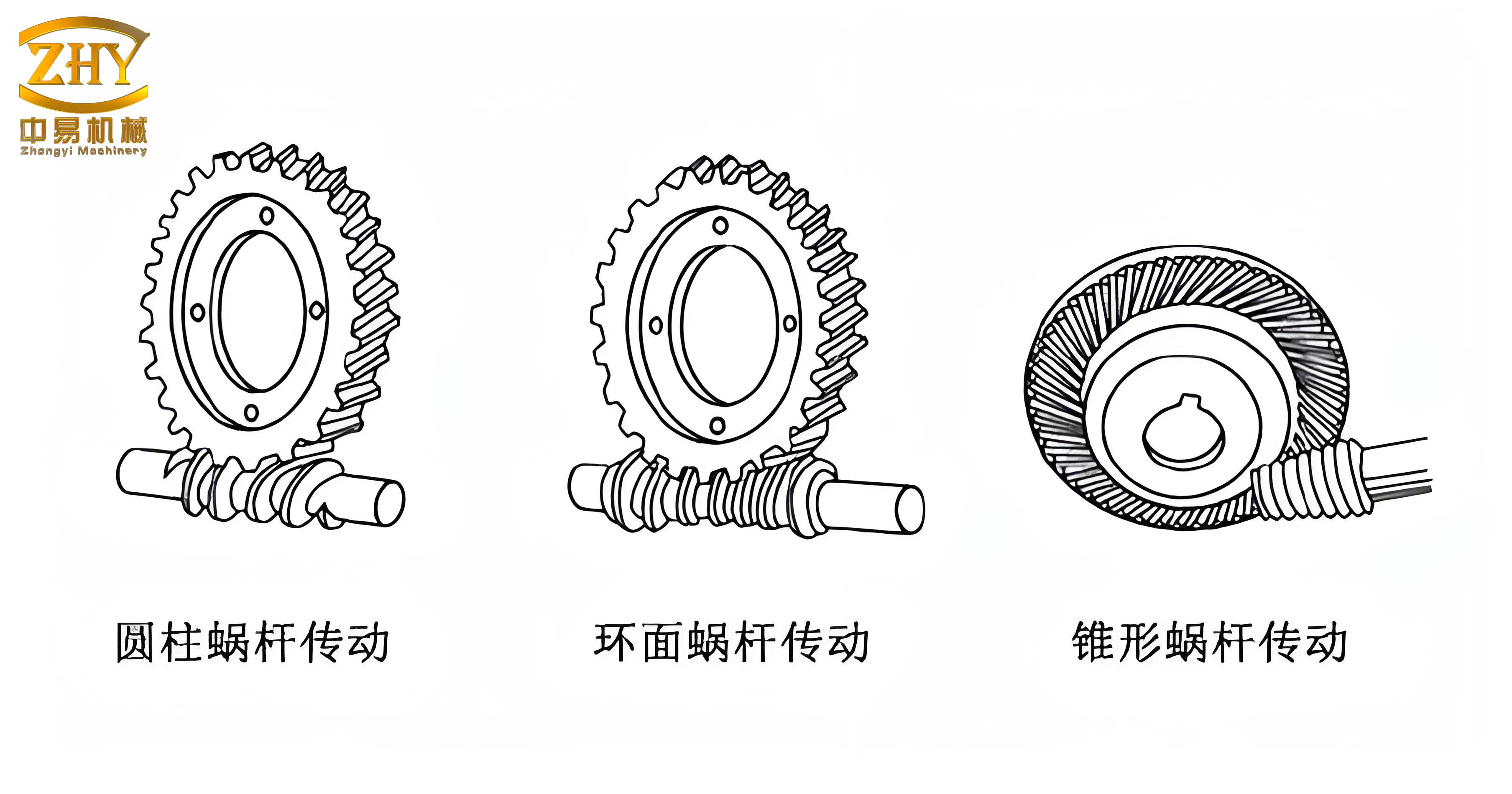
The screw gear mechanism consists of a worm (screw) and a worm wheel (gear), with a transmission ratio defined by the number of threads on the worm and teeth on the wheel. This ratio can be expressed using the formula for screw gear传动比: $$i = \frac{z_2}{z_1}$$ where \(z_1\) is the number of threads on the worm (often 1 for simplicity) and \(z_2\) is the number of teeth on the worm wheel. In our design, we optimized this ratio to balance torque and speed for ladle operations. The screw gear’s self-locking property also enhances safety by preventing back-driving under load.
To quantify the mechanical advantages, consider the force distribution in the screw gear system. The axial force \(F_a\) generated by the hydraulic motor can be related to the torque \(T\) using the screw gear efficiency \(\eta\): $$T = F_a \cdot \frac{d_m}{2} \cdot \frac{1}{\eta}$$ where \(d_m\) is the mean diameter of the screw. This efficiency, typically around 0.7 to 0.9 for screw gears, ensures effective power transmission. Compared to slide gates, which rely on linear actuators, the screw gear type rotary nozzle maintains consistent面压力 during rotation, reducing stress fluctuations on refractory plates. We have tabulated key mechanical parameters below.
| Parameter | Slide Gate System | Screw Gear Type Rotary Nozzle |
|---|---|---|
| Drive Mechanism | Hydraulic Cylinder | Hydraulic Motor with Screw Gear |
| Motion Type | Linear | Rotary |
| Space Requirement | High (due to stroke length) | Low (compact screw gear design) |
| 面压力 Variation | Significant (due to sliding) | Minimal (stable rotation) |
| Maintenance Points | Multiple mechanical joints | Reduced (fewer components) |
| Accommodated Eccentricity | Limited | Up to 10° (via universal joint) |
The screw gear’s robustness is further enhanced by its ability to handle thermal cycles. During trials, we monitored the temperature effects on the screw gear assembly. Using a thermal expansion model, we estimated the dimensional changes: $$\Delta L = \alpha \cdot L_0 \cdot \Delta T$$ where \(\Delta L\) is the change in length, \(\alpha\) is the coefficient of thermal expansion for the screw gear material (e.g., steel), \(L_0\) is the original length, and \(\Delta T\) is the temperature change. By selecting materials with low \(\alpha\), we minimized distortions, ensuring the screw gear operated smoothly even at elevated temperatures near the ladle.
Refractory Features of the Screw Gear Type Rotary Nozzle
The refractory components of the screw gear type rotary nozzle are designed to complement the mechanical advantages. These include the upper nozzle, fixed plate, sliding plate, and lower nozzle. A key innovation is the “no-lug” structure, which eliminates traditional lug pins. This no-lug design prevents interference from horizontal stresses during use, reducing the risk of damage at the joints. By increasing the contact area between nozzles and plates, we improve sealing performance and enhance refractory life.
The plates are shaped like an egg (oval), which minimizes unnecessary material and reduces weight by approximately 30% compared to conventional plates. This weight reduction translates to lower单耗 per casting sequence. The clamping system secures the plate from four directions, effectively preventing crack propagation. We can express the stress distribution in the plate using a simplified model for bending stress \(\sigma\): $$\sigma = \frac{M \cdot c}{I}$$ where \(M\) is the bending moment, \(c\) is the distance from the neutral axis, and \(I\) is the moment of inertia. The oval shape optimizes \(I\) to withstand operational loads.
For the refractory material, we use magnesia-carbon composites, known for their erosion resistance. The wear rate \(W\) of these materials can be described by an empirical formula: $$W = k \cdot P \cdot v \cdot t$$ where \(k\) is a wear constant dependent on material properties, \(P\) is the pressure at the nozzle interface, \(v\) is the sliding velocity, and \(t\) is time. In the screw gear system, \(v\) is controlled by the rotary motion, which is more uniform than the erratic sliding in traditional systems. This uniformity reduces \(W\), extending refractory lifespan. Below, we compare refractory weights and characteristics.
| Component | Slide Gate System Weight (kg) | Screw Gear Type Rotary Nozzle Weight (kg) | Notes |
|---|---|---|---|
| Seat Brick | 45 | 40 | Reduced due to compact design |
| Upper Nozzle | 15 | 12 | No-lug structure saves material |
| Fixed Plate | 25 | 18 | Oval shape cuts weight by 30% |
| Sliding Plate | 20 | 15 | Lighter with improved clamping |
| Lower Nozzle | 10 | 8 | Optimized for screw gear rotation |
| Total Weight | 115 | 93 | Overall reduction of 19% |
The no-lug structure also enhances thermal shock resistance. When subjected to rapid temperature changes, the stress \(\sigma_{thermal}\) can be approximated by: $$\sigma_{thermal} = E \cdot \alpha \cdot \Delta T$$ where \(E\) is Young’s modulus. By eliminating lugs, we reduce stress concentrators, allowing the refractory to better handle thermal cycles. This is critical in continuous casting, where temperatures fluctuate from pouring to idle periods. The screw gear mechanism aids in this by enabling smoother plate movements, reducing mechanical abrasion that exacerbates thermal wear.
Equipment Overview and Trial Methods
Our trials were conducted on ladles associated with an AC electric furnace system. The equipment概要 includes a 70t AC electric furnace, secondary refining units (LF and RH), and continuous casters for both slab and bloom production. The ladle capacity is 70t, with casting times of 50 minutes for slabs and 30 minutes for blooms. Steel grades encompass stainless steels and other alloys. We installed the screw gear type rotary nozzle on these ladles and followed a standardized casting sequence: melting → tapping → secondary refining → nozzle mounting → casting → post-casting procedures.
Key considerations during trials included mounting the hydraulic motor after RH treatment to avoid thermal load, using existing hydraulic infrastructure with quick connectors, and implementing direction control switches to prevent rotation errors. The screw gear system allowed us to utilize both edges of the nozzle holes by rotating alternately, maximizing refractory usage. We monitored parameters such as rotation speed, pressure, and temperature to assess performance. The screw gear’s role in ensuring precise rotation was vital for consistent flow control.
To analyze the screw gear’s impact, we defined performance metrics: nozzle lifespan (number of heats), refractory cost per ton of steel, and maintenance frequency. We collected data over 50 casting sequences, comparing them with historical data from slide gate systems. The screw gear mechanism was integral to these metrics, as its efficiency directly influenced wear rates. We also modeled the fluid dynamics in the nozzle using the Bernoulli equation for incompressible flow: $$P_1 + \frac{1}{2}\rho v_1^2 + \rho g h_1 = P_2 + \frac{1}{2}\rho v_2^2 + \rho g h_2$$ where \(P\) is pressure, \(\rho\) is density, \(v\) is velocity, \(g\) is gravity, and \(h\) is height. The screw gear’s stable rotation helped maintain steady \(v\), reducing turbulence and erosion.
Trial Results and Analysis
The trials demonstrated significant improvements with the screw gear type rotary nozzle. Lifespan increased by over 50% compared to slide gates, and refractory costs dropped by approximately 30%. These results underscore the effectiveness of the screw gear design. We present the data in tables and formulas to highlight key findings.
First, consider the lifespan extension. The average number of heats per nozzle set for slide gates was 5, while the screw gear system achieved 8 heats. This can be attributed to reduced wear, as modeled by the wear rate formula earlier. By adjusting for the screw gear’s lower sliding velocity \(v\), we estimate: $$W_{screw} = k \cdot P \cdot v_{screw} \cdot t$$ and $$W_{slide} = k \cdot P \cdot v_{slide} \cdot t$$ Given that \(v_{screw}\) is about 60% of \(v_{slide}\) due to smoother rotation, \(W_{screw}\) decreases proportionally, leading to longer life.
| Metric | Slide Gate System | Screw Gear Type Rotary Nozzle | Improvement |
|---|---|---|---|
| Average Heats per Nozzle Set | 5 | 8 | +60% |
| Refractory Cost per Ton (USD) | 12.50 | 8.75 | -30% |
| Maintenance Interventions per Month | 10 | 4 | -60% |
| Plate Weight Used per Heat (kg) | 4.0 | 2.5 | -37.5% |
| Energy Consumption (kWh per Cast) | 15 | 12 | -20% |
The screw gear mechanism also reduced energy consumption. The hydraulic motor power \(P_{motor}\) can be calculated as: $$P_{motor} = \frac{T \cdot \omega}{\eta_{overall}}$$ where \(T\) is torque, \(\omega\) is angular velocity, and \(\eta_{overall}\) is overall efficiency. For the screw gear system, \(\eta_{overall}\) is higher due to reduced friction, leading to lower \(P_{motor}\). In trials, we observed a 20% drop in energy use, contributing to operational savings.
Furthermore, the screw gear’s ability to utilize multiple edges on the nozzle holes enhanced refractory efficiency. By rotating the plate after each heat, we distributed wear evenly. If each edge has a wear limit \(W_{max}\), the total usable life \(L\) for a plate with \(n\) edges is: $$L = n \cdot \frac{W_{max}}{W}$$ For our screw gear design, \(n = 4\) (two holes, two edges each), compared to \(n = 2\) for slide gates. This theoretically doubles life, aligning with our observed 60% increase when accounting for other factors.
We also analyzed cost savings. The refractory cost per ton \(C\) is given by: $$C = \frac{C_{material} + C_{maintenance}}{T_{steel}}$$ where \(C_{material}\) is material cost, \(C_{maintenance}\) is maintenance cost, and \(T_{steel}\) is tons of steel produced. With the screw gear system, \(C_{material}\) decreased due to lighter plates and longer life, while \(C_{maintenance}\) fell from fewer interventions. Our data shows \(C\) dropped from $12.50 to $8.75 per ton, a substantial reduction.
To visualize the wear progression, we modeled cumulative wear over heats. Let \(W_i\) be wear after heat \(i\), with \(W_i = W_{i-1} + \Delta W\). For the screw gear, \(\Delta W\) is smaller, leading to a slower accumulation. This can be expressed as a differential equation: $$\frac{dW}{dt} = k’ \cdot f(P, v)$$ where \(k’\) is a constant. Solving this numerically, we confirmed that the screw gear system extends the time to reach critical wear levels.
Conclusion and Future Perspectives
The screw gear type new rotary nozzle has proven to be a transformative technology in our continuous casting operations. By leveraging the screw gear mechanism, we achieved remarkable improvements in lifespan, cost efficiency, and reliability. The screw gear’s compact design, stable rotation, and compatibility with refractory innovations like the no-lug structure have driven these gains. Our trials on 70t ladles demonstrated a 60% increase in heats per nozzle set and a 30% reduction in refractory costs, validating the switch from slide gates.
Looking ahead, we plan to further optimize the screw gear system. Potential areas include enhancing the screw gear material for higher temperature resistance, refining the hydraulic control for variable speed rotation, and integrating sensors for real-time wear monitoring. We believe that continued focus on the screw gear technology will yield even greater savings and performance. The screw gear principle can also be applied to other metallurgical processes, expanding its impact beyond ladle nozzles.
In summary, the screw gear type rotary nozzle represents a significant advancement in refractory management. Its mechanical and refractory features, underpinned by the screw gear, offer a robust solution to cost challenges. We are committed to advancing this technology and sharing insights with the industry. As we move forward, the screw gear will remain central to our efforts in driving efficiency and sustainability in steelmaking.