
I have spent many years working with industrial lubricants, and one of the most challenging areas I have encountered involves the proper selection and usage of oils for worm gears. Unlike spur or helical gears, worm gears typically operate with high sliding velocities, different material combinations (typically steel worm against bronze worm wheel), and often heavy loads. Incorrect lubrication can quickly lead to excessive wear, scuffing, or even catastrophic failure. In this article, I will share practical experience-based methods for choosing and applying worm gear oils, supported by empirical formulas and data tables that I have found reliable in the field.
1. Selection of Worm Gear Oils
The selection process for worm gear oils involves three primary considerations: the lubrication method, the required oil viscosity, and the oil quality grade. Each depends on factors such as sliding speed, rotational speed, load, and operating temperature. I will present several empirical approaches that I have successfully used.
1.1 Lubrication Method Selection
The choice between oil bath lubrication and circulation spray lubrication mainly depends on the relative sliding speed or the rotational speed of the worm. In my practice, I follow these general guidelines:
- If the average sliding velocity exceeds 10 m/s, choose pressure-circulation spray (oil injection) lubrication.
- If the sliding velocity is below 10 m/s, oil bath lubrication is adequate.
- Alternatively, if the worm speed exceeds 1500 rpm, use circulation spray lubrication; below 1500 rpm, oil bath is sufficient.
The relative sliding speed in worm gear pairs exists both along the tooth height direction and the tooth width direction, but the dominant component is along the tooth width. I recommend estimating the sliding speed using the following formula, which I often apply:
$$ v_s = \frac{\pi \cdot d_1 \cdot n_1}{60 \cdot 1000} \cdot \sqrt{1 + \left(\frac{z_1}{q}\right)^2} \quad [\text{m/s}] $$
where:
- \( z_1 \) = number of worm threads (starts)
- \( d_1 \) = pitch circle diameter of the worm (mm)
- \( n_1 \) = worm rotational speed (rpm)
- \( q \) = worm characteristic coefficient, \( q = d_1 / m_x \)
- \( m_x \) = axial module of the worm (mm)
This formula gives a reliable estimate of the sliding velocity that determines the lubrication method.
1.2 Viscosity Selection
Once the lubrication method is decided, the appropriate ISO viscosity grade is selected based on the sliding speed. I have compiled a typical recommendation table based on my experience with Chinese-made Feitian-brand worm gear oils (which are widely used in our industry). Table 1 shows the recommended viscosity ranges for different sliding speeds under oil bath lubrication. For worm gears with the worm located above the gear, use the higher viscosity values of the given ranges to ensure adequate oil film thickness.
| Relative Sliding Speed \(v_s\) (m/s) | ISO Viscosity Grade (cSt at 40°C) |
|---|---|
| < 1.5 | 1000 – 1500 |
| 1.5 – 3.0 | 680 – 1000 |
| 3.0 – 7.0 | 460 – 680 |
| 7.0 – 10.0 | 320 – 460 |
| 10.0 – 15.0 | 220 – 320 |
| > 15.0 | 150 – 220 (use spray lubrication) |
For spray lubrication, the oil viscosity can be slightly lower (by about one grade) because the forced circulation provides better cooling and oil film replenishment. Table 2 gives typical analysis data of Feitian (Flying Sky) worm gear oils that I frequently reference:
| Property | Grade 320 | Grade 460 | Grade 680 | Grade 1000 |
|---|---|---|---|---|
| Kinematic viscosity at 40°C (cSt) | 320 | 460 | 680 | 1000 |
| Viscosity index (minimum) | 90 | 90 | 90 | 90 |
| Flash point (°C, minimum) | 230 | 240 | 250 | 260 |
| Pour point (°C, maximum) | -8 | -8 | -6 | -6 |
| Copper corrosion (3 h at 100°C) | 1b | 1b | 1b | 1b |
| Friction coefficient (typical, under laboratory conditions) | 0.005 – 0.010 | 0.005 – 0.010 | 0.005 – 0.010 | 0.005 – 0.010 |
The friction coefficient values listed above are extremely low, which is one of the advantages of dedicated worm gear oils. They contain carefully selected additives to minimize sliding friction while protecting the bronze gear material.
1.3 Load Parameter Estimation
To determine whether the worm gear pair is operating under light, medium, or heavy load, I use a simple load parameter \(K\) defined as:
$$ K = \frac{F_t}{b \cdot d_2} \quad [\text{kg/cm}^2] $$
where \(F_t\) is the tangential force on the worm wheel (kgf), \(b\) is the face width of the worm wheel (cm), and \(d_2\) is the pitch circle diameter of the worm wheel (cm). Based on my empirical observations:
- \( K < 5 \) kg/cm² → light load
- \( 5 \leq K \leq 10 \) kg/cm² → medium load
- \( K > 10 \) kg/cm² → heavy load
For medium loads without impact, pure mineral oils may suffice. However, for medium loads with impact or for heavy loads, I strongly recommend using compounded worm gear oils containing additives (e.g., sulfur-phosphorus or special friction modifiers) that are compatible with bronze. It is critical to avoid using general extreme-pressure gear oils designed for steel-on-steel contacts, as certain sulfur- or chlorine-based additives can promote pitting or accelerated wear on phosphor bronze worm wheels.
1.4 Oil Quality Grade Selection
I classify worm gear oil quality into two main categories:
- Type A: Plain mineral oils without additives – for general-duty, light to moderate loads, low sliding speeds, and non-critical applications.
- Type B: Additive-treated oils (including mild EP, anti-wear, and friction-reducing agents) – for heavy loads, shock loads, high sliding speeds, and applications requiring extended oil life.
Many modern worm gear oils (like the Feitian brand) belong to Type B and are formulated to provide excellent thermal and oxidative stability while being non-corrosive to copper alloys. Always check the copper strip corrosion test result before using an oil on bronze worm wheels.
I must emphasize that the selection of worm gear oils should never be based solely on viscosity. The chemical compatibility with the gear materials and the thermal regime of the gearbox are equally important.
2. Application of Worm Gear Oils
Proper application is as important as correct selection. Even the best oil will fail if the oil level, flow rate, or cooling is incorrect. Below I share my hands-on guidelines for both oil bath and spray lubrication.
2.1 Oil Bath Lubrication
When the worm is located below the worm wheel (more common in small and medium gearboxes), the oil level should be between the height of one tooth and the centerline of the worm wheel. For higher worm speeds, use the lower end of this range to reduce churning losses. For lower speeds, the oil can be deeper for better cooling and splash feeding.
When the worm is located above the worm wheel (e.g., in some large reducers), the oil level should be kept below the worm centerline. In this configuration, the worm wheel dips into the oil and throws it up, where scrapers can guide the oil to the bearings and gear mesh.
I always recommend checking the oil level when the gearbox is stationary and at operating temperature. For new installations, run the gearbox for a few hours and then recheck the level.
2.2 Pressure Spray Lubrication (Circulation)
For sliding speeds above 10 m/s or when heat generation is significant, forced oil circulation with spray nozzles is necessary. The oil flow rate can be estimated from the center distance using the following empirical formula I have used for years:
$$ Q = 0.0008 \cdot C^2 \quad [\text{m}^3/\text{s}] $$
where \(C\) is the center distance between worm and wheel (mm). This gives the required oil volume in cubic meters per second. For practical unit conversion, multiply by 60,000 to obtain liters per minute.
Injection pressure also depends on the peripheral speed of the worm. Table 3 summarizes typical spray pressures:
| Worm Peripheral Speed (m/s) | Injection Pressure (kgf/cm²) |
|---|---|
| < 10 | 0.5 – 1.0 |
| 10 – 20 | 1.0 – 2.0 |
| 20 – 30 | 2.0 – 3.0 |
| > 30 | 3.0 – 5.0 |
Nozzles should be directed exactly at the ingoing mesh point (where the worm tooth enters the wheel tooth space) to ensure immediate film formation. For large gearboxes, multiple nozzles along the worm width are beneficial.
2.3 Preventing Gear Failures and Estimating Heat Generation
One of the most common failures in worm gear drives is scuffing or severe scoring, often caused by inadequate cooling leading to local hot spots. I always perform a simple heat balance calculation during the design or troubleshooting phase. The heat generated by friction in a worm gearbox is equal to the heat dissipated through the gearbox housing when thermal equilibrium is reached. The temperature rise above ambient can be approximated by:
$$ \Delta T = \frac{P_{in} \cdot (1 – \eta)}{U \cdot S} \quad [^\circ\text{C}] $$
where:
- \( P_{in} \) = input power of the worm (kW)
- \( \eta \) = total efficiency of the worm gear transmission (including gear mesh, bearings, and churning)
- \( U \) = overall heat transfer coefficient, typically taken as 0.015 – 0.025 kW/(m²·°C) for natural convection in still air
- \( S \) = heat dissipation surface area of the gearbox (m²)
The total efficiency \( \eta \) varies with the number of worm threads. Typical values I use:
| Number of Worm Threads (\(z_1\)) | Total Efficiency \(\eta\) (approx.) |
|---|---|
| 1 | 0.70 – 0.75 |
| 2 | 0.75 – 0.82 |
| 3 | 0.82 – 0.86 |
| 4 | 0.85 – 0.90 |
I generally mandate that the oil temperature should not exceed 80°C (or a maximum temperature rise of 40°C above ambient, whichever is lower). If the calculated \(\Delta T\) from the above formula exceeds 40°C, then forced cooling is required. Options include installing a fan on the gearbox shaft or incorporating cooling coils (e.g., serpentine tubes) inside the oil sump. Merely changing the oil type cannot solve an inherent overheating problem; only improved heat dissipation will prevent thermal failure.
Another important point I have learned from experience: never use a general-purpose extreme-pressure gear oil on worm gears unless it is explicitly approved by the manufacturer for bronze contacts. Many EP additives (especially those with high sulfur activity or chlorine) attack the copper in phosphor bronze, leading to rapid pitting and wear. I always verify that the oil passes the copper strip corrosion test (ASTM D130, maximum rating 1b) and, if possible, has a specific worm gear approval.
In my field service, I have also seen cases where operators mistakenly added anti-wear additives to a plain mineral oil to “improve” the worm gear performance. This is dangerous because the additive chemistry may not be balanced, and the result can be catastrophic corrosion. Stick to formulated worm gear oils from reputable suppliers.
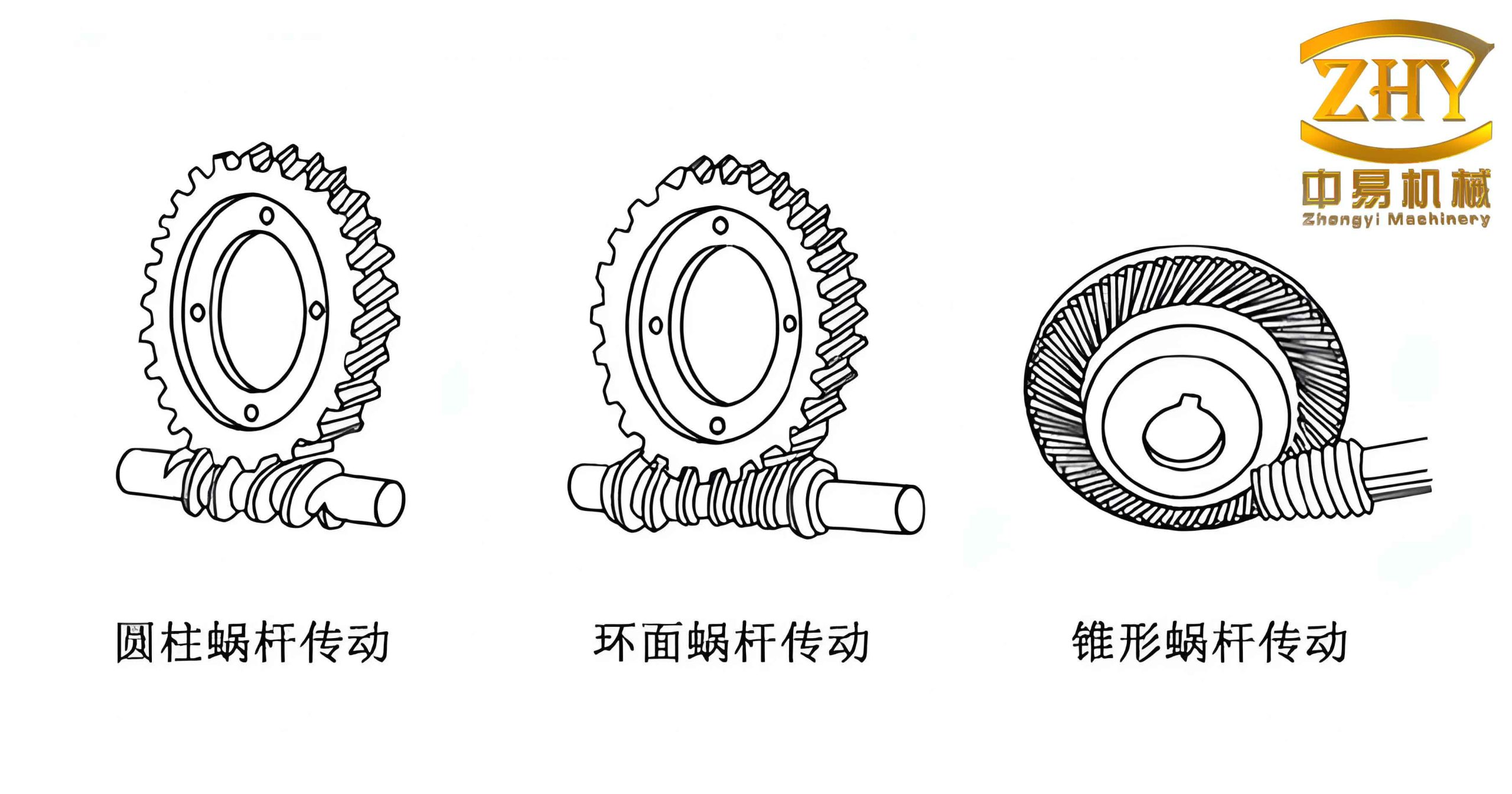
2.4 Additional Practical Considerations for Worm Gears
I have often observed that worm gear lubricants tend to degrade faster than typical gear oils due to the high sliding friction and localized high temperatures. Therefore, I recommend regular oil analysis (every 500–1000 operating hours) for viscosity, acid number, and copper content. A sudden increase in copper wear particles is an early indicator of a lubrication-related problem. The oil change intervals for worm gears should be shorter than for other gear types; typically, I advise an oil change every 2000–4000 hours for industrial applications, depending on the load.
Another nuance: for worm gear drives operating in extremely low ambient temperatures (e.g., below -10°C), the viscosity at startup becomes critical. An oil that is too thick may starve the mesh and cause initial scuffing. In such cases, consider a lower viscosity grade or an oil with a very high viscosity index and low pour point. Preheating the oil may be necessary.
Finally, I cannot stress enough the importance of proper oil filtration in spray systems. Particles as small as 20–30 microns can cause abrasive wear on the soft bronze wheel. Use inline filters with a mesh size no coarser than 25 microns, and ensure that the filter bypass is set to avoid oil starvation during cold starts.
In conclusion, the selection and application of worm gear oils require a systematic approach that accounts for sliding speed, load, cooling needs, and material compatibility. The empirical formulas and tables I have shared here come from decades of practical field work. By following these guidelines, I have helped many plants extend the life of their worm gear drives, reduce downtime, and improve efficiency. Remember: a well-lubricated worm gear is a reliable worm gear.