
In the realm of mechanical engineering, the study of meshing forces within transmission systems is paramount for ensuring reliability, efficiency, and longevity. I have undertaken an in-depth investigation into the dynamic behavior of screw gear mechanisms, particularly those employed in screw jack systems, which are ubiquitous in industries such as construction, automotive, and manufacturing. These mechanisms, often comprising a worm and worm wheel, facilitate motion conversion with high torque and compact design, but their performance is critically influenced by the meshing forces generated during operation. Traditional design approaches frequently treat these forces as constant, overlooking the periodic fluctuations induced by varying meshing stiffness and inertial effects. This oversight can lead to premature fatigue failure, increased noise, and reduced operational precision. Therefore, through advanced simulation techniques, I aim to elucidate the characteristics of meshing forces in screw gear systems, providing insights that can drive optimization and enhance design practices.
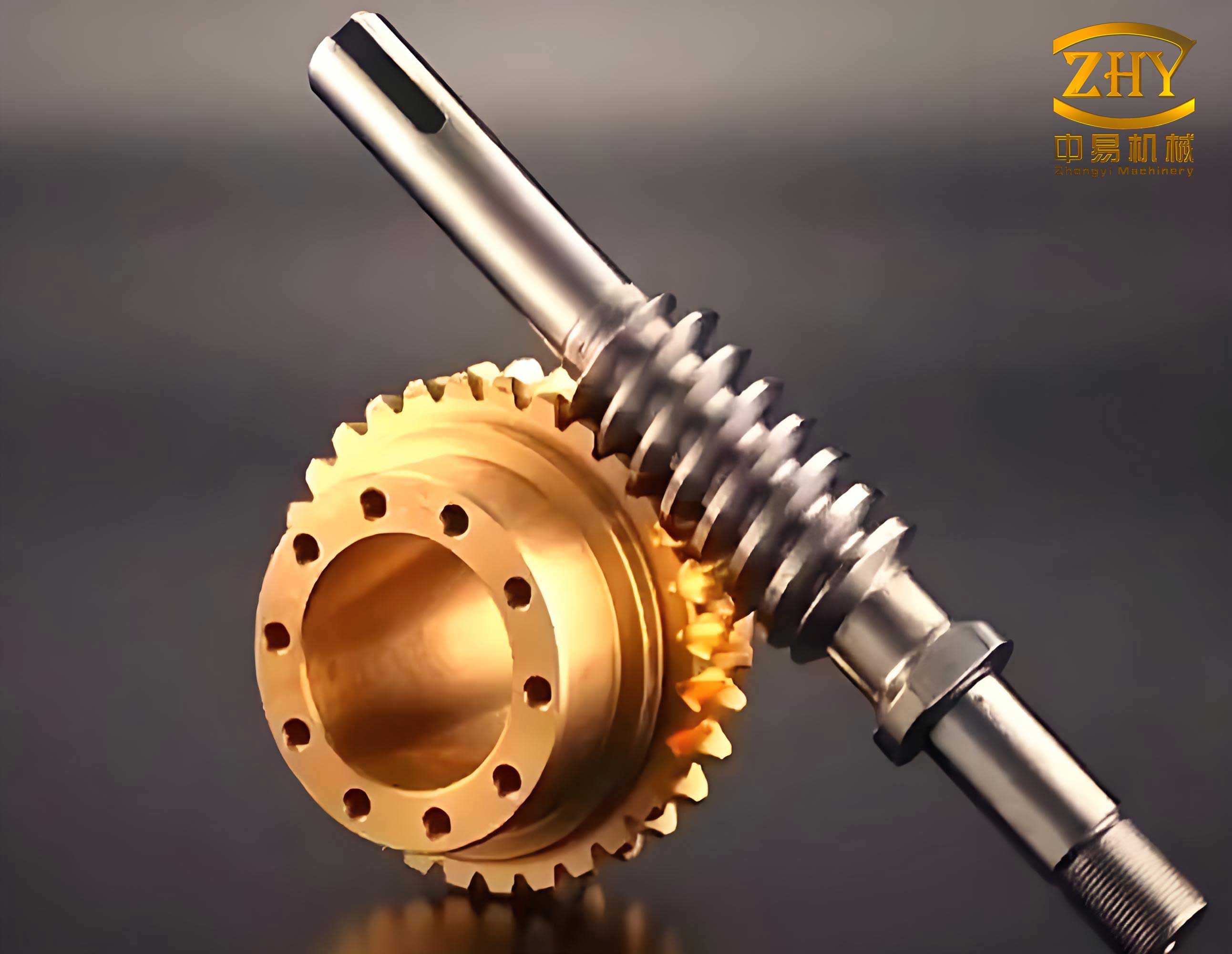
The core of my research involves creating a virtual prototype of a screw gear mechanism from a typical screw jack. Using SolidWorks, a robust 3D modeling software, I developed a detailed assembly model of the worm and worm wheel. This model was then exported in Parasolid format and imported into ADAMS (Automatic Dynamic Analysis of Mechanical Systems), a multi-body dynamics simulation environment. In ADAMS, I defined material properties, including density and mass, for each component, with the worm made of 45 steel and the worm wheel of HT150, aligning with common industrial specifications. Gravity was set to act vertically downward with a standard acceleration of 9.81 m/s². To replicate the physical interaction, I applied kinematic joints: a revolute joint between the worm and ground, allowing rotation about its axis, and another revolute joint for the worm wheel relative to ground. The critical element was defining a contact force between the worm and worm wheel to simulate meshing, which I achieved using the impact function based on Hertzian elastic collision theory. This approach allows for a realistic representation of the dynamic engagement in screw gear systems.
The contact force in ADAMS is governed by the impact function, which calculates the force based on deformation and velocity. The mathematical representation is as follows:
$$ F_{\text{Impact}} = \max\left(0, K(q_0 – q)^e – C \cdot \frac{dq}{dt} \cdot \text{STEP}(q, q_0 – d, 1, q_0, 0)\right) $$
Here, \( K \) is the stiffness coefficient, \( q_0 \) is the initial distance between bodies, \( q \) is the actual distance during collision, \( e \) is the force exponent, \( C \) is the damping coefficient, and \( d \) is the penetration depth at which damping is fully applied. For the screw gear pair, I derived the stiffness coefficient using Hertzian theory:
$$ K = \frac{4}{3} R^{1/2} E $$
where \( \frac{1}{R} = \frac{1}{R_1} + \frac{1}{R_2} \) and \( \frac{1}{E} = \frac{1 – \mu_1^2}{E_1} + \frac{1 – \mu_2^2}{E_2} \). Given the material properties—elastic moduli \( E_1 = 130 \, \text{GPa} \) for the worm wheel (HT150) and \( E_2 = 210 \, \text{GPa} \) for the worm (45 steel), and Poisson’s ratios \( \mu_1 = 0.25 \) and \( \mu_2 = 0.269 \)—I calculated \( K = 439 \, \text{N/mm} \). The damping coefficient \( C \) was set to approximately 1% of \( K \), i.e., \( 4.39 \, \text{N} \cdot \text{s}^{-1} / \text{mm} \), with \( e = 2.2 \), \( d = 0.1 \, \text{mm} \), static friction coefficient of 0.1, and dynamic friction coefficient of 0.05. These parameters ensured an accurate virtual model for analyzing screw gear dynamics.
With the virtual prototype established, I conducted dynamic simulations by applying a rotational velocity of 1330 rpm to the worm’s revolute joint. This input corresponds to typical operational speeds in screw jack mechanisms. The simulation output included the angular velocity of the worm wheel and the meshing force between the screw gear components. The worm wheel’s speed exhibited an average value of 3287.6 deg/s with periodic fluctuations, as shown in the analysis. The theoretical speed, based on a gear ratio of 24, is 3325 deg/s, resulting in a relative error of only 1.13%. This close agreement validates the accuracy of my virtual screw gear model and confirms that the simulation reliably captures the kinematic behavior.
The meshing force, however, revealed more complex dynamics. Initially, upon startup, the force spiked to a maximum of 24023.4 N due to inertial effects and sudden engagement. Subsequently, it stabilized to an average of approximately 413.6 N but continued to oscillate periodically. These fluctuations are attributed to the cyclic variation in meshing stiffness as the teeth of the screw gear pair engage and disengage, combined with collision impacts during operation. Such periodic forces are a primary source of vibration and noise in screw gear systems, and they can accelerate fatigue failure, leading to reduced service life and compromised accuracy. Therefore, mitigating the amplitude of these fluctuations is crucial for enhancing the performance of screw gear mechanisms in lifting applications.
To further investigate the factors influencing meshing forces, I varied key parameters in the simulation. Specifically, I examined the effects of stiffness coefficient and input speed on the screw gear behavior. Below, I summarize the findings using tables and formulas to elucidate these relationships.
First, I analyzed the impact of stiffness coefficient \( K \) on meshing force. Keeping the input speed constant at 1330 rpm and other parameters unchanged, I ran simulations for \( K = 200 \, \text{N/mm} \), \( 400 \, \text{N/mm} \), and \( 600 \, \text{N/mm} \). The results are compiled in Table 1, which highlights the average meshing force, maximum force, minimum force, and the nature of fluctuations. The meshing force \( F_m \) can be described as a function of stiffness and deformation:
$$ F_m \propto K \cdot \delta^e $$
where \( \delta = q_0 – q \) is the deformation. As \( K \) increases, the force magnitude rises significantly, and the oscillations become more pronounced, indicating heightened dynamic stresses in the screw gear.
| Stiffness Coefficient, \( K \) (N/mm) | Average Meshing Force (N) | Maximum Force (N) | Minimum Force (N) | Fluctuation Amplitude |
|---|---|---|---|---|
| 200 | 220.8 | 10944.6 | 3.74 | Moderate |
| 400 | 407.0 | 21889.2 | 0.27 | High |
| 600 | 549.6 | 32833.7 | 0.69 | Severe |
These results underscore that in screw gear design, selecting an appropriate stiffness is vital; excessively high stiffness can exacerbate force fluctuations, potentially leading to premature wear or failure. The periodic nature of the force is inherent to screw gear meshing due to the geometry and engagement pattern, but its amplitude can be controlled through material selection and design modifications.
Second, I explored the effect of input speed on the screw gear meshing force. Maintaining a stiffness coefficient of \( K = 439 \, \text{N/mm} \), I varied the worm’s rotational speed to 1000 rpm, 1500 rpm, and 2000 rpm. The outcomes are summarized in Table 2. The meshing force correlates with speed due to increased inertial forces and impact velocities, as approximated by:
$$ F_m \approx f(K, \omega) + C \cdot \dot{q} $$
where \( \omega \) is the angular velocity. Higher speeds not only elevate the average force but also amplify the fluctuations, as evidenced by the data.
| Input Speed, \( n \) (rpm) | Average Meshing Force (N) | Maximum Force (N) | Minimum Force (N) | Fluctuation Amplitude |
|---|---|---|---|---|
| 1000 | 324.0 | 18070.6 | 2.3 | Moderate |
| 1500 | 498.0 | 27089.9 | 2.4 | High |
| 2000 | 685.2 | 36109.2 | 3.9 | Severe |
This analysis demonstrates that operational speed is a critical factor in screw gear performance. For applications requiring high-speed lifting, designers must account for the augmented dynamic forces to ensure durability. The screw gear mechanism, while efficient, is susceptible to speed-induced vibrations, necessitating careful balancing in system design.
Beyond these parametric studies, I delved into the theoretical underpinnings of meshing dynamics in screw gear systems. The periodic fluctuation in meshing force can be modeled using a simplified equation of motion for the worm wheel:
$$ I \ddot{\theta} + C \dot{\theta} + K(t) \theta = T_{in} – F_m r $$
where \( I \) is the moment of inertia, \( \theta \) is the angular displacement, \( C \) is the damping coefficient, \( K(t) \) is the time-varying meshing stiffness (a periodic function due to screw gear tooth engagement), \( T_{in} \) is the input torque, and \( r \) is the pitch radius. The meshing force \( F_m \) is derived from this interaction, and its fluctuation frequency aligns with the tooth meshing frequency \( f_m = \frac{Z \omega}{2\pi} \), with \( Z \) being the number of teeth on the worm wheel. This relationship explains why screw gear mechanisms exhibit inherent cyclic forces, and reducing the amplitude involves minimizing variations in \( K(t) \) through optimized tooth profiles or material damping.
In practical terms, the screw gear mechanism in a screw jack must operate under varying loads and conditions. My simulations also considered the effect of external loads on meshing forces, though not detailed in the tables above. By applying a constant load torque to the worm wheel, I observed that increased load elevates the average meshing force but does not necessarily exacerbate fluctuations if the screw gear is properly lubricated and aligned. This highlights the importance of comprehensive design analysis that incorporates both kinematic and load factors.
To enhance the screw gear performance, I propose several measures based on my findings. First, optimizing the tooth geometry of the screw gear can reduce stiffness variations, thereby smoothing the meshing force curve. Second, incorporating damping materials or compliant elements in the screw gear assembly can attenuate force oscillations. Third, controlling the input speed through variable frequency drives can limit dynamic effects in high-speed applications. These strategies are essential for extending the lifespan of screw gear systems and improving their precision in lifting operations.
Furthermore, the integration of real-time monitoring systems for screw gear mechanisms could detect abnormal force fluctuations, enabling predictive maintenance. By embedding sensors that measure vibration or force, operators can identify wear early and prevent catastrophic failures. This aligns with industry trends towards smart manufacturing and IoT-enabled machinery, where screw gear components play a pivotal role.
In conclusion, my simulation-based research on screw gear mechanisms has provided valuable insights into the dynamics of meshing forces. The periodic fluctuations observed are a fundamental characteristic driven by varying stiffness and inertial effects, and they pose significant challenges for reliability and noise control. Through parametric analysis, I have shown that both stiffness coefficient and input speed profoundly influence the magnitude and amplitude of these forces in screw gear systems. By adopting design optimizations, such as tailored stiffness and speed management, engineers can mitigate these issues, leading to more durable and efficient screw gear applications in screw jacks and beyond. This work lays a foundation for future studies, including experimental validation and advanced multi-physics simulations, to further refine our understanding of screw gear behavior in complex mechanical systems.
Overall, the screw gear mechanism remains a critical component in motion transmission, and its dynamic analysis is essential for advancing mechanical engineering practices. I hope that this comprehensive exploration encourages further innovation in screw gear design, ultimately contributing to safer and more reliable lifting solutions across industries.