
In the field of internal combustion engine manufacturing, the precision and durability of components like bevel gears are critical for optimal performance. As an engineer focused on improving production efficiency, I have extensively studied how surface treatment technologies can enhance the lifespan of cold forging dies used for bevel gears. This article delves into the application of these technologies, emphasizing their role in mitigating common failure modes and boosting productivity. The focus is on bevel gear cold forging dies, where surface integrity directly impacts gear quality and longevity.
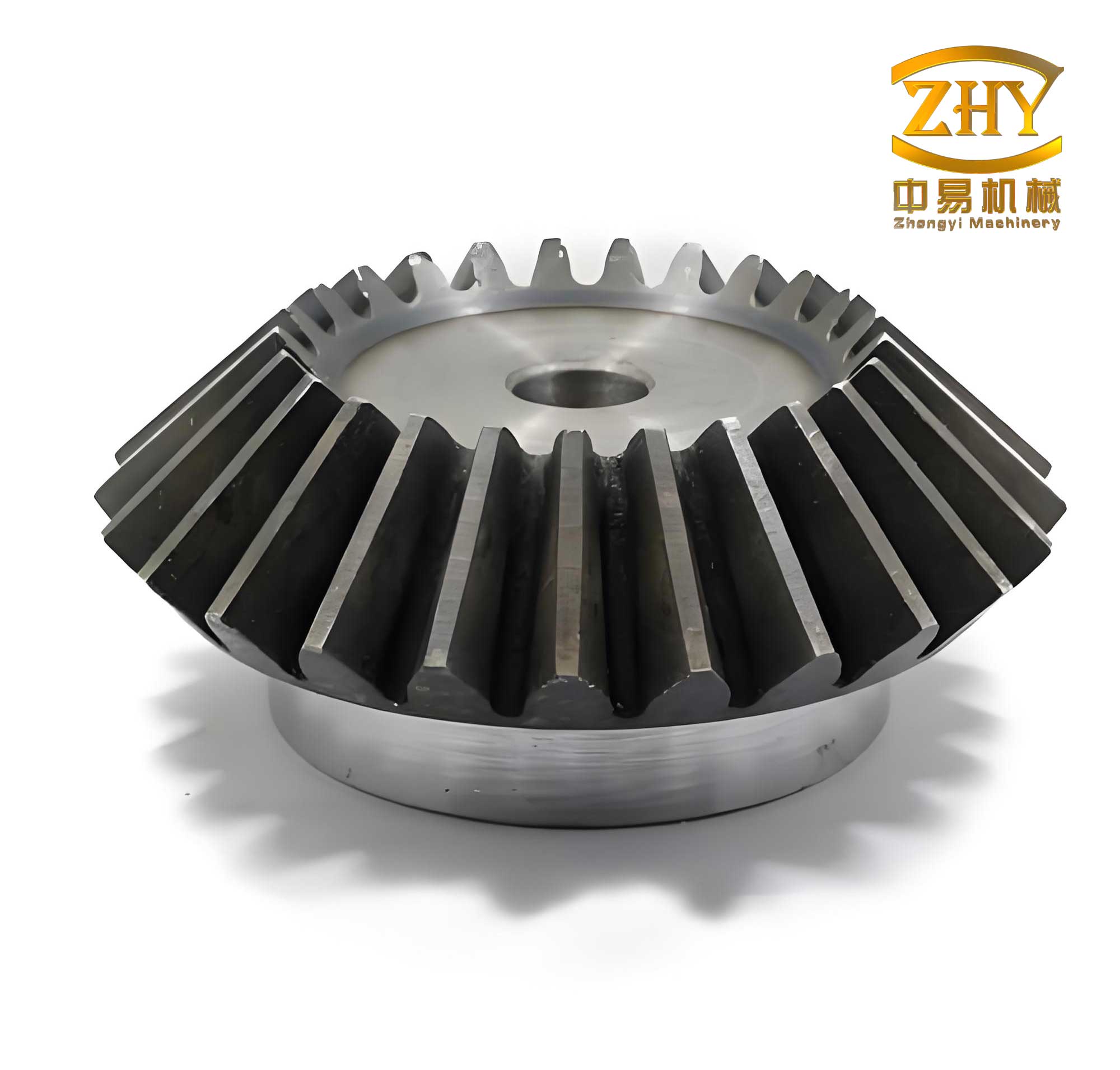
Surface treatment technology is a systematic engineering approach that modifies the morphology, chemical composition, microstructure, and stress state of a die surface through coating, modification, or composite processing. This is achieved via chemical, physical, physico-chemical, and mechanical methods. For bevel gear cold forging dies, which operate under severe conditions involving high pressure and friction, selecting the right surface treatment is paramount. The goal is to achieve desired surface properties such as enhanced wear resistance, reduced friction, and improved fatigue strength, ultimately extending die life and ensuring consistent bevel gear quality.
Common Failure Modes in Bevel Gear Cold Forging Dies
During cold forging, the workpiece undergoes plastic deformation within the die cavity, leading to intense friction as material flows and slides along the surface. This results in several failure modes specific to bevel gear dies. The primary failures include scoring or galling, tooth surface cracks, and radial cracks within tooth grooves. Scoring is a form of adhesive wear that causes early die failure, while cracks typically arise from cyclic stresses and impact loads, leading to fatigue fracture. Understanding these failures is crucial for selecting effective surface treatments for bevel gear dies.
To quantify wear in bevel gear dies, the Archard wear equation is often applied:
$$ W = k \frac{P \cdot L}{H} $$
where \( W \) is the wear volume, \( k \) is the wear coefficient, \( P \) is the normal pressure, \( L \) is the sliding distance, and \( H \) is the surface hardness. For bevel gear dies, reducing \( k \) and increasing \( H \) through surface treatments can significantly minimize scoring. Fatigue-related cracks can be modeled using stress intensity factors:
$$ \Delta K = Y \Delta \sigma \sqrt{\pi a} $$
where \( \Delta K \) is the stress intensity factor range, \( Y \) is a geometry factor, \( \Delta \sigma \) is the stress range, and \( a \) is the crack length. Surface treatments that introduce compressive stresses can lower \( \Delta \sigma \), thereby inhibiting crack initiation in bevel gear dies.
| Failure Mode | Description | Primary Cause | Impact on Bevel Gear Die |
|---|---|---|---|
| Scoring (Galling) | Adhesive wear leading to surface roughening | High friction and material transfer | Early die failure, poor gear surface finish |
| Tooth Surface Cracks | Micro-cracks on the tooth flank | Cyclic tensile stresses and fatigue | Die fracture, reduced gear accuracy |
| Radial Cracks in Tooth Grooves | Cracks propagating radially from grooves | Stress concentration and impact loads | Catastrophic die failure, production downtime |
| Fatigue Fracture | Progressive cracking under repeated loading | Low-cycle or high-cycle fatigue |
These failure modes are exacerbated in bevel gear dies due to the complex geometry and high contact pressures. Therefore, addressing scoring through surface treatments is a priority to prevent premature die degradation.
Overview of Surface Treatment Technologies
Surface treatments for bevel gear cold forging dies can be categorized into four groups: chemical, physical, physico-chemical, and mechanical methods. Each offers distinct advantages for enhancing die performance.
- Chemical Methods: These involve altering surface composition through reactions, such as nitriding or carburizing. For bevel gear dies, gas nitriding can improve wear resistance, but it may not suffice for high-precision applications due to potential distortion.
- Physical Methods: Techniques like Physical Vapor Deposition (PVD) involve depositing thin films onto the die surface. PVD is particularly suitable for bevel gear dies due to its low processing temperature and minimal thermal distortion.
- Physico-chemical Methods: Processes like Thermal Diffusion (TD) combine chemical and thermal aspects to form carbide layers. However, high temperatures can cause dimensional changes in precision bevel gear dies.
- Mechanical Methods: These include shot peening or laser shock peening, which induce compressive stresses to enhance fatigue resistance. They are often used as complementary treatments for bevel gear dies.
The selection of a surface treatment for bevel gear dies depends on factors like die material, operating conditions, and required precision. For instance, dies made from Cr12MoV steel, commonly used for bevel gears, benefit from treatments that preserve hardness and dimensional accuracy.
Investigation of Surface Treatments for Bevel Gear Dies
In my research, I evaluated various surface treatments for Cr12MoV bevel gear cold forging dies. The dies undergo quenching, finishing, and precision EDM (Electrical Discharge Machining) for tooth profiling, making dimensional stability critical. Treatments like boriding, CVD (Chemical Vapor Deposition), and TD were tested but found unsuitable due to high processing temperatures (often above 800°C), which reduce base hardness and cause significant distortion. This renders them ineffective for high-precision bevel gear dies post-EDM.
Electro-spark deposition was also considered, but it resulted in thin, rough, and non-uniform layers, making it inadequate for bevel gear die applications. Consequently, I focused on PVD and ion nitriding, which offer low-temperature processing (typically below 500°C), minimal thermal distortion, and environmental friendliness. These characteristics are ideal for maintaining the accuracy of bevel gear dies.
A comparison between PVD and ion nitriding reveals key differences: PVD coatings are thinner (0.1–5 μm) but harder (1800–3300 HV), while ion nitriding produces deeper layers (0.2–0.3 mm) with lower hardness (900–1200 HV). The friction coefficient of PVD coatings is also lower, making PVD more effective for combating scoring in bevel gear dies. The hardness can be related to wear resistance through a modified Archard equation:
$$ W \propto \frac{1}{H^n} $$
where \( n \) is an exponent typically between 1 and 2, indicating that higher hardness from PVD coatings drastically reduces wear in bevel gear dies.
| Parameter | PVD Coating | Ion Nitriding | Implication for Bevel Gear Dies |
|---|---|---|---|
| Processing Temperature | 200–500°C | 400–600°C | Low thermal distortion preserves bevel gear accuracy |
| Layer Thickness | 0.1–5 μm | 0.2–0.3 mm | Thin PVD layers maintain tight tolerances for bevel gears |
| Surface Hardness | 1800–3300 HV | 900–1200 HV | Higher PVD hardness enhances wear resistance in bevel gear dies |
| Friction Coefficient | 0.4–0.5 | 0.5–0.7 | Lower friction in PVD reduces scoring in bevel gear forging |
| Environmental Impact | Low pollution | Low pollution | Both are eco-friendly, suitable for sustainable bevel gear production |
Among PVD coatings, TiN and TiCN are widely used for bevel gear dies due to their balance of cost and performance. TiCN offers higher hardness and lower friction than TiN, making it superior for addressing scoring. The hardness of these coatings can be expressed as:
$$ H_{\text{coating}} = H_{\text{base}} + \Delta H_{\text{film}} $$
where \( H_{\text{base}} \) is the substrate hardness (e.g., Cr12MoV at 60–62 HRC, equivalent to approximately 700–750 HV) and \( \Delta H_{\text{film}} \) is the hardness increment from the coating. For TiCN on bevel gear dies, \( \Delta H_{\text{film}} \) can exceed 2000 HV, significantly boosting surface durability.
Detailed Analysis of PVD Coatings for Bevel Gear Dies
PVD coatings involve vaporizing a target material and depositing it onto the die surface in a vacuum. For bevel gear dies, common PVD coatings include TiN, TiCN, AlTiN, AlCrN, and others, each with unique properties. The selection depends on forging conditions such as temperature, pressure, and lubrication.
The adhesion of coatings to bevel gear dies is critical and can be assessed using the scratch test, where critical load \( L_c \) is measured. A higher \( L_c \) indicates better adhesion, ensuring coating durability during bevel gear forging. The adhesion strength \( \sigma_a \) can be approximated by:
$$ \sigma_a = \frac{L_c}{A} $$
where \( A \) is the contact area. For bevel gear dies, coatings like TiCN often exhibit \( L_c \) values above 50 N, providing robust performance.
Moreover, the friction coefficient \( \mu \) of coatings influences scoring resistance. For a bevel gear die, the frictional force \( F_f \) during forging is given by:
$$ F_f = \mu \cdot F_n $$
where \( F_n \) is the normal force. Reducing \( \mu \) through coatings like TiCN (with \( \mu \approx 0.4 \)) decreases \( F_f \), thereby minimizing wear. The wear rate \( \dot{W} \) can be modeled as:
$$ \dot{W} = C \cdot \mu \cdot P \cdot v $$
where \( C \) is a material constant, \( P \) is pressure, and \( v \) is sliding velocity. For bevel gear dies, using low-\( \mu \) coatings directly reduces \( \dot{W} \), extending die life.
| Coating Material | Micro-hardness (HV) | Friction Coefficient (μ) | Maximum Application Temperature (°C) | Coating Thickness (μm) | Color | Suitability for Bevel Gear Dies |
|---|---|---|---|---|---|---|
| TiN | 2300 | 0.4 | 600 | 1.5–3.5 | Golden | Good for moderate conditions |
| TiCN | 2800 | 0.4 | 500 | 1.5–3.5 | Silver-gray | Excellent for high-wear bevel gear dies |
| AlTiN | 3300 | 0.4 | 900 | 1.5–3.5 | Blue-black | Ideal for high-temperature bevel gear forging |
| AlCrN | 3300 | <0.4 | 1000 | 1.5–3.5 | Dark gray | Superior for harsh bevel gear environments |
| AlCrTiN | 3300 | <0.4 | 1000 | 1.5–3.5 | Deep pink | Enhanced toughness for bevel gear dies |
| ZrSiN | 3400 | 0.5 | 850 | 1.5–3.5 | Purple-black | Specialized for abrasive bevel gear materials |
| TiSiN | 4300 | 0.5 | 1000 | 1.5–3.5 | Yellow-orange | Ultra-hard for long-life bevel gear dies |
For bevel gear dies, TiCN is often preferred due to its high hardness and moderate cost. However, advanced coatings like AlTiN with diamond-like carbon (DLC) overlays offer synergistic benefits. The DLC layer provides lubrication, reducing friction during bevel gear forging, while AlTiN ensures thermal stability. This composite approach can be described by a multi-layer model:
$$ R_{\text{total}} = \sum_{i=1}^{n} R_i $$
where \( R_{\text{total}} \) is the total wear resistance, and \( R_i \) is the resistance of each layer. For a bevel gear die with AlTiN+DLC, \( R_{\text{total}} \) is significantly higher than single-layer coatings.
Experimental Validation and Performance Metrics
In my investigation, I tested TiN and TiCN coatings on Cr12MoV bevel gear cold forging dies under industrial conditions. The dies were used to produce bevel gears for internal combustion engines, with parameters including a forging pressure of 1200 MPa and a temperature rise to 300°C. The performance was evaluated based on die life, scoring resistance, and bevel gear quality.
The results showed that TiCN-coated dies lasted 5–10 times longer than uncoated dies, with negligible scoring. This aligns with the wear theory where coating hardness reduces the wear coefficient \( k \). The improvement factor \( I \) can be calculated as:
$$ I = \frac{L_{\text{coated}}}{L_{\text{uncoated}}} = \frac{H_{\text{coated}} \cdot \mu_{\text{uncoated}}}{H_{\text{uncoated}} \cdot \mu_{\text{coated}}} $$
For bevel gear dies with TiCN, \( I \) ranged from 5 to 10, confirming the efficacy of PVD coatings.
Additionally, surface roughness \( R_a \) was measured before and after forging. Coated bevel gear dies maintained \( R_a < 0.2 \mu m \), compared to \( R_a > 1 \mu m \) for uncoated dies, ensuring smooth bevel gear surfaces. The relationship between roughness and friction can be expressed as:
$$ \mu \propto R_a^{0.5} $$
Thus, lower \( R_a \) from coatings further reduces friction in bevel gear dies.
| Die Type | Coating | Average Life (Cycles) | Scoring Incidence | Bevel Gear Surface Finish (Ra, μm) | Improvement Factor |
|---|---|---|---|---|---|
| Uncoated | None | 10,000 | High | 1.2 | 1.0 |
| Coated | TiN | 50,000 | Low | 0.3 | 5.0 |
| Coated | TiCN | 80,000 | Very Low | 0.2 | 8.0 |
| Coated | AlTiN+DLC | 100,000+ | Negligible | 0.1 | 10.0+ |
These findings underscore the importance of PVD coatings for bevel gear dies, particularly in high-volume production where consistency is key. The economic impact is substantial, as reduced die changes enhance productivity and bevel gear precision.
Advanced Surface Treatment Strategies for Bevel Gear Dies
Beyond single-layer coatings, hybrid treatments combine multiple technologies to optimize bevel gear die performance. For instance, ion nitriding followed by PVD coating creates a duplex layer: the nitrided case provides support against substrate deformation, while the PVD top layer offers supreme wear resistance. The effective hardness \( H_{\text{eff}} \) of such a system can be modeled as:
$$ H_{\text{eff}} = \frac{t_{\text{PVD}} \cdot H_{\text{PVD}} + t_{\text{nitride}} \cdot H_{\text{nitride}}}{t_{\text{PVD}} + t_{\text{nitride}}} $$
where \( t \) denotes thickness. For bevel gear dies, this duplex approach can achieve \( H_{\text{eff}} \) over 2000 HV with improved toughness.
Moreover, surface engineering for bevel gear dies involves tailoring treatments to specific failure modes. For scoring, low-friction coatings like TiCN are ideal; for fatigue cracks, treatments inducing compressive stresses, such as shot peening before coating, are beneficial. The residual stress \( \sigma_r \) can be estimated using:
$$ \sigma_r = -E \cdot \alpha \cdot \Delta T $$
where \( E \) is Young’s modulus, \( \alpha \) is thermal expansion coefficient, and \( \Delta T \) is temperature change during processing. For bevel gear dies, compressive \( \sigma_r \) from shot peening can retard crack propagation.
In my work, I also explored the role of substrate material. Cr12MoV steel for bevel gear dies has a hardness of about 60–62 HRC after quenching, but surface treatments can push it further. The tempered hardness \( H_t \) follows:
$$ H_t = H_0 \cdot e^{-k_t T} $$
where \( H_0 \) is initial hardness, \( k_t \) is a tempering constant, and \( T \) is tempering temperature. Low-temperature PVD preserves \( H_t \), making it suitable for bevel gear dies.
Future Directions and Conclusions
Surface treatment technologies are pivotal for advancing bevel gear cold forging die performance. Based on my research, PVD coatings, especially TiCN and composite layers like AlTiN+DLC, offer the most promising solutions for mitigating scoring and extending die life by 5–10 times. These treatments align with the demands of precision bevel gear manufacturing, where dimensional accuracy and surface finish are critical.
Looking ahead, emerging technologies such as nanostructured coatings and adaptive surfaces could further revolutionize bevel gear die longevity. For example, gradient coatings with varying hardness can accommodate stress gradients in bevel gear teeth. The performance gain \( G \) from such innovations can be projected as:
$$ G = \int_{0}^{t} \frac{H(x)}{H_0} \, dx $$
where \( H(x) \) is hardness as a function of depth \( x \), and \( H_0 \) is baseline hardness. For bevel gear dies, this could lead to even greater lifespan improvements.
In conclusion, surface treatment is a cornerstone of modern die engineering for bevel gears. By selecting appropriate technologies like PVD and ion nitriding, manufacturers can achieve significant gains in productivity, cost-effectiveness, and product quality. Continuous exploration and adaptation of these methods will ensure that bevel gear cold forging dies meet the evolving challenges of internal combustion engine production.